

Evaluating a move to Thailand requires a precise understanding of how long it is realistically possible to stay in the country without becoming a resident. Thailand offers multiple non-resident stay options, each with different maximum durations, extension possibilities and practical enforcement limits. The rules have also changed frequently since 2024, with longer tourist stays balanced by tighter scrutiny of repeat visitors. This briefing outlines the current framework as of early 2026 and quantifies how long an individual can typically remain in Thailand on a non-resident basis.
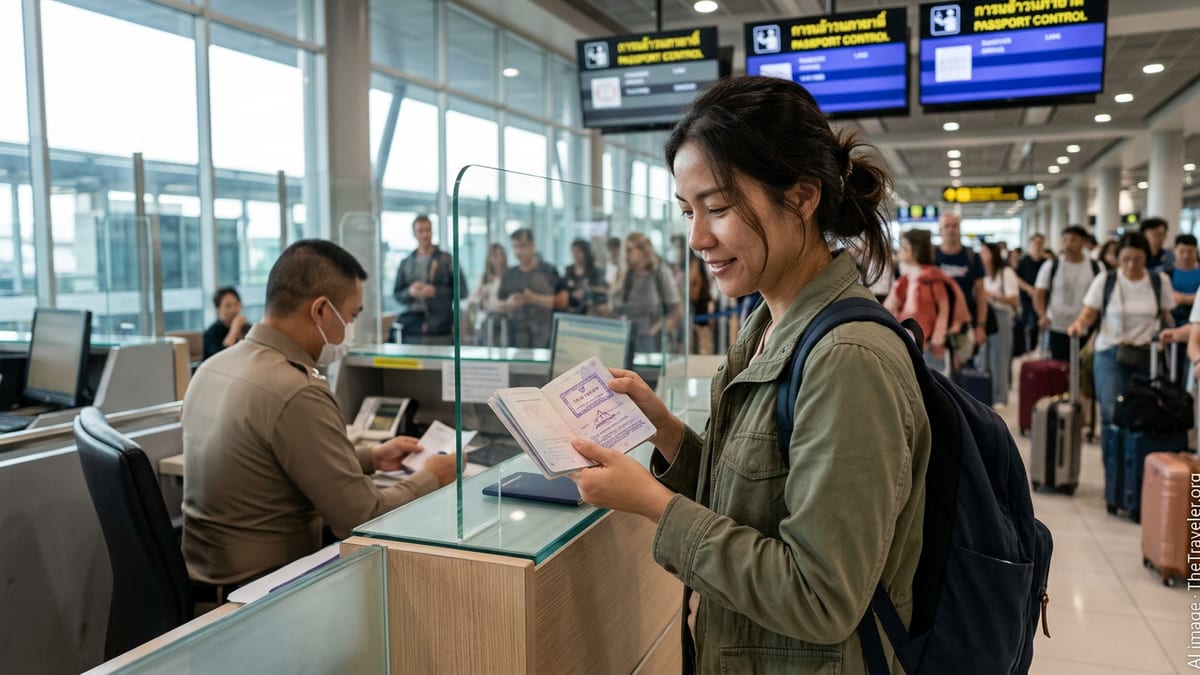
Core Framework: Staying Without Residency Status
Thailand does not set a single universal cap on time in country for non-residents. Instead, the maximum stay without residency is determined by the specific entry basis used, typically visa exemption, visa on arrival or tourist visa, each with defined stay lengths and potential extensions. For most relocation planners, the relevant question is how these short-term options can be sequenced before authorities expect a shift to a long-stay or resident status.
Since mid-2024, most visitors from approximately 90 to 95 countries, including the United States, much of Europe and several Asia-Pacific states, have been able to enter Thailand without a visa for up to 60 days per entry. In many cases this 60-day period can be extended once by 30 days at a local immigration office, yielding a total of about 90 days on a single visa-exempt entry.([thailandinsiderguide.com](https://thailandinsiderguide.com/en/travel-essentials/visas-and-entry-requirements/?utm_source=openai))
Parallel to this, a traditional 15-day visa on arrival remains available for nationals of a separate group of countries, and pre-arranged tourist visas generally provide 60 days per entry, also commonly extendable by 30 days.([thethaiger.com](https://thethaiger.com/travel/thailand-travel/overview-of-thailand-visas?utm_source=openai)) In practice, a non-resident can string together multiple such stays, but immigration officers increasingly scrutinize patterns that resemble de facto residence on back-to-back tourist entries.([layanenvironmental.com](https://www.layanenvironmental.com/uploads/6/3/4/4/63440995/phuket_immigration_spells_out_%E2%80%98visa-free%E2%80%99_crackdown.pdf?utm_source=openai))
For relocation planning, “how long you can stay without residency” is therefore best understood at three levels: maximum duration of a single lawful entry, realistic total time in Thailand in a calendar year before closer scrutiny, and upper limits achievable with multi-entry tourist arrangements before authorities typically expect a resident or long-stay visa.
Visa-Exempt Entry: Typical Maximums per Stay and per Year
Visa-exempt entry is now the main non-resident channel for citizens of many Western and selected Asian countries. Under the expanded policy introduced in July 2024 and still in force in early 2026, most eligible visitors receive a 60-day stamp on arrival.([thailandinsiderguide.com](https://thailandinsiderguide.com/en/travel-essentials/visas-and-entry-requirements/?utm_source=openai)) This can normally be extended once for 30 days at a Thai immigration office for a fee of roughly 1,900 baht, allowing a single visa-exempt visit of around 90 days.
Historically, some travelers cycled these exemptions through frequent “visa runs” by exiting briefly and immediately re-entering for a new 30-day or 60-day period. Thai authorities have increasingly discouraged this. Official commentary and legal advisories since late 2025 indicate that immigration now focuses on patterns of cumulative stay, with visitors approaching or exceeding about 150 days in a calendar year on repeated visa-exempt entries at significantly higher risk of being questioned or refused entry.([layanenvironmental.com](https://www.layanenvironmental.com/uploads/6/3/4/4/63440995/phuket_immigration_spells_out_%E2%80%98visa-free%E2%80%99_crackdown.pdf?utm_source=openai))
While there is no published statutory annual cap that applies equally to all nationalities, case reports and practitioner guidance suggest that four or more long visa-exempt visits in a single year, or sequences that approach continuous presence, are increasingly treated as misuse of the exemption scheme.([stampstay.com](https://www.stampstay.com/blog/thailand/entry-patterns/visa-exempt-limits?utm_source=openai)) Entry under visa exemption remains discretionary at the border, and officers can shorten the granted stay or deny entry altogether if they believe the traveler is effectively residing in Thailand without appropriate status.
For relocation feasibility, visa-exempt entry alone is best viewed as supporting stays of up to about 90 days at a time, with perhaps 90 to 150 total days per year achievable for genuinely intermittent visits. Beyond that range, reliance on exemptions alone becomes progressively less predictable.
Visa on Arrival and Short-Stay Limits
For nationals of certain countries, particularly in South Asia and parts of Eastern Europe, the main non-resident route without prior embassy application is visa on arrival. Thailand’s visa on arrival framework allows a stay of up to 15 days, counting the day of entry, and generally cannot be extended in-country.([thethaiger.com](https://thethaiger.com/travel/thailand-travel/overview-of-thailand-visas?utm_source=openai))
The 15-day limit makes visa on arrival unsuitable for medium-term non-resident stays. Even where multiple entries remain technically possible, the short duration per visit means that cumulative annual presence is low compared with routes offering 60-day entries. Frequent visa on arrival use also draws attention, and travelers may be asked to demonstrate clear tourism itineraries, proof of funds and onward travel.
Some policy discussions in 2024 contemplated expanding the list of visa-on-arrival eligible nationalities and experimenting with slightly longer stays, but as of early 2026 the dominant pattern remains a 15-day, non-extendable permission designed for short visits.([kpmg.com](https://kpmg.com/xx/en/our-insights/gms-flash-alert/flash-alert-2024-146.html?utm_source=openai)) For relocation assessment, this option provides at most a brief exploratory presence rather than a sustainable approach to spending substantial portions of the year in Thailand without residency.
Individuals from visa-on-arrival countries who wish to stay longer without moving into a resident category generally need to transition to pre-arranged tourist visas or other long-stay categories issued by Thai embassies abroad. The reliance on short, non-extendable entries via visa on arrival is not a viable mechanism for semi-permanent non-resident living.
Pre-Arranged Tourist Visas: Extending Non-Resident Stays
Pre-arranged tourist visas are the primary instrument for extending non-resident stays beyond the limits of simple visa exemption or visa on arrival. The most common is the single-entry tourist visa, which typically permits a stay of 60 days per entry and can ordinarily be extended once for 30 days, yielding a total lawful stay of about 90 days on that visa.([washingtondc.thaiembassy.org](https://washingtondc.thaiembassy.org/en/page/trsingle-entry?utm_source=openai))
For individuals planning more than one medium-length visit within a six-month period, some Thai missions issue a multiple-entry tourist visa. This document is often valid for six months and allows multiple entries of up to 60 days each, with the possibility of one 30-day extension per entry.([thethaiger.com](https://thethaiger.com/travel/thailand-travel/overview-of-thailand-visas?utm_source=openai)) In theory, if a traveler times entries carefully and uses extensions, it is possible to accumulate roughly 180 days, or slightly more, in Thailand within the validity period of a multiple-entry tourist visa, provided that sufficient time is also spent outside the country between entries.
However, immigration officers at ports of entry continue to assess intent and patterns. Legal and practitioner commentary since late 2025 highlights that individuals approaching 150 to 180 days in Thailand within a year on repeated tourist entries may face questioning or shorter permissions, particularly if there is little evidence of a life base elsewhere.([bgloballaw.com](https://www.bgloballaw.com/wp-content/uploads/2026/01/Thailand-Tightens-Visa-Exemption-Rules-to-Curb-Abuse-and-Attract-Quality-Visitors_Bangkok-Global-Law.pdf?utm_source=openai)) The underlying policy expectation is that tourist visas facilitate extended travel, not quasi-residence.
From a relocation planning standpoint, tourist visas can realistically sustain non-resident stays of three months at a time and perhaps half of each year in Thailand if alternated with time abroad and backed by clear evidence of ongoing ties to another country. They are not, however, a stable long-term alternative to an appropriate long-stay or resident permission for those intending to live most of the year in Thailand.
Cumulative Presence, “Visa Runs” and Enforcement Trends
Beyond the formal wording of visa exemptions and tourist visas, Thailand’s practical limit on staying without residency is shaped by enforcement trends. Authorities have repeatedly targeted “visa runs,” where foreigners exit briefly over a land or nearby air border and re-enter the next day to reset their tourist stay, as an abuse of the system.([en.wikipedia.org](https://en.wikipedia.org/wiki/Visa_policy_of_Thailand?utm_source=openai))
Recent local immigration guidance and statements in 2025 and early 2026 emphasize that a pattern of nearly continuous presence in Thailand on back-to-back tourist permissions will be treated as an attempt to reside without proper status. Officials have publicly cited cases of visitors staying 150 days or more on sequential exemptions as examples of behavior that will draw additional scrutiny or entry refusal.([layanenvironmental.com](https://www.layanenvironmental.com/uploads/6/3/4/4/63440995/phuket_immigration_spells_out_%E2%80%98visa-free%E2%80%99_crackdown.pdf?utm_source=openai))
There is also a gradual move toward digital monitoring of entries and exits, through systems such as the Thailand Digital Arrival Card and forthcoming electronic travel authorization for visa-exempt visitors.([en.wikipedia.org](https://en.wikipedia.org/wiki/Thailand_Digital_Arrival_Card?utm_source=openai)) These tools make it significantly easier for border officers to see total days spent in Thailand over the past year, the number of recent entries and any patterns typical of long-term stays without resident status.
As a result, while the legal texts may not state a hard annual maximum, a prudent working assumption for non-resident relocation planning is that spending much more than half the year in Thailand using only tourist-type permissions will increasingly conflict with enforcement expectations. Planning for structured periods outside Thailand and for eventual transition to an appropriate long-stay category becomes essential if the intent is to maintain a semi-permanent presence.
Comparative Scenarios: How Long Is Realistically Sustainable
To translate regulatory detail into practical planning, it is useful to map illustrative scenarios. For a passport holder from a visa-exempt country, relying solely on the 60-day exemption plus a 30-day extension could support a single stay of about 90 days, with the option of one or two additional shorter visits later in the year. Total annual time in-country in such a model would typically remain under roughly 150 days, staying below the threshold that currently attracts the most scrutiny.([thailandinsiderguide.com](https://thailandinsiderguide.com/en/travel-essentials/visas-and-entry-requirements/?utm_source=openai))
For a traveler obtaining a multiple-entry tourist visa in addition to eligibility for visa exemption, it becomes possible to design a year where approximately 5 to 6 months are spent in Thailand in several blocks of 60 to 90 days, interspersed with time abroad. This arrangement, while legally feasible, demands careful itinerary design, clear documentation of outward travel and acceptance of some unpredictability at each re-entry, given the discretionary powers of immigration officers.
Nationals limited to 15-day visas on arrival without straightforward access to pre-arranged tourist visas face a much shorter feasible window. Without moving into other long-stay categories, their realistic non-resident presence is confined to a series of brief visits that cumulatively are unlikely to exceed a few weeks or at most a couple of months across a year.
In all scenarios, the practical limit on “how long you can stay in Thailand without residency” is therefore a function of nationality, entry channel, tolerance for immigration risk and the willingness to spend substantial time outside Thailand between visits. For individuals intending to center their life in Thailand, non-resident tourist mechanisms should be viewed as transitional tools rather than permanent solutions.
The Takeaway
Thailand offers comparatively generous short and medium-term stays for many nationalities without requiring residency. For most visa-exempt visitors, an individual stay of about 90 days is routinely achievable through a 60-day entry plus one 30-day extension, and multiple such visits can be made over time. With careful planning and the use of multiple-entry tourist visas where available, it may be possible to spend roughly half of each year in Thailand without resident status, provided that substantial periods are also spent abroad.
However, enforcement trends since 2024 indicate that Thai authorities are increasingly focused on cumulative presence and entry patterns. Repeat long stays that approach continuous presence, especially when achieved through back-to-back exemptions or short visa runs, are actively discouraged and may result in shortened permissions or refusal of entry. The more one’s behavior resembles living full-time in Thailand, the stronger the expectation from immigration that an appropriate long-stay or resident status will be obtained.
For relocation decision-making, Thailand remains accessible for exploratory and seasonal stays without residency, but is not structurally designed for indefinite, near-continuous residence on tourist-style permissions. Individuals whose long-term plans involve spending the majority of their time in Thailand should anticipate, from an early stage, the need to transition away from purely non-resident arrangements and into a visa class expressly intended for long stays.
FAQ
Q1. How long can I stay in Thailand on a single visa-exempt entry?
Most eligible nationalities receive 60 days on arrival, which can usually be extended once by 30 days at an immigration office, giving a total of about 90 days on one visa-exempt entry.
Q2. Is there an official annual limit on days I can spend in Thailand without residency?
There is no universally published statutory annual cap, but in practice immigration increasingly scrutinizes visitors whose cumulative stays on tourist-type permissions approach roughly 150 days or more in a year.
Q3. Can I live in Thailand year-round by doing repeated visa runs?
Using repeated visa runs to stay year-round is risky and strongly discouraged. Border officers can refuse entry or shorten stays if they judge that a traveler is effectively residing in Thailand without appropriate long-stay status.
Q4. How long can I stay using a single-entry tourist visa?
A typical single-entry tourist visa allows a 60-day stay, which is commonly extendable once for 30 days, so around 90 days in total before an exit from Thailand is required.
Q5. What is the realistic maximum time per year on a multiple-entry tourist visa?
If carefully planned with time outside Thailand between entries, a multiple-entry tourist visa can support several 60 to 90 day visits, often allowing around 5 to 6 months in-country over its validity, subject to immigration discretion.
Q6. How long can I stay using visa on arrival?
Visa on arrival generally permits a 15-day stay, including the day of entry, and normally cannot be extended in-country, making it suitable only for short visits.
Q7. Are land border entries treated differently from airport entries?
Land border entries have historically been more closely scrutinized, and authorities have limited frequent land-based visa runs. Air arrivals can also be checked carefully, especially if travel history suggests near-continuous presence.
Q8. Does time spent in Thailand on different tourist permissions add up for enforcement purposes?
Yes. Immigration officers can view cumulative time across visa exemptions, visas on arrival and tourist visas when assessing whether a person appears to be using short-term permissions as a substitute for residency.
Q9. Can I alternate a few months in Thailand and a few months abroad every year without becoming a resident?
Alternating multi-month stays in Thailand with substantial periods abroad is often feasible for several years using tourist mechanisms, provided patterns remain clearly temporary and officers are satisfied you have strong ties outside Thailand.
Q10. When should I consider transitioning from tourist permissions to a long-stay or resident status?
Once your plans involve spending most of each year in Thailand for the foreseeable future, or when cumulative tourist stays begin approaching half the year on a regular basis, it is prudent to explore long-stay or resident options instead of relying solely on short-term permissions.