

More news on this day
Some of the world’s best-known long-haul carriers, including Air India, Emirates, Qatar Airways, Air France, Lufthansa and British Airways, are quietly sizing up an unlikely new vehicle for growth: the single-engine Airbus H125 helicopter. As Airbus doubles down on light-rotorcraft manufacturing and new final assembly lines in India, airline strategists and tourism boards are exploring how branded H125 fleets could unlock high-value regional tourism, from Himalaya heliski links and island-hopping resorts to premium airport transfers that bypass gridlocked roads.
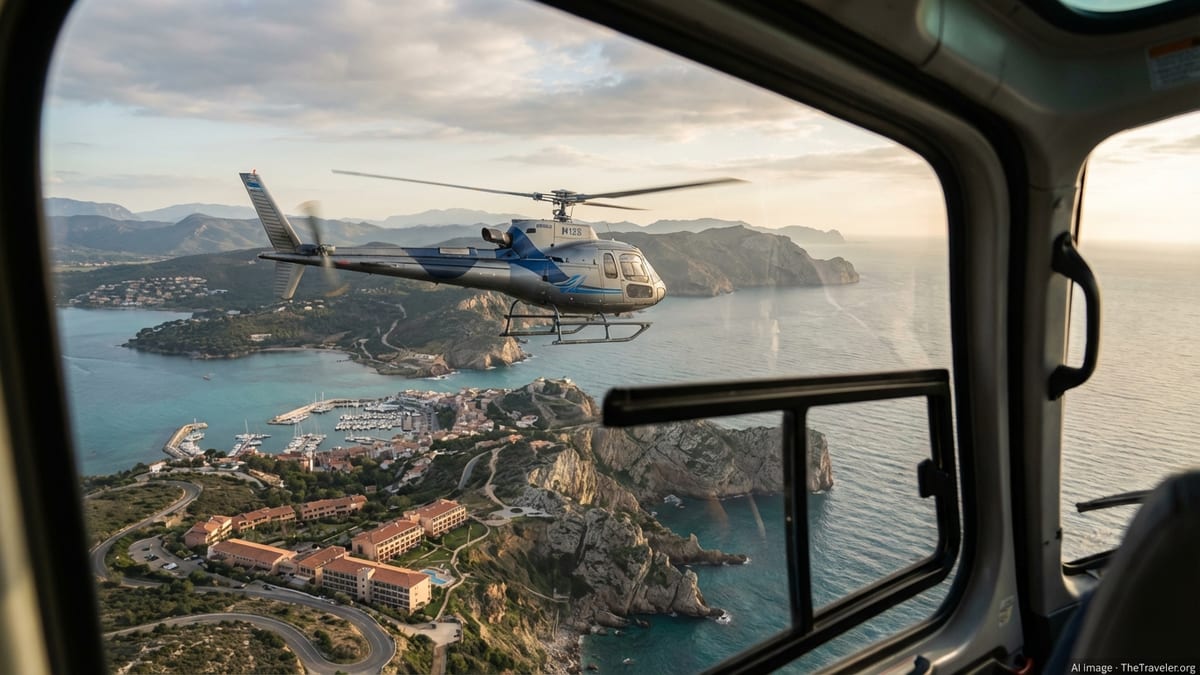
From Wide-Body Icons to Single-Engine Workhorses
For decades, airlines like Emirates, Qatar Airways, Air France, Lufthansa and British Airways have defined their brands through long-haul, wide-body jets and global hub networks. Now, the conversation in many of their strategy offices is turning to something far smaller: the Airbus H125, a rugged, single-engine helicopter widely used for tourism, aerial work and public services. With more than a thousand units in service worldwide and a reputation for operating in “high and hot” conditions where runways are scarce, the H125 is emerging as an unexpected bridge between major hubs and hard-to-reach tourist destinations.
The attraction lies in the helicopter’s versatility. The H125 is already the reference platform for aerial work and sightseeing, capable of rapid reconfiguration between passenger transport, aerial filming, survey missions and emergency response. It can carry up to six people, land on compact pads at lodges or mountain bases and handle missions at high altitudes and in challenging climates. As airlines chase new premium and experiential revenue, operators and tourism authorities see an opportunity to extend major carrier brands deep into local landscapes using this proven platform.
Industry executives and analysts say the move is less about airlines becoming helicopter operators overnight, and more about co-branded partnerships with specialist rotorcraft companies, airport authorities and hotel groups. In that model, an Emirates or Lufthansa customer might step directly from a long-haul arrival into a liveried H125 that completes the “last 100 miles” of the journey to a beach resort, safari camp or alpine retreat, with the airline’s app, loyalty program and service standards wrapping around the entire experience.
India Emerges as a Hub for H125 Tourism Ambitions
Any large-scale airline push into H125-powered tourism will lean heavily on what is unfolding in India. Airbus and Tata Advanced Systems are building out an H125 final assembly line in Vemagal, Karnataka, described by local officials as the country’s first private helicopter assembly facility of its kind. Initial plans call for about 10 helicopters a year, ramping toward a potential 500 aircraft over roughly two decades to meet Asia-Pacific demand, with the first “Made in India” H125 deliveries targeted for around 2027.
At the same time, Mahindra Aerostructures has been contracted to manufacture the main fuselage for H125 helicopters from its Bengaluru site, further anchoring the type’s industrial footprint in India and embedding domestic suppliers in Airbus’s global value chain. That twin-track approach of assembly and key structural work positions India not only as a major production base, but also as an emerging regional maintenance and upgrade hub for H125 fleets.
For Air India, now backed by the Tata Group, the alignment is obvious. The national carrier has been rapidly renewing its fleet of jets and repositioning itself as a premium global player. The ability to plug into a domestically assembled light helicopter, supported by local maintenance, repair and overhaul providers, opens the door to branded helicopter services in tourism-heavy states from Goa and Kerala to Himachal Pradesh and Uttarakhand. Regional airports and heliports near pilgrimage sites, hill stations and wildlife reserves are already on state planners’ radar; airline-linked H125 services could tie these into international arrivals in a more seamless way.
For Gulf carriers like Emirates and Qatar Airways, India’s H125 ecosystem also matters. They carry millions of passengers into Indian metros each year. A more mature, locally supported helicopter market makes it easier for them to partner with Indian tourism operators and airports on co-branded transfers and excursions, without bearing the full operational burden themselves.
What Makes the Airbus H125 Suited to Tourism Missions
The H125 is not a new aircraft, but recent upgrades and its mission flexibility make it particularly attractive for tourism-linked roles. Designed as a multi-mission rotorcraft, it can be adapted in minutes from passenger sightseeing to aerial work, disaster support or medical evacuation. Operators value its relatively low operating costs and its ability to carry external loads, attributes that make it a staple for mountain flying, filming and powerline inspection. Those same characteristics allow tourism operators to schedule scenic flights on clear days and redeploy helicopters for utility missions or charter work when demand dips.
From a passenger’s perspective, the appeal is more visceral. The H125’s wide cabin, large windows and strong performance at altitude make it a favorite for alpine sightseeing and volcano flights in markets from Europe to Latin America. Its track record includes missions in polar regions aboard expedition cruise ships, where the type has supported ice reconnaissance, wildlife surveys and emergency medical evacuations from the ice back to vessels or shore-based facilities. That operational pedigree in extreme environments reassures airlines and tourism boards contemplating services in high mountains, deserts or offshore island chains.
Airbus has also invested in modern avionics and connectivity for the platform. A line-fit option allows new H125s to be delivered with a compact wireless communication system that can securely capture flight and maintenance data, feeding airline-style analytics tools for safety and reliability. While most helicopter operators are significantly smaller than global airlines, this kind of digital backbone matters to carriers such as Lufthansa or British Airways that regard data-driven maintenance and safety monitoring as non-negotiable brand pillars.
For tourism markets, a further draw is the aircraft’s ability to operate from minimal infrastructure. A properly prepared helipad at a resort or lodge can suffice, avoiding the cost and environmental footprint of full runway development. In remote islands, high Himalayan valleys or desert oases, that can be the difference between a destination that remains aspirational and one that becomes readily accessible to high-yield international visitors.
How Major Carriers Could Deploy H125 Fleets
While no airline has yet announced a dedicated, branded H125 fleet, industry insiders outline several deployment models under active discussion. The first is the “last-mile luxury transfer,” in which airline passengers on premium fares book a through-journey that includes a helicopter leg from the arrival airport to a nearby resort area. Think of a British Airways customer flying into London and adding a helicopter hop to a country estate, or an Emirates passenger stepping off an A380 in Dubai onto a short H125 transfer to a desert retreat or nearby emirate.
A second model centers on bundled excursion products, particularly in destinations where scenic flights are already part of the tourism fabric. In France, for instance, Air France could partner with established rotorcraft operators to offer H125 sightseeing over the Alps or coastal regions, sold as ancillaries via the airline’s website and loyalty channels. Lufthansa might explore similar tie-ups in the Bavarian Alps or along the Rhine, while Qatar Airways could package helicopter tours over desert landscapes or island archipelagos accessed via Doha.
A third, more ambitious model involves hub-linked regional tourism corridors. Here, airlines would work with local governments and tourism boards to develop a network of heliports and pads that effectively extend the reach of major hubs such as Doha, Dubai, London Heathrow or Paris Charles de Gaulle deep into rural and natural areas. H125s, with their mix of endurance, payload and ability to operate in hot-and-high conditions, could shuttle small groups of visitors between national parks, heritage towns and coastal areas that would never justify scheduled jet service.
Such schemes are likely to rely on joint ventures or franchised operations, with airlines contributing brand, digital platforms, distribution and customer service standards, while specialist helicopter operators handle flight operations, pilot recruitment and maintenance. For tourism authorities, the appeal is clear: more predictable, higher-spend visitor flows that can be better distributed beyond overcrowded hotspots, easing pressure on famous city centers and beach strips.
India, Middle East and Europe: Three Very Different Tourism Playgrounds
The opportunities for H125-powered tourism look very different across the network maps of the carriers involved. In India, the biggest gap is often between international gateways and inland attractions. Air India and its partners could use H125s to stitch together circuits linking heritage cities, backwater cruises, wellness retreats and wildlife reserves, particularly where road journeys are long or seasonally disrupted. Helicopters could also support pilgrimage flows to hilltop temples and shrines, provided regulators and community leaders sign off on environmental and cultural safeguards.
In the Gulf, Emirates and Qatar Airways are looking at destinations where extreme heat and rapid urbanization have outpaced road and rail. Helicopter links could offer time-poor travelers faster access to coastal resorts, desert camps or marinas, while also supporting niche segments like golf holidays and high-end business retreats. H125 operations in these regions would need to be carefully timed around heat and visibility, but the type’s certification for high and hot performance makes such operations technically feasible.
In Europe, the equation leans more toward enhancing already mature tourism circuits. Air France, Lufthansa and British Airways are all embedded in markets where helicopter sightseeing and transfers exist, but often as standalone niches. Airline alignment could bring greater scale, digital booking ease and loyalty integration to H125-based products in areas such as the French and Swiss Alps, the Scottish Highlands, the English Lake District or the fjords and forested regions accessed via European hubs.
For all three regions, regulators will have to balance noise, safety and environmental concerns with the economic gains from higher-spend visitors and better regional dispersal. Local communities, especially in fragile mountain or coastal ecosystems, will expect airlines to engage in genuine consultation rather than simply branding existing services.
Sustainability, SAF and the Environmental Equation
No discussion about helicopter tourism in 2026 can avoid the question of emissions and noise. Airbus has been testing and promoting the use of sustainable aviation fuel in helicopter operations, with H125s already having flown missions on blends of SAF that can significantly reduce lifecycle carbon emissions versus conventional jet fuel. The manufacturer has set a goal of certifying its helicopter range to operate with 100 percent SAF by the end of the decade, which would give airlines more credible tools for managing the climate impact of short-hop flights.
In practice, any airline-backed H125 network linked to tourism will be judged by its overall footprint, not just fuel type. Helicopter flights are loud and can disturb wildlife and local residents if not properly routed and limited. Airlines and tourism authorities exploring this space are therefore looking at routing corridors that avoid sensitive zones, strict operating hours, noise abatement procedures and conservation-linked levies on flights that directly finance habitat protection or community projects.
Some operators are examining whether helicopter access can actually support more sustainable visitor management when compared with building new roads or extending runways into natural areas. By concentrating access on small groups and defined pads, and by bundling flights into regulated packages, planners argue that H125s could enable “high value, low volume” tourism models that channel revenue into conservation while minimizing sprawl. Whether that argument holds will depend on rigorous environmental assessments and transparent reporting.
For major carriers whose sustainability strategies are under intense public scrutiny, any move into helicopter-based tourism will likely be framed as a pilot program with clear guardrails, emissions accounting and community benefit mechanisms, rather than an unchecked expansion of rotorcraft activity.
Digital Integration, Safety and Passenger Experience
If H125 helicopters are to become extensions of brands like Emirates or British Airways, the passenger experience must feel as seamless and safe as the mainline jet journey. That begins with digital integration. Airlines are already adept at stitching together flights, hotels and ground transport into single itineraries. Applying the same logic to helicopter segments means integrating H125 schedules into airline booking engines, mobile apps, disruption-management tools and loyalty programs, so that a missed connection or weather delay on the helicopter leg is handled with the same transparency as a delayed feeder flight.
On the safety side, airlines will insist on rigorous oversight in pilot training, maintenance standards and operational procedures. Modern connectivity tools on the H125 allow operators to collect and upload flight and maintenance data to fleet-monitoring systems, enabling predictive maintenance and trend analysis similar to what airlines use for jets. That level of data availability is likely to be a precondition for any deep brand alignment.
Cabin product and service levels will also come under scrutiny. While helicopter cabins are far more constrained than business-class suites on wide-body jets, airlines can still differentiate through details such as noise-cancelling headsets, curated commentary, temperature control, and thoughtful baggage handling between aircraft and remote properties. For many travelers, the short helicopter segment could become the emotional highlight of the trip, offering dramatic aerial views that contrast with the anonymity of cruising altitude on a long-haul jet.
If executed well, that final leg by H125 could transform a functional trip into a memorable, story-worthy experience that strengthens loyalty to the airline brand, the destination and the local partners involved.
The Next Five Years: From Exploratory Talks to Pilot Routes
Over the next half decade, the biggest shifts may not be immediately visible on flight-tracking maps. Much of the work will be behind the scenes, as airlines, Airbus, helicopter specialists and tourism boards align on standards, commercial models and regulatory approvals. India’s emerging H125 industrial base, combined with strong demand forecasts for light helicopters in Asia-Pacific, suggests that the first large-scale experiments in airline-linked H125 tourism may appear on the subcontinent around the time locally assembled aircraft start rolling out.
In the Middle East, where airport and tourism infrastructure can be developed quickly around strategic visions, Emirates and Qatar Airways are well placed to move from exploratory partnerships to branded helicopter offerings as part of luxury tourism packages. In Europe, more incremental expansion is likely, with Air France, Lufthansa and British Airways deepening their cooperation with existing helicopter operators at key resort gateways and alpine regions.
What unites these otherwise disparate markets is a shared recognition that the battle for high-yield travelers extends beyond the airport perimeter. As the Airbus H125 becomes more accessible through new assembly lines, local supply chains and upgraded digital capabilities, major airlines have a new tool to reshape regional tourism flows. Whether they can do so in a way that balances profit, passenger excitement and environmental responsibility will define how transformational this small but capable helicopter truly becomes for the next era of travel.