

More news on this day
Tourists planning multi-country itineraries across Malaysia, the United Kingdom, France, Saudi Arabia and Qatar with Malaysia Airlines are navigating a fast-changing landscape of route adjustments, security advisories and new entry-screening systems, even as the carrier positions itself as a reliable bridge between Asia, Europe and the Gulf.
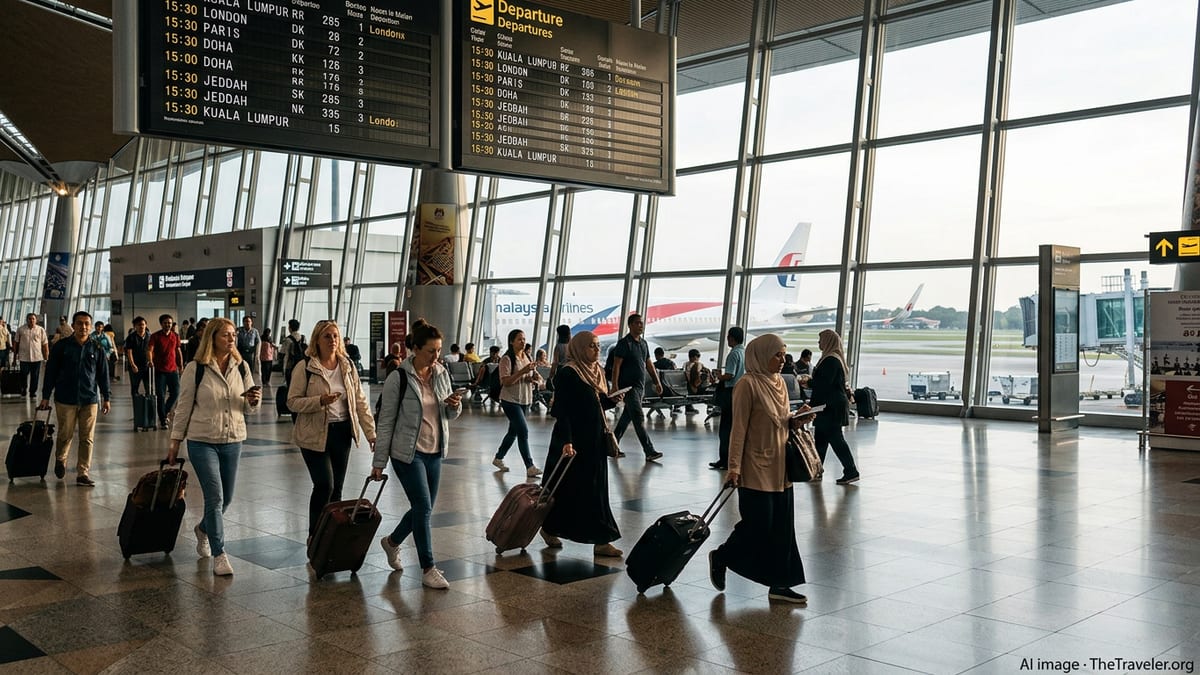
Network Updates on Key Routes Linking Asia, Europe and the Gulf
Malaysia Airlines is reinforcing its role as a hub carrier for travellers heading between Southeast Asia, Europe and the Middle East, even as regional disruptions reshape flight paths. The airline has recently added short-term extra capacity on its Kuala Lumpur to London Heathrow and Paris Charles de Gaulle routes, responding to a spike in demand from passengers whose plans were derailed by airspace closures affecting other corridors. These additional flights, operating from 6 to 8 March 2026, are designed to give stranded tourists more options to complete or reconfigure their journeys.
The boost into London and Paris follows the carrier’s full return to the French capital in 2025, where strong load factors signalled resilient demand for Malaysia to France leisure travel. For UK-bound passengers, Kuala Lumpur remains one of the most important Asian gateways, with London Heathrow serving onward connections throughout Britain and Europe via oneworld partners.
In the Gulf, Malaysia Airlines’ connectivity relies heavily on its oneworld alliance relationship and expanded codeshare ties with Qatar Airways. The joint network, strengthened again in early 2026, allows tourists to book single-ticket itineraries that link Kuala Lumpur with Doha and onward to destinations across Saudi Arabia, wider Europe and beyond. This cooperation has become particularly important as both carriers work around evolving security restrictions and temporary schedule changes.
Saudi Arabian cities such as Jeddah and Madinah remain core religious and leisure markets for Malaysia Airlines. After a brief halt to services when Middle East airspace was affected by security concerns, the airline has resumed flights into these gateways and is working through backlogs by re-accommodating affected passengers. Tourists with upcoming Umrah or heritage trips are being advised to closely monitor their bookings and allow extra flexibility in case of further operational tweaks.
Security Advisories and Airspace Disruptions Tourists Must Watch
For visitors using Malaysia Airlines across these five countries, the biggest recent shock has been the ripple effect of security-related airspace closures in parts of the Middle East. In late February and early March 2026, a combination of restrictions and precautionary airline decisions led to temporary suspensions of some routes to Qatar and Saudi Arabia. This created a knock-on effect for passengers transiting through Doha on Malaysia Airlines codeshare services, as well as those bound for Jeddah and Madinah.
Malaysian authorities have simultaneously widened their own travel advisories, strongly urging citizens to defer non-essential trips to several Middle Eastern states, including Qatar and selected neighbours. While these advisories are primarily aimed at Malaysian nationals, foreign tourists sharing itineraries or group tours with Malaysian travellers may also experience last-minute changes as operators adjust routings and group sizes.
In Qatar, diplomatic missions are busy coordinating potential evacuation and rerouting options for Malaysian nationals, with some return flights expected to be staged via Saudi Arabia. Though these special operations are not marketed to tourists, they highlight the volatility in the region and underline why all passengers should ensure their contact details with Malaysia Airlines are accurate and up to date.
Given these dynamics, Malaysia Airlines repeatedly stresses that safety remains the overriding priority. Tourists connecting between Malaysia, Doha and Saudi gateways should be prepared for same-day timing adjustments, reroutes via alternative hubs, and, in a worst-case scenario, short-notice cancellations. Travel experts recommend building longer layovers where possible and avoiding tight self-made connections on separate tickets when travelling through affected airspace corridors.
Entry Rules and Screening: What Tourists Face at Each Border
Beyond airline scheduling, travellers need to navigate a patchwork of border rules that vary across Malaysia, the UK, France, Saudi Arabia and Qatar. Malaysia continues to apply its long-standing immigration framework, under which many visitors from Europe and parts of the Middle East are granted short-stay entry without a visa for tourism. Transit passengers who remain airside in Kuala Lumpur International Airport for under 72 hours are generally processed with minimal formalities, though individual passport and visa rules still apply.
The Malaysian government is in the process of rolling out a new Advance Passenger Screening System, which checks passenger information before arrival. Malaysia Airlines is among the first group of carriers participating. For tourists, this typically means airlines will verify travel documents more strictly at check-in, and passengers may be denied boarding if their paperwork is incomplete or flagged by the system. Arriving visitors may find that immigration checks feel more efficient but also more data-driven than in previous years.
In the United Kingdom and France, travellers are adjusting to a more digital, security-focused border environment as both countries align with wider European screening reforms. Non-European tourists entering via London or Paris on Malaysia Airlines or partner flights can generally expect biometric checks, tighter scrutiny of return or onward tickets, and renewed emphasis on proof of funds and accommodation. Although many visitors still qualify for visa-free short stays, they should monitor their own government’s foreign office advisories as new electronic travel authorisation schemes continue to roll out.
Saudi Arabia and Qatar apply their own layers of security vetting and visa rules, particularly important for religious tourism to Saudi holy sites and for visitors entering Qatar during periods of heightened regional tension. While e-visas and visa-on-arrival facilities have simplified travel for many nationalities, tourists should not assume pre-pandemic rules still apply. Malaysia Airlines and Qatar Airways typically require proof of the correct visa status before boarding, and failure to meet entry requirements can leave travellers stranded at their departure point.
Practical Tips for Seamless Multi-Country Itineraries
For tourists planning a multi-stop journey across Malaysia, the UK, France, Saudi Arabia and Qatar, the choice of airline and ticket type matters more than ever. Booking a single through-ticket that uses Malaysia Airlines and its oneworld partners, particularly Qatar Airways, helps ensure baggage is checked to the final destination and rebooking is simpler when disruptions occur. Separate tickets, even between partner airlines, may require passengers to reclaim luggage, clear immigration and re-check, which can be risky in a fast-changing operational environment.
Given the recent turbulence in Middle Eastern airspace, passengers are being urged to leave wider connection windows when transiting through Kuala Lumpur or Doha. Travel agents recommend at least three hours for international-to-international connections if itineraries include routes that could be affected by security closures. Where possible, travellers heading between Asia and Europe might consider routings via Kuala Lumpur and direct services into London or Paris to reduce exposure to Gulf airspace disruptions.
Baggage allowances and through-check policies are another critical detail on Malaysia Airlines codeshare journeys, especially when connecting to Qatar Airways flights. While the two carriers generally coordinate baggage rules on joint itineraries, tourists should confirm which airline’s allowance applies to their most significant leg and purchase any extra baggage in advance. At busy hubs such as Heathrow, Charles de Gaulle and Doha, arriving early for check-in can prevent complications if staff need to manually verify through-checking arrangements.
Travel insurance with strong disruption and re-routing coverage has shifted from a nice-to-have to an essential for tourists covering multiple countries. Policies that explicitly cover airspace closures, airline schedule changes and missed connections are particularly valuable on Malaysia Airlines routes that rely on Middle Eastern overflight permissions. Passengers are advised to keep digital and printed copies of their insurance, itineraries and visa approvals on hand to speed up any rebooking or claims processes at the airport.
Staying Informed: How Malaysia Airlines Communicates With Tourists
For travellers intent on keeping their journeys as smooth as possible, staying informed is as important as buying the right ticket. Malaysia Airlines has been urging passengers to regularly update their mobile numbers and email addresses in the “Manage Booking” sections of digital channels so that rebooking options, gate changes and schedule alerts can be sent in real time. During recent disruptions affecting Saudi and Qatari routes, the airline has used these channels to offer alternative flights, often via Kuala Lumpur and onward to European hubs.
At airports, Malaysia Airlines customer service desks and partner airline counters remain the primary touchpoints for day-of-travel assistance. In major transit hubs like Kuala Lumpur, London and Doha, additional staff have been deployed during the peak of recent disruptions to help tourists understand their options, whether that means accepting a reroute, adjusting travel dates or in rare cases applying for partial refunds. Clear communication has been central in rebuilding confidence among passengers navigating the affected regions.
Industry analysts note that the airline’s strengthened codeshare partnership with Qatar Airways is both an opportunity and a responsibility. On the one hand, it offers tourists an expansive network linking the five featured countries and many more; on the other, it ties Malaysia Airlines’ operational reliability to fast-moving political and security developments in the Gulf. Travellers who stay closely attuned to airline advisories, embassy notices and reputable news outlets are best placed to take advantage of the network’s flexibility while minimising potential disruption.
For now, Malaysia Airlines continues to market itself as a stable bridge across Asia, Europe and the Middle East, anchored by direct links into London and Paris and supported by cooperative schedules with Qatar Airways into Doha and onward Saudi cities. For tourists, the message is clear: multi-country trips remain entirely feasible, but they require more preparation, vigilance and flexibility than in calmer times.