

More news on this day
Value creation in travel is being quietly redefined, as industry veteran Mauricio Prieto urges online agencies, airlines and hotels to focus less on flashy features and more on reducing customer risk and improving execution once a trip is booked.
Get the latest news straight to your inbox!
From Interface Obsession to Decision Confidence
Recent commentary from Mauricio Prieto, co founder of eDreams and founder of advisory firm Travel Tech Essentialist, has sharpened a growing debate inside travel technology. According to published coverage, Prieto argues that much of the sector still confuses activity with value creation, pouring resources into traffic growth, inspirational content and sleek interfaces while underinvesting in what actually determines whether a trip feels successful to the traveler.
Reports indicate that Prieto’s central thesis is straightforward: value in travel is created when companies reduce uncertainty and help customers make confident choices at the moment of decision. That means prioritizing accurate pricing, reliable inventory, clear trade offs and dependable support over yet another design refresh or marketing campaign. In this view, the key question for any travel brand becomes whether a customer feels more confident after interacting with the service.
Publicly available information shows that Prieto also challenges a long running assumption that frictionless experiences are always better. Thought pieces summarizing his perspective note that the right kind of friction, such as clear policies or a timely follow up call, can actually increase trust because it signals that a company is present, accountable and prepared to resolve problems when they arise.
This reframing places decision confidence, rather than interface ownership, at the center of competition. As artificial intelligence tools begin to intermediate many booking journeys regardless of the underlying website or app, Prieto’s focus on the decision layer suggests that the brands which succeed will be those that consistently steer customers toward outcomes that work in the real world.
Customer Risk as the New Competitive Battleground
In recent analyses exploring Prieto’s ideas, customer risk emerges as the main lens for evaluating travel propositions. Instead of asking how many destinations are listed or how inspirational a homepage looks, the more urgent question is how much risk a traveler absorbs when choosing, paying for and relying on a particular service. That risk can stem from schedule changes, poor data on room types, opaque ancillary fees or weak support when disruptions hit.
According to industry commentary, Prieto contends that many online travel agencies and suppliers underprice this risk in their own strategies. They optimize for conversion rates and acquisition costs while leaving gaps in post booking execution, such as slow response times, limited rebooking options or inconsistent coordination between intermediaries and end providers. The financial cost of these gaps often shows up later as refunds, compensation, negative reviews and lost repeat business.
By contrast, a model built around reducing customer risk prioritizes verifiable information, resilient operations and clear accountability lines. This includes investing in data quality, integrating with partners to share real time changes and designing policies that are easy to understand before purchase. Prieto’s perspective, reflected in recent travel trade coverage, positions this risk reduction as a primary source of long term loyalty, outweighing short term promotional discounts.
The emphasis on risk also intersects with broader trends. Benchmarks across payments and e commerce suggest that travelers abandon transactions when they sense uncertainty about charges, refundability or support. Analysts linking these findings to Prieto’s framework argue that every unresolved doubt at checkout effectively transfers risk to the customer, weakening perceived value even when the headline price looks attractive.
Execution After Acquisition: Where Loyalty Is Really Earned
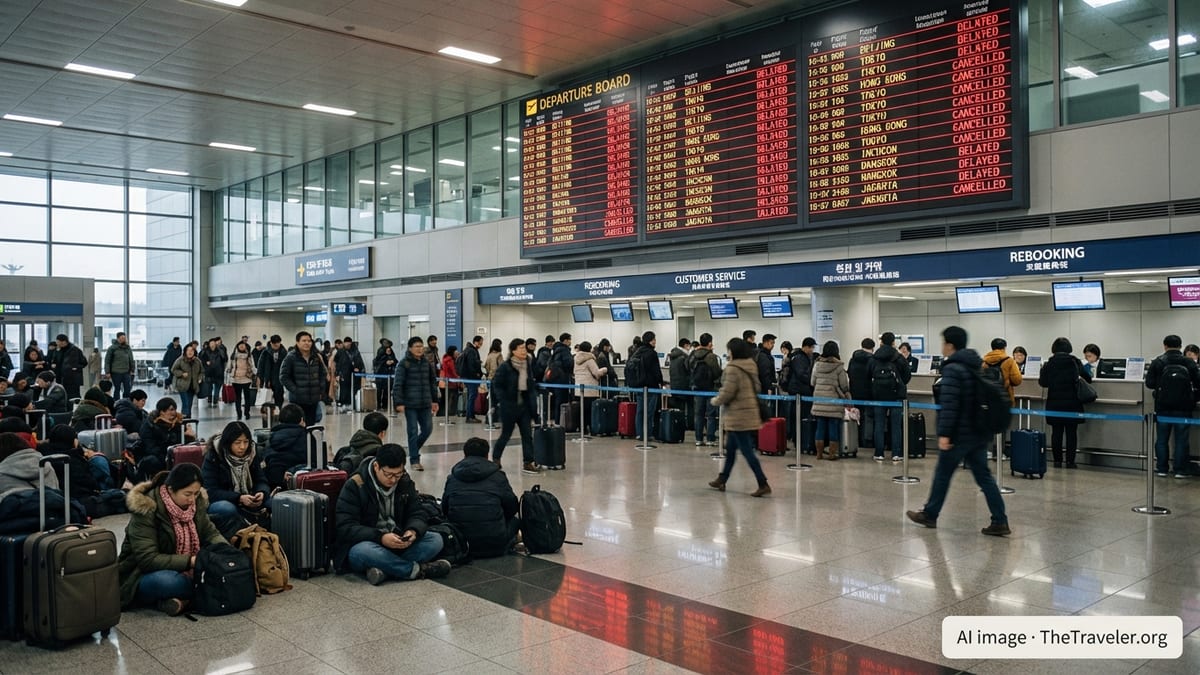
Hospitality and travel technology reports summarizing Prieto’s arguments repeatedly highlight one theme: competitive advantage is increasingly determined by what happens after the booking. For many brands, the bulk of investment still sits in acquisition channels, loyalty programs and top of funnel marketing. Yet most customer memories are formed during irregular, stressful moments such as delays, cancellations or property issues.
Prieto’s view, as reflected in recent industry discussions, suggests that brands overestimate the power of logos and slogans and underestimate the loyalty impact of operational reliability. Delivering exactly what was promised may be enough to stay average, but standing out requires exceeding expectations when conditions deteriorate. That could mean proactive rebooking, transparent timing for resolutions or empowered frontline staff who can make decisions quickly.
Public commentary on his work notes that this shift in emphasis challenges how travel firms measure performance. Instead of focusing primarily on click through rates or completed bookings, companies are encouraged to track metrics around disruption handling, response speed and the percentage of cases where outcomes surpass what customers anticipated. In such a framework, marketing and operations become tightly linked rather than separate domains.
For online intermediaries, the execution challenge is compounded by the need to coordinate airlines, hotels, ground transport and insurance. Prieto’s perspective positions this coordination as an opportunity. Brands capable of orchestrating multiple suppliers into a coherent response when plans change can claim a form of value that is extremely difficult for rivals to copy quickly.
AI and the Shift to the Decision Layer
Prieto’s recent appearances in industry thought leadership also highlight artificial intelligence as a structural force that may accelerate his vision of value creation. Commentaries summarizing his stance indicate that he sees the largest impact of AI not in novel customer facing widgets, but in how it improves internal decision making and coordination across complex travel operations.
Rather than simply recommending destinations, AI systems can help reconcile inventories, flag data inconsistencies and suggest optimal responses when schedules or conditions change. In Prieto’s framework, this moves technology investment away from surface features and toward tools that reduce uncertainty for both staff and travelers. Better data and faster internal decisions translate directly into lower customer risk and more predictable outcomes.
Analysts drawing on his ideas also point out that AI weakens the strategic importance of owning the interface. As conversational agents guide more searches and bookings, the crucial terrain becomes the decision logic that sits behind those agents. Providers that consistently offer trustworthy options, with verified information and strong operational backing, are more likely to be favored by decision engines, even if customers do not interact with their brand directly.
In this emerging landscape, Prieto’s focus on reliability and execution reads less as a niche viewpoint and more as a roadmap for surviving platform shifts. The competitive question becomes whether a company’s systems and partnerships are robust enough for algorithmic decision makers to trust with their users’ trips.
Implications for OTAs, Hotels and Travel Brands
For online travel agencies, hospitality groups and tour operators, the ideas associated with Mauricio Prieto’s work amount to a call for rebalancing investment. Industry coverage highlights several consistent implications: reduce overinvestment in cosmetic differentiation, redirect resources toward operational robustness and redesign incentives so that all parties share responsibility for post booking outcomes.
One practical consequence is the need to revisit how intermediaries and suppliers align on service delivery. Commentators drawing on Prieto’s thinking argue that as long as distribution contracts reward volume far more than customer satisfaction, there will be structural pressure to prioritize short term bookings over long term trust. New models that tie compensation to successful trip completion or post stay ratings could narrow this gap.
The demographic and behavioral shifts already visible in global travel demand make these questions more urgent. Younger travelers are increasingly influenced by peer recommendations and real experience narratives rather than brand campaigns. In such an environment, word of mouth about how a company behaves when things go wrong may carry more weight than any advertising slogan, reinforcing Prieto’s focus on execution and risk reduction.
As travel demand continues to recover and diversify, the framework advanced through Mauricio Prieto’s recent commentary suggests that the industry’s most sustainable advantages will be grounded in reliability, clarity and coordinated action. Companies that treat every booking as the beginning, rather than the end, of the value they must deliver are likely to shape the next phase of competition in global travel.