

More news on this day
Rising construction costs, energy price hikes and a volatile security landscape from Egypt to Iran are converging to reshape how hotels, homes and entire destinations are planned, financed and experienced across the Middle East.
Get the latest news straight to your inbox!
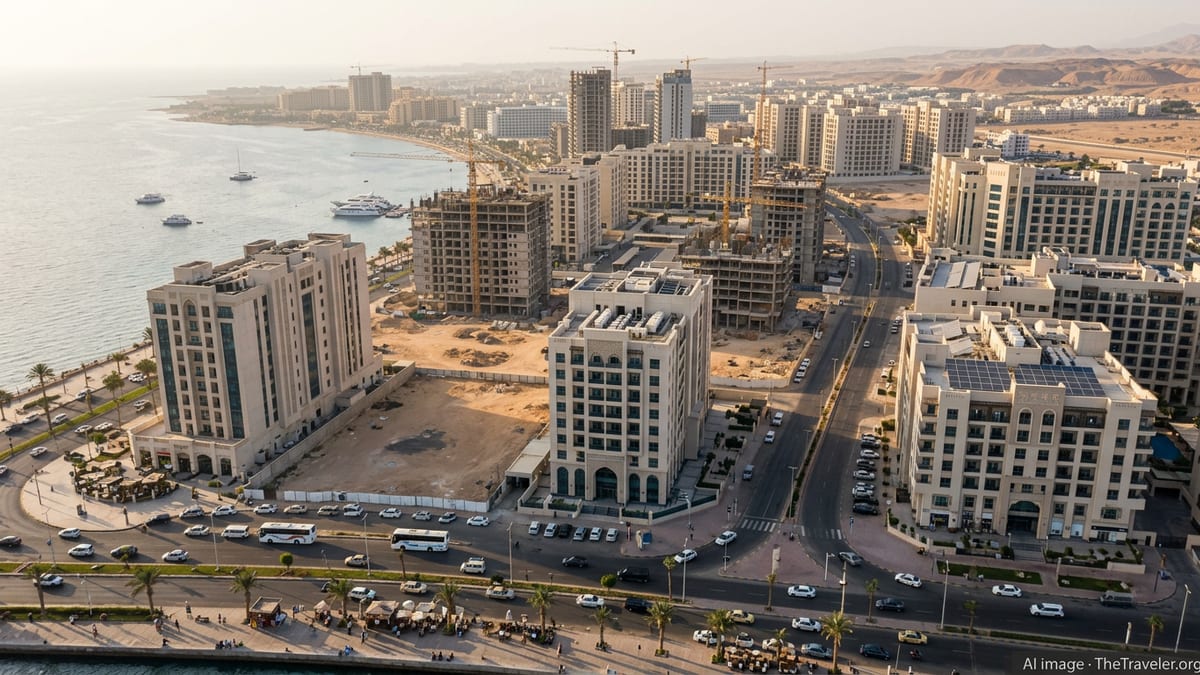
Construction Costs Squeeze Developers and Delay Projects
Across the Middle East, construction markets are contending with higher financing costs, pricier imported materials and disrupted supply chains, pushing up the cost of delivering new hotels, resorts and residential projects. Regional industry assessments for 2024 and early 2025 point to slower project awards and tighter margins, particularly in markets exposed to imported steel, cement and finishing materials. Rising fuel and logistics costs have added another layer of pressure, making large coastal and desert developments more expensive to build and operate than originally forecast.
In Egypt, these dynamics are especially visible. Recent sector reviews show that while the country’s residential and hospitality pipelines remain sizable, higher input prices and wage inflation have forced developers to rephase or resize projects, and in some cases to shift toward higher-yield, luxury-oriented offerings to protect returns. Analysts note that the overall Middle East and Africa construction market contracted in value in 2024, even as signature tourism and mixed-use schemes advanced, underscoring how only the strongest, best-capitalised sponsors are currently pushing ahead.
Across the Gulf, cost escalation is intersecting with ambitious tourism strategies. Saudi Arabia and the United Arab Emirates continue to anchor multi-billion-dollar investment programs under their diversification agendas, but regional reports indicate that procurement teams are renegotiating contracts, localising supply chains where possible and placing greater emphasis on energy-efficient design to keep lifecycle costs under control. Rising construction costs are therefore not just a short-term financial challenge; they are feeding into a broader rethink of how and where new tourism infrastructure is built.
Energy Price Volatility Rewrites Operating Models
Energy prices have become a defining variable for both real estate and tourism operators in the region. In Egypt, a series of fuel and electricity price adjustments since 2024, introduced as part of broader fiscal reforms, have raised operating costs for hotels, shopping centres and residential communities. Publicly available economic briefs highlight that these increases are part of efforts to reduce subsidy burdens and attract foreign investment into the energy sector, but they also compel property owners to invest in energy-saving technologies, from solar rooftops to more efficient cooling systems.
Iran faces a different but related set of pressures. Research on the country’s energy sector describes chronic underinvestment, sanctions-related constraints and continued reliance on heavily subsidised domestic fuel. The wide gap between local and regional fuel prices has encouraged significant smuggling, eroding state revenues and leaving fewer resources for modernising infrastructure. At the same time, high inflation and rising utility bills are squeezing households and small tourism businesses, dampening domestic travel and limiting the ability of many Iranians to spend on leisure or property upgrades.
More broadly, global energy price swings tied to tensions in the Gulf and Red Sea are feeding into construction and operational costs throughout the Middle East. Shipping disruptions have increased the cost of moving fuel and building materials, while higher power tariffs in some markets are accelerating the push toward renewables. For tourism destinations, this is prompting new investment in solar farms and wind projects intended to stabilise long-term energy bills, an emerging competitive advantage for resorts that can market themselves as both lower-carbon and less exposed to price shocks.
Geopolitical Tensions Hit Tourist Flows and Investor Confidence
Security and political risks centered on Gaza, the Red Sea and the Gulf are reverberating across tourism corridors from North Africa to the Levant. Coverage of the Red Sea crisis and Houthi attacks on commercial shipping points to a sharp reduction in Suez Canal traffic, eroding one of Egypt’s key sources of hard currency and weighing on broader economic sentiment. At the same time, conflict in neighbouring territories has led to travel advisories, route adjustments and episodic dips in visitor arrivals to parts of Egypt, even as popular resort hubs remain busy.
Reports on the economic impact of the Gaza war suggest that Egypt’s tourism revenues have faced notable downside risks since late 2023, with international visitors more cautious about trips near perceived flashpoints. Yet government data and industry analyses also indicate that domestic tourism and selective source markets have helped offset some of the decline, particularly along the Red Sea coast. New mega-project announcements backed by Gulf investors on both the Mediterranean and Red Sea frontiers signal that long-term confidence in Egypt’s tourism potential has not evaporated, even if near-term performance is more volatile.
For Iran, persistent sanctions and periodic escalations with Western powers continue to limit inbound tourism from many high-spending markets and to complicate cross-border real estate investment. Official figures and local media coverage highlight that authorities are leaning more heavily on free zones and domestic investors to develop hotels, malls and logistics hubs aimed at regional travellers and trade. The result is a tourism and property landscape that is more inward-looking and reliant on nearby markets, with fewer international brands but growing local and regional operators.
Egypt: Ambitious Tourism Expansion Under Cost and Risk Pressure
Egypt stands at the centre of these overlapping trends. On one hand, 2024 and 2025 have brought record or near-record contributions from travel and tourism to national output, according to international industry research. The opening of flagship attractions such as the Grand Egyptian Museum near Cairo and the acceleration of coastal mega-developments along the Mediterranean and the Red Sea underscore an aggressive bid to position the country as a year-round global destination. Government strategies mention targets running into tens of millions of annual visitors and hundreds of thousands of new hotel rooms over the next decade.
On the other hand, rising construction and energy costs, currency pressures and a more fragile external environment are reshaping how that expansion unfolds. Egyptian and international analysts point out that land sales to Gulf investors, large-scale mixed-use projects on the North Coast and in Ras El Hikma, and a cluster of Red Sea developments together form a new model in which long-term foreign direct investment underpins tourism growth. This model helps bring in hard currency and spreads risk, but it can also tilt new supply toward higher-end segments and second homes, raising questions about affordability and access for local residents.
Within established resort cities such as Hurghada and Sharm El Sheikh, development pipelines now routinely incorporate solar capacity, upgraded infrastructure and higher design standards, partly in response to energy price shifts and safety concerns. Recent accidents and environmental incidents in some Red Sea destinations have drawn attention to regulatory oversight and sustainability, adding another dimension to how projects are planned and marketed. For investors and travelers alike, Egypt has become a study in how a tourism powerhouse navigates overlapping economic and geopolitical shocks while still betting on long-term growth.
Iran and the Wider Region Pivot Toward Resilience
While Egypt captures many headlines, the broader Middle East is engaged in its own recalibration. In Iran, local business media report significant increases in domestic investment in free trade and industrial zones along the Caspian Sea and other strategic corridors. These zones are promoted as platforms for logistics, manufacturing and tourism that can operate with greater flexibility under sanctions, including real estate projects targeted at regional visitors and diaspora communities rather than Western mass tourism.
Elsewhere in the region, Gulf states that rely on both tourism and real estate as diversification pillars are intensifying efforts to manage risk. Economic commentary across the Gulf notes that higher oil revenues in 2024 and 2025 have given governments fiscal space to keep financing major tourism districts, cultural quarters and residential communities, even as construction and borrowing costs rise. At the same time, there is growing emphasis on phasing projects, tightening regulations around off-plan sales and introducing more resilient building standards adapted to extreme heat and water stress.
For travelers, these shifts may translate into higher room rates, more dynamic pricing and a sharper distinction between mass-market and premium experiences. For investors, the new landscape favours operators with strong balance sheets, diversified energy strategies and the ability to manage geopolitical risk. Across Egypt, Iran and the wider Middle East, the interplay of construction costs, energy prices and security concerns is not halting development, but it is redrawing the map of where and how the region’s next generation of tourism and real estate projects will emerge.