

More news on this day
As air cargo networks adjust to changing fleets and higher demand on key trunk routes, the Boeing 747-8F remains the benchmark for raw lifting power, carrying significantly more freight than Boeing’s popular twin‑engine 777F.
Get the latest news straight to your inbox!
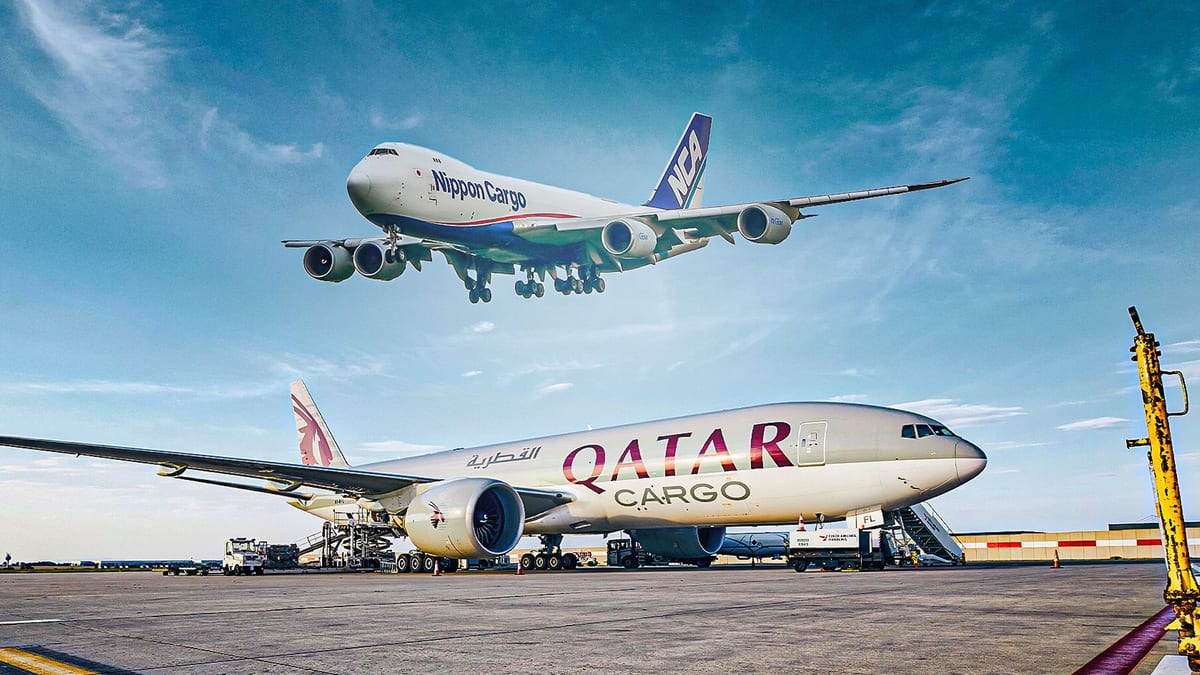
Image by Simple Flying
Headline Payload: A 35‑Tonne Advantage
Publicly available manufacturer data and independent fleet analyses show that the Boeing 747-8F offers a maximum revenue payload of about 137 to 138 tonnes, compared with roughly 102 to 103 tonnes for the 777F. That puts the four‑engine jumbo freighter ahead by around 35 tonnes, or roughly a third more payload, when both aircraft are operated within their certified weight limits under standard conditions.
In practical terms, that gap equates to the weight of hundreds of additional standard pallets of e-commerce goods, several high-value industrial components, or a mix of dense pharmaceuticals and electronics. Cargo operators often describe the 747-8F as a “payload first” aircraft, and the figures illustrate why it continues to serve the busiest, highest-yield sectors even as newer twin‑engine types enter the market.
Industry reference tables comparing current widebody freighters consistently place the 747-8F at the top of the spectrum for payload among in‑production, Western-built aircraft. While specialized outsize transports can exceed it in niche roles, within scheduled commercial cargo service the 747‑8F’s maximum payload remains a key differentiator over the 777F.
Volume and Pallet Positions: Filling the Jumbo Shell
The payload advantage is reinforced by the 747‑8F’s larger internal volume. Data compiled from Boeing reference guides and specialist cargo publications indicate that the 747‑8F offers in the region of 30,000 cubic feet of usable cargo volume, compared with about 23,000 cubic feet for the 777F. That represents an increase of roughly 7,000 cubic feet, or around 30 percent more space for freight.
The difference is reflected in pallet and container positions. Thanks to its stretched fuselage and two‑deck layout, the 747‑8F can accommodate more standard 96 x 125 inch pallets on the main deck than the 777F, along with additional containers and bulk cargo in the lower holds. For operators moving relatively light but bulky shipments, such as fashion goods or certain high-tech products, the extra cubic capacity can be just as valuable as the higher structural payload.
Analysts note that the 777F’s single‑deck design and narrower fuselage limit its volumetric capacity compared with the 747‑8F, even though it remains competitive on many routes where weight rather than volume is the key constraint. The 747‑8F’s combination of volume and weight capability means that it is less likely to “cube out” before hitting structural limits, an important consideration on dense intercontinental sectors.
Range, Efficiency and Network Roles
Where the 777F narrows the gap is in efficiency. Publicly available performance data show the 777F offering a maximum payload just above 100 tonnes paired with longer range and significantly lower fuel burn per tonne‑kilometre than the 747‑8F. This balance has made the twin‑engine freighter a favorite on long, thinner routes where absolute payload is less critical than unit costs.
By contrast, the 747‑8F is optimized for dense trunk routes linking major cargo hubs across Asia, Europe and North America. Reports from industry publications describe operators using the type where strong demand and slot constraints reward every additional tonne lifted. On these sectors, the aircraft’s higher operating costs can be offset by the extra capacity and flexibility it provides.
As the last new 747 rolled off the production line in 2023, the 747‑8F’s role in the global fleet is evolving. The 777F and forthcoming 777‑8F are expected to assume a growing share of long‑haul missions, but for cargo operators needing maximum lift today, the 747‑8F’s payload and volume advantages remain compelling, particularly where infrastructure and demand justify operating a very large freighter.
Special Capabilities: Nose Door and Oversize Freight
Beyond headline figures, the 747‑8F offers loading capabilities that the 777F cannot match. Chief among these is the iconic nose door, which allows straight‑in loading of long and oversize items such as wind turbine blades, industrial machinery or large aerospace components. Industry case studies highlight this feature as a decisive factor for charter and project cargo work.
The 777F relies on side cargo doors and a single, lower main deck, which is well suited to standard pallets and containers but less flexible for exceptionally long or awkwardly shaped loads. For integrators and scheduled carriers focused on unitised freight, this is rarely a limitation, but for heavy-lift specialists, the 747‑8F’s design offers unique commercial opportunities.
Cargo planners indicate that, when both payload and special handling requirements are considered, the 747‑8F can open up missions that would otherwise require multiple smaller aircraft or complex sea‑air combinations. This capability, combined with its raw payload margin over the 777F, helps explain the continued demand for the type on high‑profile charter and humanitarian operations.
Fleet Outlook as Cargo Demand Grows
Forecasts from major manufacturers project continued growth in air cargo demand over the next two decades, with a sizable share expected to be carried in dedicated freighters. In this environment, the payload gap between the 747‑8F and 777F is likely to shape how fleets are deployed, even as new models arrive.
The 777F is set to remain a workhorse, with strong appeal for airlines seeking fuel‑efficient, twin‑engine freighters compatible with existing 777 passenger fleets. Its roughly 100‑tonne payload aligns well with the needs of many express and general cargo operators, while its lower trip costs support frequent, high‑schedule services.
At the same time, the 747‑8F’s higher payload and volume ensure it will continue to occupy a premium niche. With no direct like‑for‑like replacement currently in regular service, industry observers expect existing 747‑8F airframes to be worked hard on the densest lanes, capturing demand spikes and handling cargo that simply will not fit on smaller widebodies. For now, that leaves the 747‑8F carrying substantially more cargo than the 777F, and firmly at the top of the commercial freighter capacity league table.