

More news on this day
With Southwest Airlines abandoning its famous open seating in favor of assigned seats, every major U.S. carrier now follows the same basic boarding playbook, raising fresh questions about what this shift means for prices, perks, and the passenger experience.
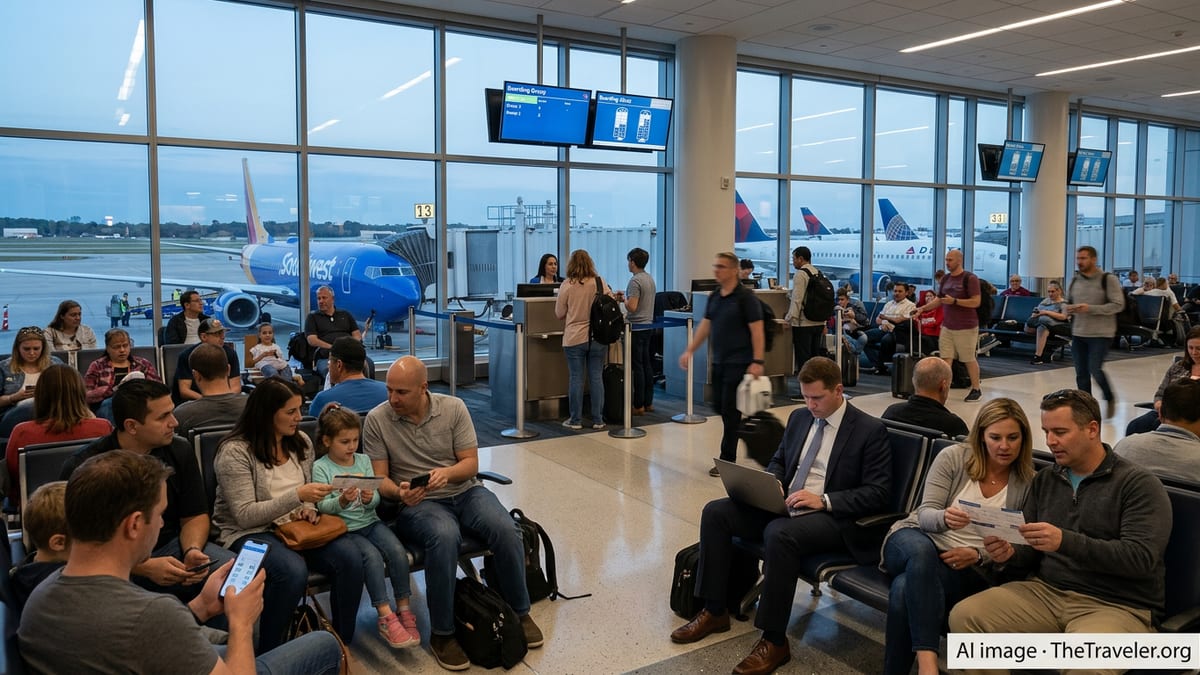
Southwest Ends Open Seating, Aligning With Major Rivals
Southwest’s move to assigned seating, effective for travel from January 27, 2026, closes a decades-long chapter that set the carrier apart from the rest of the U.S. industry. For 54 years, travelers lined up by boarding group and picked any open seat once on board. Now, seats are preassigned, with customers choosing from standard, preferred, or extra-legroom options depending on the fare purchased.
The airline has framed the change as a response to customer preferences and a way to give travelers more control, particularly families and infrequent flyers who disliked the scramble to secure seats together. At the same time, the new structure unlocks a range of upsell opportunities as travelers pay to move closer to the front of the cabin or stretch out with more legroom.
Southwest is pairing the policy shift with a cabin refresh that includes larger overhead bins and new fare bundles. Basic fares now resemble no-frills tickets on other carriers, while higher-tier products offer earlier boarding and expanded seating choice. Loyal customers with elite status or cobranded credit cards gain earlier access to preferred seats, echoing the long-standing practices at the big network airlines.
The rollout has not been smooth. Early feedback has been marked by anger over perceived “extortion” around upgrade fees and confusion about how many seats are truly available at no extra cost. The airline says it is already “refining” the process, including better signage for reserved bins and tweaks aimed at keeping families together, signaling that the new system is still evolving.
How Assigned Seating Works Across U.S. Airlines
For flyers used to the older Southwest model, assigned seating may feel unfamiliar, but for most U.S. travelers it is already standard. American Airlines, Delta Air Lines, United Airlines, JetBlue Airways, Alaska Airlines, and Spirit Airlines all assign seats at booking or check-in, with varying degrees of choice tied to fare type and frequent flyer status.
On these airlines, the lowest “basic economy” style fares usually come with limited or no free seat selection in advance. Travelers are often auto-assigned seats at check-in, with families relying on airline policies and federal guidance that children 13 and under should be seated next to an accompanying adult when possible. Moving into regular economy or higher cabins typically unlocks more freedom to choose specific seats.
Premium economy, extra-legroom economy, and exit-row seating have become key revenue drivers for full-service carriers. Delta’s Comfort+, United’s Economy Plus, and American’s Main Cabin Extra offer additional space, earlier access to overhead bins, and in some cases complimentary drinks, at a surcharge. JetBlue has built a reputation on relatively generous standard legroom but still charges for its Even More Space seats at the front and near exits.
Spirit and other ultra-low-cost carriers follow a more stripped-down version of this model: almost all advance seat selection comes with a fee, with pricing that can vary by route and demand. Travelers can still skip the charge and accept a random assignment at the airport, but the popularity of pre-booked seats shows how quickly passengers have adapted to paying if it means avoiding a cramped middle seat or securing a spot together.
New Fees, New Perks, and the Fine Print for Travelers
The spread of assigned seating is not just about order in the boarding process; it is about how airlines package and price the flying experience. As Southwest completes its shift, U.S. domestic travelers will find broadly similar frameworks from coast to coast, but the details matter for your wallet and comfort.
For one, fees for preferred and extra-legroom seats can add up quickly, particularly for families or group trips. A traveler buying a low-cost fare on any of the major carriers may see a seat map filled with desirable aisle and window seats that come with an added charge, leaving only scattered middle seats at no extra cost. Southwest’s new structure introduces that same dynamic, after years in which early check-in and savvy boarding strategies could secure good seats without explicit seat fees.
At the same time, elite status and cobranded credit cards have become more valuable for frequent flyers. American, Delta, United, Alaska, JetBlue, and now Southwest all tie complimentary or discounted seat selection to elite tiers and cardholder benefits, offering free preferred seating or periodic upgrades to extra-legroom sections. For road warriors, these perks can significantly soften the blow of tighter cabins and new fees.
One consequence is that the cabin feels more stratified, even within economy. Travelers on the same flight may have paid very different amounts for their seats, depending on when they booked, what status they hold, and how much they were willing to spend to move forward in the aircraft. Understanding each airline’s seat and fare rules before purchase is becoming as important as comparing base ticket prices.
What This Means for Families, Groups, and Budget Flyers
For families and groups, the end of Southwest’s open seating removes one long-standing strategy: boarding early as a pack to claim a cluster of seats. Now, like on other airlines, parents must pay close attention to seat maps and booking prompts, especially when opting for the cheapest fares.
Most major airlines, including Southwest under its new system, say they will work to seat children 12 or 13 and under with at least one adult in their party without a surcharge. In practice, that can depend on when a booking is made and how full the flight is. If you skip paid seat selection, you might still be reassigned at the gate, but families often find themselves negotiating with fellow passengers or gate agents to rearrange seats on crowded flights.
Budget-conscious travelers who once relied on Southwest’s open boarding to snag a good seat without paying a premium will now face the same tradeoffs seen elsewhere in the market: either accept whatever free assignment is offered or spend more to lock in a preferred spot. That could push some travelers to experiment with other carriers if prices and schedules line up, reducing one of Southwest’s traditional competitive advantages.
On the other hand, some travelers who avoided Southwest precisely because of its open seating may now give the carrier another look. The ability to guarantee seats together at booking, and to clearly see where you will sit before arriving at the airport, is a powerful draw for occasional travelers, especially on busy holiday and school-break routes.
How to Protect Your Seat and Your Sanity on Upcoming Trips
With all major U.S. airlines now operating under some version of assigned seating, planning ahead is the best defense against surprises. Checking seat maps before purchase, understanding what is included in each fare type, and paying attention to whether your ticket allows free changes or upgrades can make a big difference on the day of travel.
Travelers who value certainty should consider booking at least standard economy or its equivalent instead of the very cheapest basic fares, particularly when flying with companions. While this usually costs more upfront, it often includes at least some complimentary seat selection and greater flexibility if plans change. For frequent flyers loyal to a specific airline, aiming for elite status or using that airline’s branded credit card can unlock complimentary preferred seats and earlier boarding, without having to pay each time.
It is also wise to keep an eye on your reservation as departure approaches. Airlines frequently reshuffle equipment and seat maps, which can result in changes to your assignment. Logging in a few days before travel, double-checking your seats, and, if necessary, calling customer service can help resolve issues before you arrive at the airport.
For now, Southwest’s high-profile change brings its policies in line with American, Delta, United, JetBlue, Alaska, and Spirit. For travelers, the question is less which airline has assigned seating and more how each one prices, manages, and enforces it. The answer could determine not only what you pay for your next ticket, but also how comfortable and predictable your journey feels from boarding to touchdown.