

More news on this day
UK travellers heading to Europe face the biggest shake-up to border checks in decades as the EU’s new Entry Exit System, based on biometric registration and automatic tracking of stays, is rolled out across the Schengen Area.
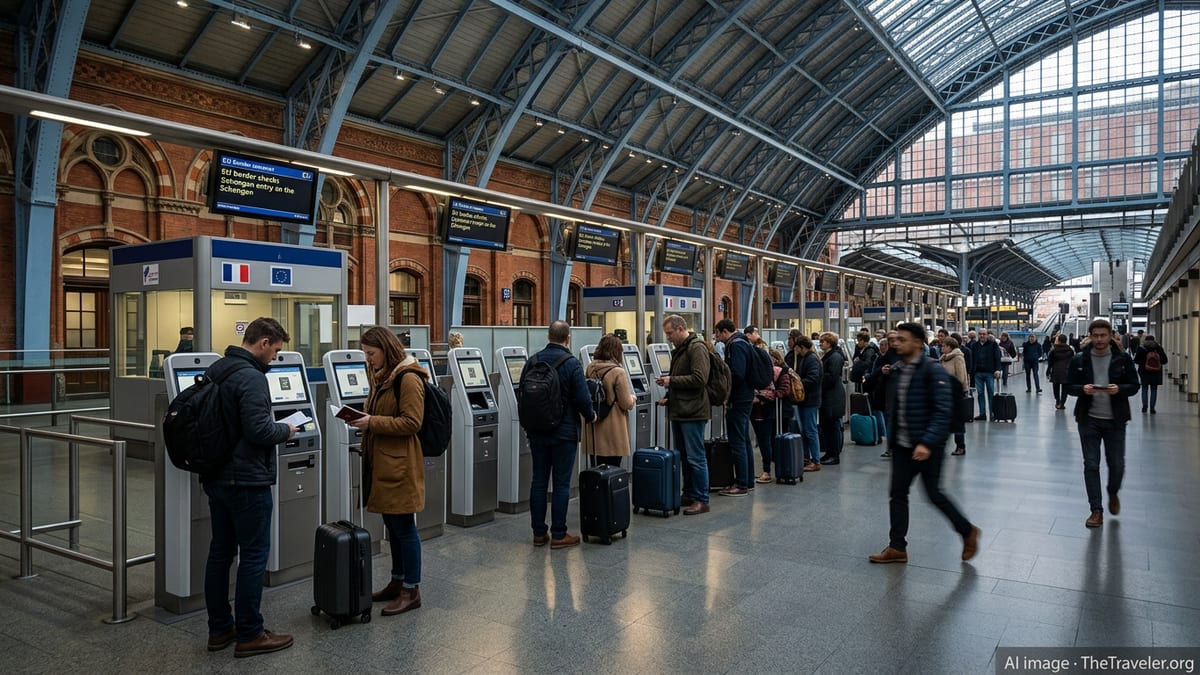
What the Entry Exit System Actually Is
The Entry Exit System, often shortened to EES, is a new EU-wide database that records the movements of non-EU visitors every time they cross an external Schengen border. Instead of relying on ink passport stamps and manual calculations, border guards will scan passports and capture biometric data such as facial images and, in many cases, fingerprints. The system then logs the date, time and place of entry or exit in a central register.
For British tourists, who since Brexit are treated as “third country” nationals, this means every trip to most of continental Europe will create a digital record rather than a series of stamps. Officials say the aim is to tighten security, spot overstayers more easily and reduce passport fraud, while ultimately making border checks more efficient once the system is fully bedded in.
The system began its progressive launch on 12 October 2025 and is due to be in operation at all external Schengen border points, from airports to seaports and land crossings, by 10 April 2026. During this transition, some checkpoints may still stamp passports alongside digital recording, but over time the electronic system will replace physical stamps entirely.
Importantly, EES is separate from ETIAS, the upcoming online travel authorisation. ETIAS will not apply until after EES is fully established and will follow on a later timetable, meaning the immediate change British travellers will notice is at the physical border itself.
How the New Rules Affect British Holidaymakers
Under existing post-Brexit rules, UK visitors can spend up to 90 days in any rolling 180-day period in the Schengen Area without a visa. That limit is not new, but until now it has largely been policed through border stamps and traveller honesty. With EES in place, those allowances will be calculated automatically from the central database, leaving far less room for misunderstanding or discretion.
Each time a British passport is scanned on arrival, the system will start or continue a stay counter. When the traveller leaves the Schengen Area, the exit is recorded in the same way. If the data show that someone has exceeded the 90-day allowance, they risk being refused entry on a subsequent trip, fined, or, in serious cases, banned from returning for a period. Airlines and ferry operators will also have access to checks and may deny boarding if records suggest a traveller has run out of days.
For holidaymakers who take one summer trip and an occasional city break, this change may be largely invisible beyond the new biometric step at the border. But for those who spend extended periods at second homes, take frequent work trips or combine several long stays in different Schengen states, the margin for error will narrow sharply. The system will treat the Schengen Area as a single zone, so days in Spain, France and Italy are all added together.
Residents of EU or Schengen countries and people holding long-stay visas or residence permits are treated differently, but British nationals relying on short-stay, visa-free travel will be tracked in the same way whether they enter through Paris, Lisbon or Athens. Ireland remains outside Schengen and keeps its own rules under the Common Travel Area with the UK.
What to Expect at Airports, Ports and the Channel Crossings
The most visible change for UK travellers will be at busy external border points such as major European airports and the Channel ports. On first arrival after EES has gone fully live at a given checkpoint, British visitors should expect to have their passport scanned, their face photographed and, where required, fingerprints taken by a border officer or via a self-service kiosk.
Officials and industry groups have warned that these extra steps could lengthen queues, particularly during the early months as both staff and passengers adapt. This is a particular concern for juxtaposed controls, such as at London St Pancras for Eurostar and at Dover and Folkestone, where French border checks already take place before departure on UK soil. Port operators have been investing in new booths and equipment but acknowledge that, at peak times, processing every non-EU passenger through biometric capture will take longer than a quick passport stamp.
Once a traveller has been enrolled in the system, subsequent crossings should be faster, as the biometric data will already be stored. In time, more automated gates are expected to use those records to speed up processing, similar to existing e-gates used for some nationalities. During the phased rollout, however, experiences may vary widely between countries and even between individual airports, with some still relying partly on manual procedures while systems are fine-tuned.
Travellers using land borders, for example when driving from the UK via ferry or tunnel into France and onwards, should also factor in potential delays at peak getaway times. Motorists may be asked to leave vehicles for initial biometric capture, and operators have been modelling traffic flows to avoid long tailbacks, but the first holiday seasons under the new regime are likely to be a real-world stress test.
Planning Your Trip Under Stricter Day-Counting
Because the 90-in-180 rule will now be enforced automatically, careful forward planning will be vital for UK travellers who make frequent or extended visits to the Schengen Area. Instead of relying on passport stamps or rough mental arithmetic, visitors will need to keep precise track of past and future stays, treating Schengen as one huge country for the purposes of counting days.
A rolling 180-day window means that on any given date of entry, border systems will look back over the previous 179 days and add up every day spent in the Schengen zone. If the total reaches 90, another visit is not allowed without a visa. Even short weekend trips can chip away at this allowance, which could catch out people who combine business travel with multiple holidays.
Travel experts suggest building in a buffer rather than planning right up to the limit, to avoid complications if return dates change unexpectedly due to strikes, cancellations or illness. Those who genuinely need more time in Europe, such as homeowners who winter abroad or digital nomads, may have to explore long-stay national visas issued by individual countries, which sit outside the standard short-stay rules and are not governed by EES in the same way.
Although the system is designed to be accurate, mistakes in data entry or mismatches between old and new passports are possible. Travellers are therefore advised to keep their own records of entry and exit dates and to retain proof such as boarding passes or booking confirmations, in case they ever need to challenge a decision or clarify their history with border authorities.
Looking Ahead to ETIAS and Further Changes
EES is only the first part of a broader overhaul of how the EU manages its external borders. The next major step will be ETIAS, a pre-travel online authorisation for visa-exempt visitors. While the scheme has been repeatedly delayed, the latest guidance indicates that ETIAS will start operations in the last quarter of 2026, with enforcement for British travellers not expected before at least April 2027.
Once ETIAS is in force, most UK nationals visiting the Schengen Area for short stays will need to complete an online application, pay a fee and receive approval before travelling. That authorisation will then be checked alongside EES border records when they arrive. For now, however, no ETIAS applications are being accepted, and travellers are being told that no action is required until official channels open and firm dates are announced.
In the meantime, the focus for British visitors should be on understanding how EES will change the practical experience of entering and leaving Europe from late 2025 and throughout 2026. Allowing extra time at ports and airports, monitoring day counts closely and staying informed about how individual countries are handling the rollout will help minimise disruption.
As with many large technology projects, the coming months are likely to feature a mix of teething troubles and gradual improvement. For UK travellers, the trade-off will be a more scrutinised but ultimately more predictable border regime, in which every day spent in the Schengen Area is recorded and counted, long after the familiar passport stamp has disappeared.