

More news on this day
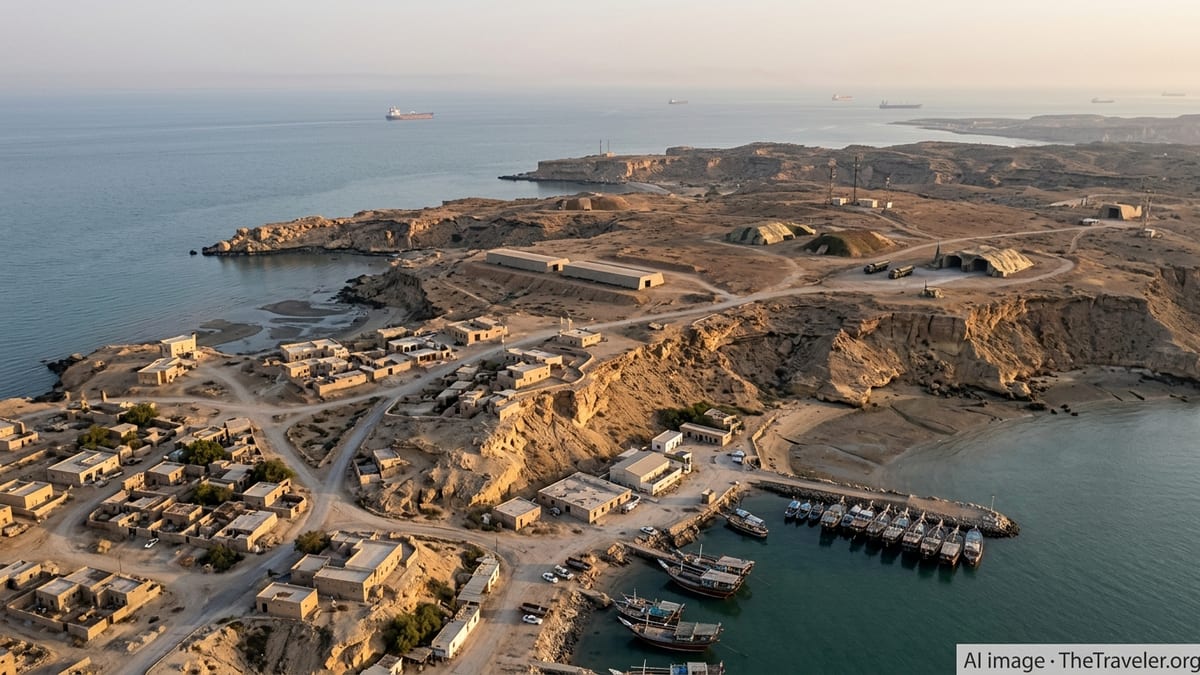
Qeshm Island, long promoted as a free‑trade playground of mangroves, duty‑free malls and geotourism in the Strait of Hormuz, is increasingly portrayed in open‑source reporting and recent wartime footage as part of Iran’s expanding network of missile and military infrastructure at the very heart of the Persian Gulf.
Get the latest news straight to your inbox!
From Free Trade Vision to Geopolitical Flashpoint
Qeshm was designated a free trade zone in the early 1990s, alongside Kish Island and Chabahar, as Iran sought to diversify its economy, attract foreign capital and build a southern tourism and logistics hub. Policy documents and academic studies highlight ambitions for large‑scale hotels, shopping complexes and a signature Persian Gulf bridge to connect Qeshm directly to the mainland and major ports, tying the island into global trade routes.
Over the past decade, tourism authorities have continued to market Qeshm’s mangrove forests, unique geology and traditional villages. Conference programs, investment roadshows and cooperation agreements with partners such as Russia’s Dubna Special Economic Zone underscore the official narrative of Qeshm as a growth engine focused on visitors, services and light industry rather than heavy militarization.
At the same time, Qeshm’s location has always placed it at the center of regional security calculations. The island sits close to the narrow entrance of the Strait of Hormuz, a chokepoint for a large share of the world’s oil shipments. Publicly available commentary from regional analysts increasingly refers to Qeshm not just as a commercial free zone but as a critical node in Iran’s wider strategy to project power across the Persian Gulf.
Missile Cities and the Militarization of the Gulf Coastline
Over the last several years, Iranian state media and international coverage have documented an expanding network of underground “missile cities” along Iran’s southern coastline. Broadcast segments have showcased tunnels packed with ballistic and cruise missiles, mobile launchers and supporting infrastructure buried in mountains and coastal areas facing the Gulf.
Analysts note that while many of these sites are undisclosed, the geography of Iran’s known missile deployments suggests a continuum of launch and storage facilities stretching from the mainland coast to islands such as Qeshm and Kharg. Reports identify advanced systems like the Kheibar Shekan and other solid‑fuel missiles among the weapons positioned in these underground bases, highlighting a shift toward faster‑launch, longer‑range platforms designed to threaten naval assets and distant targets.
In parallel, Persian‑language outlets and military observers describe Qeshm and neighboring islands as part of a layered deterrence posture aimed at both sea lanes and nearby Gulf states. Radar stations, air defense systems and possible missile support infrastructure on or near Qeshm are depicted as forming a protective belt that complicates any potential intervention and gives Iran options to respond rapidly to perceived threats.
Tourism Infrastructure Beside Strategic Assets
The juxtaposition of resort ambitions and hard power has become increasingly stark. Qeshm’s free zone authority continues to plan cruise tourism, eco‑lodges and new passenger routes to Oman and the United Arab Emirates, presenting the island as a safe and attractive leisure destination even as regional tensions rise. Promotional materials emphasize pristine beaches, local handicrafts and bird‑rich mangroves, seeking to draw both domestic and foreign visitors.
Yet open‑source satellite imagery and recent wartime reporting paint a more complex picture of land use on and around the island. Civilian infrastructure such as desalination plants, ports and communications sites share limited coastal space with assets that analysts characterize as dual‑use or explicitly military, from radar installations to suspected missile‑related facilities.
This proximity has operational and humanitarian implications. When conflict spills into the Strait of Hormuz, installations on Qeshm that support civilian life, including water and power, risk being located near or within broader target sets aimed at degrading Iran’s strike capabilities. Commentary in regional media and on public forums following recent attacks in and around Qeshm points to growing concern that the island’s residents and visiting tourists are increasingly exposed to the fallout of strategic calculations made far from its shores.
War in the Strait of Hormuz and Qeshm’s New Exposure
The 2026 Iran war has brought Qeshm’s evolving role into sharp relief. Iranian statements accused foreign forces of striking a desalination plant on the island in early March, an incident that, according to publicly available reporting, cut water supplies to multiple villages and became a powerful symbol in domestic narratives about vulnerability and escalation.
In the days that followed, combat footage shared on social platforms, later referenced by regional outlets, appeared to show strikes on communications sites and other infrastructure on or near Qeshm. Although the precise nature of each target is contested, analysts argue that the island’s association with command, control and potential missile‑support functions made it a focal point in the opening phase of the confrontation.
These developments suggest that Qeshm has moved from being a peripheral concern for Gulf security to a front‑line arena where commercial shipping, coastal communities and long‑range missile trajectories intersect. Insurance analysts, shipping industry commentators and regional think tanks have begun to frame Qeshm’s vicinity as a higher‑risk corridor, with implications for maritime routes, port calls and the viability of future tourism investments.
Implications for Travelers and the Future of Qeshm
For travelers, Qeshm’s dual identity creates a challenging calculus. On one hand, the island still offers dramatic landscapes, traditional culture and a relatively low‑cost alternative to other Gulf destinations. Iranian tourism campaigns and free zone incentives indicate a continued push to restore visitor numbers as conditions allow and to position Qeshm as a sustainable “eco‑island.”
On the other hand, the island’s entanglement with Iran’s missile and defense networks, as reflected in recent strikes and the broader militarization of the Strait of Hormuz, introduces security, perception and access risks that are difficult to ignore. Travel advisories issued by various governments routinely assess southern Iran and Gulf waters through the lens of potential conflict, sanctions enforcement and sudden disruption to air and sea links.
Looking ahead, regional experts describe two competing trajectories. One is a renewed emphasis on tourism, trade and environmental protection if de‑escalation takes hold and investment returns. The other is a deeper embedding of Qeshm within Iran’s strategic missile architecture, potentially cementing the island’s status as a permanent front line. For now, both realities coexist on a narrow strip of land at the center of one of the world’s most contested waterways.