

More news on this day
Rapid increases in pilot compensation at US budget airlines are transforming the economics of low cost flying, with ripple effects for ticket prices, route choices, and tourism-dependent destinations across the country.
Get the latest news straight to your inbox!
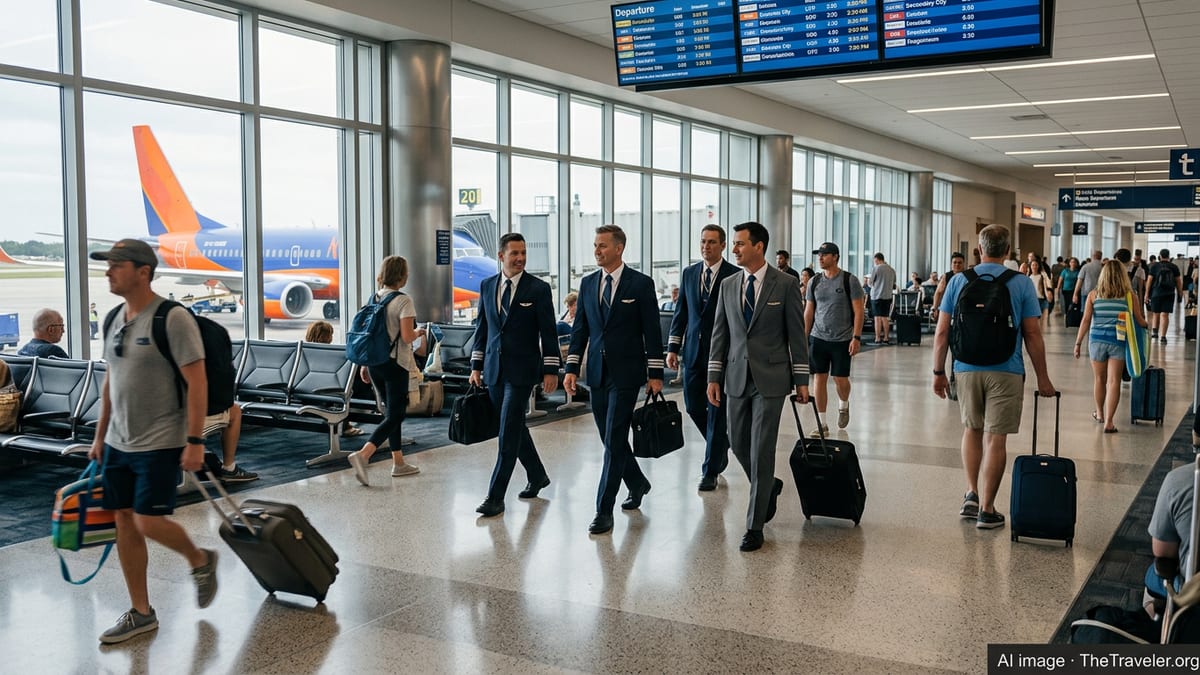
From Low Wages to Six-Figure Careers at Budget Carriers
Over the past several years, pilot pay in the United States has climbed at a pace that many industry observers describe as unprecedented, and low cost and ultra low cost carriers have been pulled into the same rising tide. Publicly available pay tables compiled by flight training providers and aviation analysts show that entry-level pilots at low cost airlines such as Frontier and Spirit commonly start in the range of roughly 85,000 to 120,000 dollars per year, with rapid progression as they move into captain roles. Some data aggregators now list typical captain pay at mature US low cost carriers well into the low- to mid-200,000 dollar range, narrowing a gap that once sharply separated budget airlines from the legacy network carriers.
This acceleration is not limited to base salary. Reports summarizing recent collective bargaining agreements indicate that some regional and budget-focused operators have implemented pay increases of 30 to 40 percent over only a few years, alongside signing bonuses, improved retirement contributions, and quality-of-life enhancements. In practical terms, first officers at smaller or low cost airlines who might once have earned wages comparable to other middle-income professions are now on trajectories that can surpass 200,000 dollars annually within a decade of flying.
The result is that the traditional narrative of budget carriers relying on substantially cheaper cockpit labor has become dated. While ultra low cost airlines still seek structural savings in areas such as aircraft utilization, ancillary fees, and simplified operations, pilot labor is rapidly converging toward broader industry norms. This convergence is a key driver in changing cost structures that ultimately influence what leisure travelers pay and which routes are sustainable.
Aviation Labor Shortages and Competitive Bidding for Talent
The spike in pilot compensation at budget airlines is closely tied to a wider labor imbalance. Aviation workforce studies and training organizations describe an ongoing shortfall of qualified pilots relative to projected global demand through the 2020s and 2030s, driven by retirements, regulatory training requirements, and post-pandemic capacity growth. In the United States, a combination of mandatory retirement at age 65, a wave of early retirements during the pandemic, and strong rebound in domestic demand has intensified competition among airlines for experienced flight crew.
Major network carriers responded with record-setting contracts and bonus programs, lifting median airline pilot wages well above 200,000 dollars according to government labor statistics and independent salary reports. That reset quickly cascaded down the ecosystem. Regional and low cost operators began advertising higher hourly rates, shorter upgrade times to captain, and signing incentives in an effort to attract pilots who might otherwise wait for positions at the largest airlines. Industry commentary frequently notes that for many pilots, the gap between a career at a legacy carrier and a well-paying position at a low cost airline is no longer as stark as it once was.
This competition has created a bidding environment in which budget airlines have limited room to step back without risking schedule cuts or reliability issues. Attempts to hold the line on wages or rely on lower-cost foreign hires have sparked pushback from labor groups, reinforcing the trend toward higher domestic compensation. The structural shift means that elevated pilot pay is likely to remain embedded in the cost base of US aviation, including among airlines that market themselves on rock-bottom fares.
How Higher Pilot Pay Filters into Airfares and Route Maps
For travelers and tourism operators, the most visible consequence of rising pilot pay is its contribution to overall airline operating costs. Analyst estimates and financial disclosures commonly place pilot pay and related benefits as a significant share of labor expense, and labor itself is a major component of total airline costs alongside fuel and aircraft ownership. When pilot wages rise sharply in a short period, budget carriers have fewer levers available to protect margins without passing some of the increase through to ticket prices.
Published coverage of airline pricing trends indicates that ultra low cost carriers still often advertise the lowest base fares in many US markets, but the spread between their prices and those of larger competitors has narrowed on certain routes. Ancillary fees for baggage, seat selection, and priority boarding have also become more prominent as tools to offset higher fixed costs. For leisure travelers who were accustomed to very low headline fares on routes to popular tourist destinations, modestly higher average trip costs are becoming more common, even if the underlying fare remains relatively cheap by historical standards.
The impact is particularly acute on thinner or highly seasonal routes. Industry analyses of capacity changes show that, when costs rise, airlines frequently trim or eliminate flights that generate lower yields, often to smaller cities or secondary airports. In this environment, the higher cost of cockpit crews can make marginal routes unviable for budget carriers that once specialized in connecting price-sensitive travelers to emerging leisure markets. That dynamic can leave certain communities with fewer nonstop options, pushing travelers toward longer connections or other modes of transport.
Tourism Winners and Losers in a Higher-Cost Era
The tourism sector is feeling these shifts unevenly. Large, established leisure hubs in Florida, Nevada, California, and other high-volume markets continue to benefit from intense competition, where even higher pilot pay is diluted across full aircraft and robust demand. Budget airlines, seeking economies of scale, are inclined to concentrate aircraft where they can reliably fill seats, which often favors major sunbelt destinations and gateway cities that draw both domestic and inbound international visitors.
Smaller resort areas and secondary urban markets face more uncertainty. Economic development agencies and local tourism boards in several regions have pointed to reductions in low cost capacity as a headwind, particularly for weekend or shoulder-season travel. When pilot pay and other fixed costs climb, airlines may prioritize routes with higher average fares or stronger business demand, leaving purely discretionary leisure markets more vulnerable to cuts. This can affect hotel occupancy, restaurant traffic, and local attractions that previously relied on ultra low cost connections from large metropolitan areas.
On the other hand, some destinations benefit from the improved reliability and service quality that can accompany better-compensated flight crews. Aviation safety studies and industry commentary often link stable, experienced cockpit staffing to fewer disruptions and greater operational resilience. For travelers planning tightly timed vacations or cruise departures, the perceived value of reliability can partly offset modest fare increases, especially when trips are planned well in advance.
What Travelers and Industry Stakeholders Should Watch Next
Looking ahead, the trajectory of pilot pay at US budget airlines will influence how far low cost competition can continue to expand. Training organizations report that more students are enrolling in flight schools and cadet programs, encouraged by the prospect of six-figure incomes and clearer career paths. If supply gradually catches up with demand, the sharpest wage spikes could moderate, giving airlines some breathing room on costs. However, demographic trends and continued travel growth suggest that pilot labor will remain a relatively scarce resource for years.
For travelers, close attention to route announcements and seasonal schedule changes will be essential. Budget carriers are likely to keep fine-tuning their networks, shifting capacity away from underperforming leisure routes and toward dense corridors where higher crew costs can be spread across more passengers. Flexible travelers may still find attractive deals by flying midweek, using secondary airports that retain strong low cost service, or booking far ahead of peak holiday periods.
Tourism authorities and airport operators, meanwhile, are increasingly engaged in active negotiations and incentive programs to retain or attract low cost carrier service. As pilot compensation consumes a larger share of airline budgets, subsidies, fee waivers, and cooperative marketing arrangements can tip the balance in favor of maintaining routes that might otherwise be dropped. The evolving economics of pilot pay, particularly at budget airlines, is therefore becoming a central factor not only in airline boardrooms but also in regional tourism strategies across the United States.