

More news on this day
Russian travellers are reshaping tourism dynamics in Seychelles, prompting the Indian Ocean archipelago to expand Russian language training and cultural skills for front-line staff as it competes with other warm-weather destinations for a lucrative, fast-growing market.
Get the latest news straight to your inbox!
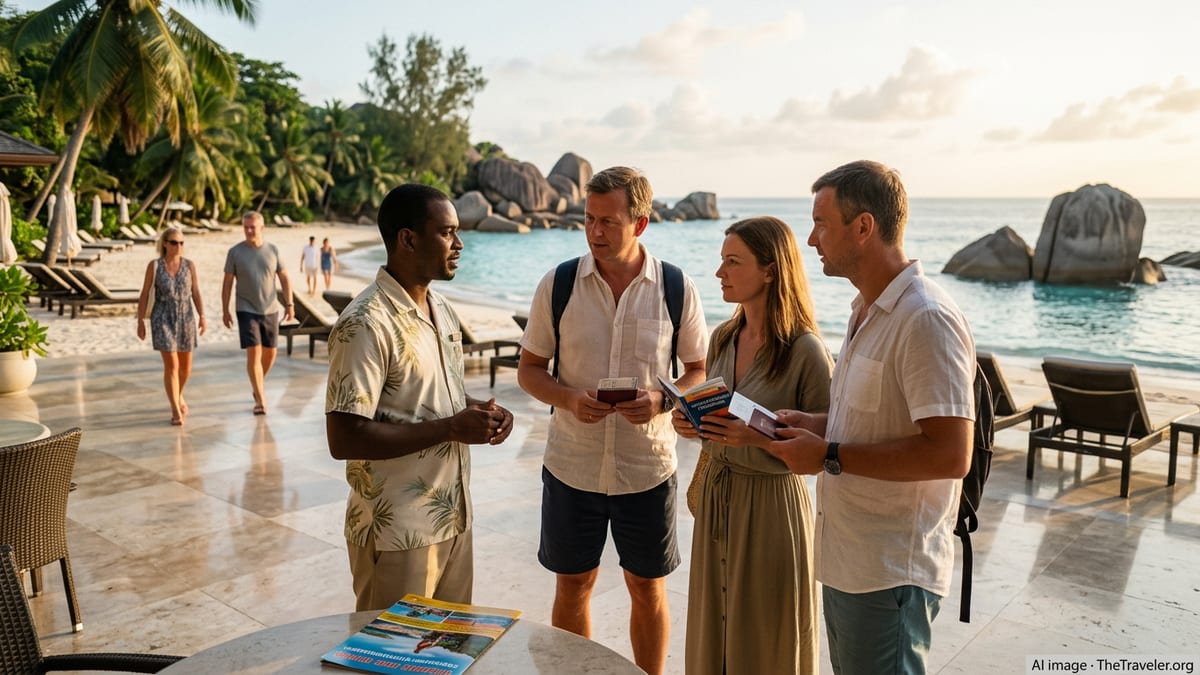
Russian Arrivals Surge As Seychelles Chases High-Spending Visitors
Publicly available tourism data shows that Russia has consolidated its position among Seychelles’ top three source markets in recent years, alongside Germany and France. In several quarterly snapshots since 2023, Russia has either led or closely trailed European peers in visitor numbers, underlining the strength of outbound travel from the country even amid wider geopolitical disruptions.
Sector statistics for 2024 and early 2025 indicate that Russian arrivals have risen at a faster pace than overall visitor growth, helping to offset softer performance from some traditional European markets. Trade-focused coverage notes that targeted airline capacity, including seasonal services by Aeroflot between Moscow and Mahé, has been a critical factor in sustaining demand, particularly during the northern winter peak.
At the same time, macroeconomic reports from Seychelles highlight that tourism earnings remain central to the country’s foreign exchange inflows. With long-haul visitors from Russia tending to stay in resorts and higher-end guesthouses, the segment is viewed as strategically important for average spend per visitor, even when total arrivals fluctuate from month to month.
Against this backdrop, tourism planners are paying closer attention to how language access and cultural comfort affect destination choice. In a marketplace where destinations such as Turkey, the Maldives and Thailand actively court Russian guests with Russian-speaking staff and tailored services, Seychelles is under pressure to match or exceed those standards.
New Russian Language Courses Target Front-Line Tourism Workers
In response, education and training institutions in Seychelles are gradually adding Russian language options to programmes aimed at tourism employees. Public information about course offerings shows that vocational schools, hospitality academies and private training providers have begun piloting beginner and intermediate Russian modules focused on real-world situations such as hotel check-ins, restaurant service, excursions and emergency assistance.
These courses typically prioritise practical vocabulary over grammar-heavy instruction. Sample curricula emphasise greetings, key phrases used in resorts and on boats, menu explanations, payment terms, and basic problem-solving exchanges. The goal is not to turn staff into fluent speakers, but to enable simple, reassuring communication that reduces friction for Russian guests who may not be comfortable using English or French.
Reports from industry-facing media indicate that hotels and destination management companies are encouraging staff to enrol, sometimes offering partial sponsorship or holding in-house evening classes. In sectors such as diving, fishing charters and island-hopping tours, operators are understood to be particularly keen to have at least one Russian-speaking guide available during peak season when group bookings from Russia are common.
Alongside language, some programmes are bundling in short cultural-competency sessions covering Russian holiday patterns, expectations around food and drink, preferred styles of customer interaction and common travel concerns. This reflects a wider shift in Seychelles’ training ecosystem from generic hospitality skills to more market-specific preparation.
From Visa-Free Travel to Direct Flights: Why Seychelles Appeals to Russians
Seychelles’ fundamentals continue to make it attractive for Russian holidaymakers. Official policy provides for visa-free entry for most nationalities, and publicly available travel guidance notes that visitors are instead required to register and obtain electronic travel authorisation before arrival. For Russian citizens, this contrasts with the more complex visa procedures associated with many European destinations, making Seychelles comparatively easier to access.
Air connectivity is another key factor. Aviation and tourism trade publications describe how seasonal direct services from Moscow, as well as one-stop links via hubs in the Gulf, have underpinned Russian demand. When Aeroflot schedules multiple weekly flights during the northern winter, tour operators tend to respond with more aggressive marketing of Seychelles as an exotic but accessible beach escape.
Travel-industry analysis also points out that Seychelles offers a mix of ultra-luxury resorts, boutique hotels and self-catering villas, which aligns well with Russian travellers’ growing interest in both high-end stays and more private, family-oriented accommodation. The archipelago’s reputation for safety, year-round warm weather and clear-water beaches reinforces its status as a premium alternative to more crowded Mediterranean or Black Sea resorts.
However, in an environment where competing destinations already feature Russian-language signage, television channels and menus as standard, Seychelles’ relative lack of Russian-language infrastructure has been highlighted as a competitive weakness. The current expansion of language training is therefore framed as a practical response to shifting regional benchmarks rather than a cosmetic gesture.
Inside the Classroom: How Training Is Being Structured
Course descriptions shared by local training providers and regional education platforms suggest a modular approach to Russian language instruction for Seychellois tourism workers. Entry-level modules often run for several weeks and are scheduled around work shifts, with classes held in the late afternoon or evening. Teaching methods typically combine short role-plays, listening exercises based on real hotel and restaurant scenarios, and vocabulary drills that can be taken home via mobile apps or printed flashcards.
Practical assessments tend to focus on core interactions, such as welcoming guests at reception, explaining excursion itineraries, handling complaints politely or clarifying payment options. Some programmes also encourage participants to learn how to read Cyrillic signage and names, which can be crucial when checking passports, tickets or booking lists.
Beyond language, training materials increasingly touch on digital habits. Russian travellers are heavy users of messaging apps and social platforms when coordinating trips, and tourism businesses in Seychelles are starting to explore whether Russian-language responses on chat channels or social media could improve service perceptions. This has led a handful of operators to pair language classes with basic tutorials on handling Russian-language inquiries online using translation tools and standard phrase banks.
There are also early signs of collaboration between training institutions and tourism businesses to tailor content to different islands or segments. For example, staff at dive centres may focus on safety briefings and equipment instructions, while employees at family resorts might concentrate on kids’ club enrolment, dietary needs and entertainment schedules, all delivered in simple Russian where possible.
What Russian Travellers Can Expect On The Ground
For Russian visitors planning trips in the coming seasons, the gradual rollout of new language skills in Seychelles will be uneven but noticeable. Travellers are most likely to encounter Russian-speaking staff at larger resorts, high-end hotels and well-established excursion operators that handle significant Russian business. Smaller guesthouses and locally run restaurants may still rely primarily on English, French and Creole, though they could adopt key Russian phrases over time.
Holidaymakers can expect incremental improvements in welcome letters, basic signage and information sheets, particularly around check-in, meal plans and popular activities. In some properties, Russian-language menus or QR-code downloads of translated material may appear as part of low-cost efforts to boost comfort without overhauling existing systems.
Industry commentary suggests that expectations should remain realistic in the short term. Seychelles is a small destination with limited human resources, and comprehensive Russian-language coverage across all islands is unlikely in the near future. However, for travellers who choose hotels or tour operators that actively market to Russian speakers, the service experience is likely to become more familiar and less reliant on ad hoc translation.
The broader trend is clear: as Russian outbound travel diversifies beyond its traditional favourites, Seychelles is striving to ensure it can serve this market in its own language while preserving the laid-back, low-density character that differentiates the archipelago. For Russian tourists, that means a growing chance of hearing their own language at reception desks and on catamarans, even as they step into a distinctly Creole environment in the middle of the Indian Ocean.