

More news on this day
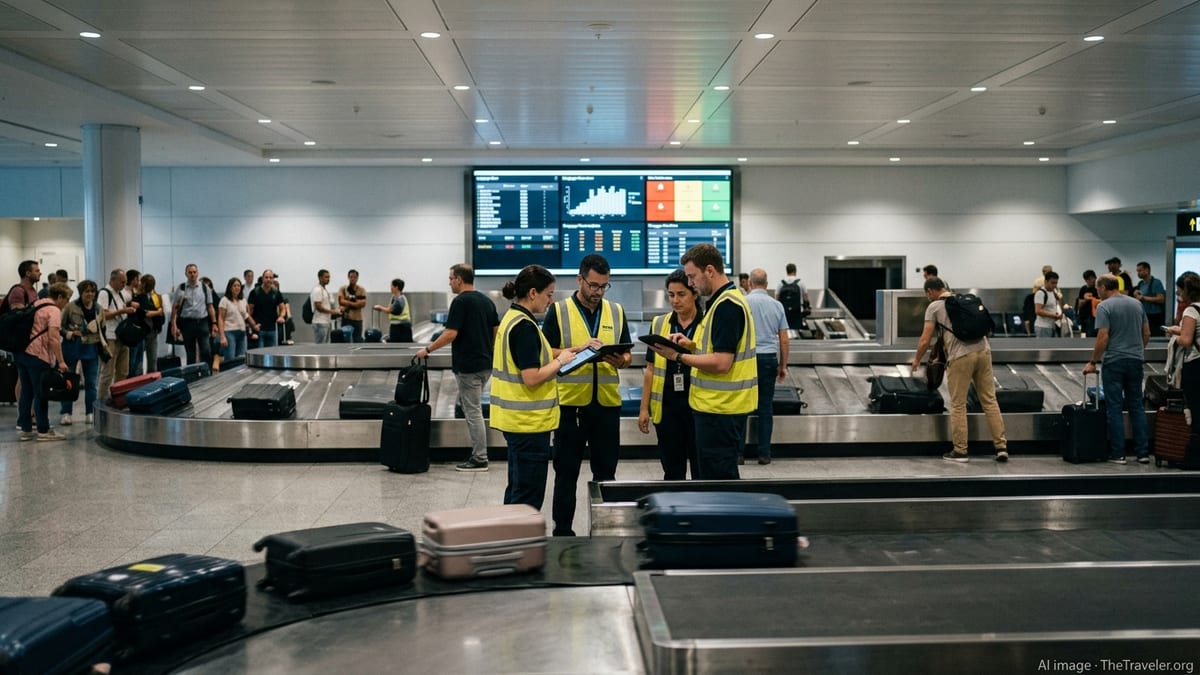
A new wave of artificial intelligence and cloud-based analytics is reshaping how airlines and airports handle checked luggage, with SITA’s emerging Bag Radar concept positioned to make baggage operations more predictive, data-driven, and passenger friendly.
Get the latest news straight to your inbox!
From Tracking to Predicting the Baggage Journey
For years, the aviation industry has focused on tracking bags more accurately, largely in response to IATA’s Resolution 753, which requires airlines to log key points in every bag’s journey. SITA’s cloud-based baggage portfolio, including Bag Journey and Bag Manager, has played a central role in building that global data backbone by capturing detailed scan events from check-in through arrival.
Now the emphasis is shifting from simply knowing where a bag is to anticipating what might go wrong before it happens. Industry presentations and technical materials from SITA indicate that this evolution is being driven by applying advanced analytics and machine learning on top of the company’s extensive baggage data lake. The emerging Bag Radar concept is described as leveraging these tools to forecast potential bottlenecks, identify high-risk connections, and highlight where interventions are needed in real time.
Publicly available information suggests that Bag Radar is not a standalone replacement for existing systems, but a predictive layer that sits across SITA’s cloud-enabled baggage services. By turning billions of historical and real-time bag messages into actionable predictions, it aims to help airlines and airports move from reactive problem solving to proactive disruption management.
In this model, baggage operations teams gain a wider, forward-looking view of bag flows across multiple airports and handling partners. Instead of waiting for bags to miss a flight or disappear from the system, they can use predictive alerts to prioritize tasks, re-route luggage, or adjust staffing to reduce the impact on passengers.
AI and Cloud Analytics at the Core of Bag Radar
SITA’s baggage platforms are already deployed across hundreds of airlines and airports and are delivered over the company’s ATI Cloud infrastructure. This foundation gives Bag Radar access to a rich stream of baggage events, from bag tag creation to loading, transfer, and final delivery. Reports and product briefs highlight that this data is increasingly being processed using machine learning models designed to detect patterns associated with mishandling and delay.
By ingesting both historical performance and live operational data, Bag Radar can estimate the probability that specific bags, flights, or connections will encounter issues. Factors such as minimum connection times, airport congestion patterns, seasonal demand surges, and known weak points in transfer corridors can be incorporated into these models. The result is a continuously updated risk profile for the entire baggage operation.
Cloud-native deployment is central to this approach. Rather than relying on isolated local servers, Bag Radar draws on a scalable environment that can support high-volume analytics across regions. This architecture is aligned with SITA’s broader move to cloud-based baggage reconciliation systems, which industry coverage indicates has already helped airports increase capacity and reduce infrastructure costs.
By operating in the cloud, predictive baggage tools can be rolled out quickly to new locations, updated without local downtime, and integrated with other applications through standardized APIs. That makes it easier for airlines, ground handlers, and airport authorities to consume predictions inside their existing operational dashboards or mobile tools.
Transforming Airport Operations and Airline Workflows
Predictive baggage intelligence has the potential to change how day-of-operations teams work. Instead of scanning long exception lists or responding to passenger complaints at the carousel, teams can receive prioritized alerts that tell them which flights, transfer belts, or inbound connections are most at risk during a given hour.
For airlines, this can mean more targeted interventions when tight connections or irregular operations threaten to leave bags behind. According to published coverage on SITA’s baggage services, existing tools like Bag Manager have already been credited with double-digit reductions in mishandled bags at some airports. Adding a predictive layer could help further by allowing teams to preempt misloads, arrange alternative routings, or pre-position staff at vulnerable points.
Airports, meanwhile, can apply Bag Radar insights to make smarter use of limited resources. If analytics indicate that a particular hub bank or transfer corridor is likely to come under pressure, managers can adjust staffing plans, allocate additional carts or containers, or coordinate with ground handlers in advance. This is especially relevant as traffic continues to recover and grow, putting renewed stress on baggage systems that were designed for lower volumes.
Ground handlers also stand to benefit from clearer visibility into upcoming risks. Instead of discovering problems when a belt backs up or a flight nears departure with incomplete loading, they can rely on predictive dashboards that highlight where to direct teams next. Over time, this could help stabilize on-time performance and reduce costly last-minute searches for missing bags.
Enhancing the Passenger Baggage Experience
For travelers, the promise of predictive baggage operations shows up most clearly in fewer lost bags, shorter waits at carousels, and better information when something does go wrong. Research cited in SITA’s baggage materials suggests that many passengers would be more comfortable checking a bag if they could receive real-time updates on its status. With a predictive engine behind the scenes, those updates can become more meaningful and timely.
If Bag Radar identifies that a bag is unlikely to make a short connection, for example, airlines could use that insight to inform customers earlier through mobile apps or self-service channels. This could give passengers more time to adjust plans, register a delayed bag, or request delivery options without waiting in line at a service desk.
Predictive analytics may also support the expansion of off-airport and doorstep baggage services. A recent agreement between SITA and urban baggage logistics provider Airportr highlights how cloud-based tracking and open APIs are enabling new models, where bags are collected at homes or hotels and routed directly into airline systems. Feeding these additional data points into Bag Radar could improve end-to-end visibility and forecast potential issues beyond the airport boundary.
As baggage handling becomes more transparent, airlines and airports may be able to offer differentiated services based not just on speed or priority tags, but on dynamically assessed risk and performance. That could mean more reliable connections for time-sensitive bags and clearer expectations for passengers about when and how their luggage will arrive.
Looking Ahead to a Predictive Baggage Ecosystem
The transition to predictive baggage operations is still unfolding, but indications from SITA’s technical briefings and conference presentations point to a broader vision. In that vision, Bag Radar is one of several AI-driven tools that collectively reshape how baggage is planned, routed, and recovered across the entire network.
Computer vision partnerships, such as SITA’s work with IDEMIA on AI-based luggage identification, further extend this ecosystem by adding richer data from cameras and image recognition systems. When combined with message-based tracking and predictive models, these signals could help reduce reliance on manual scanning and narrow the gap between what systems think has happened to a bag and what is actually occurring on the ramp or in the baggage hall.
Industry analysts note that as air travel volumes increase and labor markets remain tight, baggage operations are under pressure to deliver more with fewer resources. Tools like Bag Radar are positioned as a response to that challenge, using data science to surface the most critical risks and guide teams toward the actions that will have the greatest operational and customer impact.
For now, the details of Bag Radar’s full commercial rollout and feature set continue to evolve. What is clear from publicly available information is that predictive baggage analytics are moving from experimental pilots into mainstream planning for many airports and airlines. As those capabilities mature, travelers may notice fewer baggage headaches, even if they never see the algorithms quietly steering their luggage behind the scenes.