

More news on this day
From the Gulf to the Pacific and from the Nile to the Cape, a new group of destinations led by Qatar, Japan, Egypt, Brazil and South Africa is posting record arrivals, accelerating investments and redefining what global tourism looks like in 2026.
Get the latest news straight to your inbox!
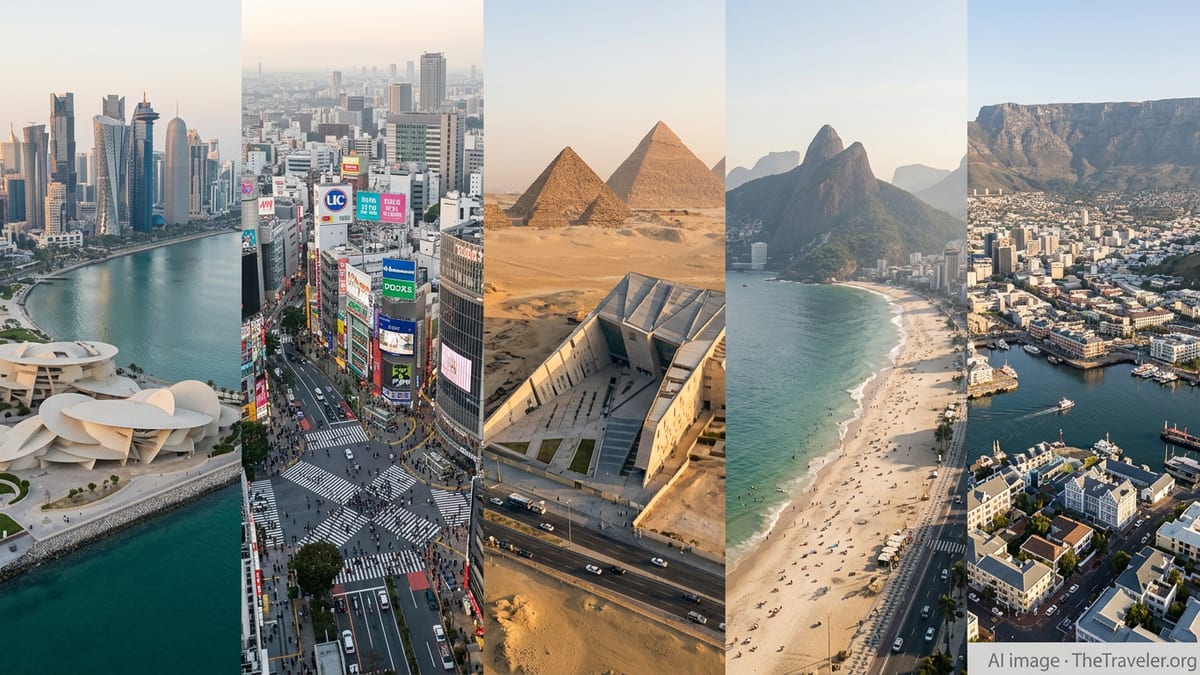
Qatar Turns Mega-Events Into a Long-Term Tourism Machine
Qatar is rapidly transforming its World Cup bounce into a lasting tourism surge, with the country reporting more than 5 million visitors in 2024, surpassing its annual target and signaling that interest has not faded after the 2022 football tournament. Publicly available data highlights how major events such as the AFC Asian Cup, the Formula 1 Qatar Grand Prix and an expanded cruise season have driven sharp peaks in arrivals while boosting the country’s profile among high-spending travelers.
Alongside event-led demand, Qatar has invested heavily in luxury hotels, beachfront districts and cultural attractions designed to keep visitors staying longer and spending more. The redevelopment of Doha’s waterfront, new museums and an emphasis on curated desert and island experiences are positioning the country as a compact stopover hub as well as a standalone short-break destination for regional and international tourists.
Reports also note a strong digital push, with Qatar Tourism rolling out an artificial intelligence powered trip concierge and multilingual tools that make itinerary planning more seamless. Combined with a growing low-cost and premium airline network through Doha, these moves have helped Qatar punch above its weight in global tourism rankings and compete directly with longer-established Gulf destinations.
Japan’s Weak Yen Supercharges an Inbound Tourism Boom
Japan has emerged as one of the world’s most powerful tourism stories, with 2024 visitor arrivals reaching an all-time high of about 37 million, according to official figures cited in domestic and international coverage. A prolonged period of yen weakness has made everything from rail passes to high-end dining comparatively affordable, drawing repeat visitors from Asia, Europe and North America and turning cities such as Tokyo, Osaka and Fukuoka into year-round hotspots.
Published travel data indicates that air capacity from key markets has rebounded and in some cases exceeded pre-pandemic levels, while relaxed entry rules for several Asian countries have further stoked demand. Travelers are increasingly combining classic circuits that link Tokyo, Kyoto and Hiroshima with lesser-known regional hubs, from Hokkaido’s national parks to the art islands of the Seto Inland Sea.
The surge has intensified conversations inside and outside Japan about crowding, sustainability and regional dispersal. Local governments are promoting off-peak travel, encouraging visits to rural prefectures and experimenting with digital tools and differential pricing to manage congestion at popular temples, shrines and entertainment districts. Together, these measures are reshaping how and where visitors experience the country, even as overall numbers continue to climb.
Egypt Bets Big on Culture, Infrastructure and Record Visitor Goals
Egypt’s tourism sector is in the midst of a high-stakes expansion drive that couples record visitor numbers with some of the most ambitious cultural investments anywhere in the world. Official figures and international reporting indicate that the country welcomed more than 15 million tourists in 2024, the highest on record, with authorities targeting roughly double that number by the early 2030s.
At the heart of this strategy is the long-awaited Grand Egyptian Museum on the Giza Plateau, widely described as one of the world’s largest and most advanced archaeological museums. The complex, located near the pyramids and Sphinx, is being promoted as a global cultural landmark intended to encourage longer stays in Cairo and increase high-value cultural tourism across the country.
Egypt is also expanding hotel capacity and modernizing airports to cope with anticipated demand, with planning documents outlining a sharp rise in tourism and antiquities investment for the 2025 to 2026 fiscal year. New and upgraded resorts along the Red Sea and Mediterranean, as well as improved connections to Luxor, Aswan and emerging desert destinations, reflect a push to diversify beyond classic Nile cruises while still capitalizing on the country’s unique archaeological draw.
Brazil Rides Urban Culture, Nature and a Regional Travel Wave
Brazil’s tourism rebound has accelerated, powered by pent-up regional demand, a weaker local currency and renewed interest in both iconic and lesser-known destinations. Recent data from Rio de Janeiro’s city authorities, highlighted in international coverage, shows that the city alone attracted about 12.5 million visitors in 2025, including more than 2 million international tourists, with overseas arrivals up sharply year on year and contributing significant revenue to the local economy.
While Rio’s beaches, Carnival and major sporting heritage remain powerful drawcards, visitor behavior is evolving. Reports describe growing interest in favela-based cultural tours run by local residents, street art circuits and community-led gastronomy experiences, signaling a shift toward more immersive and socially engaged forms of urban tourism.
Beyond Rio and São Paulo, Brazil is benefiting from renewed attention to the Amazon, the Pantanal wetlands and coastal regions such as Bahia and Ceará. Domestic and regional travelers are increasingly combining nature-focused itineraries with urban stays, while policymakers promote routes that spread spending more evenly across the country and highlight Brazil’s biodiversity and Afro-Brazilian heritage.
South Africa and a New African Tourism Wave
South Africa is consolidating its role as one of Africa’s flagship destinations, with official statistics showing that international arrivals have climbed back into the multi-million range and are edging beyond pre-pandemic peaks. A recent performance report from national tourism authorities notes that total arrivals in 2024 grew in the mid-single digits compared with the previous year, while separate analysis by data firms indicates that trips surpassed eight million in 2023 and have continued to rise.
Government releases and industry assessments highlight stronger flows from both regional African markets and long-haul sources in Europe, North America and Asia. South Africa’s appeal remains anchored in a mix of wildlife tourism in Kruger and other reserves, urban culture in cities such as Cape Town, Johannesburg and Durban, and wine and food tourism in the Western Cape, with new product development around adventure, township experiences and creative industries.
The country is also benefiting from wider momentum across the continent. Pan-African rankings compiled by international organizations suggest that Africa welcomed more than 70 million international tourists in 2024, reflecting a broad-based recovery that has lifted destinations from Morocco to Kenya and Mauritius. Visa reforms, new air links and regional marketing campaigns are encouraging multi-country itineraries in which South Africa often features as a key anchor.
At the same time, analysts caution that infrastructure constraints, safety perceptions and the need for more streamlined border processes remain live issues. Industry bodies argue that tackling these challenges could unlock even stronger growth and further entrench South Africa’s role in a rapidly evolving global tourism landscape.
A New Map of Global Tourism Demand
The rapid ascent of Qatar, Japan, Egypt, Brazil and South Africa underscores how global tourism is shifting away from a narrow set of traditional hubs toward a more diverse mix of regional powerhouses. Currency dynamics, aviation connectivity and large-scale cultural or sporting events are playing a decisive role, but so too are travelers’ changing preferences for authenticity, local connection and varied experiences within a single trip.
Analysts note that these destinations are not simply chasing volume but increasingly focused on visitor spending, length of stay and the balance between short-haul and long-haul markets. Investment in museums, transport, technology and community-based tourism is reshaping urban neighborhoods, resort corridors and rural regions, often bringing new jobs and revenue but also raising questions about sustainability and local impact.
As more countries seek to emulate their success, the competitive landscape for tourism is likely to intensify. For now, however, the stories emerging from Doha, Tokyo, Cairo, Rio and Cape Town suggest that the next era of global travel will be defined less by a single dominant region and more by a constellation of rising destinations that are changing the face of tourism worldwide.