

More news on this day
As Spirit Airlines works on a court-backed plan to exit Chapter 11 by early summer 2026, its struggle has revived a familiar storyline in global aviation: airlines that crash into bankruptcy, then rise again as leaner, more disciplined competitors. From the United States to Australia, South Africa and Italy, some of the industry’s biggest names have already traced the same arc, turning financial collapse into multi-billion-dollar comebacks.
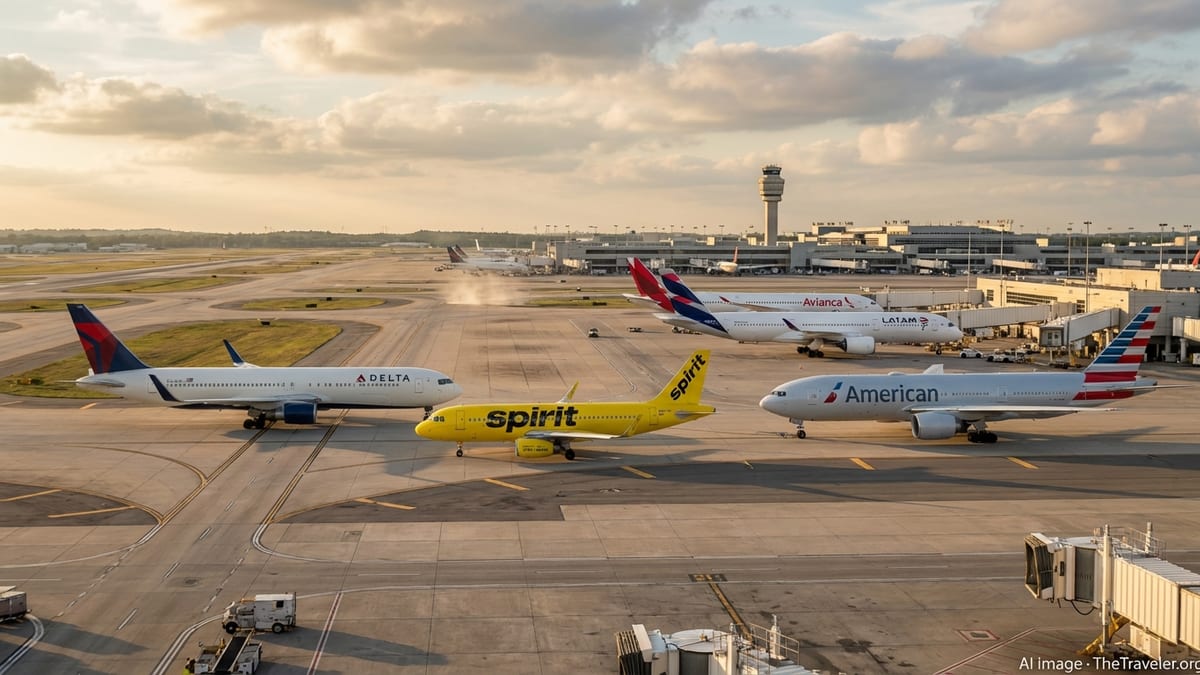
Spirit Seeks to Join a Club of Survivors
Spirit Airlines, the largest ultra-low-cost carrier in North America, is racing to convince judges, creditors and travelers that it can follow a well-worn path out of bankruptcy. After a failed merger attempt and years of post-pandemic losses, the airline sought Chapter 11 protection, and in a fresh restructuring round it has now secured a preliminary agreement with lenders to exit court protection by late spring or early summer 2026 as a smaller, leaner airline.
The latest plan would wipe out billions of dollars in debt and lease obligations while sharply reducing fleet and capacity. Spirit has already cut routes, furloughed staff and moved to shed dozens of aircraft viewed as financial dead weight. Executives say the revamped carrier will keep its low-fare DNA but add higher-yield products such as roomier seating and more flexible fare bundles in an effort to capture revenue once left to full-service rivals.
For passengers, the promise is that schedules will stabilize and the brand will re-emerge as a predictable, if still no-frills, option in the crowded U.S. domestic market. For investors and policymakers, the question is whether Spirit can replicate the kind of post-bankruptcy transformation that powered Delta Air Lines, American Airlines, LATAM, Aeroméxico and Avianca back into profitability.
Delta, American and the U.S. Blueprint for Rebirth
The modern playbook for airline revival was effectively written in the United States. Delta Air Lines and American Airlines both entered Chapter 11 in the 2000s and early 2010s, using the courts to slash debt, renegotiate labor contracts and streamline fleets. Delta exited bankruptcy in 2007 with a dramatically lower cost base, fewer aircraft and a more profitable, internationally focused network, quickly returning to sustained profitability.
American followed a similar route, filing in 2011 and emerging in 2013 through a merger with US Airways. That combination created one of the world’s largest airline groups, backed by a significantly repaired balance sheet. In each case, bankruptcy was used less as a last rite and more as a strategic tool to accelerate changes that would have been politically or contractually impossible in normal times.
The lesson for Spirit is that Chapter 11 is only the starting point. Delta’s rebound depended on disciplined capacity management and a sharpened focus on revenue quality, while American’s depended on leveraging merger synergies and network breadth. Spirit, which lacks the scale and global networks of these giants, will have to lean instead on ruthless cost control, more targeted growth and partnerships that extend its reach without heavy capital spending.
LATAM, Aeroméxico and Avianca: Latin America’s Phoenix Story
Latin America’s largest carriers have already shown how brutal downturns can be turned into fresh capital and renewed competitiveness. LATAM entered Chapter 11 in 2020 as travel collapsed during the pandemic and emerged in late 2022 with a slimmer cost structure, billions of dollars in new equity and liquidity, and a strengthened alliance with Delta that deepened connectivity between North and South America.
Aeroméxico and Avianca followed similar routes through U.S. courts, using bankruptcy to convert debt into equity, renegotiate aircraft leases and exit unprofitable routes. The result has been a trio of carriers that, while smaller on paper, are structured for more sustainable margins and have become more attractive partners for U.S. and European airlines seeking access to key Latin American markets.
Spirit’s leaders frequently point to these examples in arguing that scale alone is not destiny. The Latin American restructurings show that aggressive balance-sheet surgery, combined with renewed strategic partnerships, can attract fresh investment and restore investor confidence more quickly than many skeptics expect.
Global Case Studies: Australia, South Africa and Italy
Beyond the Americas, governments and investors in Australia, South Africa and Italy have repeatedly chosen restructuring over liquidation in order to preserve critical aviation links. In Australia, Virgin Australia collapsed into administration early in the pandemic before being acquired by new owners, recapitalized and relaunched as a more tightly focused domestic and short-haul carrier. The reborn airline has since rebuilt its network and quietly regained market share on core routes.
In South Africa, the national flag carrier has endured a succession of restructurings and near collapses. A deeply painful business-rescue process cut jobs, closed money-losing routes and grounded aircraft, but also paved the way for private investment, partnership talks and a renewed focus on profitable regional and intercontinental services. The outcome is a smaller, hybrid model that serves strategic routes while relying more heavily on partner airlines to plug network gaps.
Italy has gone through its own cycle of aviation reinvention, as the long-troubled Alitalia brand gave way to a new national carrier built on a cleaner balance sheet and a more disciplined approach to capacity. Backed by a combination of state support and private capital, the successor has been able to refresh its fleet, simplify operations and pursue deeper alliances with major European and transatlantic partners, positioning itself as a more stable gateway to the Italian market.
What Spirit Must Get Right to Earn Its Comeback
If Spirit is to join this roster of phoenix-like comebacks, several ingredients will be crucial. First is credibility with creditors and courts: the latest restructuring plan must be both aggressive enough to restore long-term viability and realistic about the limits of demand for ultra-cheap tickets in a world of rising costs and intense competition.
Second is operational reliability. Delta, American and the revived carriers in Australia, South Africa and Italy only cemented their recoveries once they could deliver consistent schedules, improved on-time performance and a more predictable product. Spirit will need to prove it can run a tighter, less disruption-prone operation even as it trims its fleet and experiments with new fare and seating options.
Finally, Spirit’s leadership will be under pressure to show that the company has learned from its pre-bankruptcy mistakes: overexpansion on marginal routes, heavy reliance on fee-driven revenue and limited insulation from shocks such as fuel spikes and competitive fare wars. If it can match a healthier balance sheet with more disciplined growth and better risk management, Spirit could indeed follow Delta, American, LATAM, Aeroméxico and Avianca in turning the trauma of bankruptcy into a billion-dollar reset rather than a final chapter.