

More news on this day
Spirit Airlines has struck a new restructuring agreement with creditors that averts liquidation and keeps the ultra-low-cost carrier operating, but at the price of a smaller fleet, reduced schedule and a sharper focus on key U.S., Latin American and Caribbean markets that will directly affect travelers’ options and fares in the months ahead.
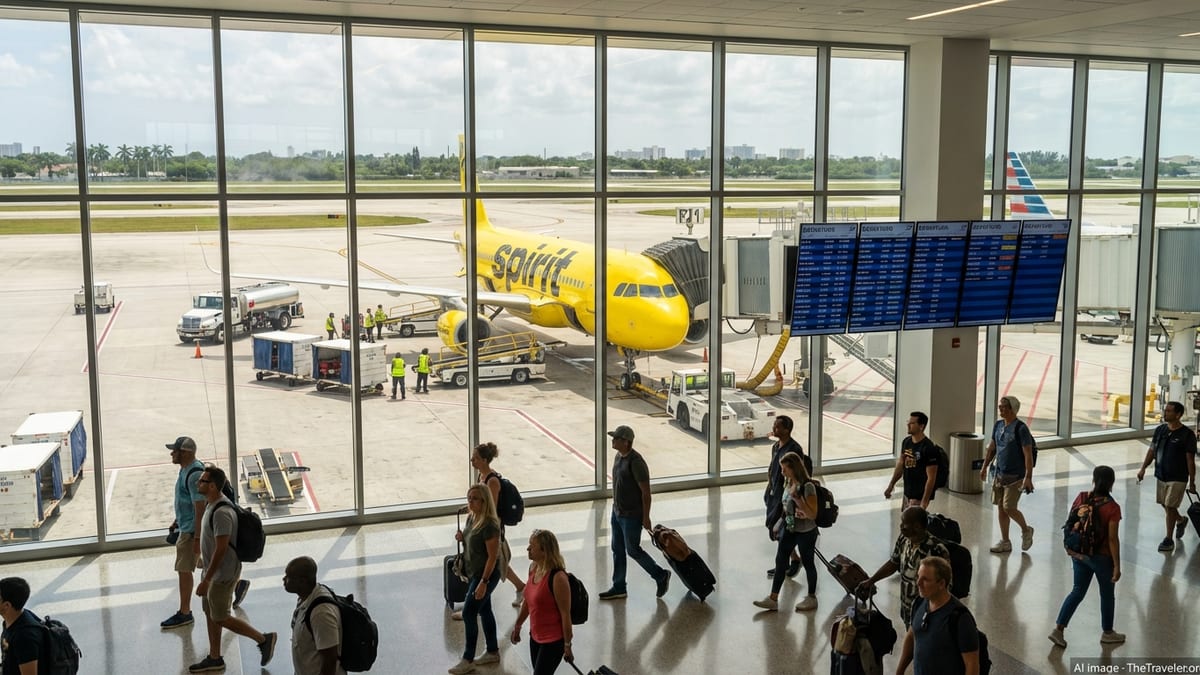
What the New Spirit Restructuring Agreement Actually Does
The latest agreement, reached in U.S. bankruptcy court, allows Spirit to shed billions of dollars in debt and aircraft lease obligations while raising fresh capital to keep flying. In practical terms, the deal turns much of the company’s debt into equity, brings in new investment from bondholders and gives management room to reset its strategy after a punishing period of losses and two Chapter 11 filings in less than two years.
Executives say Spirit will emerge by late spring or early summer 2026 as a leaner, independent low-fare airline rather than being folded into a larger competitor. Previous plans to merge with JetBlue collapsed under antitrust scrutiny, and a first attempt at restructuring in 2025 did not go far enough to stabilize the business. This new agreement is more aggressive, slashing fleet commitments and locking in a smaller but more financially sustainable operation.
For passengers, the headline is continuity: tickets, credits and loyalty points remain valid, and flights continue to operate during the court process. The trade-off is reduced capacity. Spirit expects to operate significantly fewer flights than it did before entering its second bankruptcy, especially in marginal or overlapping markets.
Fewer Planes, Fewer Flights, Tighter Focus on Core US Gateways
Central to the restructuring is a sharp downsizing of Spirit’s fleet and schedule. The airline has already moved to reject leases on dozens of stored aircraft and plans to sell additional Airbus jets, trimming excess capacity that had become a financial drag. Network planners are using the process to pull out of underperforming domestic routes and secondary airports where competition is intense and yields are thin.
By March 2026, Spirit expects to be operating nearly a third fewer flights than in the same month a year earlier, according to figures cited in court and by company officials. Several U.S. cities, including Milwaukee, Phoenix, Rochester and St. Louis, are losing Spirit service entirely, while dozens of domestic routes are being withdrawn from hubs such as Atlanta, Baltimore, Detroit, Houston, Las Vegas, Orlando and Philadelphia.
The airline is concentrating flying around its strongest bases and leisure corridors, particularly in Florida. Fort Lauderdale and Orlando, long-standing gateways for Caribbean and Latin American traffic, will remain central to the reshaped network. That concentration means many travelers will see reduced nonstop options from smaller U.S. markets but potentially more stable service and sharper fares from the main Florida hubs that anchor Spirit’s international operations.
Impacts on Latin America and Caribbean Routes
For Latin America and the Caribbean, the restructuring is more about refinement than retreat. Spirit is not exiting the region, which has been a core part of its identity as a low-cost bridge between U.S. cities and leisure and visiting-friends-and-relatives markets. Instead, it is pruning weaker links while reinforcing routes that consistently fill planes and feed its Florida gateways.
On the cut list, some point-to-point international flights have already disappeared or will end in early 2026, including certain services from U.S. inland hubs and select Caribbean holiday routes that underperformed outside peak seasons. Orlando to Punta Cana, for example, is among the routes being withdrawn as the airline shifts capacity toward stronger flows and higher returning demand.
At the same time, Spirit has been restoring and expanding other connections across the region that better fit its restructured profile. From Fort Lauderdale, the carrier is bringing back or boosting service to cities such as Lima and Medellín, as well as to Central American capitals including Guatemala City and San Salvador. It has also introduced or resumed flights from Florida to Belize City and Grand Cayman, tapping resilient demand for affordable sun and sand getaways.
In the Caribbean, Spirit continues to lean on high-volume islands such as San Juan, Punta Cana, Montego Bay, Kingston and the Dominican Republic’s secondary cities. Many of these routes are being configured with schedules that concentrate around peak leisure periods, allowing the airline to maintain a visible presence in the region while better matching capacity to demand throughout the year.
What Travelers Should Expect for Fares, Connections and Reliability
For travelers, the immediate effects will vary by origin and destination. In smaller U.S. cities that lose Spirit completely, competition on some routes will thin out, which can put upward pressure on fares as remaining carriers fill the gap. Passengers who previously relied on nonstop ultra-low-cost options may now have to connect through a larger hub on a legacy airline or travel farther to reach a Spirit-served airport.
From major Florida and East Coast gateways, however, the restructuring could stabilize or even expand low-fare choices to Latin America and the Caribbean. With a rightsized fleet and fewer marginal routes, Spirit aims to operate a more reliable schedule, which in turn should reduce the wave of last-minute cancellations and irregular operations that often ripple through ultra-tight low-cost networks.
Travelers should monitor schedules closely in the coming months, as filing deadlines in bankruptcy court can still produce last-minute network tweaks. Nonetheless, the broad direction is clear: fewer total Spirit flights overall, but a stronger emphasis on dense leisure and visiting-friends-and-relatives routes where the airline’s low base fares and paid add-ons generate steady revenue.
Fares themselves will continue to follow Spirit’s familiar pattern. Base prices may remain attractive, especially during sale periods meant to rebuild demand after the restructuring. Ancillary fees for bags, seat assignments and other extras will still be key to the airline’s model, and Spirit has signaled an interest in introducing more premium seating options within its single-cabin aircraft to squeeze additional revenue from passengers willing to pay for more comfort.
How to Navigate Spirit’s New Reality if You Already Booked or Plan to Fly
Customers who already hold Spirit tickets to or from Latin American and Caribbean destinations should first verify that their flights remain scheduled on the original dates. When routes are pulled or schedules reduced, the airline typically offers rebooking on alternative Spirit services or refunds if comparable alternatives are unavailable. Because the carrier remains under court supervision during restructuring, policies must be applied consistently, and travelers should keep documentation of any schedule changes or cancellations.
For new bookings, flexibility is valuable. Travelers can reduce risk by choosing flights operated from Spirit’s core hubs, particularly Fort Lauderdale and Orlando for Latin America and the Caribbean, and by building in more generous connection times. Avoiding tight self-made connections on separate tickets is especially advisable while the airline fine-tunes its post-restructuring schedule.
Passengers planning trips later in 2026 and beyond may find a somewhat different Spirit: smaller, more focused and still heavily oriented toward budget-conscious leisure travelers. Those willing to travel light and accept fewer frills in exchange for low base fares will continue to find value in the network that survives the restructuring. For travelers between the United States, Latin America and the Caribbean, Spirit’s new agreement ultimately aims to preserve a low-cost bridge across the region, albeit one with fewer access points and a tighter, more disciplined approach to where and how it flies.