

More news on this day
Thai Airways is preparing one of its most significant baggage policy shake-ups in years, moving from a weight-based system to a piece-based allowance that will gradually reshape how passengers around the world plan and pack for their trips from 2025 into 2026.
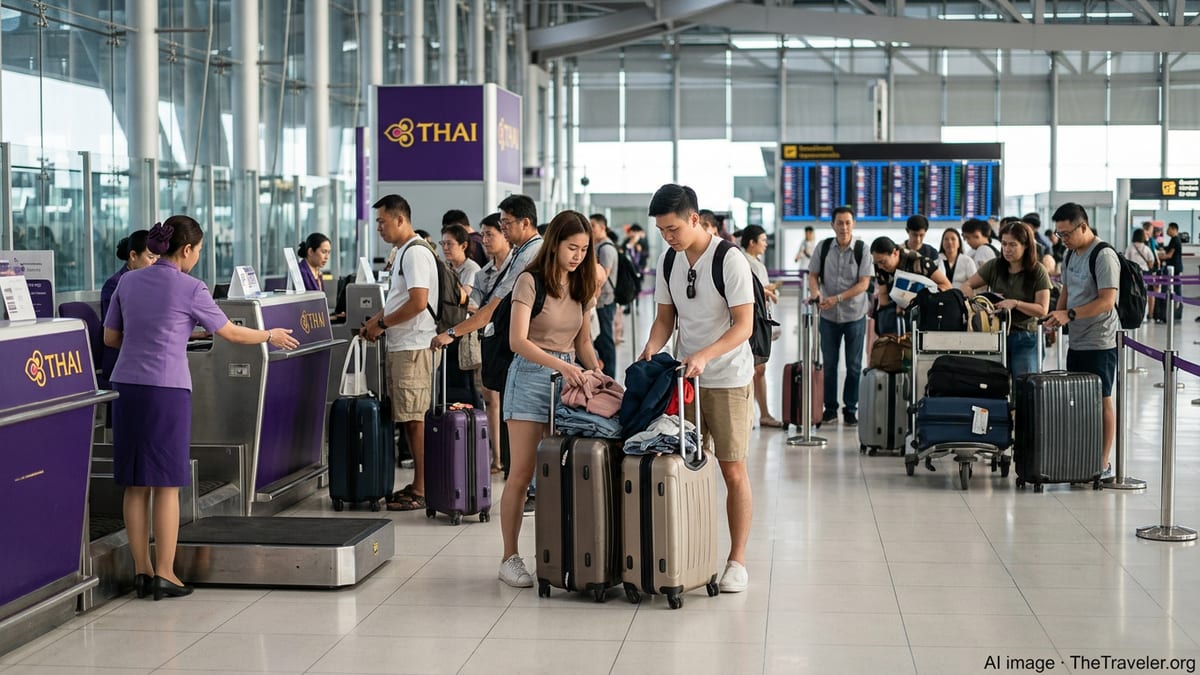
From Kilos to Pieces: What Is Changing and When
Thai Airways currently uses a weight concept on most routes, allowing passengers to check multiple bags as long as their combined weight stays within a set limit. That is due to shift to a piece concept, where the focus is on how many bags a traveler can check and how heavy each piece can be. The airline says the step is meant to align with global practice and make rules clearer for connecting itineraries across different carriers.
Under the new framework, Thai Airways will begin transitioning its checked baggage allowance from total kilos to a fixed number of pieces tied to cabin and fare class. Official documentation indicates that for tickets issued or reissued from late November 2025, and for travel starting on or after March 2, 2026, the piece-based policy will apply across domestic routes and a wide swath of its international network, including much of Asia Pacific and services linking Europe, the Middle East and Africa with Asia.
On itineraries that include the Americas, Thai Airways is already familiar with the piece concept because of industry rules on transpacific and transatlantic travel. The new policy effectively extends that logic across more of the network, creating a more standardised system and reducing the confusion that has often surrounded connecting journeys where one leg is weight-based and another is piece-based.
In practice, the transition means that for many travelers the question will no longer be simply how many kilos they can check, but how to distribute their belongings across one, two or three permitted bags while respecting a strict maximum weight per piece and standardised size limits.
Allowance by Cabin: Winners, Losers and the Fine Print
The headline change for most passengers is the definition of how many pieces each ticket type can include. In the new policy outline, Royal First Class passengers are entitled to up to three checked bags at 32 kilograms each on international routes, while Royal Silk business class and premium cabins such as Premium Economy Plus receive two pieces of up to 32 kilograms. Standard Premium Economy is set at two pieces with a lower per-bag weight cap of 23 kilograms.
Economy travelers face more variation because the allowance is now explicitly tied to fare family. Thai Airways signals that higher priced Economy Flex and Full Flex tickets will include two pieces at 23 kilograms each on international routes, whereas lower priced Standard and Saver economy fares generally include a single piece of 23 kilograms. Infants without a seat keep a smaller entitlement that mirrors the allowance of the accompanying adult, with the same piece-count limitation and size rules.
Across all cabins, the airline is codifying a maximum checked baggage size of 158 centimetres in total linear dimensions per piece, a standard already used by many global carriers. Any single bag above 32 kilograms will not be accepted and must be repacked. That threshold is particularly relevant for long-haul travelers and those relocating, who previously could sometimes maximise a higher weight allowance within a single oversized suitcase on weight-concept routes.
Separate from the structural change to pieces, Thai Airways has also confirmed a cut to economy weight allowances for some lower-tier fare classes from April 1, 2025, trimming them from 25 kilograms to 23 kilograms. While that shift precedes the piece-based system, it signals a broader recalibration of checked baggage entitlements that will feed directly into how passengers perceive value across different fare brands once the new rules are fully in force.
How the New Rules Are Influencing Travel Planning
The move from weight to piece is already prompting travelers and travel agents to re-evaluate how they book and structure trips for 2026 and beyond. On routes where the weight concept previously allowed multiple small bags within a single generous kilo limit, passengers who habitually checked two or three modest suitcases may soon need to upgrade from Saver to Flex fares or pay extra for a second piece, adding a new cost calculation into trip planning.
For long-haul passengers connecting onto or from Thai Airways flights, particularly through Bangkok between Europe and Asia or Australia and Asia, the piece concept provides clearer alignment with partner airlines that have used per-piece rules for years. That may reduce disputes at check in and make through-checking luggage on multi-airline itineraries easier, but it also means travelers will have less room to exploit differences between carriers by loading more weight into a single bag on one segment.
Frequent flyers and corporate travelers in premium cabins are likely to feel more protected by the change. The generous number of pieces and high per-bag weight limits in Royal First and Royal Silk classes will make it easier for business travelers, luxury tourists and expatriates to move bulky items such as presentation materials, formal wear or sports equipment without incurring excess baggage fees, as long as they stay within clearly published piece counts.
Budget-conscious passengers, students and long-stay tourists, by contrast, may start factoring in prepaid extra-baggage charges and the cost of additional checked pieces when comparing Thai Airways with regional rivals. Some travel advisers are already urging customers with heavy packing needs to secure tickets before the transition dates where possible or to consider mixing cabins, such as outbound travel under the current weight rules and inbound travel under the new piece system, depending on when journeys fall.
What Passengers Need to Check Before They Fly
Because the new policy is tied to both ticketing date and travel date, Thai Airways customers are being urged to read their ticket conditions carefully instead of assuming that a single rule applies across 2025 and 2026. A ticket issued before the November 2025 cut-off for travel in early 2026 may still fall under the legacy weight-based system, while a later reissue of an unused ticket could trigger the piece-based rules without the passenger realising it.
Travel experts recommend that passengers pay close attention to their fare family, cabin class and route when interpreting the new tables. A Bangkok domestic hop, a regional flight within Asia and a long-haul journey to Europe or Australia may all sit under the same piece-concept umbrella but carry different allowances, particularly in economy where Saver and Flex products diverge on the number of permitted bags. Those flying to or from North America should also note that transpacific and transatlantic baggage rules may override or modify the standard policy on certain itineraries.
Another factor in planning is the cost of excess baggage under the piece model. Instead of simply charging per extra kilogram above a threshold, airlines using a piece system often apply fixed fees for a second or third bag, as well as surcharges for oversized or overweight pieces. Thai Airways is publishing updated excess-baggage matrices alongside the new policy, and travelers looking to check sports equipment, musical instruments or larger suitcases will need to weigh up whether shipping or cabin upgrades may offer better value.
With the first elements of the baggage overhaul scheduled around April and November 2025 and a network-wide shift in March 2026, passengers who book months in advance face a moving target. In the short term, that means careful reading of fine print and, where in doubt, direct confirmation with the carrier or a trusted agent. In the longer term, once the piece concept is fully embedded, Thai Airways expects that customers will benefit from clearer, more predictable baggage entitlements that are easier to compare with other global airlines when planning complex journeys.