

More news on this day
International air travel from the United States is entering another growth phase in 2026, with global demand topping pre-pandemic records and airlines racing to add long-haul capacity even as bottlenecks in fleets, staffing and infrastructure reshape what U.S. travelers can expect from their next overseas trip.
Get the latest news straight to your inbox!
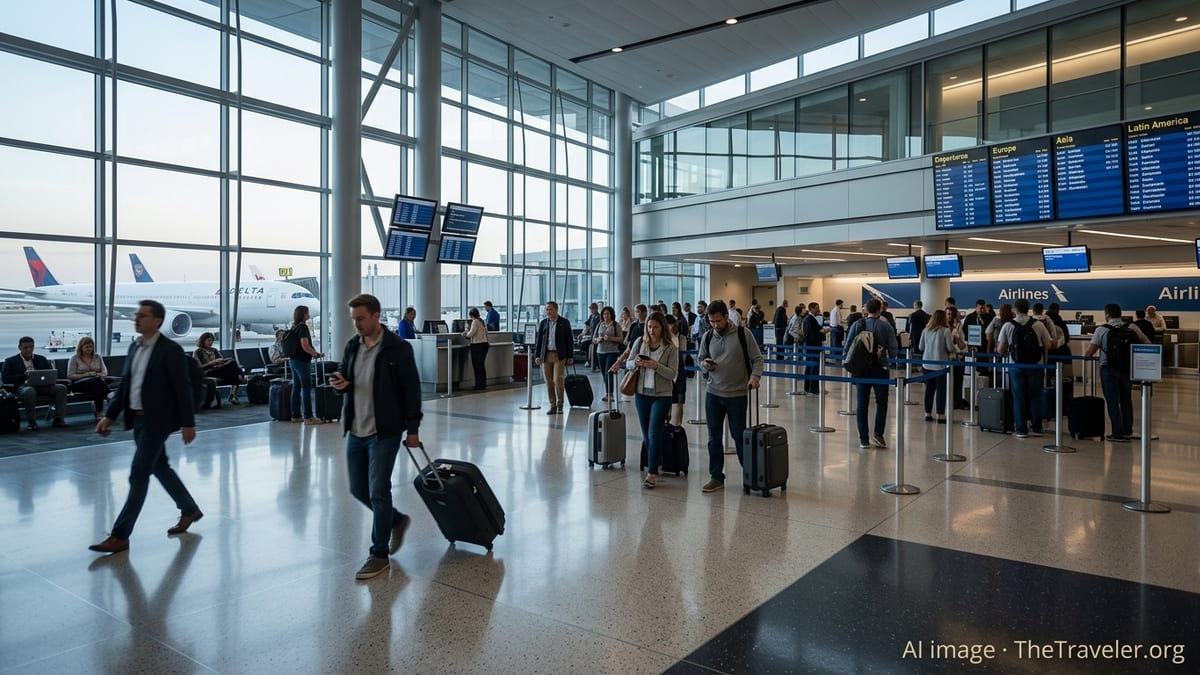
Aviation Demand Surges Past Recovery Into New Growth
After several years focused on regaining lost ground, the aviation industry has moved decisively into a new expansion cycle. Data published by the International Air Transport Association for early 2026 shows global passenger demand growing around 3 to 4 percent year over year, on top of record highs in 2025, pushing traffic well beyond 2019 levels in many markets. Industry outlooks now describe the pandemic recovery as effectively complete and characterize 2026 as the start of a more traditional growth phase fueled by leisure travel and a resilient U.S. labor market.
U.S. travelers are central to that momentum. Trade and tourism forecasts compiled in late 2024 and 2025 projected outbound trips by U.S. residents to rise around 9 percent in 2025, with total international volumes expected to fully match or exceed pre-pandemic benchmarks by 2026. Aviation demand reports released over the past several months indicate that this rebound has largely materialized, particularly on popular long-haul corridors linking major U.S. hubs with Europe, Latin America and parts of the Asia Pacific region.
Airport statistics from across the United States support this picture of renewed enthusiasm for global travel. Several mid-sized and large airports reported record or near-record passenger numbers in their most recent fiscal years, driven in part by international departures. Even where overall traffic slipped in 2025 at certain facilities, the declines followed back-to-back record years, underscoring how quickly volumes had climbed from the depths of 2020 and 2021.
Industry economic reports also highlight a shift in the composition of demand. While corporate travel to and from the United States has been uneven, with some reports noting softer business visitation in 2025, outbound leisure and so-called “bleisure” trips by U.S. residents have helped sustain airlines’ long-haul networks. This tilt toward discretionary travel is influencing when and where carriers deploy scarce aircraft, with clear implications for anyone planning an overseas vacation from a U.S. gateway in 2026.
More Seats and New Routes, but Also Persistent Capacity Strains
For consumers, one of the most visible signs of the 2026 aviation boom is the continued expansion of long-haul schedules from major U.S. hubs. In recent months, several large carriers have announced additional transatlantic and transpacific services for the northern winter 2025 to 2026 season, along with upgrades to larger aircraft on routes connecting cities such as Los Angeles with key destinations in Oceania and Europe. These moves are described in airline announcements as efforts to keep pace with strong international demand.
New and restored nonstop links are also appearing beyond the biggest coastal gateways. Secondary and Sun Belt airports have highlighted fresh services to Canada, Mexico, the Caribbean and occasionally Europe, framed as part of broader terminal expansion and modernization projects. Publicly available airport statistics and planning documents show that for many communities, international flights are now a core justification for multi-billion-dollar infrastructure programs intended to handle sustained growth in passenger numbers.
At the same time, global supply chain pressures continue to constrain how fast capacity can grow. IATA’s recent market assessments point to persistent delays in aircraft deliveries, limitations in engine maintenance capacity and higher operating costs, all of which are estimated to add billions of dollars to airlines’ expenses. Forecasts also note a sizeable backlog of aircraft orders that manufacturers and maintenance providers are still working through in 2026.
The result for travelers is a paradoxical mix of fuller schedules and tight seat supply. Many airlines are flying more international routes and frequencies than a few years ago, but high load factors are now common in peak seasons because fleets cannot expand as quickly as demand. Prospective passengers planning summer or holiday-period trips from U.S. cities in 2026 are likely to encounter busy booking curves and more limited last-minute availability than they might remember from the pre-pandemic era.
What This Means for Fares, Fees and Onboard Experience
A key question for U.S. travelers is how the aviation boom will affect the price of getting overseas. IATA’s economic outlook for 2026 suggests that, after sharp increases earlier in the decade, average airfares are expected to decline in real terms when adjusted for inflation, continuing a long-term trend toward more affordable air travel. With fuel prices more stable than during the most volatile years and competition intensifying on a number of major routes, several industry analyses anticipate modest downward pressure on many economy-class fares over the medium term.
However, travelers are unlikely to feel that relief uniformly. Because international journeys from the United States are now heavily concentrated on peak leisure periods, headline discounts may be most visible on shoulder-season dates or less crowded days of the week. In contrast, flights to popular European capitals in June or tropical islands around major U.S. holidays can still command premium pricing because aircraft are operating with high load factors and limited spare capacity.
The cost structure of travel is also shifting toward ancillary revenue. Public financial disclosures and carrier strategies over the last two years show growing emphasis on fees for seat selection, early boarding, checked bags and extra-legroom sections, especially on long-haul flights. Even if base fares soften slightly in real terms, the total price of a journey that includes preferred seating or additional luggage may remain elevated compared with pre-2020 norms.
Onboard, U.S. passengers are likely to see incremental improvements rather than dramatic changes. Aircraft cabin retrofits continue across widebody fleets, with many airlines installing denser configurations in economy while refreshing premium economy and business-class products. Travel industry reports point to rising demand for these intermediate cabins as some leisure travelers trade up for more space on long flights. For those sticking to standard economy from U.S. gateways, however, higher seat counts and consistently strong load factors may translate into a noticeably more crowded cabin environment in 2026.
Infrastructure Upgrades and the Airport Experience for U.S. Flyers
The current traffic surge is accelerating long-planned overhauls of key U.S. airports that serve as international gateways. Federal forecasts and airport master plans released in the past two years describe a wave of capital projects, including new terminals, expanded concourses and upgraded customs facilities designed to accommodate higher volumes of departing and connecting passengers. In cities where construction is underway, travelers may face a period of disruption before enjoying the benefits of larger, more modern spaces.
Some airports that saw record traffic in their latest reporting periods are using those figures to justify additional gates and international-capable infrastructure. In other locations, recent declines from exceptional 2023 and 2024 highs are being interpreted as temporary pauses rather than reversals, with long-term projections still pointing to steady growth. For outbound U.S. passengers, this often means more choice in airlines and destinations, but also longer walks, shifting terminal assignments and occasional congestion as facilities are reconfigured.
Security and border processing remain pressure points in the overall journey. Analyses from travel industry groups and government transportation reports have warned that if screening and inspection procedures do not keep pace with demand, bottlenecks could discourage millions of potential trips and cost billions of dollars in lost spending. Programs such as TSA PreCheck, Global Entry and mobile passport control are expanding, yet participation and effectiveness vary by airport, and peak-hour waits can still be significant during busy travel periods.
Technology is gradually reshaping this experience. Facial recognition boarding trials, automated bag drops and enhanced self-service kiosks are increasingly visible at major hubs, supported by vendor announcements and airport investment plans. For U.S. travelers heading abroad in 2026, these tools can speed certain steps, but they also require careful attention to airline and airport instructions, especially when new procedures or dedicated lanes are introduced during construction.
Strategies for U.S. Travelers Planning 2026 International Trips
In this environment of strong demand, constrained capacity and evolving infrastructure, planning habits matter more than ever for U.S. residents eyeing an overseas trip. Travel advisers and industry summaries published over the past year consistently highlight the benefits of booking international flights earlier in the planning cycle, particularly for peak school holidays and major global events. With aircraft often operating near capacity, the lowest fares and most desirable seat selections tend to disappear weeks or months in advance.
Flexibility can also help travelers navigate the boom. Choosing midweek departures, considering secondary airports near major European or Asian hubs, or traveling slightly outside high season can open up more options and sometimes lower prices. As carriers tweak schedules to respond to demand and operational constraints, passengers willing to adjust their dates or routing may find better combinations of fare and convenience than those locked into fixed plans.
Travelers may also want to pay closer attention to connection times and minimum layovers when flying internationally from the United States. With global air traffic volumes now above pre-pandemic levels and some airports operating through large-scale renovations, schedule buffers can be a valuable safeguard against delays, longer taxi times and crowded security or transit checkpoints. Industry performance data from recent years show that even small disruptions can cascade quickly when systems are running at or near capacity.
Finally, the return of full-force U.S. outbound travel is a reminder that conditions can shift quickly in response to policy changes, labor actions or economic developments. Public forecasts from aviation and tourism bodies typically assume continued growth through 2026, but they also flag risks ranging from geopolitical tensions to fuel price swings. For individual travelers, staying informed about airline schedule changes, entry requirements and travel advisories in the weeks before departure remains an essential part of navigating the new era of international aviation.