

More news on this day
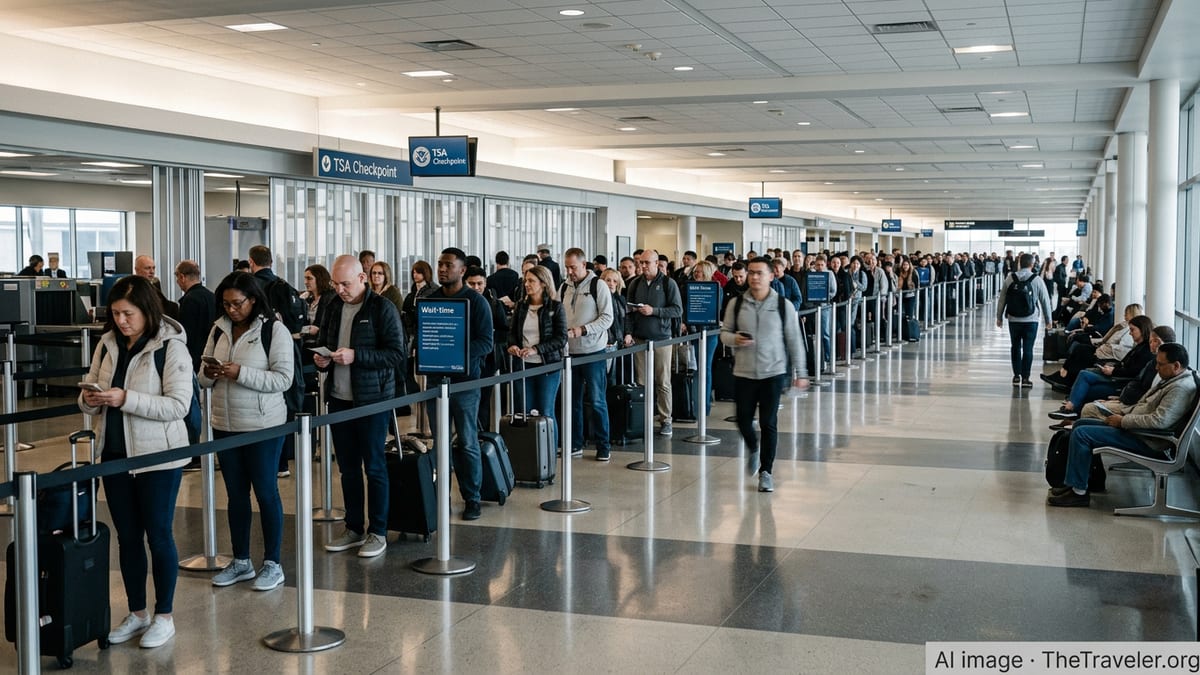
As the 2026 Department of Homeland Security funding standoff stretches into spring, airport security lines across the United States are ballooning to ninety minutes and beyond, disrupting vacations and business trips just as the peak travel season ramps up.
Get the latest news straight to your inbox!
Shutdown Politics Spill Into Airport Security
The current turbulence at airport checkpoints traces back to a partial federal shutdown that began in mid-February and specifically targets Homeland Security funding. Transportation Security Administration officers, along with other Department of Homeland Security personnel, are working with disrupted pay as agencies reshuffle limited resources.
Publicly available information shows that the partial shutdown has led to the temporary suspension of trusted traveler programs such as TSA PreCheck and Global Entry. These programs normally siphon frequent fliers into shorter, faster-moving lines. Without them, most travelers are funneled into standard lanes, compounding pressure on already stretched security checkpoints.
Recent coverage indicates that some airports, including busy hubs in Texas, Louisiana, Georgia and North Carolina, have reported security waits running to ninety minutes or longer during morning and evening peaks. In Houston’s secondary airport, lines have recently reached several hours during surges, while other facilities such as New Orleans and Atlanta have warned passengers to arrive far earlier than usual.
Not every airport has been hit equally. Smaller regional airports and a handful of mid-size facilities where security is partly handled by private contractors, under federal oversight, have reported more modest delays. But with spring break traffic building and federal negotiations still unsettled, wait times remain volatile from day to day and airport to airport.
Where Lines Are Longest This Spring
Reports from major U.S. travel hubs in March 2026 suggest an uneven but increasingly strained security picture. In recent days, travelers at Houston’s Hobby Airport have described three to four hour waits at peak times, while more typical waits of one to one-and-a-half hours are being reported as an improvement from the worst of the backlog.
Coverage out of New Orleans and Atlanta points to similar patterns: long, snaking lines at the start of the week, with advice to arrive at least three hours before departure as a buffer. In North Carolina, passengers at Raleigh-Durham have described early-morning lines that stretch across ticketing halls and toward terminal doors, with processing times pushing close to an hour even when lines keep moving.
Other airports have so far avoided the most dramatic delays but are bracing for spillover effects. Richmond International, for example, has urged travelers to be checked in and headed toward screening at least ninety minutes before departure, citing rising spring break demand and the broader national environment. The airport’s own wait-time tracking technology has faced outages, reflecting how even basic passenger planning tools can be affected when federal systems and contracts are disrupted.
Meanwhile, some major coastal hubs have seen more mixed experiences. At certain times of day, travelers report moving through security in under half an hour; at others, a sudden wave of departures combined with reduced staffing or closed lanes can quickly push waits toward or beyond the ninety-minute mark.
How Travelers Are Beating the Madness
Faced with unpredictable checkpoint queues, travelers are adapting quickly. One of the most common tactics is simply time: arriving significantly earlier than before. For many domestic flights, advice is shifting from the familiar “two hours early” to a more cautious window of two-and-a-half to three hours, especially at large or heavily affected airports and during early-morning or Sunday evening peaks.
Publicly available guidance from airports and airlines also underscores the value of checking security conditions before leaving home. Where real-time or estimated TSA wait tools remain online, passengers are using them to decide when to head to the airport and which terminal entrance to use. In cities where those tools are offline or marked as unavailable, local news coverage and social media updates are helping travelers gauge whether to budget extra time.
Some travelers are changing their flight patterns altogether. Bookings are shifting toward off-peak hours, including midweek and midday departures, in the hope of shorter lines. Others are routing through smaller regional airports that so far report shorter queues, even if it means an extra connection or longer drive. Travel forums and community groups now routinely compare wait experiences at neighboring airports, with reports indicating that a thirty-minute drive to a secondary airport can sometimes save an hour or more in security.
Paid expedited options that remain operational, such as certain private fast-track or identity-based services where available, are also in higher demand. While these services cannot fully bypass federal screening, they can, in some locations, offer separate lanes or more predictable processing, appealing to travelers willing to pay for reduced uncertainty.
Tech Tools and On-the-Ground Strategies
Technology is emerging as a key ally for travelers navigating shutdown-era waits. Several airports are investing in upgraded systems that estimate and display security times based on sensors and cameras at checkpoints. Recent announcements from airports such as Boston’s Logan highlight plans to roll out tools that let passengers view projected TSA wait times before they even leave for the airport.
Airline mobile apps and third-party travel tools are also playing a larger role. Many now push security and gate alerts alongside flight status, helping travelers react quickly if they encounter unexpected bottlenecks at check-in or bag drop. With PreCheck suspended, some carriers are reminding customers to complete online check-in, pay for bags in advance and travel with carry-on only where possible to reduce time spent in pre-security queues.
Once inside the terminal, on-the-ground tactics still matter. Travelers are spreading out among available checkpoints instead of joining the first line they see, especially in airports with multiple screening locations. Some reports describe passengers walking to a farther checkpoint or even to another connected concourse to find significantly shorter queues, then returning airside via internal corridors or trains.
Seasoned fliers are also rethinking what they bring through security. Consolidating electronics, limiting liquids and wearing easily removable shoes and jackets are small steps that can speed individual screening, helping lines move faster overall. In a climate where every extra minute at the checkpoint can cascade into missed flights, these practical details are gaining renewed attention.
What Travelers Should Expect Next
With negotiations in Washington ongoing and no firm end date for the shutdown affecting Homeland Security, most forecasts anticipate continued strain on airport security operations into late March and potentially beyond. Published analysis suggests that even if funding is restored, it could take time for staffing levels, overtime budgets and trusted traveler programs to return to normal rhythms.
In the short term, the most likely scenario is volatility rather than uniform gridlock. Some days and airports will see relatively smooth flows, while others will experience ninety-minute or longer lines with little warning. Weather disruptions, irregular operations and localized staffing gaps may all amplify shutdown-related delays at certain hubs.
Travel industry observers note that the current episode is sharpening debate over how insulated aviation security should be from political funding disputes. Ideas under discussion include wider use of private screening teams under federal oversight, new mechanisms to protect TSA pay during shutdowns, and technology investments that make checkpoints more efficient even under staffing pressure.
For now, travelers face an environment where preparation and flexibility are essential. Building in extra time, monitoring airport conditions closely and considering alternate airports or flight times are proving to be the most reliable tools for beating the worst of the shutdown-fueled security lines.