

More news on this day
As the 2026 federal government shutdown drags through March, a growing number of U.S. airports are reporting security lines of an hour or more, with some checkpoints briefly stretching toward the ninety minute mark and beyond just as spring break crowds arrive.
Get the latest news straight to your inbox!
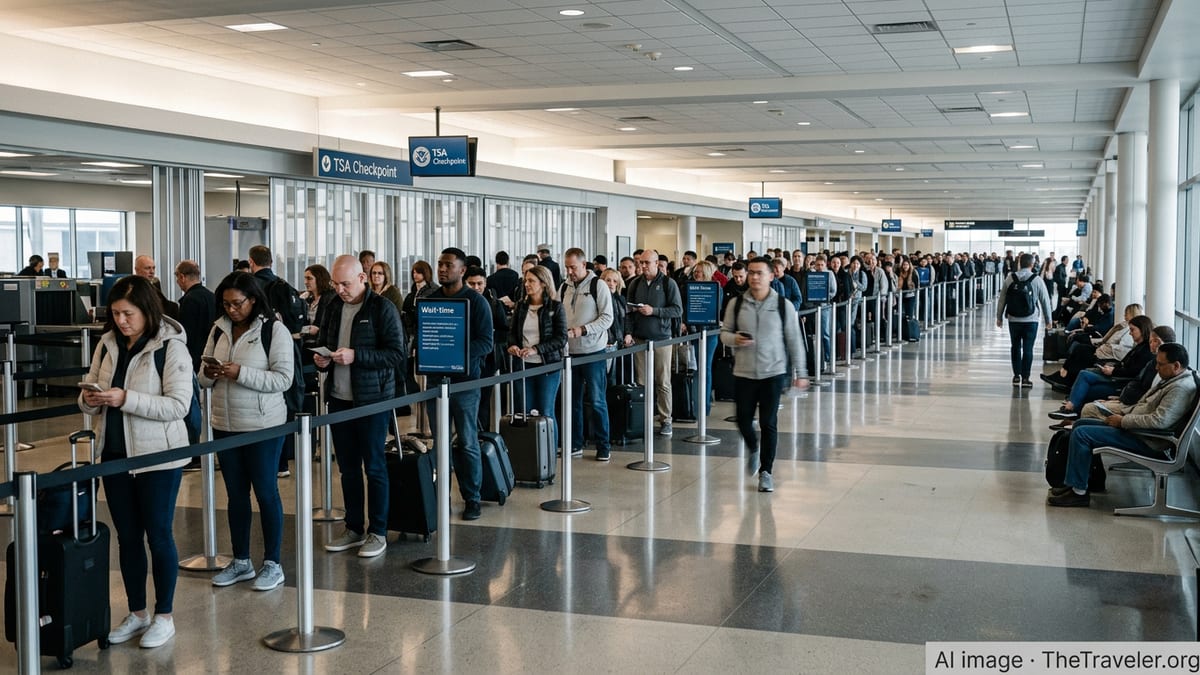
Staffing Shortages Turn Routine Screening Into a Chokepoint
The current shutdown, which began in mid February and left tens of thousands of Department of Homeland Security employees working without pay, is increasingly visible at airport checkpoints. Publicly available data and news coverage show unscheduled absences among Transportation Security Administration officers more than doubling compared with normal operations, as some workers seek second jobs or leave the agency altogether.
Those staffing gaps are colliding with one of the busiest periods of the travel calendar. Reports from airports in Houston, New Orleans, Atlanta, Charlotte and Chicago describe security lines snaking into parking garages and baggage claim areas, with peak waits ranging from roughly an hour to more than three hours on some days. In that context, ninety minute lines have moved from rare outliers to a realistic worst case scenario for travelers hitting checkpoints at the wrong time of day.
At the same time, federal agencies are reallocating limited personnel to cover what they consider essential operations, such as primary inspection for arriving international passengers. Programs that typically ease congestion, including Global Entry enrollment and some Trusted Traveler services, were temporarily scaled back earlier in the shutdown before being partially restored. That has pushed more passengers into standard lanes, lengthening queues even where officer headcounts remain relatively stable.
The cumulative effect is a patchwork of conditions across the country. Some large hubs, particularly those with private security contractors operating under federal oversight, have so far maintained relatively normal flows, while others warn passengers to arrive three or even four hours ahead of departure to avoid missing flights.
Where Ninety Minute Lines Are Most Likely to Appear
Long waits are not universal, but patterns have emerged. Coverage from national and local outlets indicates that mid size and large hubs in fast growing metro areas have been among the first to feel sustained pressure. In recent days, airports in New Orleans and Houston reported checkpoint waits that peaked around two to three hours during weekend rushes, prompting advisories urging travelers to arrive significantly earlier than usual.
Major connecting hubs in the Southeast have also seen intermittent delays as spring break traffic builds. Social media posts and airport updates from Atlanta and Charlotte show security queues periodically spilling beyond normal roped areas, particularly in early morning waves when many departures are stacked within a short window and checkpoints are still ramping up staffing.
By contrast, some large airports in Texas and California have so far reported smoother operations. Local reporting from Dallas and Richmond notes that these airports have largely sidestepped the most severe bottlenecks, even as the shutdown contributes to staffing challenges elsewhere. Travelers passing through smaller regional airports in the Pacific Northwest and Mountain West are also describing relatively quick screening, reflecting lighter traffic and more manageable staffing rosters.
The result for passengers is a highly uneven experience. Two airports of similar size can look very different on the same day, and even within a single terminal, wait times can swing from fifteen minutes to more than an hour between the mid morning lull and the peak early morning or late afternoon periods.
How Travelers Are Beating the Madness
In response, travelers are adjusting habits in an attempt to stay ahead of the longest lines. Many are building in additional buffer time, arriving at the airport two and a half to three hours before domestic departures at busier hubs, and even earlier when traveling with young children or checked baggage. Travel advisors are echoing that guidance, particularly for flights departing between 5 a.m. and 9 a.m., when checkpoint congestion has been most acute.
Technology is playing a larger role as well. Frequent flyers are turning to airline apps, airport websites and third party tools that aggregate crowdsourced data to check estimated TSA wait times before leaving home. While those feeds can fluctuate rapidly, they provide a rough snapshot that helps travelers decide whether to leave an extra thirty minutes earlier than planned or route ground transportation to a less crowded terminal when options exist.
Enrollment in expedited screening programs that remained open or have since restarted is another strategy for reducing risk, although it is not a quick fix for those traveling in the next few days. Travelers who already hold TSA PreCheck, CLEAR or Global Entry report that their dedicated lanes often move faster, even when standard lines stretch toward an hour. However, at some airports, staffing constraints have led to the temporary closure of dedicated lanes during off peak hours, forcing all passengers through a single queue.
Seasoned travelers are also making tactical choices, such as flying late morning or midday when possible, steering away from the earliest departures that bunch large crowds into limited checkpoint hours. Others are switching to carry on only packing to streamline the screening process, reducing the chance that checked bag drop lines will compound security waits.
The Quiet Advantage of Smaller and Alternate Airports
One notable trend in recent coverage is the relative resilience of smaller airports. While the shutdown has affected federal employees nationwide, regional fields with fewer daily departures and more predictable traffic patterns often report modest waits, even on peak travel days. Travelers flying out of airports in smaller metropolitan areas describe clearing security in under half an hour, a stark contrast with the ninety minute or longer lines seen at some major hubs.
This disparity is prompting some passengers to rethink their departure points altogether. In regions with multiple airports, travelers are looking beyond the closest big hub and pricing itineraries out of secondary airports that historically see lighter crowds. In a few cases, higher base fares from these alternates are being weighed against the time and stress savings of shorter security lines and easier parking.
Travel industry guidance issued during the shutdown has encouraged this type of flexibility. Advisories suggest that when ticket prices and schedules allow, choosing a less congested origin or connection point can significantly reduce exposure to the longest queues. That is particularly relevant for families and infrequent flyers, for whom navigating an unexpectedly long checkpoint line can be especially daunting.
Even for those committed to a primary hub, understanding which terminals are currently seeing the heaviest demand can help. At airports with multiple screening areas, some terminals experience chronic morning surges while others remain comparatively calm, creating opportunities for savvy travelers to route themselves through quieter checkpoints when their airline and ticket permit it.
What to Expect if the Shutdown Persists Into Late Spring
Looking ahead, transportation analysts warn that prolonged funding lapses can have lingering effects on airport staffing even after pay is restored. Past shutdowns have been followed by spikes in resignations among security officers, slowing efforts to rebuild the workforce. Early data from the current impasse point to several hundred TSA officers already leaving the agency since mid February, hinting at a longer recovery curve once lawmakers resolve the standoff.
For travelers, that could mean that sporadic ninety minute lines become a recurring feature at the most heavily used airports if the shutdown extends deeper into the spring travel season. Airlines are monitoring checkpoint conditions closely, and in some cases are adjusting minimum check in time recommendations and sending more aggressive pre travel alerts advising passengers to arrive early.
At the policy level, the latest disruptions are again drawing attention to proposals that would insulate transportation security operations from future political stalemates. Ideas include giving more airports the option to contract with private security firms under federal standards, as well as designating certain traveler programs and staffing categories as protected from furloughs or funding interruptions.
In the meantime, the most practical tools for avoiding the worst delays remain in travelers’ hands. Building in extra time, checking real time information, choosing flight times and airports strategically, and taking advantage of expedited screening where available can together mean the difference between creeping through a ninety minute line and walking straight to the gate.