

More news on this day
As the latest U.S. government shutdown stretches into its second month, signs are mounting that air travel could face mounting disruption, from longer security lines at major hubs to the potential closure of security checkpoints at smaller regional airports that connect many of the country’s lesser-known destinations.
Get the latest news straight to your inbox!
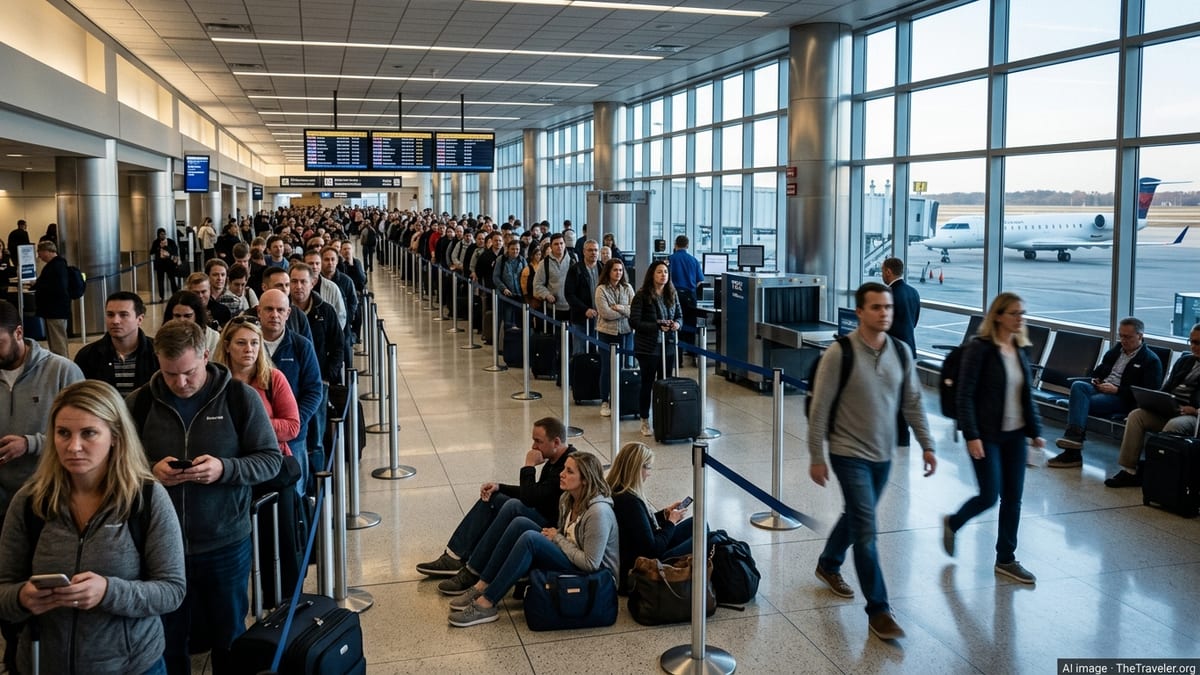
Partial Shutdown, Full-Scale Strain on Air Travel
The current funding lapse for the Department of Homeland Security, which began in mid-February 2026, has left tens of thousands of Transportation Security Administration officers working without pay, according to publicly available federal workforce data and recent coverage from national news outlets. While aviation safety and security operations are classified as essential and continue to run, the lack of pay has pushed staff morale and retention into a precarious position.
Recent reporting shows that absenteeism among security screeners has begun to rise, echoing patterns seen during previous government shutdowns when unpaid federal workers increasingly stayed home or sought other jobs. Analyses published by the White House Council of Economic Advisers and travel industry associations in late 2025 warned that a sustained shutdown can quickly turn small increases in no-shows at checkpoints into cascading delays across the national air network.
A series of severe storms sweeping across the eastern United States in recent days has intensified those pressures, with thousands of flights canceled or delayed just as busy spring travel ramps up. While weather is the immediate culprit for many of those disruptions, aviation analysts note that thinner staffing and reduced flexibility at security and operations centers can make it harder for airlines and airports to recover when schedules go off track.
TSA Bottlenecks and the Risk of Airport Security Closures
Airport security screening has become a flashpoint in the shutdown as front-line TSA staff continue to process millions of passengers per day without current paychecks. In internal guidance and public briefings cited by national media, agency leaders have acknowledged that if absenteeism continues to climb, they may be forced to consolidate resources at the busiest hubs and reduce coverage at smaller facilities.
Recent commentary from aviation labor representatives and former security officials highlighted the possibility that some airports could face significant reductions in screening hours or, in extreme cases, temporary closure of TSA checkpoints during parts of the day. While such moves would be framed as last-resort steps to maintain security standards, they would immediately disrupt flight schedules and passenger itineraries, particularly for early-morning and late-night departures.
The strain is compounded by the fact that hiring and training pipelines for new security officers are largely paused during a shutdown. That leaves the system dependent on an existing workforce that is bearing heavier overtime loads while dealing with the uncertainty of when back pay will arrive. Industry analysts warn that if the impasse in Washington continues into the peak summer travel season, the combined effect could be longer lines, more missed connections, and further erosion of traveler confidence.
Hidden Regional Destinations Face Outsized Risk
While major hubs typically have the staffing and political visibility to remain a priority during a shutdown, aviation experts caution that regional airports and small communities are far more vulnerable. Many of these facilities rely on a limited number of daily departures operated by regional carriers under contract with major airlines, and they often depend entirely on TSA for passenger screening.
Travel industry briefings on past shutdowns noted that when flight reductions are required, airlines are more likely to cut frequencies or suspend routes at smaller airports rather than on dense trunk routes between major cities. In practice, that can sever air links to remote national park gateways, rural business centers, and emerging tourism destinations that market themselves as off-the-beaten-path.
Recent travel forum discussions and aviation trade coverage suggest that some regional travelers are already seeing more schedule changes and cancellations than usual as carriers adjust to operational uncertainty. For visitors, the loss or reduction of these routes can make it significantly harder to reach hidden mountain towns, coastal communities, and lesser-known wine or outdoor regions that rely on a single daily flight to a major hub.
If TSA is eventually forced to curtail checkpoint hours at the smallest airports, the impact could be even starker. Flights might be shifted into narrower operating windows, limiting flexibility for connections and raising the risk that a delay at a hub strands passengers far from home without easy alternatives.
Airlines, Travel Industry and Passengers Scramble to Adapt
Major U.S. passenger and cargo airlines have begun publicly pressing Congress for a resolution to the shutdown and for longer-term measures to insulate key aviation functions from future funding battles. In open letters and public statements, carrier executives have called for legislation that would guarantee pay for air traffic controllers and security officers regardless of funding lapses, arguing that reliable staffing is essential to the broader economy.
Travel and tourism groups have circulated advisories warning that even if core safety operations remain intact, the shutdown is likely to slow airport security lines, stall agency approvals, and complicate planning for the busy summer travel period. Industry economists have also emphasized the knock-on effects for hotels, tour operators, and small businesses in communities that depend on air links to bring in visitors.
For individual travelers, publicly available guidance from consumer advocates and airline information channels now emphasizes building in more buffer time at airports, especially for early-morning departures from large hubs where screening lines may be longest. Passengers connecting through the United States to onward international flights are being urged to consider longer layovers and to monitor airline alerts closely for schedule changes tied to staffing constraints.
What Travelers Can Expect if the Standoff Continues
Analysts who track the aviation system note that there is no single point at which air travel abruptly stops during a government funding lapse. Instead, disruptions tend to build gradually as unpaid workers weigh their options, backlogs grow, and the system’s normal slack is exhausted.
If the shutdown extends further into spring, travelers are likely to see growing variability in airport experiences. Some hubs may still move passengers smoothly at certain times of day, while others struggle with rolling delays. Regional airports may experience sudden cancellations or temporary reductions in service if airlines decide that thinner demand or operational risk no longer justify maintaining marginal routes.
At the same time, key federal travel programs linked to DHS have already begun to feel the impact. Homeland Security has announced the suspension of expedited screening and trusted traveler enrollment programs such as TSA PreCheck and Global Entry for the duration of the shutdown, limiting options for frequent travelers looking to bypass the longest lines. Application backlogs that build up now could take months to resolve even after funding is restored.
For those planning trips in the coming weeks, experts recommend building flexibility into itineraries, staying alert to official announcements, and paying particular attention to the health of regional connections. The greatest risk may fall not on marquee city pairs, but on the hidden regional destinations that depend on a fragile chain of federal services, airline economics, and traveler trust to stay connected to the rest of the world.