

More news on this day
As the AFC Women’s Asian Cup kicks off across Perth, Sydney and the Gold Coast in March 2026, tourism and hospitality operators are treating the tournament as much more than a football spectacle, positioning it instead as a catalyst for a new phase of Australia’s visitor economy.
Get the latest news straight to your inbox!
A Compact Tournament With Big Economic Ambitions
The 2026 AFC Women’s Asian Cup is being staged in a tight three week window from 1 to 21 March, with matches spread across just three host cities and five major stadiums. Publicly available schedules show fixtures at Perth Stadium and Perth Rectangular Stadium in Western Australia, Western Sydney Stadium and Stadium Australia in Sydney, and Gold Coast Stadium in Queensland, underscoring a deliberate focus on high profile venues and visitor ready destinations.
Reports indicate that the host model is intentionally compact compared with the more dispersed approach taken during the FIFA Women’s World Cup in 2023. Concentrating games in a small number of cities is designed to deepen local spending in accommodation, food, transport and attractions, while simplifying logistics and broadcasting. Tourism strategists describe this as a pivot from simply accommodating supporters to maximising their time and expenditure in key precincts.
Event documentation and match schedules suggest that organisers are prioritising evening kick offs and double header days at the same venue, a pattern familiar from recent major football tournaments. This scheduling is expected to encourage visitors to stay longer in host cities and to build itineraries that combine multiple games with sightseeing, regional excursions and food and wine experiences.
Learning From the 2023 Women’s World Cup Boom
Government and sporting bodies are positioning the Asian Cup squarely in the slipstream of the 2023 FIFA Women’s World Cup, which delivered unprecedented audiences and spending in Australia and New Zealand. A study released jointly by FIFA and the World Trade Organization highlighted strong tourism, trade and social impacts from that tournament, while local impact evaluations for host cities in New Zealand reported tens of millions of dollars in new visitor expenditure and six figure increases in visitor nights.
Australian media coverage of Football Australia’s reporting on the World Cup has pointed to a national economic impact in the hundreds of millions of dollars and significant gains in global visibility for the Matildas brand. The 2026 Asian Cup is being framed as a way to sustain that momentum, using a smaller but still premium event to keep stadiums busy, airlines and hotels engaged and international fans returning to the region.
Publicly available policy material on Australia’s sport and visitor economy strategies shows a consistent emphasis on major events as tools to attract high yielding visitors and showcase destinations. Within that context, the Asian Cup functions as a bridge between the Women’s World Cup and future bids for larger tournaments, testing new approaches to fan zones, city activations and partnerships with local businesses.
Perth, Sydney and the Gold Coast Reposition as Women’s Football Gateways
Host city information published by the tournament and state agencies presents Perth, Sydney and the Gold Coast as complementary gateways for different types of visitors. Perth is being marketed as the western entry point, with a focus on riverfront experiences, Aboriginal culture and wine regions within easy reach of stadium precincts. The opening match involving Australia in Perth is intended to generate early demand for flights and accommodation at the shoulder of the traditional summer season.
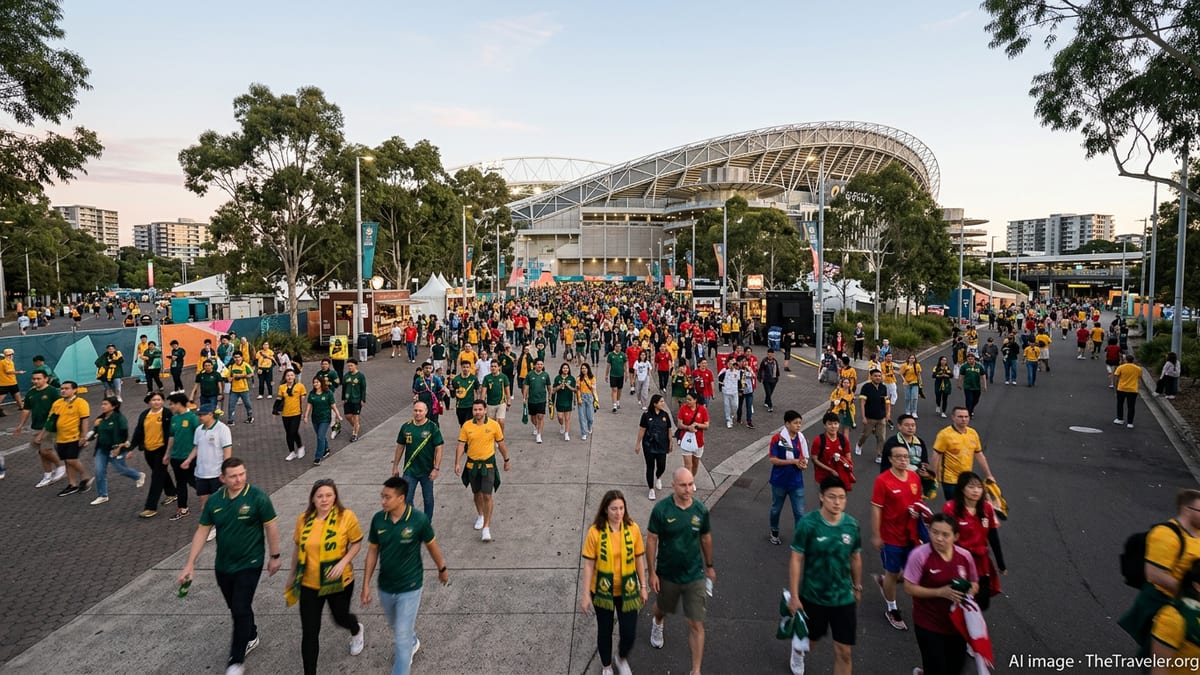
Sydney, which hosted the final of the 2023 Women’s World Cup at Stadium Australia, is again cast as the flagship stage for the latter stages of the competition. Match schedules show that Stadium Australia in Sydney Olympic Park will host key knockout fixtures and the final, reinforcing the venue’s role as a national arena for major football events. Tourism operators are using this visibility to bundle Asian Cup packages with harbour cruises, cultural institutions and coastal experiences that appeal to both domestic and regional travellers.
On the Gold Coast, event information highlights the proximity of Gold Coast Stadium to beaches, theme parks and hinterland attractions. Destination marketing materials are already blending images of match days with lifestyle imagery, signalling an intention to convert football bookings into broader leisure stays. The city’s existing reputation as a short break destination for both Australian and Southeast Asian travellers is seen as an advantage in attracting fans who may not have travelled solely for a football tournament.
Sport Tourism, Legacy Goals and Regional Dispersal
Beyond the immediate influx of fans, planners are framing the Asian Cup as part of a longer sport tourism and legacy strategy. Australian federal sport policy outlines major events as levers for community participation and regional economic development, and the Asian Cup is being used to reinforce that message around women’s football in particular. Community programmes, fan festivals and training camps in suburban and regional centres are expected to direct some visitor flows beyond the primary stadium precincts.
Experience from the Women’s World Cup has encouraged organisers to think about legacy in terms of both infrastructure and perception. Impact evaluations from New Zealand host cities noted intangible benefits such as increased visibility of women’s sport and strengthened global perceptions of host destinations as inclusive and vibrant. The Asian Cup is being framed in a similar way, with state tourism agencies using language around welcoming environments, safe travel and diverse cultural experiences alongside the core football narrative.
There is also an emphasis on building repeat visitation. Tourism bodies view the tournament as a chance to introduce first time visitors from Asian football markets to Australian destinations in late summer conditions, with the hope that positive experiences translate into future holidays or study and business travel. In this sense, the multi million dollar play is less about the three week tournament window and more about the long tail of return trips and word of mouth promotion.
Chasing Record Crowds and New Revenue Streams
Early attendance figures and ticketing campaigns suggest that organisers are targeting new benchmarks for the Asian Cup in terms of crowds and broadcast reach. Discussion around recent matches in Sydney has already referenced record attendances for the tournament, supported by strategic pricing, family friendly scheduling and promotional offers on selected fixtures. The ambition is to narrow the gap between continental tournament crowds and the levels seen during the global showpiece in 2023.
At the same time, the 2026 event is being used to experiment with revenue streams that blend sport and tourism. Hospitality packages that pair premium seating with curated food and wine experiences, behind the scenes tours or regional day trips illustrate a move towards higher value offerings. Travel operators are also using dynamic packaging, combining airfares, accommodation and match tickets in ways that spread visitor spending across multiple sectors.
For Australia’s visitor economy, the AFC Women’s Asian Cup is emerging as a test case in how a continental tournament can punch above its weight. By tightly integrating match schedules with destination marketing and by building on the data and lessons of the 2023 Women’s World Cup, the country is attempting to turn a three week football festival into a longer term reimagining of how sport, tourism and place branding intersect.