

More news on this day
The European Union’s new Grids Package, presented at the end of 2025, is framed as an energy and industrial overhaul, but its impact is set to reach far beyond power markets and into the heart of European tourism and travel experiences.
Get the latest news straight to your inbox!
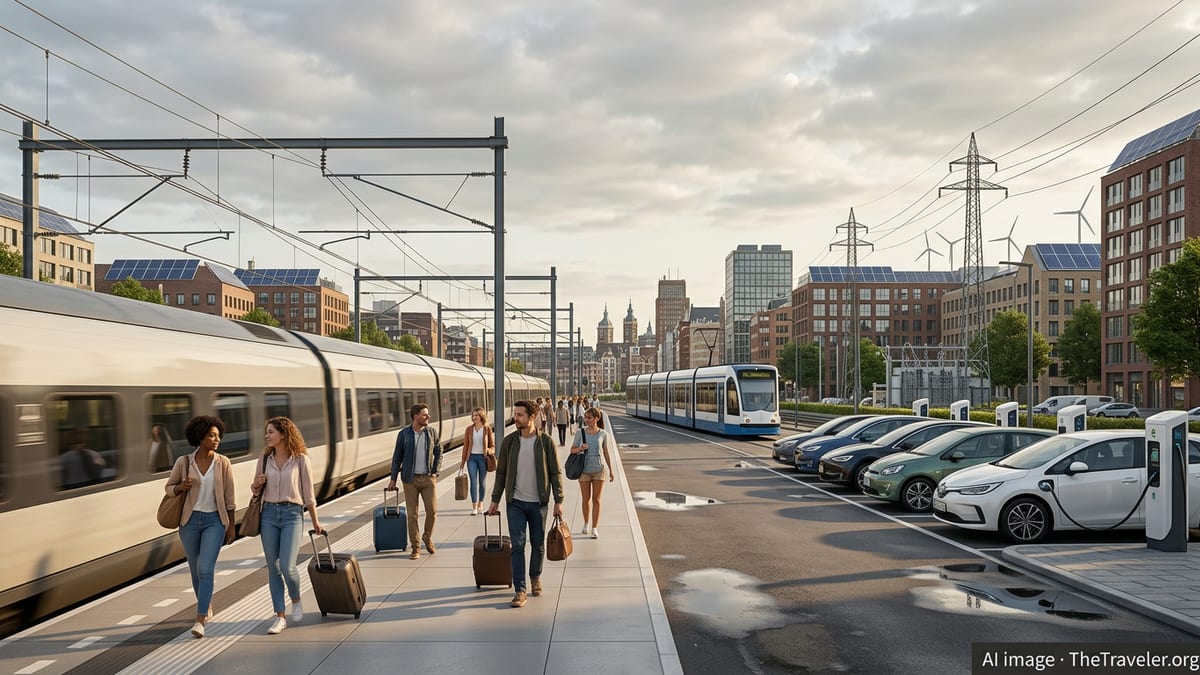
A Modern Grid as the New Backbone of European Mobility
The European Grids Package builds on the 2023 EU Action Plan for Grids and guidance on anticipatory investments, seeking to upgrade and expand electricity networks that are increasingly seen as a bottleneck to the clean energy transition. Publicly available European Commission documents describe a system in which more than a third of distribution grids are over 40 years old, while electricity demand is expected to rise sharply due to electric vehicles, rail electrification, data centres and heat pumps. The package positions large-scale grid investment as essential to keeping Europe’s infrastructure functioning reliably.
For tourism, a modernised grid is not an abstract technical fix. Reliable, resilient power networks underpin rail timetables, metro systems, airport operations, hotel services and attractions across the continent. Recent stress events, such as regional outages and congestion that slowed new connections, have highlighted how vulnerable visitor-dependent regions can be when electricity systems are stretched. By prioritising cross-border interconnections, digital monitoring and faster permitting for new lines, the Grids Package seeks to reduce the risk of disruptive blackouts and power quality issues that can undermine visitor confidence.
Improved interconnection between member states also supports the idea of tourism corridors built on frequent, electrified rail and bus services. With the Baltic states now synchronised with the continental European grid and new investments linking Iberia, Central Europe and the Nordics, the long-term vision is a more integrated electricity system that mirrors the freedom of movement offered by the Schengen area. For travelers, that could mean more seamless journeys across borders on reliable, low-carbon transport.
Boosting Rail and Public Transport for Low-Carbon Tourism
European mobility reports indicate that rail is already among the most energy-efficient ways to travel, and that more than half of rail traction electricity in participating countries now comes from renewable sources. However, rail operators and city transport authorities face constraints when they try to add new high-speed services, increase frequencies or electrify remaining diesel lines, often because local grids cannot handle additional loads. The Grids Package directly addresses this by tying transmission and distribution upgrades to transport electrification needs.
By encouraging anticipatory investment, the new framework is designed to allow grid operators to expand capacity in advance of firm demand from train operators, tram systems or metro extensions. This is a marked shift from past practices where infrastructure could only be built once demand was contractually guaranteed, slowing down sustainable transport projects. For tourism destinations planning new airport-rail links, electric shuttle buses or night trains, this could shorten delivery times and improve the business case for shifting visitors from cars and short-haul flights to rail-based options.
Digitalisation measures in the package, including smart substations and real-time congestion management, are expected to improve the reliability of traction power for rail networks. That translates into fewer delays caused by grid-related constraints, more stable operations during heatwaves or storms, and greater confidence in ambitious cross-border services such as sleeper routes and high-speed corridors that cater to both leisure and business travelers.
Scaling EV Charging Networks Along Tourist Routes
Electrification strategies published by the Commission show that road transport remains the largest consumer of energy in the sector, and that millions of public charging points will be needed to support the shift to electric vehicles. Yet member states regularly highlight that new highway and destination chargers are delayed because of weak local grids and lengthy connection queues. The Grids Package explicitly links grid planning with the rollout of charging infrastructure, treating the two as part of a single system rather than separate policy tracks.
For self-drive tourists, this could be one of the most tangible changes. As grid operators gain incentives to reinforce networks around major corridors, scenic coastal routes and rural attractions, electric car drivers should encounter more reliable fast charging, shorter waits for new installations and fewer instances of stations being throttled due to local grid limits. The package’s emphasis on flexibility and smart charging also encourages the use of dynamic tariffs and load management, which can reduce peak congestion while keeping charging costs more predictable for visitors.
European Parliament briefing material on the automotive transition stresses that future charging demand must be integrated into grid expansion plans to avoid stranded assets and local overloads. The Grids Package, as part of the wider Clean Industrial Deal and Action Plan for Affordable Energy, signals that this integration will be embedded into planning methodologies. Destination managers seeking to attract climate-conscious visitors can therefore be more confident about promoting electric road trips and EV-based car rentals, knowing that the underlying power system is being designed to cope with seasonal tourism peaks.
Powering Hotels, Resorts and Destination Infrastructure
Tourism infrastructure is becoming steadily more electricity-intensive, from air-conditioned hotels and energy-hungry wellness centres to ski resorts with snowmaking systems and coastal marinas hosting electric boats. At the same time, many destinations want to install rooftop solar, battery storage and local microgrids to cut emissions and energy costs. Without supportive grid rules, these investments can be delayed by connection backlogs or restricted export capacity. The European Grids Package responds by encouraging smarter distribution networks and flexible connection agreements that can accommodate large volumes of decentralised generation.
Guidance on anticipatory investments published in 2025 outlines how regulators can allow grid companies to reinforce lines and substations ahead of demand where there is a clear expectation of future connections, including from tourism-focused regions. This can help Mediterranean islands, alpine valleys and coastal towns upgrade their electricity systems before large new resorts, conference centres or charging hubs open, rather than racing to catch up afterwards. For travelers, the result should be fewer power cuts during peak holiday weeks and a smoother experience in hotels and attractions that increasingly depend on digital systems.
The Grids Package also highlights the role of digital tools in managing distributed energy resources, enabling hotels, airports and event venues to participate in demand response or flexibility markets. By shifting some consumption away from critical hours, these facilities can lower energy bills and reduce stress on local networks. Over time, this could support the growth of “net-zero” destinations where on-site generation, storage and flexible loads are fully integrated into regional grid planning, reinforcing Europe’s image as a leader in sustainable tourism.
Resilience, Climate Risks and the Future Travel Experience
Recent years have exposed how climate-related events can disrupt both electricity supply and tourism. Extreme heat has strained grids and rail infrastructure, while storms and floods have damaged lines in coastal and mountain regions. According to published coverage of the Grids Package and related policy debates, resilience to physical and cyber risks is now a core priority of EU network planning. This includes hardening infrastructure, improving cross-border support arrangements and enhancing situational awareness through digital monitoring.
For the travel industry, stronger and smarter grids mean that destinations are better prepared to keep essential services running during shocks, maintain transport links and recover quickly after disruptions. Cruise ports, airports and high-speed rail hubs depend on stable power not just for lighting and air conditioning but for security systems, baggage handling and ticketing. As grids gain redundancy and flexibility, operators are likely to be less vulnerable to single points of failure that can cascade into large-scale delays and cancellations.
By positioning the power network as an enabler of mobility, digital services and climate resilience, the European Grids Package effectively links energy policy with the broader competitiveness of Europe as a travel destination. While implementation will depend on national regulators, grid companies and local authorities, the direction of travel is clear. A quieter revolution in cables, transformers and control rooms could soon be reshaping how smoothly visitors move around the continent, how comfortable their stays feel and how confidently Europe can market itself as both accessible and climate-responsible.