

Italy’s public healthcare system, the Servizio Sanitario Nazionale (SSN), is a tax-funded, residence-based system that offers broad medical coverage to citizens and legal residents. For individuals considering relocation, understanding how residents access and use SSN services, what is covered, and where costs or gaps may arise is critical to assessing the practicality of a move.
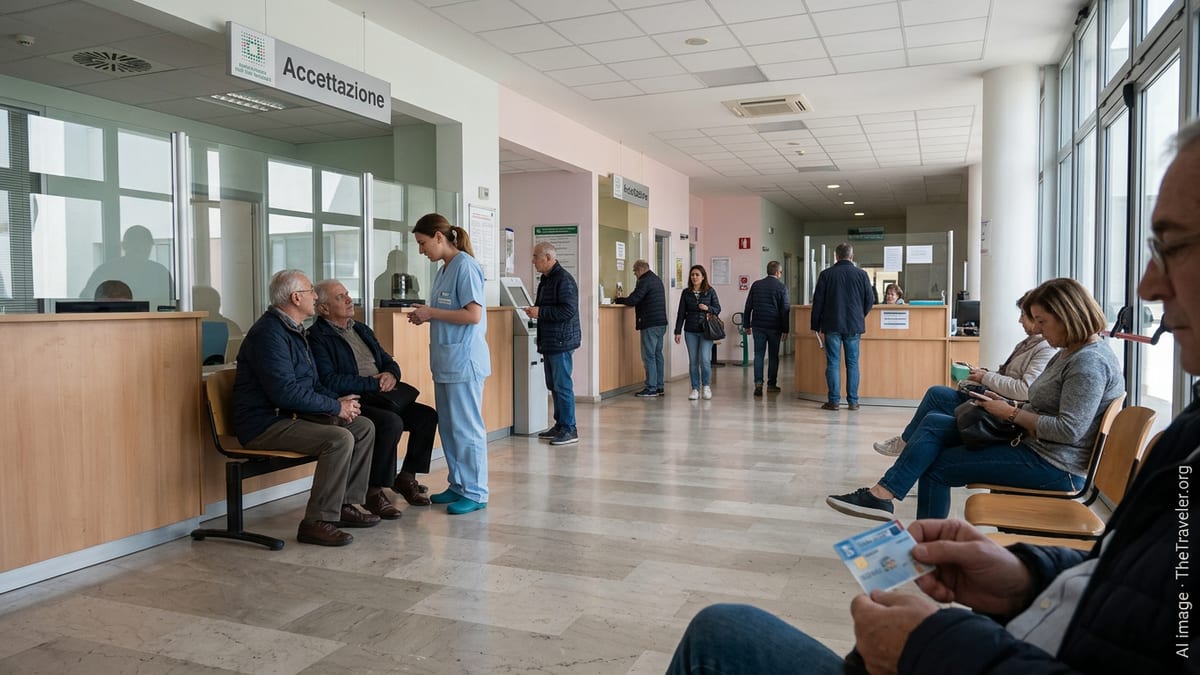
System Structure and Eligibility for Residents
Italy operates a universal public healthcare system, the Servizio Sanitario Nazionale, established in 1978 and financed primarily through general taxation and regional payroll-related contributions. Healthcare is organized nationally but administered by regions, which manage local health authorities (Aziende Sanitarie Locali, ASL) and public hospitals, leading to variations in service quality and waiting times between regions.
Access to the SSN is based on legal residence rather than nationality. Italian citizens resident in Italy and foreign nationals who hold valid residency or a residence permit in an eligible category can usually register with the SSN and receive care under the same conditions as Italian residents. This principle of equal treatment for residents is a core element of the system, although administrative procedures differ for European Union and non-EU nationals and can be applied inconsistently at local level.
Residents who are not eligible for mandatory SSN registration, such as some non-EU retirees or financially independent migrants without work or family-based permits, may access the system on a voluntary basis by paying an annual flat-rate contribution, or they may rely on private insurance and pay out-of-pocket when using public or private facilities. Consequently, relocation decisions should factor in the exact residence status, since this directly affects the route into the public system.
Non-residents, tourists and short-stay visitors have more limited rights. They are generally entitled to emergency and urgent care, but comprehensive access to the SSN normally requires residence-based registration or, for EU/EEA visitors, use of the European Health Insurance Card during temporary stays.
Registration Process and the Tessera Sanitaria
Registration with the SSN is not automatic for most new residents. After securing local registration at the municipal office (anagrafe) and, for non-EU nationals, a valid permesso di soggiorno, residents must apply at their local ASL to be enrolled. Required documentation typically includes passport or identity document, tax code (codice fiscale), proof of residence, and proof of the residence title or employment where applicable. Procedures and required forms vary by region and even by ASL office, so practical timelines and experiences can differ substantially.
Upon successful registration, residents receive a Tessera Sanitaria, the Italian health card. This plastic card carries the individual’s identification data and health service number and is used to access SSN services, obtain medicines at subsidized prices, and book specialist visits and diagnostic tests. For many residents, the Tessera Sanitaria also functions as the European Health Insurance Card (EHIC/TEAM), which supports medically necessary care when temporarily present in other EU countries under the rules that apply in the host state.
Mandatory registration normally applies to employed and self-employed workers, registered unemployed individuals receiving benefits, family members of insured persons, some categories of long-term residents, and individuals covered under international protection or family reunification frameworks. Those who are not in mandatory categories, including many students, certain EU citizens without employment, or non-EU residents with elective residence permits, often have access to voluntary registration with a flat annual contribution defined at national level, with specific reduced tariffs for students and lower incomes in many cases.
The Tessera Sanitaria typically has a limited validity aligned with the residence permit or a multi-year validity for long-term residents and citizens. Renewal is usually managed centrally and cards are mailed automatically, but residents who change region or ASL may need to update their registration and reselect a general practitioner.
Primary Care, Referrals and Everyday Use
The cornerstone of everyday access to the Italian public healthcare system is the general practitioner (medico di base) for adults and the pediatrician of free choice for children up to a specified age. Upon SSN registration, residents choose a GP from an authorized list maintained by their ASL. This doctor provides primary care, manages chronic conditions, issues prescriptions for medicines and diagnostic tests, and refers patients to specialist services or hospital care when needed.
Consultations with the chosen GP are generally free at the point of use for registered residents. Office hours and appointment systems vary, but primary care is usually delivered through small practices with scheduled consultations and some walk-in capacity. Outside office hours, regions provide out-of-hours services such as the guardia medica (on-call medical service), which residents may contact for urgent but non-emergency needs when their GP is not available.
Access to most publicly funded specialist care normally requires a referral prescription from the GP or a pediatrician. Once issued, appointments can be booked through regional booking centers (CUP), ASL call centers, online platforms in some regions, or directly with accredited facilities. Waiting times for routine specialist consultations and non-urgent diagnostics can be significant, especially in regions under financial pressure, and this is one of the main reasons many residents use private or intramoenia (private practice within public hospitals) services for certain specialties.
For urgent and emergency needs, residents can access hospital emergency departments directly. Triage codes are used to prioritize care, with truly urgent and life-threatening cases treated without charge, while some regions apply co-payments for non-urgent visits that could have been managed in primary care settings.
Coverage Scope, Co-payments and Out-of-Pocket Costs
The SSN offers a broad benefits package that includes primary and specialist outpatient care, hospital care, diagnostic tests, maternity services, mental health care through dedicated services, and a substantial list of reimbursed medicines and medical devices. Many core services are free at the point of use for residents, particularly primary care visits, hospital admissions, and essential preventive programs such as vaccinations and some screening initiatives.
However, the system uses co-payments, commonly referred to as the ticket sanitario, for a range of outpatient services. These typically include specialist consultations, many diagnostic tests and imaging procedures, and certain emergency department visits classified as non-urgent. National rules set reference ceilings for co-payments, while regions can add modest surcharges or waive co-payments for specific services to address local priorities, resulting in some variation between regions.
Recent data and guidance indicate that co-payments for a single outpatient prescription (for example a specialist consultation or diagnostic test) are usually capped at a nationally defined maximum per prescription, with some regions applying additional fixed surcharges. Residents may, therefore, encounter out-of-pocket charges that, while generally modest by international standards, can accumulate if multiple prescriptions are needed. Medicines are stratified into categories, with essential and chronic-disease medicines heavily subsidized and some non-essential drugs requiring full payment by the patient.
Exemption schemes significantly reduce the financial burden for vulnerable populations. Residents may qualify for full or partial co-payment exemption on the basis of low income, age, chronic or rare diseases, disability status, pregnancy, and other protected conditions. Eligibility thresholds and the scope of exemptions can differ by region, and proof of status must typically be recorded in the health information systems so that pharmacies and booking systems automatically apply the correct exemption during use.
Regional Variation, Performance and Waiting Times
Although the SSN is national, regional autonomy in financing and service delivery means that the resident experience of public healthcare in Italy is highly dependent on location. Northern and some central regions generally report higher performance indicators, shorter waiting times and better infrastructure, while several southern regions face greater challenges with staffing, facility investment and timely access to non-urgent care.
Studies and international comparisons consistently show that Italy performs well on health outcomes such as life expectancy and avoidable mortality for treatable conditions, reflecting strong primary care coverage and access to hospital services for serious illness. At the same time, surveys highlight user dissatisfaction with waiting times for orthopedic surgery, specialist visits and advanced diagnostics in certain regions, leading to missed appointments, delayed treatment or increased reliance on private providers.
For relocating residents, this regional disparity has practical implications. Choosing a region or city with stronger health system performance can significantly affect daily access to care. Even within high-performing regions, residents may face crowded urban facilities and extended timelines for specific high-demand specialties. Many residents mitigate delays by paying out-of-pocket for private consultations, often with the same specialists who work in the public system, particularly when rapid diagnosis or scheduling certainty is a priority.
Financial pressures on regions have occasionally led to measures such as limiting the number of publicly reimbursable prescriptions per prescription form or tighter controls on diagnostic testing, which can indirectly influence access and require residents to navigate more administrative steps or accept alternative scheduling options.
Residents, Private Healthcare and Complementary Insurance
Alongside the SSN, Italy has a robust private healthcare sector that coexists with the public system. Residents may consult private doctors, clinics and diagnostic centers either as a complement to or substitute for public services. Fees for private services vary depending on the provider and region, but are often considered reasonable by international standards, particularly for routine consultations and diagnostics.
Many residents, including Italian nationals, hold voluntary supplemental health insurance, often provided by employers through collective agreements or subscribed to individually. This integrative coverage tends to focus on faster access to specialist consultations and elective procedures, treatment in private or semi-private hospital facilities, broader dental coverage, and reimbursement of co-payments or non-covered services.
For foreign residents, private insurance plays several roles. Before full SSN eligibility, particularly for categories that must opt for voluntary enrollment or are initially excluded, comprehensive private coverage can bridge access gaps. Even once registered with the SSN, private plans remain valuable for managing waiting times, obtaining second opinions, or securing English-speaking providers in areas where language may be a barrier.
Relocation planning should, therefore, assess the interaction between public SSN rights, any mandatory private insurance linked to visa or residence requirements, and optional top-up products. The overall healthcare experience for residents often reflects a hybrid use of public coverage for core services and private or semi-private options for speed, comfort or specific specialties.
The Takeaway
For residents, Italy’s public healthcare system offers universal access to a wide range of essential services, anchored in a strong primary care model and hospital network. Once registered, residents generally receive comprehensive coverage at low direct cost, with free access to general practitioners and hospital care, and co-payments for many outpatient services kept to comparatively modest levels.
At the same time, the system’s regionalized structure and budget constraints generate variability and waiting-time challenges that relocating individuals must realistically factor into their expectations. Administrative processes for registration can be complex, especially for foreign residents whose eligibility depends closely on residence status and category, and may require persistence to navigate.
Decision-grade relocation planning should consider three core questions: whether and how the intended residence status grants access to mandatory or voluntary SSN registration; which region and local health authority will be responsible for service delivery; and to what extent private healthcare and supplemental insurance will be used to manage waiting times or language preferences. Evaluated with these considerations, the Italian public healthcare system can represent a strong foundation for long-term residence, particularly for those prepared to work within its administrative and regional characteristics.
FAQ
Q1. Do all legal residents in Italy automatically qualify for public healthcare?
Not automatically. Most workers, jobseekers receiving benefits and their family members qualify for mandatory SSN registration, but some residence categories must enroll voluntarily or use private insurance.
Q2. What is the Tessera Sanitaria and why is it important for residents?
The Tessera Sanitaria is the Italian health card issued after SSN registration. Residents use it to access public healthcare services, obtain subsidized medicines and, in many cases, as their European Health Insurance Card when traveling within the EU.
Q3. How much do residents typically pay when using the Italian public healthcare system?
Primary care visits with your chosen GP are usually free. Residents pay co-payments, known as the ticket sanitario, for many specialist consultations, diagnostic tests and some non-urgent emergency visits, although exemptions exist for low-income and vulnerable groups.
Q4. Are there income-based exemptions from co-payments?
Yes. National rules and regional regulations provide exemptions based on income, age, chronic or rare disease status, disability, pregnancy and other conditions. Eligible residents often have exemptions recorded electronically so that reduced charges apply automatically.
Q5. How long are waiting times for specialist visits and tests in the SSN?
Waiting times vary significantly by region, specialty and urgency. In many areas, urgent cases are prioritized quickly, but non-urgent specialist visits and elective procedures can involve delays that lead some residents to use private providers.
Q6. Can foreign residents choose their own general practitioner?
Yes. After SSN registration, residents select a GP from an official list provided by their local health authority. The choice can usually be changed later within certain limits, subject to provider availability and local rules.
Q7. Is dental care fully covered by the Italian public system for residents?
No. Dental services are only partially covered under the SSN, generally for emergencies or for specific protected groups such as children or low-income residents. Most routine dental care is paid privately or via supplemental insurance.
Q8. What role does private health insurance play for residents in Italy?
Private health insurance is widely used as a complement to the SSN. It can speed up access to specialists and elective surgery, offer more comfortable facilities, and provide broader coverage for services such as dentistry or private-room hospital stays.
Q9. How does regional variation affect the resident healthcare experience?
Because regions manage funding and service delivery, the quality, accessibility and waiting times for care differ across Italy. Residents in stronger-performing regions often report better access and infrastructure than those in financially constrained areas.
Q10. What should relocating residents do first to access Italian public healthcare?
Key initial steps are securing legal residence, obtaining a tax code, registering with the municipality, then enrolling with the local health authority for SSN coverage, receiving the Tessera Sanitaria and choosing a general practitioner.