

More news on this day
Once synonymous with bargain travel across Japan’s legendary rail network, the Japan Rail Pass has become more expensive in recent years, yet careful planning shows it can still unlock extensive, budget-conscious journeys for visitors intent on covering long distances at high speed.
Get the latest news straight to your inbox!
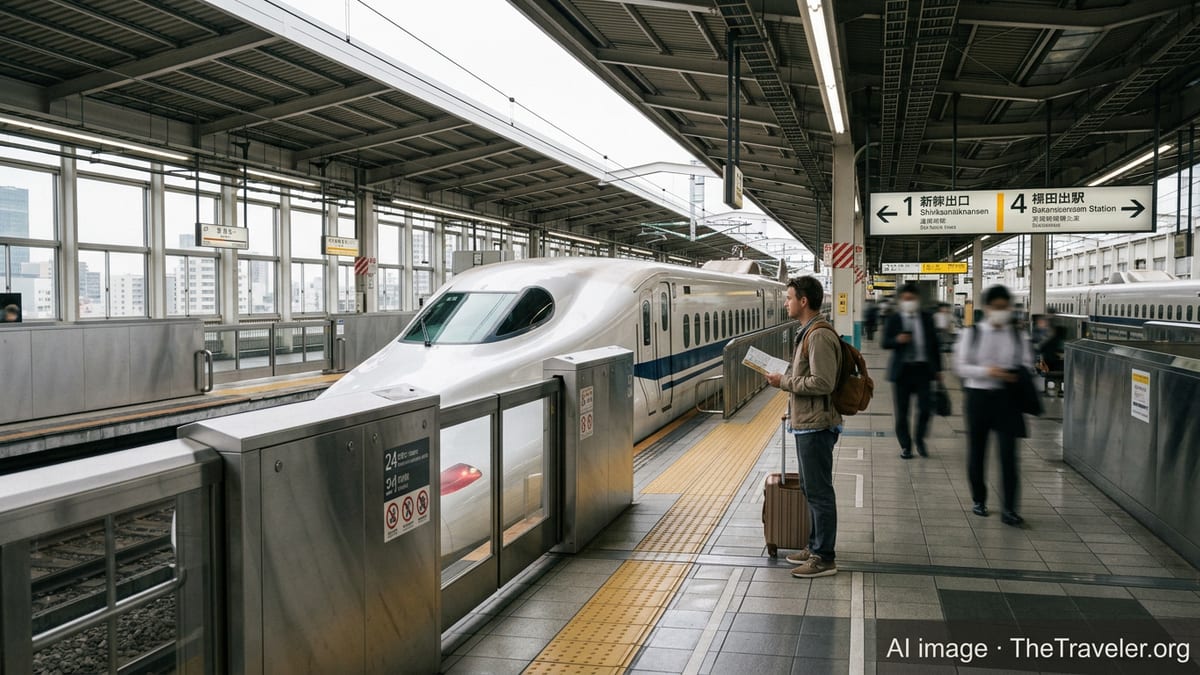
What the Japan Rail Pass Covers in 2026
Publicly available information shows that the Japan Rail Pass remains the only nationwide ticket that allows most overseas visitors to ride an extensive mix of services across the Japan Railways Group. The pass is valid on the majority of JR-operated trains, including the famous Shinkansen bullet trains on the Tokaido, Sanyo and Kyushu corridors, with separate supplementary tickets now allowing access to the formerly excluded fastest Nozomi and Mizuho services. It also covers many limited express and rapid services, JR local lines and certain JR buses and ferries, giving travelers a single product that knits together a countrywide network.
Reports indicate that the pass is available in 7, 14 and 21 consecutive-day versions, all tied to calendar days rather than hours. Once activated, it can be used from the first train of the morning until the last departures that night, across the entire validity period. Travelers can usually make advance seat reservations at JR stations without extra charge, which is particularly valuable during peak seasons such as cherry blossom, Golden Week and the summer holidays when Shinkansen services can sell out.
The nationwide pass cannot be used on most private railways, subways and non-JR buses, which remain important for reaching neighborhoods, smaller towns and airports not served exclusively by JR. However, many itineraries that focus on long intercity hops still derive most of their transport value from the high-speed legs that the pass covers. For many visitors, that combination of broad long-distance coverage and predictable upfront cost is what continues to make the product attractive.
Eligibility rules remain centered on foreign passports and temporary visitor status stamped into the passport at the border, according to official documentation. Some categories of Japanese nationals living overseas can also purchase the pass under specific conditions that have been extended in recent notices, but the product remains primarily aimed at short-term inbound tourism rather than residents.
Price Hikes and What “Unlimited” Really Means
The most dramatic change affecting affordability arrived with the large price increase that took effect in October 2023, when newspapers such as the Japan Times reported average rises of around 70 percent for the Japan Rail Pass. Subsequent coverage and specialist rail guides note that this adjustment significantly changed the calculation for casual visitors, who can no longer assume the pass will automatically be the cheapest option for every itinerary. Since then, smaller adjustments to some regional passes and related products have continued as JR companies respond to higher operating costs and strong demand for rail travel.
Despite the higher upfront cost, the “unlimited” nature of travel within the validity period still has concrete financial advantages for specific trip patterns. A single return journey by Shinkansen between Tokyo and cities such as Hiroshima or Hakodate can approach or even exceed the cost of a 7-day pass when standard reserved-seat fares and surcharges are added. Specialist fare breakdowns published by independent rail sites show that adding even one more long-distance leg within the same week typically tips the balance firmly in favor of the pass.
Travel media and rail-focused publishers now emphasize that travelers need to think of the pass as a long-distance rail subscription rather than a blanket discount on all movement in Japan. Day trips on short JR segments around Tokyo, Osaka or Fukuoka rarely justify using a pass day by themselves, while itineraries built around several bullet-train hops plus a scattering of local rides can still deliver strong value. In practice, the more ground a traveler covers at high speed in a short period, the more the economics favor the pass.
Observers also note that price revisions for some JR commuter fares scheduled for March 2026 will not directly change the set price of the nationwide Japan Rail Pass. That means the relative value of the pass compared with buying individual long-distance tickets could slightly improve if regular fares rise while pass prices hold steady, although the overall effect on a short tourist trip is expected to be modest rather than transformative.
Digital Upgrades and Easier Access for Visitors
Recent announcements from JR East and tourism promotion bodies highlight a quiet but important shift in how travelers can obtain and use the Japan Rail Pass. From April 1, 2026, passes purchased through the official reservation website will be redeemable not only at staffed ticket counters but also at selected JR East ticket vending machines equipped with passport readers. Public information about the rollout suggests that these machines will be concentrated at major Tokyo-area stations and key airports, alongside at least one large station in the Tohoku region.
This change is designed to reduce queues at busy ticket offices and to give travelers arriving on early-morning or late-night flights more flexibility in when they exchange their reservation for the physical pass. Combined with ongoing expansions in contactless IC card usage through systems like Suica and other mutual-usage cards, the experience of navigating stations, reserving seats and passing through ticket gates is becoming more streamlined for visitors accustomed to digital wallets at home.
Separate coverage on rail-focused sites describes broader digital enhancements to the pass ecosystem, including clearer online reservation interfaces, multilingual support and real-time seat availability tools. These developments are particularly significant for first-time visitors who may find Japan’s dense timetables and complex station layouts intimidating. A smoother booking and pickup process reduces the friction that can otherwise undermine some of the value of unlimited travel, especially during short trips when time spent in queues directly eats into sightseeing.
Industry commentators suggest that these upgrades are also part of Japan’s wider preparation for major events such as the Osaka-Kansai Expo and for long-term ambitions to host 60 million inbound visitors annually. In that context, a more flexible and user-friendly nationwide rail pass is seen as a cornerstone of the country’s broader tourism infrastructure, even as debates continue about crowding, regional imbalances and environmental impacts.
When the Pass Saves Money and When It Does Not
Travel guides and community forums increasingly stress that the Japan Rail Pass is no longer a universal recommendation. For visitors focusing on a single metropolitan area like Tokyo or Osaka, or on short hops within one region, individual tickets combined with local IC cards usually cost less. Urban private railways and subways, which the pass does not cover, often provide the most direct routes within big cities, further reducing the benefit of a nationwide JR-only product for these types of itineraries.
Where the pass still stands out is on fast-paced routes that link multiple regions over a week or more. An itinerary that includes Tokyo, Kyoto, Hiroshima and a side trip to Kyushu within seven days, for instance, would involve several long Shinkansen segments that quickly accumulate high point-to-point fares. Price comparisons published by independent rail analysts consistently show that travelers who string together three or more long-distance bullet-train legs within the validity period can surpass the break-even point and move into genuine savings, sometimes amounting to the equivalent of several hundred US dollars.
There is also non-monetary value to consider. Knowing that every JR train boarded within the pass conditions is effectively prepaid can make it easier to be spontaneous, change plans at short notice or detour to a lesser-known stop along a main line. That flexibility is hard to quantify but frequently cited in traveler reports as a reason to choose the pass even when the savings are marginal compared with individual tickets.
For some visitors, especially rail enthusiasts, the pass doubles as a license to explore lesser-used lines that might otherwise be skipped because of extra cost. Riding scenic rural routes in Tohoku, Hokuriku or inland Kyushu becomes easier to justify when they no longer require a separate ticket for each segment. In that sense, the pass still supports the original goal of spreading tourism beyond the country’s most famous cities, even though fewer travelers now find it automatically cost-effective.
Planning Strategies to Maximize Unlimited Rail Travel
Expert guides advise treating the Japan Rail Pass as the centerpiece of a carefully structured itinerary rather than an add-on purchased at the last minute. One common strategy is to cluster costly long-distance journeys within the pass’s 7, 14 or 21 consecutive days, while using pay-as-you-go IC cards or local tickets before and after that window. Travelers might spend the first few days exploring Tokyo on subways and non-JR lines, activate the pass on the day they leave for Kyoto or Kanazawa, and then use it continuously while moving through western Japan and back toward their departure airport.
Another widely recommended tactic is to map out exact Shinkansen and limited express routes in advance and compare the combined cost of individual fares with the price of the pass using publicly available fare calculators. This exercise often reveals edge cases where the pass almost, but not quite, breaks even; in those situations, personal priorities such as flexibility, time savings and the desire to avoid repeated ticket purchases can justify opting for the pass even without hard savings on paper.
Regional passes offered by JR East, JR West, JR Kyushu and other companies complicate but also enrich this calculation. Recent revisions have raised prices for some of these products and, in a few cases, merged separate area passes into broader but more expensive versions. Nonetheless, for itineraries contained within a single part of the country, such as the Tohoku region or Kansai plus Hokuriku, regional options can still undercut the cost of the nationwide pass while retaining unlimited travel within their zones. Analysts increasingly recommend comparing at least one regional alternative before committing to the nationwide product.
As Japan’s rail system evolves ahead of timetable changes in March 2026 and the further digitalization of ticketing, the Japan Rail Pass remains a powerful tool rather than an automatic bargain. Visitors who understand its current pricing, coverage and digital features, and who design their itineraries to concentrate long-distance travel within the validity window, can still unlock extensive, relatively affordable access to one of the world’s most impressive rail networks.