

Portugal’s public healthcare system, the Serviço Nacional de Saúde (SNS), offers broad access to medically necessary care for legal residents, but it operates within a complex framework of registration rules, referral pathways, and cost-sharing arrangements. Understanding how the system functions in practice is essential for anyone evaluating relocation to Portugal and planning long-term access to healthcare as a resident.
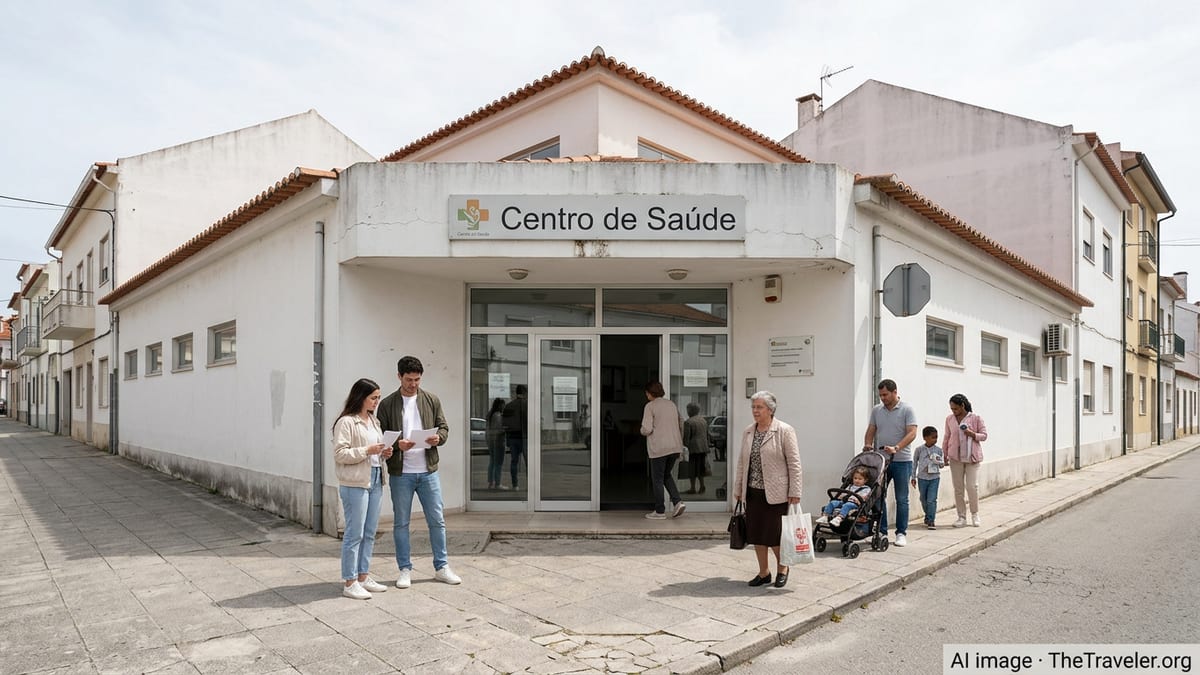
System Overview and Governance of the Portuguese SNS
Portugal’s health system is built around a tax-funded National Health Service, the Serviço Nacional de Saúde (SNS), which provides universal coverage for residents. The SNS coexists with smaller occupation-based health subsystems and a growing private insurance and hospital sector, but the SNS remains the backbone for primary and hospital care for most of the resident population. Public spending covers the majority of health expenditure, while out-of-pocket payments and voluntary insurance account for the remainder.
The SNS is overseen by the Ministry of Health and administered through regional health authorities (Administrações Regionais de Saúde) and local groupings of health centers and hospitals. Residents typically interact with the system at three main levels: primary care units (centros de saúde), hospital outpatient and inpatient services, and emergency or urgent care. National data indicate that more than 10 million users are registered in primary healthcare, reflecting near-universal enrolment of the resident population in SNS primary care structures.
Policy reviews by international bodies describe the quality of clinical care as generally high by European standards, with strong preventive and maternal-child health programs, but also highlight persistent challenges such as waiting times for some specialties and regional disparities in access. Portugal’s 2025 state budget and subsequent health policy measures continue to focus on shoring up public health capacity and improving affordability for lower-income households.
For relocation planning, it is critical to understand that the SNS is a residency-based entitlement system: eligibility is linked to lawful residence status in Portugal rather than employment alone. Once enrolled with an SNS user number, residents have access to medically necessary services under essentially the same rules as citizens.
Eligibility, Registration and SNS User Number for Residents
Access to the SNS starts with registration in the National Health User Registry (Registo Nacional de Utentes, RNU) and the issuance of an SNS user number (número de utente). According to guidance from the Portuguese health regulator and Ministry of Health, foreign citizens with permanent or temporary residence in Portugal and a valid residence authorization are entitled to full registration status, treated in practice on the same basis as nationals for public healthcare access.
New residents typically obtain their SNS number by presenting identification, a Portuguese tax number, proof of address, and a valid residence permit at their local public health center. Once the RNU record is created and marked as updated resident status, the individual can enroll in a specific primary care unit and request assignment to a family doctor. For non-EU residents, regular immigration status documented through residence cards or long-stay visas is usually required for full registration, while some categories of migrants with pending regularization may receive more provisional registration types that still allow access to urgent and essential care.
For EU and EEA nationals, initial access may involve coordination with home-country systems using European Health Insurance Cards for temporary stays, but long-term residents are generally expected to transfer to the Portuguese system and obtain an SNS user number once domiciled in Portugal. Certain special cases, such as posted workers or bilateral social security arrangements, may modify the path into the SNS, but for most residents contemplating full relocation, local registration as an SNS user becomes the default gateway to care.
In practical terms, residents should anticipate an administrative process that can vary by region and facility, with occasional delays or confusion over documentation requirements. However, policy documents from the regulator emphasize that health units must register eligible foreign residents and may not deny medically necessary care based solely on nationality, particularly in urgent or life-threatening situations.
Structure of Care: Primary, Specialist and Emergency Services
The SNS is organized so that primary care acts as the main entry point and coordinator for most other services. Local health centers group together functional primary care units, including Family Health Units (USF) and Personalized Health Care Units (UCSP), which provide general practice, maternal and child health, vaccinations, preventive screening, and chronic disease management. Law and practice assign family physicians the role of first contact for non-emergency problems and gatekeepers for referrals to many specialist and hospital services.
Each resident is in principle assigned a family doctor (médico de família) within a primary care unit. However, national statistics and independent reports indicate that a substantial minority of residents do not currently have an assigned doctor because of workforce shortages, particularly in some urban and coastal regions. Recent data show over 10 million users registered in primary care, but more than one million residents without a designated family doctor at various points in recent years, with regional variation. Residents without a family doctor are usually attached to a health center and can be seen by rotating clinicians or through acute consultation slots, but continuity of care may be weaker.
Specialist care in the public system is predominantly delivered in hospital outpatient departments. Access usually requires a referral from a family doctor or from a primary care urgent consultation, except for certain specialties such as gynecology or psychiatry where direct access may be available in some regions. Waiting times for non-urgent specialist consultations and elective surgeries can extend from weeks to many months, depending on specialty and region, leading some residents to use private providers or insurance for faster access while still relying on the SNS for major or costly interventions.
Emergency and urgent care are delivered through hospital emergency departments and urgent care units associated with health centers. The national telehealth line SNS 24 provides nurse-led triage, advice, and appointment scheduling, and can direct residents either to self-care, primary care, or hospital emergency departments according to standardized clinical protocols. Residents registered with the SNS have a right to emergency care regardless of ability to pay at the point of use, although user charges may formally apply to some non-exempt users.
Coverage Scope and Excluded Services
For residents, the SNS broadly covers medically necessary care including: general practice and primary care consultations, specialist outpatient visits, hospitalizations and surgeries, emergency care, maternity and neonatal services, pediatric care, mental health services, vaccinations, preventive screening programs, and a large share of outpatient prescription medicines through co-payment arrangements between the state and patient. Public health programs such as cancer screening (for example, breast and cervical) and childhood immunization are delivered with full coverage and no user charges.
Despite this wide coverage, there are notable gaps and limitations that relocation candidates should factor into planning. Routine dental care for adults is not comprehensively covered by the SNS, and much dental treatment is paid out-of-pocket or via private insurance, although there are expanding voucher schemes and public dental services targeted at children, pregnant women, and vulnerable groups. Some allied health services such as physiotherapy and psychology are partially available in the public system but subject to referral constraints and capacity limits, leading many residents to seek these services privately.
Outpatient prescriptions are covered through a tiered reimbursement scheme in which the state pays a proportion of the reference price and the patient pays the remainder. Recent policy adjustments introduced income-based exemptions for certain low-income older adults, but analysis by the World Health Organization has found that out-of-pocket spending on medicines remains a major source of financial pressure for Portuguese households compared with some other EU countries. As of 2025, further reforms are being considered to reduce co-payment burdens on vulnerable groups and expand automatic exemptions.
Areas such as fertility treatment, long-term nursing home care, and certain high-cost technologies are provided under more restrictive criteria or through limited capacity programs. Residents often combine public coverage for core medical risks with private insurance or savings for dental, optical, and faster access to elective outpatient services. The reliance on mixed strategies is particularly common among higher-income residents and international transferees, who may seek predictable access and English-speaking providers while still valuing the SNS as a safety net for major treatment episodes.
User Charges, Exemptions and Out-of-Pocket Costs
Historically, Portugal applied “moderating fees” known as taxas moderadoras for many SNS services, including primary care visits, emergency department attendances, and certain diagnostic tests. Policy reforms over the past decade have significantly reduced these charges, especially for primary care, where routine consultations in health centers are now effectively free at the point of use for registered residents. Recent legal changes further scaled back emergency department co-payments for many clinical situations, particularly when the visit follows proper referral pathways or results in hospital admission.
Exemptions from user charges apply to extensive groups, including children, pregnant women, people with specific chronic diseases, low-income households receiving certain social benefits, and individuals in other protected categories. International assessments estimate that roughly two-thirds of registered SNS users fall into exemption categories, meaning that they face no or minimal user charges for core services, although they may still have co-payments for medicines. This high level of exemption substantially reduces point-of-care payments for much of the population but concentrates the remaining fee burden on middle-income users who do not qualify for exemptions.
Despite the reduction in formal user charges, out-of-pocket expenditure remains a concern. WHO analysis published in late 2025 estimated that nearly 8 percent of Portuguese households experience financial hardship because of health-related out-of-pocket spending, a rate higher than many EU comparators. The primary drivers are co-payments for outpatient medicines, private spending on dental care, and optional use of private providers to bypass waiting lists, rather than SNS consultation fees. Relocating residents should understand that while day-to-day consultations in the public system are low-cost or free, total health spending can still be meaningful, particularly for chronic medicine use or when private care is used for convenience.
For residents accustomed to employer-based systems, it is important to understand that the SNS does not levy premiums at the point of registration; financing is mainly through general taxation and social contributions. As a result, new legal residents who have not yet contributed significantly through taxes still access care on the same user-charge terms as longer-term contributors, although broader fiscal debates in Portugal occasionally revisit issues of system sustainability and fairness.
Quality, Capacity and Regional Variation
Independent evaluations consistently rank Portugal’s healthcare outcomes above the EU average on indicators such as life expectancy and avoidable mortality, reflecting long-standing investments in primary care and public health. However, the SNS faces capacity constraints, including hospital bed pressures, staffing shortages in some specialties, and significant emigration of health professionals over the past decade. These pressures manifest primarily as waiting times for non-urgent consultations, diagnostic tests, and elective surgeries.
Regional variation is pronounced. Northern and central regions often report higher proportions of residents with assigned family doctors and stronger primary care coverage, while the Lisbon metropolitan area and Algarve show higher shares of residents without a designated physician and heavier reliance on urgent care or walk-in consultations. National-scale studies using primary care data suggest that over 10 million users are registered across primary care units, with some regions achieving nearly 80 percent coverage by a family doctor and others closer to two-thirds.
For potential relocations, these regional disparities mean that healthcare access experience can differ significantly depending on location. In major cities, tertiary hospital care, advanced diagnostics, and specialist services are widely available, but queues can be long, pushing some residents toward mixed public-private strategies. In smaller towns and interior regions, primary care continuity may be stronger, yet the range of local specialty services is narrower, with greater reliance on referral to regional hospitals and occasional patient travel.
Quality assurance is supported by national clinical guidelines, digital health records within primary care, and standardized training of family physicians. Nonetheless, user experience varies by facility, and language can be a practical barrier in some public units that focus mainly on Portuguese-speaking populations. Multilingual staff are increasingly common in high-immigration areas, but there is no guarantee of English-language provision in every public setting.
Practical Considerations for New and Long-Term Residents
From a relocation planning perspective, successful use of the Portuguese public healthcare system depends on timely registration and realistic expectations regarding access patterns. New residents should prioritize obtaining an SNS user number soon after establishing residence, registering with their local health center, and requesting placement on the list for a family doctor even if immediate assignment is not possible. Maintaining updated contact details in the user registry is essential because many notifications, including offers of family doctor assignment or screening appointments, are delivered via SMS or digital channels.
Residents without an assigned family doctor can still use the SNS through open consultation slots, urgent care points, and the SNS 24 telehealth line, but they may encounter more fragmented care and longer waits. Those with chronic conditions or complex medical histories often find it advantageous to secure a stable family doctor in the public system, even if they use private providers for some appointments, as this ensures access to state-covered prescriptions, referrals, and long-term monitoring within the national record system.
Given ongoing workforce and capacity challenges, many resident households adopt a hybrid approach. They rely on the SNS for catastrophic coverage, inpatient care, maternity, and high-cost treatments, while using private insurance or out-of-pocket payments for faster access to elective consultations, dental services, and certain diagnostics. International assignees should also assess employer provisions, as some relocation packages include private health insurance, which can significantly alter the day-to-day healthcare experience without replacing the strategic value of SNS registration.
Finally, digital literacy and awareness of official channels are increasingly important. Residents are encouraged to use official SNS apps and portals for test results, prescriptions, and appointment booking, while being cautious about phishing attempts that mimic SNS communications and attempt to harvest financial data. Authorities have recently issued warnings about fraudulent SMS messages posing as SNS debt notifications, underscoring the need to treat unsolicited payment requests with skepticism and verify queries directly with health units.
The Takeaway
For residents, Portugal’s public healthcare system offers broad access to essential services at relatively low direct cost, anchored in a universal, tax-funded model. Legal residents who complete SNS registration are entitled to the same core benefits as citizens, including primary care, hospital treatment, emergency services, and subsidized medicines, subject to standard rules on referrals and user charges.
At the same time, the SNS operates under real constraints. Assignment to a family doctor is not guaranteed in all areas, waiting times for some specialist and elective care can be long, and out-of-pocket expenses for medicines, dental care, and optional private services can be significant. Regional variation and administrative complexity mean that individual experiences differ widely.
For relocation decision-making, the key considerations are straightforward. Residents can usually rely on the SNS for serious illness and emergency care, and for preventive and maternal-child health services. However, those who value short waits, routine adult dental coverage, and consistent access to English-speaking providers often supplement public coverage with private insurance or targeted savings. Overall, the Portuguese public healthcare system provides a robust safety net and a generally high standard of care, but it is best understood as the core of a mixed public-private landscape that residents must navigate actively.
FAQ
Q1. Do foreign residents have the same right to Portuguese public healthcare as citizens?
Yes. Once legally resident and registered with an SNS user number, foreign nationals access the public healthcare system under essentially the same rules as Portuguese citizens, including eligibility for primary care, hospital treatment, and emergency services.
Q2. How does a new resident obtain an SNS user number?
New residents normally visit their local public health center with identification, a Portuguese tax number, proof of address, and a valid residence authorization. Staff register the individual in the National Health User Registry and issue an SNS user number, which enables access to appointments, prescriptions, and referrals.
Q3. Is it guaranteed to receive a family doctor in the SNS?
No. The system is designed so that every resident has a family doctor, but staffing shortages mean that in some regions a significant number of users are on waiting lists. Residents without a doctor can still be seen at health centers by available clinicians or in urgent slots.
Q4. Are SNS consultations free at the point of use?
Most primary care consultations in public health centers are now free for registered residents, and many users are exempt from other fees. Limited user charges may still apply to some emergency visits and services for non-exempt users, while outpatient medicines generally involve separate co-payments.
Q5. Does the SNS cover dental care for adults?
Routine dental care for adults is not comprehensively covered. The SNS and related programs focus dental benefits on specific groups such as children and vulnerable patients. Most adults pay privately or through dental insurance for regular check-ups and treatments.
Q6. What services require a referral from a family doctor?
Non-urgent consultations with many hospital-based specialists, elective surgeries, and various diagnostic tests generally require a referral from a family doctor or primary care unit. Emergency care does not require prior referral, though using proper referral pathways can influence user charges.
Q7. How high are out-of-pocket health costs for residents?
Direct fees for SNS consultations are relatively low, especially for exempt groups, but households still face out-of-pocket costs for medicines, dental care, and optional private services. International analysis indicates that around one in twelve households experiences financial pressure from health-related expenses.
Q8. Is private health insurance necessary if registered with the SNS?
Private insurance is not legally required, and many residents rely solely on the SNS. However, some choose private coverage to reduce waiting times, improve access to English-speaking or specific providers, and cover services such as dental and private hospital care.
Q9. Can residents use telehealth services in the public system?
Yes. The SNS operates a national telehealth line and digital platforms that provide nurse-led triage, medical advice, appointment booking, and, in some cases, teleconsultations. These tools are increasingly integrated into routine access to public healthcare services.
Q10. What should relocation candidates do about healthcare in their first months in Portugal?
Relocation candidates should prioritize obtaining an SNS user number, registering with the local health center, and requesting a family doctor. They should also decide whether to add private insurance for faster access or broader dental coverage while relying on the SNS as the fundamental safety net.