

Spain’s public healthcare system is a mature, largely tax-funded model that provides near-universal access to medical care. Understanding how it is structured, who can use it, what it covers and how services are accessed is essential for anyone evaluating a potential relocation to Spain.
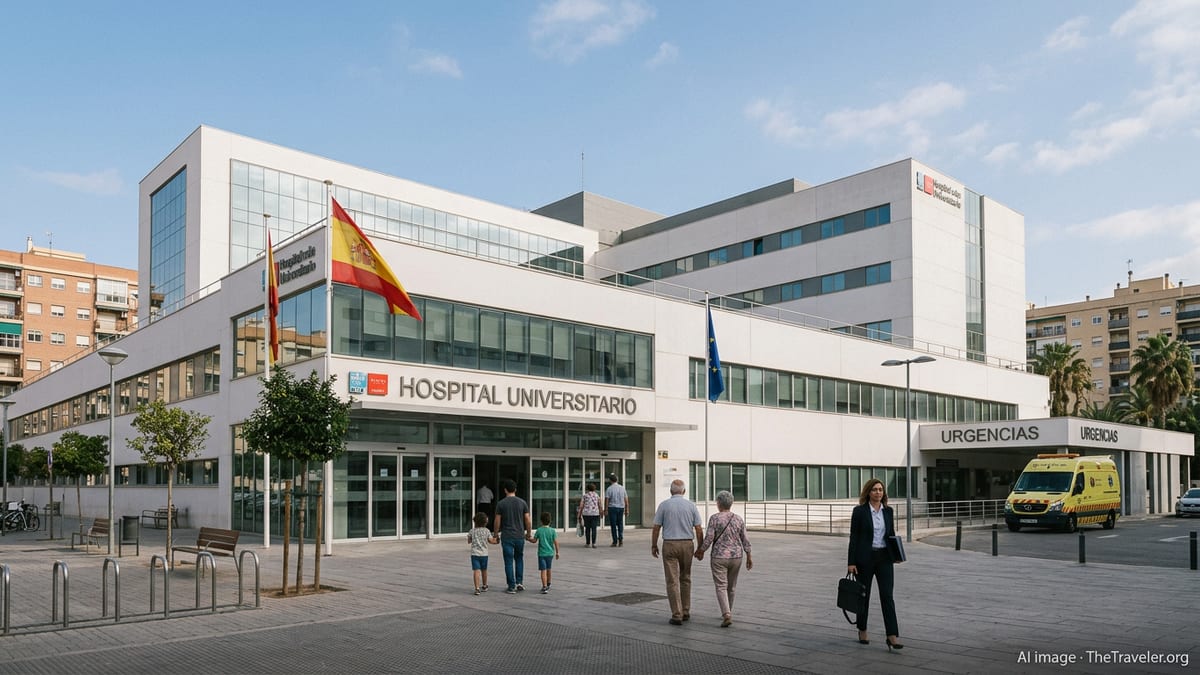
Structure of the Spanish Public Healthcare System
Spain’s public healthcare system is known as the Sistema Nacional de Salud (SNS). It is a predominantly tax-financed model that offers universal or near-universal access to residents, with services delivered mainly through public providers. The central government, through the Ministry of Health, sets basic legislation, minimum benefits and national coordination, while regional governments are responsible for actually organizing and delivering healthcare services within their territories.
The SNS is highly decentralized. Each of Spain’s 17 autonomous communities, plus the two autonomous cities, runs its own regional health service. These regional services manage primary care centers, hospitals, emergency services and public health programs. This decentralization means service availability, investment levels and waiting times can vary between regions, although the legal core of guaranteed services remains national.
Public healthcare is funded primarily through general taxation rather than dedicated health insurance contributions. Recent analyses place total health expenditure at around 10 percent of GDP, with government and compulsory schemes accounting for the majority of spending. Out-of-pocket spending by households makes up roughly one fifth of current health expenditure, which is somewhat above the EU average but still significantly lower than in systems where private insurance plays a dominant financing role.
Private healthcare coexists with the SNS. Private insurance is voluntary and is often used by residents seeking shorter waiting times, access to additional services such as wider dental or optical coverage, or English-speaking providers. However, for most residents, the SNS is the primary source of routine and hospital care.
Eligibility and Registration for Public Healthcare
Access to the Spanish public healthcare system is linked primarily to legal residence and registration rather than citizenship alone. In broad terms, Spanish citizens, EU and non-EU residents with legal residence status, and individuals contributing to Spanish social security are entitled to public healthcare. Specific rules apply to cross-border workers, pensioners receiving Spanish or certain foreign state pensions, and vulnerable groups without sufficient resources.
The practical gateway to the system is registration with the municipal authorities (padrón) and the social security system where applicable. Once a resident is registered and recognized as entitled to care, a personal health card known as the Tarjeta Sanitaria Individual (TSI) is issued by the regional health service. This card is used to access primary care, hospital services and pharmacy benefits in the public network.
Spain has taken legislative steps to reinforce universal access. A national bill approved in recent years is aimed at restoring or extending the right to health care for Spanish citizens returning from abroad, for family-reunified migrants and for people residing in Spain regardless of administrative status under defined conditions. In practice, implementation is handled by the autonomous communities, and some details can differ, but the policy direction is toward inclusive coverage.
Temporary visitors and tourists from the European Union generally access necessary healthcare through the European Health Insurance Card arrangements, while non-EU visitors typically rely on private travel insurance. These short-term mechanisms are distinct from the resident entitlements of the SNS and should not be confused with long-term coverage for relocation purposes.
Care Pathways: From Primary Care to Specialist and Hospital Services
The Spanish public system is organized around strong primary care. Residents are assigned or choose a family doctor (médico de familia or general practitioner) at their local primary care center. This physician is the principal entry point into the SNS, managing common health issues, chronic diseases, preventive care and coordination with other parts of the system. Primary care centers also host pediatricians, nurses and, in some regions, basic mental health or social work services.
Access to most public specialists is by referral from the primary care doctor. This gatekeeping model is designed to ensure appropriate use of high-cost services and to maintain continuity of care. Specialists usually practice in public hospitals or specialist outpatient centers. Once referred, patients are placed on regional waiting lists for non-urgent consultations or procedures. Urgent cases are prioritized, but non-urgent specialist care and elective surgery can involve waiting periods that vary considerably by region and specialty.
Hospital care within the SNS includes emergency departments, inpatient wards, intensive care, maternity services and major surgery. Many large public hospitals act as teaching and research centers, supporting medical education and advanced treatments. Emergency care for acute conditions is available through public hospital emergency rooms and regional emergency services, and is generally provided without direct payment at the point of use for residents entitled to SNS coverage.
Diagnostics and ancillary services such as imaging, laboratory tests and rehabilitation are usually ordered by primary care or hospital physicians and provided within the public network. In some areas, public authorities contract private providers to deliver certain services, especially to reduce waiting times. From the patient’s perspective, these contracted services are still accessed using the public health card and follow public coverage rules, even if the care is delivered in a private facility.
Scope of Coverage and Typical Exclusions
The public benefits package of the SNS is extensive by international standards. It covers primary and specialist medical consultations, inpatient and outpatient hospital care, emergency services, maternity and neonatal care, vaccinations, a wide range of preventive programs and medically necessary rehabilitation. Mental health services are also included, though availability and intensity can vary by region and the level of care required.
Public coverage includes medically necessary surgery, oncology treatment, renal dialysis and other high-cost interventions that are often the focus of concern for relocating households. Public programs also provide chronic disease management, including for conditions such as diabetes, cardiovascular disease and chronic respiratory illnesses, with prescriptions subsidized according to statutory co-payment rules.
However, there are notable areas of limited or no coverage. Routine adult dental care is only minimally covered in most regions, often restricted to emergency extractions or limited treatments for children and vulnerable groups. Optical services such as glasses or contact lenses are largely excluded except for specific clinical situations, and hearing aids may only be subsidized under certain conditions. Many residents meet these needs through out-of-pocket spending or private insurance add-ons.
Non-essential or clearly cosmetic procedures are generally not covered. Some therapies regarded as complementary or alternative medicine fall outside the SNS, and access will depend on private payment or insurance. These exclusions are important for relocation planning, particularly for families with ongoing dental or optical costs, or for individuals seeking elective procedures that are considered non-essential by the public system.
Costs, Co-payments and Out-of-Pocket Expenditure
For residents entitled to SNS coverage, consultations with primary care doctors, public specialists and hospital inpatient stays do not usually involve direct fees at the point of use. The main mandatory co-payments in the public system relate to outpatient prescription medicines and certain medical devices such as prosthetics. The level of co-payment is determined by national rules that take into account income, employment status and pensioner status, with lower-income groups typically paying a smaller share and subject to ceilings.
At system level, out-of-pocket payments by households account for roughly 20 to 21 percent of total current health expenditure in Spain, a proportion slightly higher than the EU average but still consistent with a predominantly publicly financed system. These payments are concentrated in areas where coverage is partial or absent, such as adult dental services, optical products and some over-the-counter medicines, as well as private consultations chosen outside the public pathway.
While emergency and inpatient care are effectively free at the point of use for those covered by the SNS, uninsured visitors or individuals without recognized entitlement can face substantial bills for hospital care. For relocators, ensuring that residence status and public healthcare eligibility are correctly established is therefore critical to avoid unexpected costs during serious illness or accidents.
Complementary private insurance is common, especially among middle and higher income groups or those whose employers offer private coverage. Premium levels vary according to age and benefits, but the strategic role of private insurance is usually to secure faster access and broader coverage for services that are weakly covered in the public system, rather than to replace SNS coverage for essential hospital care.
Regional Variation, Capacity and Waiting Times
Because the SNS is delivered by autonomous communities, regional variation is a core feature of the Spanish public healthcare landscape. Regions differ in the density of healthcare professionals, the age and capacity of hospital infrastructure, and investment in digital systems. For example, some regions report over seven doctors per 1,000 inhabitants in certain areas, while others have significantly fewer, which can influence appointment availability and waiting times.
Waiting times for non-urgent specialist consultations and elective surgery are one of the most widely discussed limitations of the SNS. Average waits can range from several weeks to several months depending on specialty and region. Common high-demand areas such as orthopedics, ophthalmology and diagnostic imaging may experience persistent backlogs. Policy initiatives and targeted funding have aimed to reduce these waits, including public contracts with private providers and extended operating hours, but significant differences between regions remain.
Primary care access is generally good, with most residents having a designated family doctor within reasonable travel distance. However, in some urban neighborhoods and rural areas there are reports of appointment slots being fully booked, leading to delayed non-urgent consultations or heavier reliance on walk-in urgent care facilities. Demographic pressures such as population aging and uneven distribution of health professionals can exacerbate these access issues.
Digitalization and telemedicine are advancing but unevenly implemented. Some regions have robust electronic prescription systems and patient portals that allow online appointment booking and access to medical records, while others are still standardizing electronic systems. Relocating professionals should therefore expect a competent but not fully integrated digital environment, with certain administrative processes remaining paper based or requiring in-person visits to health centers.
Interaction Between Public and Private Healthcare
Spain operates a mixed delivery environment where public and private providers coexist. The SNS remains the backbone for essential care, but private hospitals and clinics play a supplementary role. Many healthcare professionals work in both sectors. Employers in some industries offer private insurance as an employee benefit, and individuals sometimes purchase private plans specifically to bypass waiting lists or to secure services not comprehensively provided by the SNS.
The public system itself occasionally purchases services from private providers to increase capacity. For example, regions may contract private hospitals to perform elective surgeries or diagnostic tests for public patients when public waiting lists become too long. In these cases, public patients use their SNS health card and do not pay additional fees, even though care is delivered in a private facility under contract.
For relocation decision-making, it is important to view private coverage as a complement rather than a strict prerequisite for accessing quality healthcare. The SNS offers robust coverage for essential medical needs, but a private policy can substantially improve convenience and predictability for non-urgent care. Professionals who prioritize rapid specialist access, private hospital rooms or English-speaking staff are more likely to rely on combined public and private arrangements.
Households should also note that some immigration pathways and long-term residence categories may impose private insurance requirements for a period, even though this falls outside the inherent design of the SNS. Once legally resident and integrated into the social security system, many new arrivals transition to using the public system as their main source of care, while retaining private policies selectively.
The Takeaway
The Spanish public healthcare system offers comprehensive, predominantly tax-funded coverage that performs strongly on major outcomes such as life expectancy and access to essential medical services. Its decentralized structure, centered on primary care and public hospitals, provides residents with a broad package of benefits that covers most necessary treatments at little or no cost at the point of use.
For potential relocators, the main advantages of the SNS are its universal orientation, extensive hospital coverage and protection from catastrophic medical expenses. Core services are generally reliable once eligibility is established, and major health risks such as acute illness, serious accidents and complex surgery are well covered within the public framework.
The principal constraints are regional variation and waiting times for non-urgent specialist care and elective procedures, along with limited coverage of dental, optical and certain ancillary services. Out-of-pocket spending concentrates in these gaps, and many residents mitigate them through complementary private insurance.
Overall, Spain’s public healthcare model is suitable for most relocating professionals and families who prioritize security against high medical costs and accept some trade-off in speed and amenities for a largely universal system. A combined strategy that leverages the SNS for essential care while selectively using private options for convenience and enhanced services is common and can be an effective approach for newcomers.
FAQ
Q1. Is public healthcare in Spain free for residents?
For eligible residents, most primary care, specialist consultations and hospital treatments are provided without direct charges, although prescription medicines and some devices require income-based co-payments.
Q2. Do I need to pay social security contributions to access the Spanish public system?
Many residents qualify for SNS coverage through social security contributions as employees or self-employed workers, but other legal residents can also qualify through residence-based rules, pension entitlements or specific protective schemes for low-income groups.
Q3. How do I access a doctor in the Spanish public healthcare system?
Once registered as a resident and issued a health card, you register with a local primary care center and are assigned or choose a family doctor who becomes your main point of contact for routine care and referrals.
Q4. Can I go directly to a specialist without a referral?
In the public system, access to most specialists requires a referral from a primary care doctor, except in emergencies. Direct specialist access is more common in the private sector for those with private insurance.
Q5. What services are not well covered by the Spanish public system?
Routine adult dental care, optical services such as glasses and contact lenses, and many purely cosmetic procedures are sparsely covered or excluded, which often results in additional out-of-pocket spending.
Q6. How long are the waiting times for treatment in the public system?
Waiting times for non-urgent specialist consultations and elective surgery vary by region and specialty, ranging from a few weeks to several months, while urgent and emergency care is prioritized and generally provided quickly.
Q7. Do I still need private health insurance if I use the SNS?
Private insurance is not mandatory for using the SNS, but many residents purchase it to gain faster access to specialists, broader dental and optical coverage, and additional comfort options in hospitals.
Q8. Are prescription drugs covered by the public system?
Outpatient prescription medicines are partially subsidized. Patients pay a percentage of the price based on income and status, with caps and reduced rates for pensioners and lower-income groups.
Q9. Can I use the Spanish public system if I am only visiting?
Short-term visitors from the EU typically use European Health Insurance Card arrangements for medically necessary care, while most non-EU visitors rely on private travel insurance rather than full SNS entitlements.
Q10. Is emergency care available to everyone in Spain?
Emergency departments in public hospitals provide urgent treatment regardless of ability to pay at the time of care, but long-term coverage and billing outcomes depend on legal residence status and entitlement to the SNS.