

More news on this day
As spring break crowds collide with a partial federal government shutdown and lingering staffing shortages, travelers at major US airports are facing hourslong Transportation Security Administration lines, missed flights and cascading delays just as the busy March travel period peaks.
Get the latest news straight to your inbox!
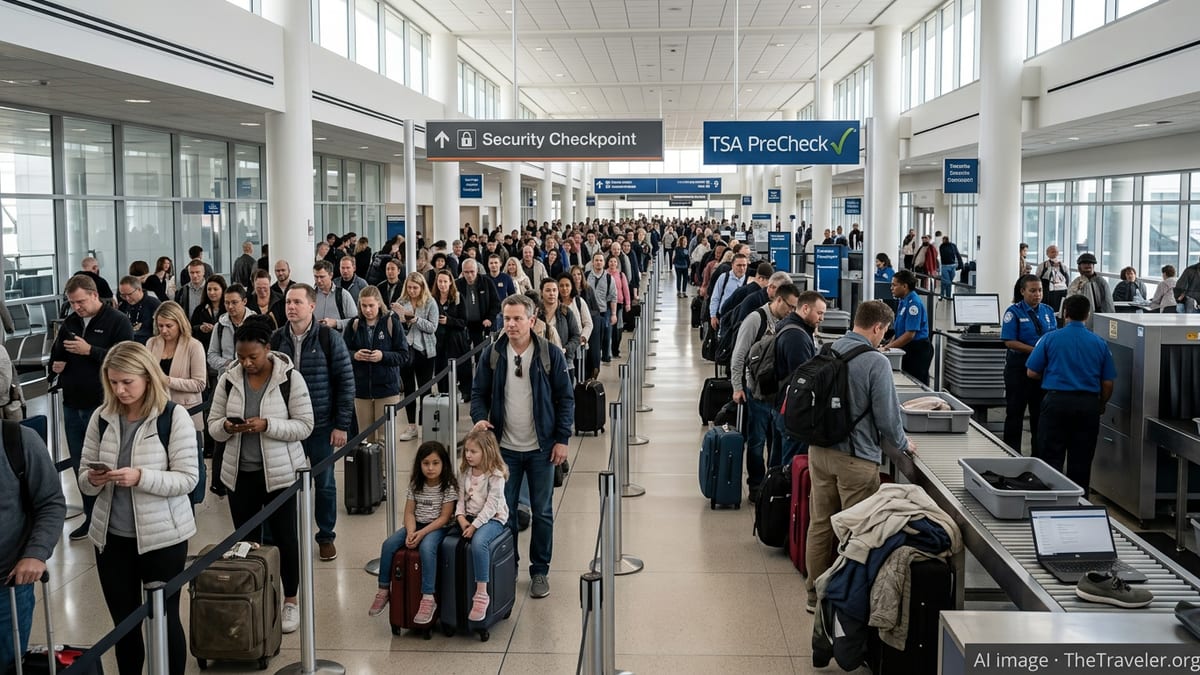
Why Security Lines Are So Bad Right Now
Security checkpoints at several large US hubs have been overwhelmed in recent days, with reported TSA waits of up to three hours at airports in Houston, New Orleans, Atlanta and Charlotte. The surge in passengers for spring break has coincided with a partial shutdown of the federal government, which is delaying paychecks for many TSA officers and stretching staffing at some checkpoints to the limit.
Transportation and homeland security officials have warned that the combination of elevated demand and strained federal resources will likely keep pressure on security lanes through at least late March. At Houston’s Hobby Airport, for example, travelers have reported lines looping through the terminal and into parking areas, prompting airport officials to urge passengers to arrive significantly earlier than usual for all departures.
While not every airport is seeing extreme waits, the situation is fluid. Some mid-sized airports that started the week relatively unaffected have begun to experience rolling slowdowns as TSA reallocates staff and adjusts shift patterns, while others, such as Dallas Fort Worth and Chicago O’Hare, are bracing for their heaviest waves of spring break traffic over the coming weekends.
Compounding the strain at security are broader capacity issues in the US aviation system. Air traffic control facilities are still working through chronic staffing gaps that first emerged years ago and intensified during the pandemic and subsequent shutdowns. When storms, volume and staffing shortages overlap, the result can be long ground holds and in-flight delays even after passengers successfully clear TSA.
How Early You Should Arrive at the Airport
Airlines, airport authorities and federal officials are all delivering a similar message this month: build in far more time than you normally would. For many major US airports, the traditional two-hour guideline for domestic flights is proving inadequate during peak periods, especially in the early morning and late afternoon when departure banks are heaviest.
Travelers departing from known hotspots for delays, including large hubs in Texas, Georgia, North Carolina and Louisiana, are being urged to arrive at least three hours before domestic flights and four hours before international departures. Even at airports that have so far avoided the worst of the lines, officials say passengers should assume they will encounter at least one bottleneck, whether at the ticket counter, bag drop, security or boarding.
Experts note that “how early” is not a one-size-fits-all answer. Passengers checking bags, traveling with young children, or flying with low-cost carriers that operate from secondary terminals often need additional buffer. So do travelers connecting through heavily congested hubs, where tight layovers that looked reasonable when tickets were purchased can quickly evaporate if the departure airport experiences an unexpected slowdown at TSA.
If you are flying in the next two weeks, the most conservative strategy is to treat your departure time as fixed but move everything else earlier. That means getting to the airport ahead of official guidance when possible, scheduling rideshares with extra margin, and avoiding last-minute checked baggage or kiosk issues that could push you into the worst of the queues.
Smart Ways to Cut Your Time in TSA Lines
For travelers still planning trips, one of the most effective steps is to enroll in expedited-screening programs such as TSA PreCheck or Global Entry, both of which can dramatically reduce time spent in general security queues. Although some of these programs were temporarily disrupted earlier in the year, they have since resumed processing, and dedicated lanes where available are typically moving far faster than standard lines.
Even without special programs, there are practical ways to shave precious minutes off the screening process. Packing with security in mind is crucial: place laptops, tablets and large electronics where they are easy to remove, keep your pocket contents consolidated in a single bag, and follow the liquid and powder rules to reduce secondary bag checks. Wearing slip-on shoes and minimizing bulky outerwear can also speed personal screening.
Many airports now publish approximate wait times on public displays inside the terminal or via their mobile apps. While these figures are not always precise, they can help you choose the shortest checkpoint if a terminal has multiple screening areas. In some cities, carriers and airport authorities post real-time security updates on social media, including warnings when lines spill beyond the usual queuing zones.
Families and occasional travelers can benefit from having one person “quarterback” the process: checking boarding passes, confirming gate changes and guiding everyone through security prep before they reach the conveyor belt. That advance organization, combined with listening closely to TSA officers’ instructions, can prevent time-consuming re-screens that add to congestion for everyone in line.
Managing Flight Delays and Missed Connections
With air traffic control facilities also feeling the strain, long TSA lines are only one part of the disruption travelers may encounter in the coming weeks. Weather systems, rerouted traffic and ground stops at overburdened hubs are already generating widespread delays, with a particularly heavy impact on tightly scheduled short-haul flights and evening departures.
One of the best defenses is thoughtful itinerary planning. When possible, choose morning flights, which are less exposed to the day’s accumulated delays, and favor longer connection times through known congestion points. Nonstop flights are generally more resilient when available, but if you must connect, avoid pairing a late-evening first leg with a tight layover at a busy hub.
If you do miss a flight because of an unusually long security line, document what you experienced. Photos of the queue, time-stamped messages from the airport or airline warning of delays, and any public announcements about TSA staffing issues can help when you speak with airline agents. Policies vary by carrier, but many will work to rebook passengers at no charge when the disruption is clearly beyond the traveler’s control.
While you wait, keep an eye on both your airline’s app and the main departure boards. Gate changes are common during irregular operations, and flights that are initially posted as severely delayed can sometimes move up if the system recovers faster than expected. Staying close to food, water and charging points will make it easier to adapt as the situation evolves.
What to Expect in the Weeks Ahead
Looking beyond the immediate crunch, aviation officials say they expect elevated pressure on both security and air traffic operations through the rest of March as spring break traffic continues in waves across regions and school districts. Some airports that have not yet seen major problems are preparing contingency plans, including opening overflow queuing areas and reassigning staff to help manage crowds at security.
At the national level, agencies are working to balance safety with throughput. That includes shifting TSA personnel between airports as needs change, temporarily expanding overtime, and coordinating closely with airlines to spread departures more evenly across the day when possible. The Federal Aviation Administration is also using ground-delay programs and controlled departure schedules to prevent gridlock in the skies when key facilities face staffing strains.
For individual travelers, the reality is that some unpredictability will persist, especially at major US hubs that handle a large mix of domestic and international traffic. The most important steps remain within passengers’ control: arriving early, staying informed through official airport and airline channels, packing with security screening in mind, and building extra flexibility into travel plans.
Industry analysts note that although the current turbulence is frustrating, it has also renewed attention on the long-term needs of America’s aviation system, from modernizing technology to rebuilding the security and air traffic control workforce. Until those investments fully materialize, however, beating the TSA chaos will depend as much on smart personal planning as on policy fixes in Washington and at the nation’s busiest airports.