

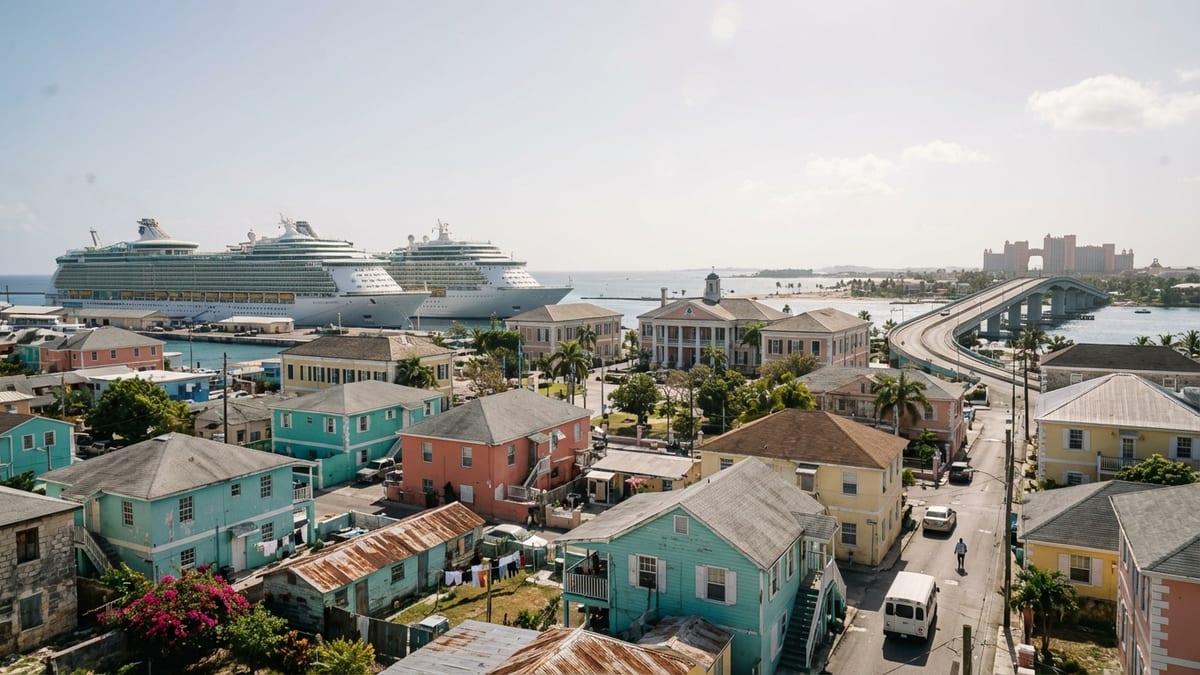
Nassau is one of the Caribbean’s busiest cruise gateways, but the real character of the Bahamian capital starts where the pier ends. Beyond the duty-free shops and shore-excursion kiosks, you will find beaches with space to breathe, layered colonial and Afro-Bahamian history, vibrant neighborhood food, and wild pockets of forest and sea that feel a world away from the crowds. Whether you are in port for a single day or extending your stay on New Providence Island, there are many ways to experience Nassau beyond the cruise terminal.
Getting Beyond the Cruise Port: Orientation & Practical Tips
Nassau’s cruise port sits at the northern edge of downtown, within easy reach of historic streets, public beaches, and the main bridge to Paradise Island. To really explore beyond the immediate port shops and bars, it helps to understand the island’s layout and a few practical considerations, from transportation to safety and timing.
Understanding Nassau’s Layout
Nassau occupies the eastern half of New Providence Island, which is only about 21 miles long and 7 miles wide. Downtown and the cruise port line the northern shore, with Paradise Island just across the harbor to the northeast. Resorts and more spacious beaches cluster along the north coast, while residential areas spread south toward the island’s interior and west toward the airport.
For most visitors with limited port time, the main areas of interest beyond the cruise terminal are:
- Downtown and the historic core, including Parliament Square, the forts, and the Queen’s Staircase
- The north coast and resort areas of Cable Beach and Baha Mar
- Paradise Island, home to Atlantis, The Cloisters, and public beaches
- Outlying nature spots such as Primeval Forest National Park and Clifton Heritage National Park
Transportation & Getting Around
From the port, you can walk into downtown Nassau in a matter of minutes, but reaching beaches and more distant sites usually requires a short ride. Taxis queue just outside the cruise terminal and are the most straightforward option for first-time visitors. Fares are typically regulated by zone rather than meter, so confirm the price with the driver before setting off.
Shared local buses, known as jitneys, provide a cheaper and more local experience, running fixed routes along Bay Street and out toward Cable Beach and other neighborhoods. They can be crowded and are best for travelers who are comfortable with a bit of spontaneity, since schedules are informal.
Safety, Timing & Crowd-Avoidance
The U.S. State Department currently advises travelers to exercise increased caution in The Bahamas, particularly in parts of Nassau where gang-related crime has occurred, including the Over the Hill area south of Shirley Street. Visitors should stay in well-trafficked zones, avoid wandering into unfamiliar residential areas, especially at night, and keep valuables discreet.([people.com](https://people.com/bahamas-updated-travel-advisory-tourists-exercise-increased-caution-violent-crime-11709318?utm_source=openai))
To sidestep the busiest cruise port crowds, start your day early and move quickly past the immediate port shops. Visit high-traffic historic sites like the Queen’s Staircase and Fort Fincastle in the morning, then head for beaches or nature areas by midday. If multiple megaships are in port, consider focusing on more spread-out attractions such as Clifton Heritage National Park or Primeval Forest National Park.
Explore Nassau’s Historic Heart Beyond the Pier
Nassau’s compact historic core makes it easy to step into centuries of colonial and Afro-Bahamian history within a short walk or taxi ride from the cruise terminal. Moving just a few blocks inland from Bay Street, you will find pastel-fronted civic buildings, atmospheric stone staircases, and hilltop forts that shaped the island’s strategic role in Atlantic history.
Walk Parliament Square & Rawson Square
Parliament Square, just inland from Bay Street, is framed by salmon-pink, white-trimmed Georgian-style government buildings that echo Nassau’s British colonial past. The colonial courthouse and parliamentary buildings here continue to serve as the symbolic heart of Bahamian civic life, and the statues dotting the square mark key figures in the nation’s history.
Across Bay Street lies Rawson Square, a public plaza named for a 19th-century governor and home to a bronze bust of Sir Milo Butler, the first Bahamian governor-general after independence.([nassaucruiseport.com](https://nassaucruiseport.com/destination/top-attractions/?utm_source=openai)) These twin squares form an easy first stop on a walking tour and offer a quick primer on how political power shifted in The Bahamas from colonial administration to independent rule.
Climb the Queen’s Staircase
The Queen’s Staircase, carved by enslaved laborers between 1793 and 1794, is one of Nassau’s most atmospheric landmarks. Sixty-five limestone steps rise through a cool, shaded gorge lined with high rock walls and dripping vegetation, once providing a strategic route between hilltop defenses and the town below.([en.wikipedia.org](https://en.wikipedia.org/wiki/Queen%27s_Staircase?utm_source=openai))
Ascending the staircase gives a visceral sense of the physical labor that built Nassau’s infrastructure and the central role of slavery in shaping the island. At the top, you emerge into the Fort Fincastle complex, where vendors often sell crafts and cold drinks, and panoramic views reward the climb.
Tour Fort Fincastle and Fort Charlotte
Perched on Bennet’s Hill above the Queen’s Staircase, Fort Fincastle dates to the 1790s and was originally built to guard Nassau’s approaches and serve as a lighthouse.([en.wikipedia.org](https://en.wikipedia.org/wiki/Fort_Fincastle_%28The_Bahamas%29?utm_source=openai)) Its wedge-shaped walls and cannon-lined ramparts overlook the harbor, with views across Paradise Island and the eastern end of New Providence. Simple interpretive signs help explain its role in defending the town against pirate and foreign threats.
To the west, Fort Charlotte crowns a ridge above the harbor. Completed in 1789, it is Nassau’s largest British colonial fortification, with dungeons, a dry moat, and sweeping harbor vistas that put the town’s geography in perspective.([en.wikipedia.org](https://en.wikipedia.org/wiki/Fort_Charlotte_%28Nassau%29?utm_source=openai)) Wandering the ramparts and subterranean passages offers a quieter, more expansive fort experience than compact Fort Fincastle.
Step Inside the Nassau Public Library & Museum
Near Parliament Square, the octagonal Nassau Public Library occupies what was once the island’s colonial jail. Built in the late 18th century, the building was converted into a library during the 19th century, and its former prison cells now hold archival documents, books, and historic artifacts.([en.wikipedia.org](https://en.wikipedia.org/wiki/Nassau_Public_Library?utm_source=openai))
Visiting the library provides a striking contrast between its carceral origins and its current role as a quiet place of learning. Travelers interested in Bahamian social history will find the transformation especially poignant, and the unusual architecture alone makes it worth a quick detour.
Connect with Bahamian Culture, Art & Heritage
Beyond the photo-ready colonial facades, Nassau is a living Bahamian city with its own contemporary art movements, musical traditions, and community festivals. A short taxi ride or walk from the cruise pier can transport you into galleries, museums, and cultural sites that reveal a richer sense of national identity.
Visit the National Art Gallery of The Bahamas
Housed in the restored 19th-century Villa Doyle, the National Art Gallery of The Bahamas (NAGB) sits at the edge of downtown and showcases both historic and contemporary Bahamian art.([en.wikipedia.org](https://en.wikipedia.org/wiki/National_Art_Gallery_of_the_Bahamas?utm_source=openai)) Paintings, sculpture, photography, and mixed-media works trace themes such as colonialism, independence, identity, and environmental change across the islands.
Exhibitions rotate regularly and often highlight emerging Bahamian and regional artists, while the permanent collection anchors visitors in key works of national significance. The gallery’s hillside location provides views back toward the harbor, and the grounds include an outdoor art park and small amphitheater used for performances and film screenings.
Explore the Pompey Museum of Slavery & Emancipation
Set within historic Vendue House on Bay Street, the Pompey Museum examines the Bahamian experience of slavery, resistance, and eventual emancipation. The museum takes its name from an enslaved man, Pompey, whose 1830 rebellion against his owner became a touchstone of local resistance.
Exhibits use documents, artifacts, and narrative panels to tell stories that often go untold in general Caribbean tourist literature. Spending time here offers crucial context for sites like the Queen’s Staircase and helps frame the island’s colonial architecture within the lived experiences of the people who built and inhabited it.
Experience Junkanoo Culture Beyond the Parades
Junkanoo, The Bahamas’ exuberant street parade tradition of music, dance, and elaborate costumes, erupts most famously in the pre-dawn hours of Boxing Day and New Year’s Day.([nassaucruiseport.com](https://nassaucruiseport.com/destination/top-attractions/?utm_source=openai)) However, travelers visiting at other times can still connect with the culture behind the festival.
Costume-making shacks and practice spaces in Nassau’s neighborhoods hum with activity as groups prepare for the big parades, particularly in the months leading up to the winter holidays. Organized tours and cultural experiences sometimes offer behind-the-scenes visits to see the intricate paper and fabric costumes in progress and to hear the driving rhythms of goatskin drums and cowbells in more intimate settings.
Seek Out Local Food & Neighborhood Flavors
Beyond the familiar chains near the pier, Nassau rewards travelers who venture a bit farther for Bahamian dishes such as conch salad, stew fish, cracked conch, and peas and rice. Casual eateries and food stalls around downtown and on the road toward Arawak Cay, as well as in neighborhoods near Cable Beach, give a taste of everyday dining.
To go deeper, consider a guided food tour that blends tastings with historical context, or allocate time for a sit-down meal at a Bahamian-owned restaurant rather than grabbing a quick bite in the cruise terminal. Paying attention to where office workers and families line up at lunchtime is often the simplest way to find satisfying, authentic plates.
Escape to Beaches & Coastal Hideaways
Nassau’s waterfront near the cruise port can feel crowded when several ships are docked, but you do not have to go far for a more relaxed beach experience. While some of the most famous stretches of sand sit in front of major resorts, there are also public-access beaches and less busy options where the water is just as turquoise and the atmosphere more laid-back.
Enjoy the Scene at Junkanoo Beach
Junkanoo Beach, about a 15-minute walk west along the shore from the cruise terminal, is the closest major public beach to the port.([californiafamilytravel.com](https://www.californiafamilytravel.com/free-things-to-do-in-nassau-bahamas-cruise-port/?utm_source=openai)) The sand curves along a sheltered cove with clear, shallow water suitable for swimming, especially for families with young children.
The atmosphere here is festive, with beach bars serving grilled seafood, conch fritters, and tropical drinks, and music often drifting from speakers. This is not Nassau’s quietest strand, but it is convenient if you want to combine beach time with downtown exploring without committing to a longer taxi ride.
Head West to Cable Beach
For a more expansive shoreline and softer sands, a taxi or jitney ride west from downtown leads to Cable Beach, one of New Providence’s best-known beach areas. The coastline here stretches for several miles, with clear water and a patchwork of resort zones and public access points.
Large properties, including the Baha Mar resort complex, dominate sections of the shore, but you can still find spots to lay down a towel, especially near public entrances. The vibe is more resort-style and less crowded with day-trippers than Junkanoo Beach, making Cable Beach a good choice if you have several hours and want to feel farther removed from the port scene.
Cross the Bridge to Paradise Island
Paradise Island, connected to Nassau by the Sir Sidney Poitier Bridge, is best known for the enormous Atlantis resort, with its water park, aquariums, casino, and manicured beaches. Day passes offer access to the resort’s amenities for non-guests, making it a popular choice for families and groups looking for a full-day playground.
Beyond Atlantis, the island also has public beach access points where you can enjoy the same soft sand and turquoise water without paying for resort facilities. The northern shore tends to be busier, while quieter sections appear the farther east you go.
Seek Quieter Sands & Snorkeling Spots
Travelers with more time or a willingness to hire a taxi for a longer ride can seek out less-visited beaches on New Providence’s western and southern shores. Some small coves and local favorites remain relatively calm even on days when the port is crowded.
Snorkeling opportunities around New Providence vary, with some of the best reefs accessed by organized boat trips. Shore-accessible snorkeling can be limited near heavily developed sections of the north coast, so talk with local operators if coral and fish life are a priority. Many day cruises and catamaran trips combine sailing, snorkeling, and beach stops, offering a more secluded coastal experience than in-town beaches can provide.([carnival.com](https://www.carnival.com/awaywego/travel/caribbean/top-11-things-to-do-in-nassau?utm_source=openai))
Discover Nassau’s Wild Side: Nature, Forests & Sea
New Providence may be relatively small and developed, but pockets of native forest and protected coastline remain. These natural enclaves provide a welcome contrast to the bustle of downtown and give a sense of the island’s ecosystems before large-scale tourism.
Wander the Boardwalks of Primeval Forest National Park
On the southwest side of New Providence, Primeval Forest National Park preserves a rare patch of old-growth Bahamian hardwood forest and karst landscape.([en.wikipedia.org](https://en.wikipedia.org/wiki/Primeval_Forest_National_Park?utm_source=openai)) Boardwalks, stairs, and viewing platforms wind around deep sinkholes, limestone caverns, and tall, tangled trees that evoke a time before logging and development reshaped the island.
The park is relatively small but feels surprisingly remote, with birdsong replacing traffic noise. It is a strong choice for nature lovers and photographers, particularly those curious about the island’s geology and native flora. Because access is more limited and it sits well outside the downtown core, it is best visited with a rental car, organized tour, or pre-arranged taxi.
Explore Clifton Heritage National Park
At the western tip of New Providence, Clifton Heritage National Park blends natural beauty with important historical and cultural sites. Coastal trails pass along limestone cliffs, beaches, and rocky coves, while interpretive areas highlight the history of Lucayan, African, and European communities that lived and worked here.
Visitors can snorkel among underwater sculptures and reef formations just offshore, walk through restored plantation ruins, and learn about the lives of enslaved people whose labor underpinned the island’s early economy. The park’s relative distance from the cruise port translates into fewer crowds, making it an excellent option for travelers seeking a full-day escape.
Join a Responsible Marine Adventure
Many visitors come to Nassau specifically for time on the water, from reef snorkeling and scuba diving to boat tours that visit nearby cays. Reputable operators run trips out of marinas along the northern shore and sometimes from the cruise port area itself, offering reef exploration, sandbar visits, and encounters with marine life such as rays and reef fish.([carnival.com](https://www.carnival.com/awaywego/travel/caribbean/top-11-things-to-do-in-nassau?utm_source=openai))
When booking, pay attention to safety standards, equipment quality, and environmental practices. There have been official concerns about unregulated water sports operators in parts of The Bahamas, particularly jet ski rentals, and it is wise to use established companies, follow crew instructions, and avoid risky behavior.([people.com](https://people.com/bahamas-updated-travel-advisory-tourists-exercise-increased-caution-violent-crime-11709318?utm_source=openai)) Choosing operators that prioritize reef protection and responsible wildlife interactions helps keep Nassau’s marine ecosystems healthy for future travelers and residents alike.
Day Trips, Neighborhoods & Off-the-Beaten-Path Experiences
Travelers who stay in Nassau for more than a single port day can dig deeper into local neighborhoods, consider short island-hopping excursions, and seek experiences that do not appear on every cruise excursion list. With more time, Nassau becomes less a checklist of big-name sights and more a lived-in place where daily life and tourism intersect.
Stroll Residential Streets with Care
Just a few blocks away from Bay Street, the city shifts into a quieter rhythm of homes, small churches, and corner shops. Exploring these residential zones, particularly in the direction of West Street and the areas around the National Art Gallery, gives a sense of Nassau beyond the tourist storefronts.
Stick to daylight hours, remain aware of your surroundings, and avoid wandering deep into unfamiliar neighborhoods, especially south of Shirley Street, where crime concerns are more acute.([people.com](https://people.com/bahamas-updated-travel-advisory-tourists-exercise-increased-caution-violent-crime-11709318?utm_source=openai)) Guided walking tours can be an excellent way to explore residential districts while benefiting from local knowledge and context.
Join a Food, Rum, or Chocolate Tour
Specialized tours that focus on Bahamian food, rum, or chocolate production offer a flavorful window into local agriculture and craftsmanship. Distillery visits may highlight the region’s role in historic trade routes and the modern revival of Caribbean spirits, while chocolate or confectionery tastings showcase island ingredients and entrepreneurial energy.
These experiences typically operate in small groups and often venture into less touristy corners of the city or nearby industrial zones, adding another layer of everyday Nassau to your visit.
Take a Nearby Island Excursion
From Nassau’s marinas, fast boats head out on day trips to nearby islands and cays, ranging from popular pig-beach experiences to quieter snorkel-focused outings. These excursions offer a sense of the wider Bahamian archipelago, with stops at sandbars, reefs, and small settlements.
Because travel times and logistics vary, visitors arriving by cruise should pay close attention to ship schedules and choose tours with guaranteed or realistic return times. Those staying overnight in Nassau have more flexibility to opt for longer journeys or smaller, less commercialized operators.
Engage with Nassau’s Pirate Legacy Thoughtfully
Nassau’s history as a pirate stronghold during the so-called Golden Age of Piracy has long captured the imagination, from stories of Blackbeard to more recent films and television series that dramatize the era. Modern research and underwater expeditions are now shedding new light on the wrecks and trade networks that once made New Providence notorious in maritime circles.([theguardian.com](https://www.theguardian.com/world/2025/jun/19/expedition-new-providence-bahamas-treasure-pirates-caribbean?utm_source=openai))
While pirate-themed attractions and souvenir shops remain popular, travelers interested in the real history should seek out museums, walking tours, and educational materials that distinguish legend from documented fact. This more nuanced approach honors both the scholarship behind recent discoveries and the broader historical context of colonial power, commerce, and resistance in the region.
The Takeaway
Stepping beyond the cruise terminal’s bustling shops and bars reveals a very different side of Nassau. Hilltop forts and shaded staircases tell stories of colonial defense and enslaved labor. Museums and galleries amplify Bahamian voices, past and present. Forest boardwalks and rocky coastlines preserve fragments of the island’s original ecosystems, while beaches farther from the pier offer calmer slices of sand and sea.
Whether you have a single day in port or several nights on New Providence, the key is to move quickly beyond the immediate cruise zone, travel with awareness, and allocate time for both headline sights and quieter moments. A morning spent climbing the Queen’s Staircase and exploring the forts, an afternoon on a less crowded beach or in a museum, or a day immersed in native forest or coastal trails can transform Nassau from a brief shopping stop into a destination that lingers long after your ship sails.
FAQ
Q1. Is Nassau safe to explore beyond the cruise port?
Overall, many visitors safely explore Nassau each year, especially in well-trafficked tourist areas, but there are genuine crime concerns. Travelers are advised to exercise increased caution, avoid high-risk neighborhoods such as the Over the Hill area south of Shirley Street, stay aware of their surroundings, and use reputable transportation and tour operators, especially after dark.
Q2. How much time do I need to see Nassau beyond the pier during a cruise stop?
If you have a typical eight-hour port call, you can comfortably combine a walking tour of downtown and the historic sites with either a beach visit or a single museum or gallery. Plan to return to the port area at least an hour before final boarding time to account for traffic, taxi waits, and security lines.
Q3. What is the best way to get from the Nassau cruise port to beaches like Cable Beach?
The most straightforward option is to take a licensed taxi from outside the terminal and agree on the fare before departing. Budget-minded travelers sometimes use local jitney buses along Bay Street, but these can be crowded and slower, so they are better suited for those with flexible schedules and some comfort using local transit.
Q4. Are there good things to do in Nassau with kids beyond the port area?
Yes, families can enjoy a variety of kid-friendly activities, including time at Junkanoo Beach or Cable Beach, a day pass to Atlantis on Paradise Island with its water park and aquariums, and gentle nature walks at places like Clifton Heritage National Park. Many boat excursions also welcome children and combine short rides with beach and snorkeling stops.
Q5. What should I wear when visiting historic and cultural sites in Nassau?
Light, breathable clothing and comfortable walking shoes are essential due to the heat and uneven surfaces at forts and on older streets. While resort wear is common, bringing a light cover-up or shirt for museums, churches, and more formal venues is respectful. A hat, sunscreen, and a refillable water bottle are strongly recommended.
Q6. Can I explore Nassau’s historic sites on my own, or do I need a tour?
You can certainly visit many of Nassau’s key historic sites independently, including Parliament Square, the Queen’s Staircase, and the main forts, which are fairly close together. However, a guided walking or driving tour can add valuable context, stories, and local insight that enrich the experience and help you use limited time more efficiently.
Q7. Are there any lesser-known attractions in Nassau worth prioritizing?
Travelers looking beyond the obvious stops often praise Primeval Forest National Park for its wild, old-growth feel and dramatic sinkholes, as well as Clifton Heritage National Park for its blend of history, coastal scenery, and snorkeling. The Nassau Public Library, housed in a former jail, is another small but memorable stop for history enthusiasts.
Q8. Is it possible to visit another island on a day trip from Nassau during a cruise stop?
Some fast-boat excursions from Nassau visit nearby cays and sandbars on half-day or tightly timed full-day trips, but cruise passengers must carefully check timing to avoid missing their ship. Those staying overnight in Nassau have more flexibility to choose longer or more remote island-hopping itineraries without the same time pressure.
Q9. What cultural experiences should I seek out if I want to understand Bahamian life better?
Consider visiting the National Art Gallery of The Bahamas and the Pompey Museum to explore Bahamian perspectives on art, history, and identity. Watching or participating in Junkanoo-related events when possible, joining a guided food tour, and dining at locally owned restaurants rather than sticking to international chains all help connect you with contemporary Bahamian culture.
Q10. When is the best time of year to visit Nassau if I want to avoid crowds but still enjoy good weather?
Late spring and late autumn often bring fewer cruise ships and resort guests than the peak winter season while still offering warm weather and swimmable seas. Hurricane season runs from June through November, so travelers visiting during those months should keep an eye on forecasts and consider flexible plans or travel insurance, while winter and early spring generally provide more stable conditions but larger crowds.