

More news on this day
As airspace closures and conflict bulletins ripple across the Persian Gulf and wider Middle East, hundreds of Asia–Europe flights are being rerouted or cancelled, driving up prices and forcing travelers to rethink how they book long-haul trips between the two regions.
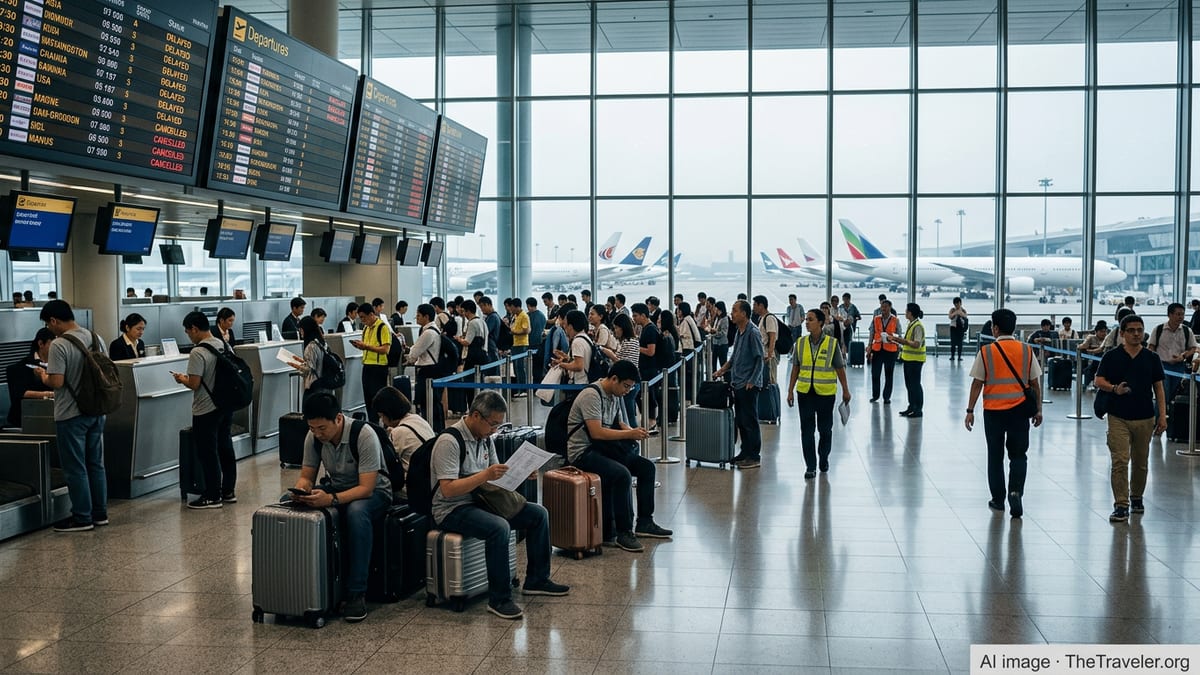
What the Gulf Airspace Closures Mean for Your Route
In recent days, conflict across the Middle East has triggered sweeping airspace restrictions over countries including Iran, Iraq, Qatar, the United Arab Emirates and Israel, severely disrupting the traditional crossroads between Asia and Europe. Major Gulf hubs such as Dubai, Doha and Abu Dhabi, normally among the busiest connecting points on the planet, have scaled back or temporarily suspended large parts of their operations as safety notices and military activity make key corridors unusable.
Flight data and aviation authorities report thousands of cancellations and diversions worldwide as airlines scramble to keep passengers and crews out of high risk zones. The European Union Aviation Safety Agency has issued a high risk conflict-zone bulletin for much of the Persian Gulf region through at least March 2026, warning carriers that last minute route changes and aircraft swaps may be unavoidable. The result for travelers is a network in flux, where even tickets that do not appear to touch the Middle East may suddenly be pushed onto longer paths.
With Russian skies still effectively shut to many Western airlines, carriers have been funneling more Asia–Europe traffic into a narrow band of airspace over the Caucasus and via southern detours over Turkey, Egypt and Saudi Arabia. That congestion adds time and fuel burn, which can feed directly into higher fares. For travelers trying to keep costs down, understanding these shifting chokepoints is the first step toward making smarter booking decisions.
Industry analysts say some Gulf airspace will likely reopen in phases, but warn that the situation remains fragile and subject to rapid change as hostilities evolve. Until there is a sustained easing of risk advisories, passengers should expect longer routings, fewer nonstop options and more volatile pricing on what were once routine connections between major Asian and European cities.
Rethinking Hubs: Alternatives to the Gulf Superconnectors
For years, the most affordable and convenient way to travel between Asia and Europe often ran through Gulf megahubs. Carriers based in Dubai, Doha and Abu Dhabi used geographic advantage and deep fleets to offer keenly priced one stop itineraries. With those hubs now constrained by airspace closures and military risk, the value equation has shifted toward alternative gateways across Eurasia.
Airlines in Turkey and the wider Mediterranean, along with northern European carriers, have been expanding their role as bridge builders between Asia and Europe. Istanbul, already a major transfer point, has become even more important as Turkish Airlines and others route flights along corridors that skirt closed Gulf and Iranian airspace. Similarly, hubs such as Athens, Larnaca and Cairo are absorbing additional transfer traffic as carriers plot southern detours around conflict zones.
Travelers looking for affordable options should map out itineraries that connect through these secondary hubs rather than insisting on traditional Gulf routings. A trip from Southeast Asia to Western Europe, for example, may now price lower via Istanbul or a Central European hub than on a disrupted Gulf connection with a high risk of cancellation. Metasearch engines that allow routing filters can help surface combinations involving airlines based in Europe, India or East Asia that bypass the Persian Gulf entirely.
In some cases, it may be cheaper to self connect using a regional low cost carrier to reach a stable hub, then continue onward with a network airline. That could mean, for instance, flying a budget airline from a South Asian city into Istanbul or Singapore, and then onward to Europe on a full service carrier that is operating on more predictable northern or southern tracks. This strategy requires longer layovers and careful planning, but it can unlock fares that remain closer to pre crisis levels.
Booking Strategies to Keep Fares in Check
The most immediate effect of the Gulf airspace closures on prices is reduced capacity on once dense corridors, particularly those linking South and Southeast Asia with Western Europe. With aircraft forced onto longer routes and some services cancelled outright, supply has tightened even as demand remains strong. Travelers who want to avoid paying a premium need to adjust both how and when they book.
One of the most effective tactics in the current environment is to be flexible about departure dates and nearby airports. Fare data across recent disruptions show that prices can swing sharply from one day to the next as airlines adjust schedules and reposition aircraft. Searching across a wider window, such as plus or minus three days around your ideal date, often reveals more affordable itineraries that use less congested routings through non Gulf hubs.
It is also prudent to compare fares sold directly by airlines with those offered through reputable online travel agencies. When networks are unstable, carriers frequently issue promotional fares or quietly discount less popular routings in order to keep planes full on longer detours. These may not always surface on the first page of a simple search. Applying filters to exclude connections through currently affected Gulf airports can help steer the algorithm toward more reliable and often cheaper alternatives.
Travelers should approach ultra tight connections with caution. Detours around closed airspace have added anywhere from 30 to 90 minutes to some long haul routes, and knock on delays are common as crews bump up against duty time limits. A connection that once worked with a 60 minute layover in a major hub may now be overly risky. Allowing a longer buffer between flights reduces the likelihood of missed onward legs that can quickly erase any savings achieved on the base fare.
Protecting Your Budget: Flexibility, Refund Rules and Insurance
Beyond the sticker price of a ticket, the fine print now plays a much bigger role in how affordable a trip ultimately proves to be. The current wave of airspace closures is driven by armed conflict, and many standard travel insurance policies exclude disruption caused by war or military action. That leaves some travelers exposed to additional accommodation, meal and rebooking costs when flights are cancelled at short notice.
Before committing to a booking, passengers should scrutinize an airline’s change and refund policies for tickets touching any part of the Middle East or neighboring detour corridors. In recent days, many major carriers have introduced temporary waivers that allow free date changes or route adjustments for travel to and from affected regions. However, these policies can be limited to certain fare classes or travel dates, and may not apply to the least expensive promotional tickets.
Travelers who value cost certainty may find it worthwhile to pay slightly more for a fare that includes flexibility, such as free changes or a low reissue fee, particularly on the long Asia–Europe legs. While the initial outlay is higher, the ability to move a flight forward or backward by a few days without penalty can save substantial sums if conflict related restrictions are extended or expanded.
When considering add on insurance, it is important to look for products that explicitly cover schedule disruption and missed connections resulting from airspace closures or government imposed restrictions, rather than relying on basic medical or baggage policies. Some premium credit cards bundle this kind of trip interruption coverage, which can soften the financial blow of last minute hotel stays or new tickets should your original routing become unusable.
Timing Your Trip as the Situation Evolves
With conflict in the region ongoing, any travel planning between Asia and Europe over the coming months requires an acceptance of uncertainty. Safety advisories, risk bulletins and military developments can change quickly, prompting new airspace closures or, conversely, partial reopenings that allow airlines to restore more direct paths. This fluidity complicates efforts to lock in the very cheapest fares far in advance.
For trips that are discretionary rather than urgent, postponing travel by a few weeks can sometimes yield both lower prices and a clearer operating picture. Historical patterns from previous airspace crises show that once carriers have time to redesign schedules and secure stable routings, they often reintroduce more competitive pricing to win back demand. Travelers monitoring fares over several weeks may spot a downward trend as additional capacity returns.
Those who must travel sooner rather than later should keep a close eye on airline advisories and reputable news outlets in the days leading up to departure. If conflict bulletins are extended or new closures announced, it can be worth proactively contacting the airline to discuss rebooking options before flights fill with delayed passengers. Acting early gives travelers more choice of alternative dates and routings, which can be crucial to maintaining both affordability and reasonable journey times.
Ultimately, the Gulf airspace closures have exposed just how dependent many Asia–Europe itineraries are on a handful of strategic corridors. By diversifying hubs, building in flexibility and paying careful attention to the rules attached to each ticket, travelers can still cross Eurasia without breaking their budgets, even as airlines continue to navigate one of the most challenging operating environments since the pandemic.