

Kingston is energetic, busy and often intense, and how you move around the city can shape your entire experience. From crowded downtown streets and hillside neighborhoods to coastal roads and university districts, the Jamaican capital rewards visitors who understand its transport options and local rhythms. With some preparation, you can get where you are going safely and efficiently, whether you are walking a few blocks, hopping on a bus or hiring a taxi.
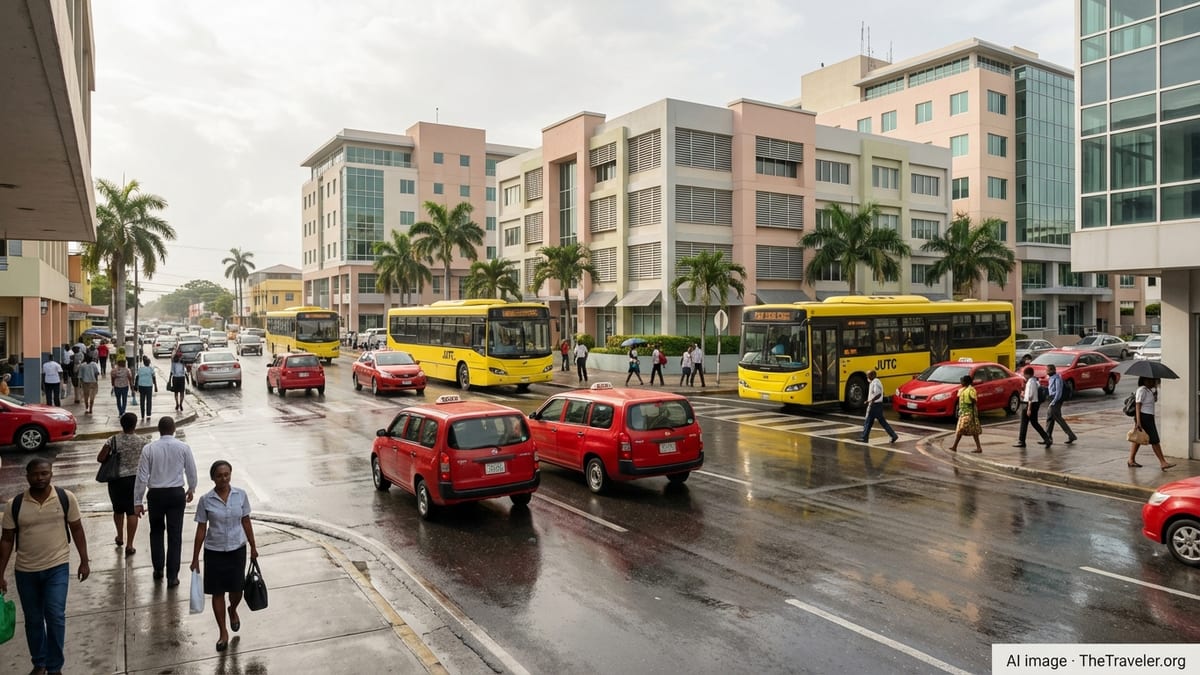
Understanding Kingston’s Layout and Traffic Rhythms
Before choosing how to get around Kingston, it helps to picture the city’s basic layout. Downtown Kingston is the historic and commercial core near the waterfront, with government buildings, markets and the main bus hubs. New Kingston, just to the north, is the modern business district, home to hotels, offices, restaurants and nightlife. Further uptown, areas such as Liguanea, Barbican and Manor Park spread into the foothills, while the main road to the Norman Manley International Airport runs along the Palisadoes peninsula to the southeast.
Traffic in Kingston is often heavy, especially on weekdays during the morning and evening rush. Peak congestion typically builds between about 6:30 and 9:00 in the morning and again from roughly 4:00 to 7:00 in the evening, when major arteries and intersections can slow to a crawl. Letters and commentary in local media frequently highlight bottlenecks in areas such as Half Way Tree, New Kingston and the Liguanea corridor, reflecting how central traffic is to daily life. If you can plan your movements outside these windows, you will usually save time and frustration.
For visitors, this means allowing generous buffers in your schedule. A drive that might take 15 minutes at midday can easily double in rush hour. Real-time navigation apps are widely used by residents to check congestion and suggest alternative routes, and they are just as useful for newcomers. Still, remember that sudden roadworks, water-main projects or weather can change traffic patterns without much warning, so flexibility is important.
Kingston is also a city of contrasts, with some neighborhoods much calmer and more residential than others. Uptown areas with embassies, universities and shopping centers tend to feel more orderly and predictable, while parts of the inner city can be more chaotic. Where you choose to stay will influence which transport modes make the most sense and when it is practical to move around.
Walking Around Kingston: When It Works and When It Does Not
Walking can be a pleasant way to experience Kingston in short stretches, but it is rarely a comprehensive way to get around. Distances between neighborhoods are significant, sidewalks are inconsistent, and the tropical heat quickly wears down even seasoned walkers. For most visitors, walking is best kept to specific districts and daytime hours, combined with taxis or rides for longer hops.
New Kingston is generally the most walkable area for travelers. Hotels, office towers, cafes and several cultural sites sit relatively close together, and many streets have sidewalks, at least on one side. During business hours there are usually plenty of people around, and you can often walk between your hotel, a lunch spot and a meeting without needing a car. Uptown commercial zones like Liguanea and parts of Barbican can also be manageable on foot for short errands, though major intersections may feel hectic.
By contrast, downtown Kingston and some inner-city areas can be challenging for visitors to navigate on foot. Traffic can be aggressive, pedestrian crossings limited and sidewalks crowded or broken. While many locals walk these streets every day, visitors unfamiliar with the city’s unwritten rules may feel overwhelmed. Security concerns are another factor. Crime in Kingston is highly localized to specific communities and streets, but official advisories from foreign governments regularly urge caution, especially after dark and in less familiar neighborhoods.
If you do walk, stick to daytime, busier streets and keep your route simple. Avoid displaying jewelry, watches or electronics and carry only what you need for that outing. Keep your phone out of sight when not actively using it for directions and step inside a shop or lobby if you need to check a map for more than a moment. When possible, ask hotel staff or trusted local contacts which routes they consider sensible to walk and which they prefer to avoid.
Using Public Buses, Route Taxis and Private Shuttles
Public transport in Kingston is a patchwork of government-operated buses, private minibuses and licensed route taxis. It is the backbone of mobility for local commuters and can be a budget-friendly way to move around if you are comfortable with crowds and a more informal system. That said, visitors who prioritize simplicity or have limited time often prefer a mix of hotel shuttles, private transfers and taxis instead.
The Jamaica Urban Transit Company, commonly known as JUTC, runs the official bus network in the Kingston Metropolitan Region. Its large yellow buses operate on fixed routes linking downtown, Half Way Tree, New Kingston and various suburban communities. Fares are set by the government and are generally very inexpensive by international standards, with lower concession prices for children, students, seniors and people with disabilities. The company promotes a reloadable smart card to speed up boarding and reduce cash handling. Timetables and route maps continue to evolve, especially as new routes are rolled out, so it is wise to confirm schedules close to your travel date.
In addition to JUTC buses, privately operated minibuses and route taxis (shared taxis following semi-fixed routes) blanket the city. These vehicles are typically marked with a red license plate and a route description on the windscreen. They tend to be faster and more flexible than big buses but can be crowded, with rapid hops on and off at the roadside. Fares are usually very low and paid directly to the driver. For visitors, the challenge is often knowing where each vehicle is headed, how much to pay and how safe a given route feels at a particular time of day.
If you prefer more comfort and predictability, consider using private shuttles and coach services for intercity travel, then taxis or hotel-organized transfers within Kingston. Companies running express coaches between Kingston and resort towns or other cities typically operate modern, air-conditioned buses with reserved seating. Although they depart from city terminals rather than making many local stops, some also connect with the airport via scheduled shuttles. Booking ahead and checking current departure times can help you coordinate your arrival and onward connections smoothly.
From Norman Manley International Airport Into the City
Most international visitors arrive via Norman Manley International Airport, set on the narrow Palisadoes strip facing Kingston Harbour. The drive from the terminal into central Kingston takes roughly 25 to 40 minutes in normal traffic, though this can lengthen if you hit peak rush hour or heavy rain. Planning your transfer ahead of time removes stress after a long flight and helps you avoid confusion at the curb.
The most common method is a licensed airport taxi or prearranged private transfer. Official taxis operate from the ground transportation area just outside the arrivals hall and charge fixed or meter-based rates that are typically posted or can be confirmed with the dispatcher. Prebooked transfers arranged through your hotel or a reputable provider offer an added sense of security: a driver waits with a sign, knows your destination and drives a clearly identified vehicle. This option often costs more than public transport but offers peace of mind, especially at night or for first-time visitors.
There is also a public bus link between the airport and downtown Kingston, operated by JUTC. The airport stop sits near the arrivals area, and buses run during the day and into the night, generally at intervals that suit both workers and travelers. Fares on this route are low and paid directly to the driver or via the company’s smart card. The trade-off is that buses make intermediate stops and can be crowded, and service frequency may vary outside core hours or on holidays. If you are carrying bulky luggage or arriving late, a taxi may be more convenient.
For those planning to connect to other parts of Jamaica soon after landing, private coach companies operate shuttles between the airport and their main terminals in New Kingston. From there, long-distance buses continue to cities such as Ocho Rios and Montego Bay. This option can be efficient if your final destination is on the north coast, but it requires coordination of flight times, shuttle departures and mainline bus schedules. Checking updated timetables and leaving room for immigration and customs is essential.
Taking Taxis and Ride-Hail Services Safely
Taxis are one of the most practical ways for visitors to get around Kingston, especially for point-to-point trips or evenings out. They provide door-to-door service, spare you from navigating unfamiliar roads and remove the need to find parking. Understanding how taxis work locally helps you choose safe options and avoid misunderstandings over fares.
In Jamaica, licensed public passenger vehicles, including taxis, carry red license plates. Within Kingston, there are both route taxis that share set corridors and chartered taxis that you hire for your own journey. Hotels, guesthouses and restaurants usually have trusted drivers they can call for guests, which is often the easiest route for newcomers. These drivers are used to working with visitors, explaining fares upfront and taking the most sensible routes for security and traffic.
When you get into a taxi, confirm the approximate fare and destination before the car moves. Some journeys are charged by a visible meter, while others operate on a flat rate agreed in advance. It is common to pay in Jamaican dollars, though some taxi operators who work frequently with tourists may quote approximate equivalents in US dollars. If the price feels unclear or uncomfortably high, politely ask for clarification or step away and let your hotel call another driver. Keeping small bills on hand makes paying smoother.
Ride-hail technology continues to evolve in Jamaica, and new digital platforms appear from time to time. However, coverage can be inconsistent, especially outside central districts or during very busy periods, and regulatory frameworks are different from those in North America or Europe. Even when using an app, basic precautions still apply: verify the plate number and driver when the car arrives, sit in the back seat and share your route details with a trusted person if possible. Avoid hailing unmarked cars from the street, particularly at night or in quieter areas.
Driving Yourself: Car Rentals, Road Rules and Local Etiquette
Renting a car can offer flexibility for side trips out of Kingston, such as up to the Blue Mountains or along the southeastern coast, but driving in the city itself is not for everyone. Local drivers are assertive, traffic can be dense, and road markings and signage may be less clear than you are used to. If you are an experienced driver who feels comfortable in busy urban environments and left-side traffic, a car can be a useful tool. If you prefer a more relaxed visit focused on a few neighborhoods, relying on taxis and transfers will likely be less stressful.
In Jamaica, vehicles drive on the left-hand side of the road, with the driver seated on the right. Seat belts are required, and using a mobile phone without a hands-free system while driving is prohibited. Speed limits vary between urban areas, rural roads and highways, but they are not always posted as prominently as in some countries, so it is important to drive cautiously and adapt to conditions. Road surfaces range from smooth multi-lane corridors to narrow side streets with potholes, uneven shoulders and speed bumps.
Within Kingston, you should expect sudden lane changes, frequent stopping for passengers and occasional disregard for traffic signals from both vehicles and pedestrians. Motorcyclists and minibus drivers may weave through traffic, and intersections can become congested when drivers try to squeeze through on yellow or red lights. Defensive driving is essential: leave extra following distance, anticipate that other road users may cut in front of you and adopt a calm, patient mindset.
Parking regulations are another consideration. In some commercial districts, you will find pay-and-display lots or guarded parking areas near offices, malls and attractions. In others, parking is more informal, with attendants helping drivers find spaces along the curb. Always ask whether a spot is legal and safe to leave a vehicle for the time you need. At night, favor well-lit, staffed lots and avoid leaving valuables in the car. For travelers staying in central hotels, on-site parking can be a deciding factor if you plan to rent a vehicle.
Staying Safe and Aware While You Get Around
Like many large cities, Kingston has areas that are relatively calm and others where security concerns are more pronounced. International advisories periodically highlight crime risks and recommend that visitors exercise increased caution, especially in certain neighborhoods and during nighttime hours. This does not mean you cannot move around the city, but it does mean that conscious planning, situational awareness and local advice are vital.
Where possible, plan your movements in daylight. Daytime trips, especially along familiar corridors between major hotels, shopping centers and cultural sites, are generally more straightforward, with more people on the streets and more services in operation. If you need to be out after dark, use taxis arranged by your hotel, restaurant or a trusted contact instead of walking or waiting at bus stops. Avoid short cuts through poorly lit side streets or unfamiliar residential zones, even if your map suggests they are faster.
When using any form of public transport, keep your belongings close and secure. Use a bag that zips closed and carry it in front of you in crowded situations. Large backpacks can attract attention, so consider a smaller day pack for city outings. Avoid counting cash in public or displaying phones and cameras more than necessary. If someone offers unsolicited help or insists on steering you toward a particular taxi or store, you can politely decline and seek assistance from uniformed staff or your accommodation instead.
Finally, stay informed. Check the latest travel advisories from your home country before you arrive and again during your stay. Conditions can change, and certain communities may experience temporary flare-ups that affect recommended routes. Hotel staff, local guides and professional drivers are usually the best positioned to advise which areas are fine to pass through, which are best avoided and which times of day are most suitable for your planned activities.
Practical Tips for Planning Your Daily Movements
Good planning can transform getting around Kingston from a source of stress into a manageable part of your day. Start by clustering your activities by area. For instance, you might spend one day focused on New Kingston and nearby museums, another exploring uptown neighborhoods, and a separate day for downtown markets or a coastal excursion. This approach reduces the number of cross-town journeys you need to make and limits your exposure to the most congested corridors.
Use navigation and mapping apps to preview routes, but remember that they do not fully replace local knowledge. Real-time traffic layers can show where congestion is building and suggest alternatives, but they may not reflect very recent roadworks or security-related closures. Before setting out, especially to a new area, it is good practice to confirm your plan with hotel staff or a local contact. They may suggest a different route, a better time of day to travel or a preferred taxi driver for that trip.
Build buffer time into any schedule that connects with fixed commitments, such as a meeting, event or long-distance bus. In practice, this might mean leaving your hotel at least twice as early as the minimum driving time predicted by a navigation app during peak hours. Tropical rainstorms, traffic incidents or temporary diversions can quickly add 20 or 30 minutes to a journey that is usually short. By expecting delays in advance, you reduce stress when they happen and avoid feeling pressured to take risks on the road.
Lastly, consider your own energy levels. The combination of heat, humidity, noise and traffic can be tiring. Plan breaks in air-conditioned spaces, hydrate frequently and pace yourself. A well-timed taxi ride between neighborhoods, even for a relatively short distance, can help preserve your energy for the experiences you really came to Kingston to enjoy.
The Takeaway
Getting around Kingston is a study in balance. The city’s intensity is part of its appeal, but it also demands respect and preparation from visitors. By understanding the basic layout, recognizing rush-hour patterns and choosing the right mix of walking, taxis, buses and private transfers, you can move through the capital with more confidence.
For most travelers, that mix means walking short, sensible routes in New Kingston or uptown by day, leaning on licensed taxis and hotel-arranged drivers for evenings out, and using official buses or coaches when cost and local immersion matter more than speed. Driving yourself can be rewarding for some, but only if you are comfortable with dense traffic and left-side road rules. Whatever combination you choose, staying aware, seeking local advice and giving yourself extra time will go a long way.
In the end, Kingston’s transport network reflects the character of the city itself: energetic, informal and constantly in motion. Approach it with patience, flexibility and a willingness to adapt, and it becomes not just a way to get from A to B, but a window into everyday life in Jamaica’s capital.
FAQ
Q1. Is it safe to walk around Kingston as a visitor?
Walking is possible in selected areas such as New Kingston and parts of uptown during daylight, but it is not recommended as your primary way of getting around. Stick to main streets, avoid displaying valuables and ask your hotel which routes they consider sensible. After dark, it is generally wiser to use licensed taxis or hotel-arranged transport instead of walking.
Q2. How do I recognize a licensed taxi in Kingston?
Licensed public passenger vehicles in Jamaica, including taxis, carry red license plates. Many also display company markings or route information. For visitors, the safest option is usually to have your hotel, restaurant or a trusted local contact call a known driver for you rather than hailing a random car on the street, especially at night.
Q3. Are Kingston’s public buses easy for tourists to use?
The JUTC bus network is inexpensive and widely used by locals, but it can feel confusing if you are new to the city. Routes, numbers and schedules change from time to time, and buses can be crowded. Visitors who are comfortable with busy urban transport may find it a good value, especially on main corridors, while others may prefer taxis or private shuttles for simplicity.
Q4. What is the best way to get from Norman Manley International Airport to my hotel?
Most visitors use licensed airport taxis or prebooked private transfers. These offer door-to-door service and predictable pricing, which is especially helpful after a long flight or if you arrive after dark. There is also a public bus link between the airport and downtown, which is cheaper but less comfortable with luggage and may require additional transport to reach your final destination.
Q5. Should I rent a car to get around Kingston?
Renting a car can be useful if you plan side trips out of the city, but driving within Kingston can be challenging because of heavy traffic, assertive driving styles and left-side road rules. If your plans focus mainly on city neighborhoods and standard sights, taxis and organized transfers are usually less stressful. Consider your comfort level with busy urban driving before deciding.
Q6. Are ride-hailing apps available in Kingston?
Digital ride-hailing services are evolving in Jamaica, and in some periods there have been app-based options in parts of Kingston. Coverage and reliability can change over time, so do not rely solely on apps. Even when using one, verify the vehicle and driver details, sit in the back seat and follow the same safety precautions you would with any taxi.
Q7. What is traffic like in Kingston during rush hour?
Rush-hour traffic in Kingston can be very slow, particularly on main routes through downtown, New Kingston, Half Way Tree and uptown corridors. Journeys that are quick at midday can take significantly longer in the early morning and late afternoon peaks. It is smart to avoid scheduling tight connections at these times and to leave earlier than navigation apps suggest.
Q8. How much cash do I need for getting around?
Public transport, small taxis and some parking areas typically expect payment in Jamaican dollars, often in smaller denominations. While larger hotels and some drivers who cater to tourists may accept card or quote prices in foreign currencies, it is practical to carry modest amounts of local cash each day. Avoid carrying large sums and keep money in a secure, discreet wallet.
Q9. Can I use public transport late at night?
Some buses and route taxis continue operating into the evening, but service tends to thin out and wait times can lengthen. Security considerations are also more pronounced at night, particularly at bus stops or in less busy areas. For most visitors, especially those unfamiliar with the city, using a known taxi or hotel-arranged car is the safer and more convenient choice after dark.
Q10. How can I stay informed about safety and transport changes while in Kingston?
Check current travel advisories from your government before and during your trip, and monitor local news for updates on roadworks, weather and security developments. On the ground, hotel staff, local guides and professional drivers are valuable sources of up-to-date advice about which routes are smooth, which areas to avoid and the best times to travel.