

Permanent residency in Italy is a key milestone for foreign nationals who intend to live in the country long term. It consolidates immigration status, reduces dependence on short-term permits, and in some cases facilitates mobility within the European Union. This briefing explains, in a structured and practical way, how to obtain permanent residence in Italy, what eligibility conditions apply, and how the process differs for EU and non-EU nationals.
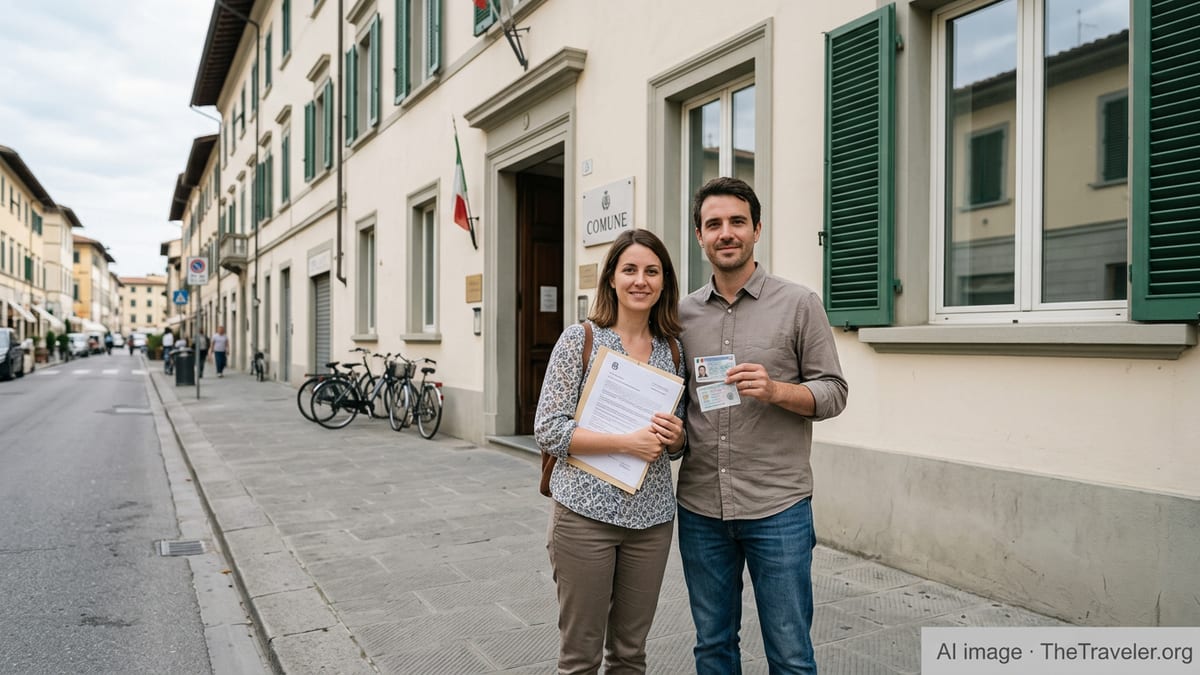
Overview of Permanent Residency in Italy
Italy operates two main permanent residence regimes: one for non-EU nationals and one for EU/EEA and Swiss citizens. For non-EU nationals, the relevant status is the EU long-term resident permit, formally known as the "Permesso di soggiorno UE per soggiornanti di lungo periodo". It grants an unlimited right to stay in Italy, subject to possible revocation, and a plastic residence card that is typically renewed as a document every 10 years without repeating the full immigration assessment.
For EU/EEA and Swiss nationals exercising free movement rights in Italy, permanent residence arises automatically after five years of continuous lawful stay, provided specific conditions have been met over that period. This status can be evidenced by a certificate of permanent residence issued by the local municipality but is a right derived from EU law rather than a discretionary immigration decision.
In both regimes, the five-year qualifying period is central. Applicants must show continuous, legal residence in Italy for at least five years, with limited allowances for temporary absences. However, the supporting criteria, evidence, and authorities involved differ between EU and non-EU nationals, making it important to understand the correct pathway before preparing an application.
The following sections provide a step-by-step breakdown of eligibility, documentation, and procedures, focusing separately on non-EU and EU/EEA citizens while highlighting points that are especially relevant for long-term relocation planning.
Eligibility for Non-EU Citizens: EU Long-Term Resident Permit
Non-EU citizens typically access permanent residency through the EU long-term resident permit. To qualify, an applicant must generally meet four cumulative conditions: (1) at least five years of continuous and legal residence in Italy under one or more temporary permits; (2) sufficient and stable income above a threshold linked to the annual social allowance; (3) suitable accommodation that meets minimum housing standards, particularly if family members are included; and (4) basic knowledge of the Italian language, usually demonstrated at A2 level through a recognized certificate or integration agreement completion.
The five-year residence requirement is calculated based on lawful presence with an Italian residence permit. Periods in irregular status do not count, and extended absences from Italy can interrupt the clock. Absence rules are interpreted by reference to EU Directive 2003/109/EC and Italian immigration law: in practice, short absences for holidays or business are tolerated, but an absence of more than six consecutive months or an aggregate of more than 10 months over five years may jeopardize eligibility and should be carefully assessed against current guidance.
Income sufficiency is tied to Italy’s annual social allowance level. For a single applicant, authorities normally require documented income at least equal to that allowance; for applicants with dependants, the required income increases, often by a fixed fraction of the same index for each additional family member. Income can derive from employment, self-employment, pensions, or other documented lawful sources, and in some circumstances household income can be aggregated if cohabiting family members are also long-term residents or apply together.
Accommodation criteria typically require either a registered rental contract or proof of ownership and, for family applications, an official housing suitability certificate aligned with regional standards for public residential housing. International protection beneficiaries enjoy some relaxations in housing requirements, but for most applicants, the availability of suitable housing is examined together with income to ensure long-term stability.
Step-by-Step Process for Non-EU Long-Term Residence
The application for an EU long-term resident permit follows a structured administrative process involving both the post office (or online systems where extended) and the Immigration Desk and Police Headquarters (Questura). Although details can vary slightly by province, the sequence below reflects the standard national procedure as of early 2026.
First, the applicant gathers core documentation: passport, current and previous residence permits covering at least five continuous years; tax declarations and employment or business documents evidencing sufficient income; proof of registered residence (iscrizione anagrafica) where applicable; housing documents such as rental contracts or property deeds and, if needed, a housing suitability certificate; and proof of Italian language at A2 level or confirmation that the integration agreement has been fulfilled. Any civil status or family relationship documents must be legalized or apostilled and translated into Italian if issued abroad.
Second, the applicant submits the formal request. For most categories, this is done using the authorized post office “kit” or via the Ministry of the Interior online portal, which forwards the file to the local Sportello Unico per l’Immigrazione and the Questura. At this stage, government fees are paid, including a fixed stamp duty and a production fee for the electronic residence card. The applicant receives a receipt that functions as provisional proof of status while the application is pending.
Third, the applicant attends the biometric appointment at the Questura on the date indicated in the receipt or by subsequent notification. During this appointment, fingerprints and photographs are collected, and immigration officers can request clarifications or additional documents regarding income, housing, or residence continuity. Processing times vary significantly by province but often range from three to six months from biometric capture for straightforward cases; complex income situations or file backlogs can extend this period.
Finally, if the application is approved, the Questura issues the EU long-term resident permit card. The card typically has a ten-year validity as a physical document, but the underlying status is unlimited, subject to revocation grounds such as long absences from EU territory, expulsion orders, or proven fraud. If the application is refused, the decision should detail the reasons and the available appeal channels and deadlines, which are important to evaluate with legal assistance in borderline income or residence continuity cases.
Eligibility for EU/EEA and Swiss Citizens: Permanent Residence Status
EU/EEA and Swiss nationals rely on free movement law rather than national immigration law to obtain permanent residence in Italy. The core rule is that an EU citizen acquires a right of permanent residence after five years of continuous legal residence in Italy, provided that during those five years the citizen has complied with one of the qualifying conditions: working as an employee or self-employed person, having sufficient resources and comprehensive health coverage as a self-sufficient person, or studying with sufficient resources and health coverage.
Unlike non-EU nationals, EU citizens are not required to obtain a physical permanent residence card to exercise this right, but they can request an "attestazione di soggiorno permanente" from their local municipality. This certificate is important in practice, as it proves that the conditions for permanent residence have been met and simplifies dealings with public authorities, social security institutions, and in some cases banks or landlords.
Continuous residence for EU citizens follows EU Directive 2004/38/EC rules. Short absences of up to six months per year, or longer absences for compulsory military service, do not interrupt residence. A single absence of up to 12 consecutive months for important reasons such as pregnancy, study, or overseas postings is also compatible with continuity. Longer or repeated absences may break the continuity, in which case the five-year clock resets from the return date.
Certain EU citizens can acquire permanent residence before five years if they meet specific conditions, for example retiring after a period of work in Italy and meeting income and length-of-stay thresholds. These early acquisition scenarios are narrowly defined and should be assessed by reference to up-to-date national transposition rules, but they can be relevant for older workers planning a late-career relocation.
Step-by-Step Process for EU Citizens and Their Family Members
For EU/EEA and Swiss citizens, the step-by-step path to permanent residence begins with lawful registration in Italy. Within prescribed deadlines after arrival, the EU national registers at the municipality of residence, providing evidence of employment, self-employment, sufficient resources, or student status, along with health coverage. This registration results in a residency certificate and entry in the municipal registry, which is later critical evidence for calculating the five-year period.
After five years of continuous registration in Italy, and assuming the qualifying conditions were met throughout, the EU citizen can request the "attestazione di soggiorno permanente" from the municipality. The application typically requires: proof of identity; confirmation of continuous registration (which the municipality can verify internally); and supporting documents showing that economic activity or self-sufficiency conditions were maintained over the five-year period. Municipal practices differ, but many require employment contracts, social security records, or tax declarations as corroboration.
Family members of EU citizens, including non-EU spouses and dependent relatives, follow a related but distinct track. Non-EU family members who have resided legally with the EU citizen sponsor in Italy for five continuous years acquire a right to permanent residence and may request a permanent residence card. This card is separate from the EU long-term resident permit discussed above and is linked to their family member status under free movement rules. Maintaining valid family ties and residence over the five-year period is therefore essential for this group.
In practice, EU citizens and their non-EU family members should plan early for documentation continuity. Gaps in registration, unreported moves between municipalities, or undocumented periods outside the labor market can complicate later applications, even if the legal right to permanent residence exists in principle.
Key Timelines, Validity, and Loss of Status
For both EU and non-EU nationals, permanent residence in Italy is not entirely unconditional. While it reduces the need for frequent renewals, there are time-related rules on validity and circumstances in which the status can be lost, which are important for professionals with mobile careers or those considering extended periods outside Italy or the EU.
For holders of the EU long-term resident permit, Italian and EU rules provide that the status can be lost after an absence from the territory of the European Union of 12 consecutive months, or after acquiring long-term resident status in another EU member state. There are also national grounds for revocation in cases of serious public security concerns or proven fraud in the application. Short or moderate absences within the EU are generally acceptable, but long stays in non-EU countries for work or personal reasons need to be evaluated carefully against the 12-month rule.
For EU citizens with permanent residence under free movement law, the right is lost only after an absence from Italy of more than two consecutive years in most standard cases. This is more generous than the rule for non-EU long-term residents, but still relevant for those who might be seconded abroad or choose to spend extended periods outside Italy after acquiring permanent status.
From a relocation-planning perspective, the combination of a five-year qualifying period and potential loss for long absences means that permanent residence in Italy is best suited to individuals and families intending to anchor their primary residence in Italy for the medium to long term. Those planning frequent or extended international moves should model their mobility patterns against these thresholds before relying on Italian permanent residence as a long-term asset.
Documentation, Common Pitfalls, and Practical Risk Management
Documentation quality and continuity are decisive factors in successful permanent residence applications. Authorities expect to see an unbroken chain of permits (for non-EU nationals) or municipal registration and evidence of economic activity or self-sufficiency (for EU nationals). Missing residence renewals, late registrations, or unofficial living arrangements that were never reported to the authorities can result in gaps that either interrupt the five-year clock or trigger requests for additional evidence.
Common pitfalls for non-EU applicants include: relying on income that is not fully declared for tax purposes; failing to obtain or renew health insurance where required by the underlying permit category; not updating address information with the municipality and immigration authorities; and spending extended periods outside Italy without considering the impact on continuous residence. Another frequent issue is underestimating the time required to secure a housing suitability certificate or gather foreign civil status documents with proper legalization and translation.
For EU citizens, under-documentation of self-sufficiency and health coverage is a recurring problem, particularly for early retirees or remote workers who did not initially formalize their status when registering in Italy. Changing economic circumstances, such as moving from employment to self-employment or periods of inactivity, need to be backed up with clear records and, where appropriate, updated declarations to the municipality.
From a risk management perspective, individuals intending to pursue permanent residence in Italy should approach the five-year qualifying period as a compliance project. This involves maintaining organized personal files of permits, residence certificates, tax returns, employment contracts, and insurance policies; monitoring travel to avoid extensive absences that break continuity; and seeking professional advice in advance if relying on unusual income sources, cross-border work arrangements, or mixed-family status (for example, EU and non-EU family members in one household).
The Takeaway
Permanent residency in Italy is a structured, rule-based status that can materially improve the stability of a long-term relocation. For non-EU nationals, the EU long-term resident permit offers an unlimited right to stay in Italy, conditional on a five-year track record of legal residence, sufficient income, suitable housing, and basic language competence. For EU/EEA and Swiss citizens, permanent residence is a legal consequence of five years of continuous, compliant residence under free movement rules and can be documented through a municipal certificate.
The process is not purely administrative; it is the culmination of at least five years of consistent compliance with immigration, registration, and, for many, tax and social security obligations in Italy. Interruptions, under-documented income, or extended absences can delay or jeopardize eligibility. As a result, individuals and employers planning relocation to Italy should integrate permanent residence objectives into their medium-term mobility planning from the outset rather than treating it as a last-minute administrative step at the end of the five-year period.
Ultimately, the practicality of obtaining permanent residence in Italy depends on the applicant’s ability to maintain a stable and documented presence in the country over time. Those who structure their stay with these requirements in mind typically find the transition to permanent status manageable. Those whose circumstances are more fragmented or highly mobile should carefully assess whether the benefits of Italian permanent residence align with their long-term mobility and career patterns.
FAQ
Q1. How many years of residence are needed to get permanent residency in Italy?
Most applicants must demonstrate at least five years of continuous and legal residence in Italy. This rule applies both to non-EU nationals seeking the EU long-term resident permit and to EU/EEA and Swiss citizens acquiring permanent residence under free movement rules, subject to specific conditions in each regime.
Q2. Do short trips abroad interrupt the five-year qualifying period?
Short absences such as holidays or business trips generally do not interrupt continuous residence, provided they remain within the limits set by law. For non-EU long-term residents, extended absences of more than six consecutive months or more than 10 months in total over five years can be problematic, while EU citizens follow EU free movement rules that allow more flexibility for certain justified absences.
Q3. Is Italian language knowledge mandatory for permanent residence?
For non-EU applicants to the EU long-term resident permit, basic Italian language competence at approximately A2 level is normally required, demonstrated through recognized language certificates or completion of an integration agreement. For EU citizens, there is no formal language requirement to acquire permanent residence under free movement law, although language skills remain practically important for documentation and integration.
Q4. What income level is required to obtain the EU long-term resident permit?
The income threshold is indexed to the Italian social allowance and updated periodically. Applicants must show income at least equal to this level for a single person and higher amounts when dependants are included. Authorities assess income using tax declarations, employment contracts, and other official evidence and may accept aggregated household income in certain family scenarios.
Q5. Can student residence permits count toward the five years for permanent residency?
Periods spent in Italy with a student residence permit may count partially or fully depending on the interpretation applied, the specific time period, and any subsequent transition to work or other residence categories. Because practice can be restrictive, especially for non-EU students, it is prudent to obtain up-to-date advice on how each period of stay will be calculated before relying on student years alone.
Q6. How long does it take to process a permanent residence application?
Processing times vary by province and workload. For the EU long-term resident permit, once biometrics are taken at the Questura, straightforward cases are often finalized within three to six months, though delays are possible. For EU citizens requesting a permanent residence certificate from the municipality, processing is usually quicker, often a matter of weeks, depending on document completeness.
Q7. Can permanent residence in Italy be lost after it is granted?
Yes. Non-EU long-term residents risk losing their status after 12 consecutive months outside the European Union, acquisition of similar status in another member state, or in cases of serious public security concerns or fraud. EU citizens with permanent residence generally lose the right after more than two consecutive years of absence from Italy, subject to specific rules and exceptions.
Q8. Is permanent residency the same as Italian citizenship?
No. Permanent residency grants an unlimited right to stay and broader local rights, but it does not provide Italian nationality, EU citizen voting rights at national level, or an Italian passport. Citizenship typically requires a longer period of residence, additional eligibility criteria, and a separate application process.
Q9. Can family members be included in a permanent residence application?
Non-EU applicants for the EU long-term resident permit can request the status for eligible family members if they have resided legally and continuously in Italy and if the applicant’s income and housing meet enhanced thresholds for the whole family. For EU citizens, non-EU family members can acquire their own permanent residence card after five years of legal residence in Italy as family members of the EU national.
Q10. What happens if a permanent residence application is refused?
If the authorities refuse an application, the decision should state the reasons and the available appeal channels and deadlines. Common grounds include insufficient income, gaps in residence, or inadequate documentation. Applicants can often correct documentation issues and reapply, or where legal interpretation is disputed, pursue an appeal through administrative or judicial channels with specialist advice.