


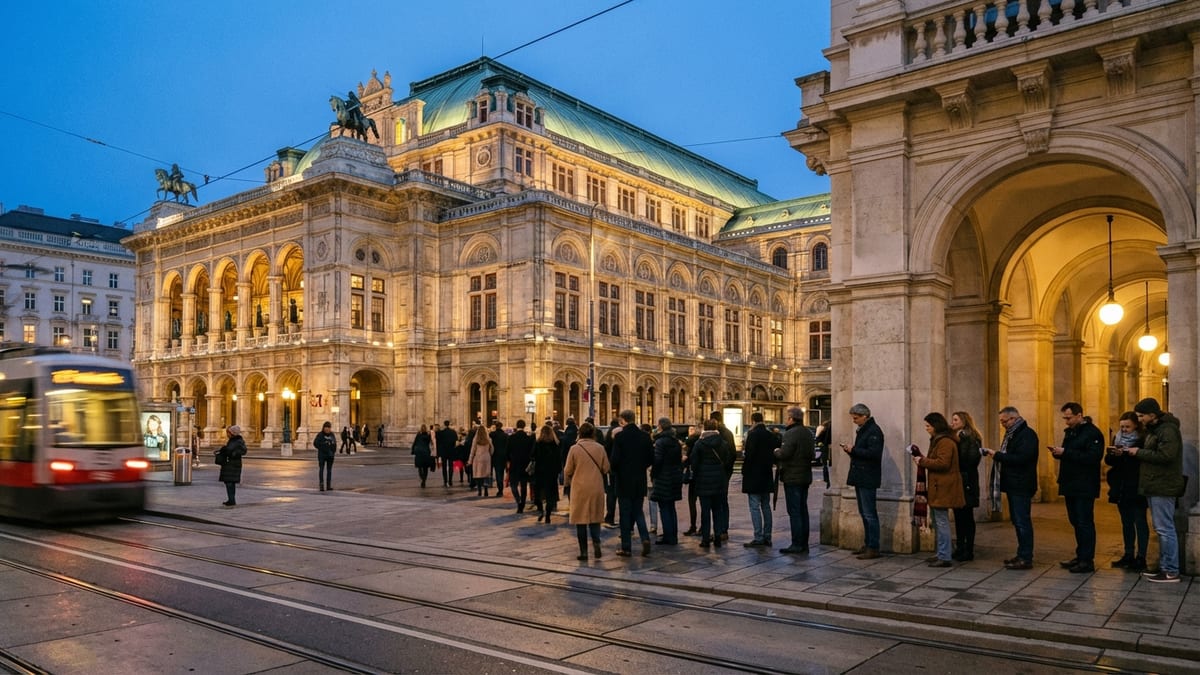
Seeing a performance at the Vienna State Opera is a highlight of many trips to Austria, and the experience begins long before the curtain rises. Navigating the ticketing system can feel intimidating at first, especially if you are hoping to secure highly coveted standing room spots on a sold out night. With a little planning, though, you can choose the right ticket type for your budget, understand when and where to buy, and avoid common pitfalls that catch out first time visitors.
Understanding How Vienna State Opera Ticket Sales Work
The Vienna State Opera operates on a hybrid system of advance sales, special discounts and same day options. Regular seats can typically be bought about two months in advance for individual performances, with even earlier opportunities if you purchase subscriptions or fixed cycles for multiple evenings. Both locals and visitors compete for the most in demand opera and ballet titles, and prestigious casts often sell out quickly.
Tickets are sold through several official channels. You can purchase online at any time, buy in person at the Bundestheater box offices that serve the Vienna State Opera and other federal theaters, or order by telephone or in writing using an order form. The main box office in the opera foyer keeps daytime opening hours from late morning into early evening, with a separate evening box office that opens one hour before each performance.
The seating plan is divided into categories that reflect both location and visibility. Premium stalls and front rows in the circle command the highest prices, while balcony and gallery seats are more affordable but can be partially obstructed. On top of this, the house maintains a large contingent of standing room tickets at very low prices, which are sold on the day of performance. This tiered structure is designed to keep the opera accessible across a wide range of budgets while still generating revenue for a world class repertory schedule.
It is important to distinguish between the Vienna State Opera’s own ticket office and third party resellers. Several reputable agencies sell tickets at a markup that covers their service, but buyers sometimes confuse these for the official box office and pay significantly more than necessary. When possible, booking directly through the opera’s own channels gives you the clearest information on prices, conditions and availability.
Buying Regular Seats in Advance
If you already know your travel dates and have a particular work or star singer in mind, securing a reserved seat ahead of time is the most comfortable option. Regular tickets generally go on sale about two months before each performance date. On the day a performance opens for sale, the online system can be very busy, and popular titles may show limited availability or sell out within hours, particularly for weekend evenings and well known operas.
You can browse the season calendar by date and repertoire, then select your performance and preferred price category. The booking engine shows a seating plan with color coded categories, allowing you to choose exact seats if they are still available. If you are not familiar with the auditorium, it is worth spending a few minutes comparing locations and prices. Mid price seats in the circle or balcony often offer an excellent view of the stage and orchestra while costing substantially less than the top stalls.
Telephone sales operate during daytime hours using major credit cards, and tickets can be sent electronically or held for collection at the box office. Visitors who prefer a more old fashioned process can also submit written orders using a form, although fulfillment is subject to availability and may favor patrons who plan longer stays or multiple visits. This method is less suited to last minute travelers but can work well for enthusiasts planning months ahead.
Once purchased, tickets are generally non refundable and non exchangeable, except in specific circumstances such as a change of the advertised work or a cancellation before the midpoint of the performance. Cast changes are common in opera and do not entitle you to a refund. Because of this, travelers should think of their opera night as a fixed commitment in their itinerary and avoid booking flights or trains that might conflict with curtain time.
Same Day Options and Discounts for Young Visitors
Not every traveler can commit months ahead, and the Vienna State Opera has several mechanisms that make spontaneous visits possible. Same day seat tickets may be available online or at the box office if performances have not sold out. On some dates, discounted offers are released for holders of the Bundestheater Card or for special promotions marked in the calendar. It is always worth checking the official ticket store on the morning of your desired performance to see what is left.
Travelers under 27 benefit from generous concessions. The opera runs a U27 scheme that offers a fixed contingent of tickets for selected performances at a flat price that is far below the regular top categories. These U27 seats exclude only the most expensive category, meaning that you could, in theory, sit in an outstanding location for a modest sum if you secure one of these allocations. Dress rehearsals and certain concert events are also made available to U27 members at still lower prices.
Young people do not need to rely solely on advance U27 allocations. Half an hour before the start of many performances, any person under 27 can buy remaining tickets for a sharply reduced price at the box office in the opera foyer, subject to availability. This is particularly attractive for students spending a semester in Vienna or backpackers willing to accept whatever seats are left. A valid ID showing date of birth is required, and you should arrive early to queue if you hope to take advantage of this window on a busy evening.
In addition to age based discounts, there are seasonal programs and customer cards that unlock further savings. The Bundestheater Card, for example, allows holders to access a 20 percent reduction on selected performances and last minute offers for full price seats. For ballet lovers, a separate ballet bonus card offers reduced tickets for many dance performances. While these schemes are primarily marketed to residents, visitors who expect to attend several performances in one season may find them worthwhile.
How Standing Room Works at the Vienna State Opera
For many opera fans, especially budget conscious travelers, the real magic lies in standing room. The Vienna State Opera maintains an unusually large standing room area, with around 435 spaces distributed between the parterre (at the rear of the stalls), the balcony and the gallery. Prices are extremely low compared with seats, making it possible to hear top casts in world class productions for only a few euros.
As of the 2025/26 season, standing room tickets can be purchased online or at the federal theater box offices from 10 a.m. on the day of the performance. This marks a significant change from the purely in person, queue based system that many guidebooks still describe. For regular evening performances, a designated portion of standing places is reserved for sale later in the day at a separate standing room box office on Operngasse, which opens 80 minutes before curtain time.
The standing room sections differ in atmosphere and sightlines. Parterre standing, directly behind the stalls seats at ground level, offers a central view that many aficionados consider the best value in the house, though the number of spots is limited and demand is intense for starry opera nights. The balcony and gallery standing areas are higher and further from the stage, but still offer an engrossing view of the production at a fraction of the cost of a seat. Each standing place has a small rail in front of it, often used to tie a scarf to mark your spot once you have claimed it.
Standing room tickets are sold without seat numbers, but they are allocated by area. Once inside the auditorium, custom dictates that you reserve your chosen spot by tying a scarf, program or similar item to the railing. Many locals treat this ritual almost as seriously as the performance itself. Although the prices are low, the artistic experience is identical to that of the seated audience, and for popular titles, the standing room crowd buzzes with energy and expert commentary during intervals.
Step by Step: Securing a Standing Room Ticket
There are now two main strategies to secure standing room: booking online at 10 a.m. on the day, or buying in person closer to showtime. The online method suits travelers who want to lock in their place early without waiting in a street queue. On the morning of the performance, you log in to the ticket store, select your desired show and look specifically for standing room categories. Availability can vanish quickly for major operas, so it pays to be online shortly after sales begin.
If online standing tickets are sold out or you prefer maximum spontaneity, you can aim for the allocation sold at the dedicated standing room box office. This entrance is on Operngasse under the arcades of the opera house and opens 80 minutes before curtain. Queues often form well earlier, especially for significant events like premieres or performances featuring international stars. Arriving one and a half to two hours before curtain for the biggest titles is sensible if you want a good chance at parterre standing; for less celebrated works or weekdays in shoulder season, you may find shorter lines.
When the standing room box office opens, the line moves steadily as each person purchases their ticket, usually paying in cash or with a bank card. You choose your preferred area based on availability and price. After you have your ticket, you will typically be allowed into the building once the general doors open, around one hour before the performance. At that point, many regulars make a beeline for their favored spot, tie a scarf to claim it, and then relax in the foyer or café until the start of the show.
Travelers should also be aware of special standing room arrangements. Certain social and cultural programs, such as the local culture pass for people experiencing financial hardship, allow eligible holders to collect standing room tickets free of charge from 60 minutes before the performance. Other promotions like Standing RoomPLUS, linked to the Bundestheater Card, offer reduced standing tickets at slightly higher but still modest prices. These options reflect the opera’s effort to keep its performances accessible while managing very high demand.
Practical Tips for Enjoying Standing Room
Spending several hours on your feet is not to everyone’s taste, so it pays to prepare. Comfortable shoes are essential; thin soled dress shoes will feel punishing by the third act of Wagner, while supportive flats or smart sneakers make a huge difference. Dress code at the opera has relaxed over time, and while many locals still favor elegant attire, well groomed casual clothing is widely accepted, particularly in standing room. A neat dark outfit that layers easily against winter cold or hot summer evenings is ideal.
A light scarf, sweater or jacket serves two purposes. First, it helps you adjust to temperatures inside the building, which can feel warm in the upper levels. Second, it is the traditional way to mark your standing place once you have chosen it. The etiquette is simple: tie your scarf around the rail in front of your chosen spot, then feel free to move about until the performance begins. Others will respect this system, and disputes are rare, though staff may intervene if someone tries to occupy more spots than their ticket allows.
A performance at the Vienna State Opera can easily last three to four hours with intervals, so pacing is important. Many standing room veterans lean against the rail to relieve their legs, shifting weight between feet and stretching discreetly during moments of darkness or applause. You can sit on the steps in the foyer during intervals, and the building’s cafés and bars offer drinks and snacks. Keep in mind, however, that alcohol and rich food may make standing for long periods more tiring, especially at altitude in the gallery.
If you are uncertain whether standing is right for you, consider choosing a shorter work for your first attempt. A Mozart opera or a one act ballet is less demanding than a lengthy Verdi or Wagner evening. Another strategy is to combine: enjoy one night in a reserved seat for a treasured opera, and a second visit in standing room for the atmosphere and value. Many enthusiasts come to love the perspective from the gallery and return repeatedly, even when they could afford a seat.
Special Events, Subscriptions and Seasonal Variations
The Vienna State Opera is a repertory house with a dense schedule of opera and ballet, but not every day of the year plays out the same way. The annual Vienna Opera Ball, for instance, transforms the auditorium into a ballroom and has its own complex ticketing system with applications, lotteries and table packages. General performance tickets and standing room are not sold for that night, and visitors mainly encounter it as a televised or reported spectacle rather than a standard evening at the opera.
Subscription packages and cycles offer another layer. These allow regulars to secure five or more performances across the season, often at a significant discount compared with buying each ticket individually. Subscribers choose a particular day of the week and preferred price category, then receive pre assigned seats for the chosen series. While this is most attractive to residents, tourists staying in Vienna for extended study or work assignments sometimes use subscriptions to structure their cultural calendar.
Seasonal patterns also affect ticket availability. The main opera season typically runs from early autumn through late spring, with a somewhat lighter schedule and occasional special events in summer. Peak tourist months in Vienna, such as around Christmas and New Year, see extremely strong demand, making advance planning more important if you want a reserved seat. In contrast, midweek performances outside holidays may have more same day availability, which can be a gift for flexible travelers willing to be open minded about repertoire.
Public holidays and special matinees can change the pattern of box office openings as well as the timing of standing room sales. It is wise to check specific performance information shortly before your visit, as starting times and formats can vary. Matinees, for example, may distribute standing room at the general box office in the opera foyer rather than at the usual standing room entrance. Staying alert to such details helps you avoid showing up at the wrong door or missing a time window by a few crucial minutes.
The Takeaway
Experiencing the Vienna State Opera is as much about understanding its rhythms and traditions as it is about the music itself. The ticketing system offers something for nearly every budget and travel style, from carefully chosen seats booked months ahead to spontaneous standing room adventures that cost less than a simple meal. By familiarizing yourself with the options for advance purchases, same day discounts and the mechanics of standing room, you give yourself the best chance to enjoy an unforgettable evening without last minute stress.
For visitors who value comfort and certainty, reserving a seat in advance through official channels will be the most straightforward route. Those who are young, flexible or simply eager to soak up the atmosphere from the heart of the opera loving crowd will find that standing room remains one of Europe’s great cultural bargains. Whichever path you choose, arriving early, respecting local customs and allowing time to savor the building and its rituals will enrich your night. The curtain will rise, the orchestra will sound, and for a few hours, you will be part of a living tradition at the center of Vienna’s cultural identity.
FAQ
Q1. How far in advance can I buy tickets for a performance at the Vienna State Opera?
For most individual performances, regular seat tickets go on sale about two months before the performance date, with longer lead times available only through subscriptions and multi performance cycles.
Q2. Are standing room tickets still sold only in person on the day of the show?
No. As of the mid 2020s, a large share of standing room tickets can be purchased online or at the federal theater box offices from 10 a.m. on the day of performance, with an additional fixed contingent sold later at the standing room box office 80 minutes before curtain.
Q3. Where exactly do I go to buy standing room tickets in person?
You buy same day standing room at the dedicated standing room box office on Operngasse, under the arcades of the opera house, which opens 80 minutes before the start of the performance. For matinees, standing tickets are issued at the main box office in the opera foyer instead.
Q4. How much do standing room tickets cost, and are there different areas?
Standing room tickets are among the cheapest ways to attend, with prices typically only a few euros, varying slightly by area and any applicable discounts. The main sections are parterre standing at the rear of the stalls and higher level balcony and gallery standing areas, each with different views and atmospheres.
Q5. What is the U27 program and how can young visitors benefit from it?
The U27 program is a membership scheme for people under 27 that offers reduced price tickets for selected performances, including very affordable seats in almost all categories and inexpensive access to dress rehearsals and some concerts. Even non members under 27 can usually buy remaining tickets at a flat reduced price at the box office shortly before curtain, subject to availability and with ID.
Q6. Do I have to dress formally to stand in the gallery or balcony?
There is no strict dress code, and standards have relaxed over time. While some guests still dress formally, especially in the stalls, clean and neat smart casual clothing is perfectly acceptable in standing room. Comfortable shoes and layers are far more important than a suit or gown for an enjoyable evening on your feet.
Q7. Can I return or exchange my ticket if my plans change?
In general, tickets are non refundable and cannot be exchanged simply because of a change of personal plans. The main exceptions are if the advertised work is replaced by a different piece or if a performance is canceled before its midpoint, in which case refunds or exchanges may be offered according to the opera’s terms and conditions.
Q8. How early should I arrive if I have a standing room ticket?
For highly sought after performances, it is wise to be in line at the standing room entrance significantly before it opens, often one and a half to two hours before curtain, to increase your chances of securing a good spot. Once inside, you can tie a scarf or similar item to the rail to reserve your place and then relax in the foyer until the performance begins.
Q9. Is it realistic to stand through a full length opera if I am not used to it?
Many people do so successfully, especially with comfortable footwear and by choosing shorter works for their first attempt. However, if you have back, leg or mobility issues, or if the performance is unusually long, a seated ticket may be a better choice. Some visitors try standing room once for the experience and then decide based on how they feel.
Q10. Are there any ways to avoid queuing if I plan to attend multiple performances?
Regular visitors can make use of advance online standing room sales at 10 a.m., consider subscriptions for reserved seats, or investigate customer cards such as the Bundestheater Card, which sometimes offer last minute seat deals and discounted standing room upgrades. These tools reduce reliance on long physical queues, though for the most coveted evenings even experienced locals still line up early.