

Reaching Churchill, Manitoba is part of the adventure. Perched on the southwestern shore of Hudson Bay with no road access from the rest of Canada, the self-proclaimed polar bear capital of the world can only be reached by plane, train, or ship. For most travelers, that means planning carefully around limited schedules, extreme weather, and long travel times. The reward is a front-row seat to Arctic wildlife, northern lights, and tundra landscapes found in few other places on earth.
Understanding Churchill’s Remote Location
Churchill sits near the tree line on the edge of the Arctic, hundreds of kilometers north of Manitoba’s last major highway. There is no road connecting Churchill to southern Canada, so you cannot simply drive all the way there in your own vehicle or on a bus. Instead, travelers must rely on a combination of rail and air services that thread their way through the boreal forest and subarctic tundra.
This isolation shapes everything about getting to Churchill. Schedules are less frequent than in most destinations, and transportation is more vulnerable to disruption from weather or seasonal conditions. Flooding in the past has temporarily shut the rail line, and winter storms can delay or cancel flights. While services are operating reliably today, it remains wise to build flexibility into your itinerary and to buy travel insurance that covers delays.
Most visitors travel to Churchill from Winnipeg, Manitoba’s capital, which serves as the main southern gateway by both air and train. A smaller number route through Thompson or Gillam in northern Manitoba, either combining train and air, or using these communities as staging points for regional flights. A small seasonal cruise industry and cargo ships also reach Churchill via Hudson Bay, but those options are primarily for expedition-style trips and are usually booked as part of a larger package.
Because Churchill is separated from the North American road grid, everything from groceries to building supplies arrives by train, plane, or ship. Travelers are stepping into a working northern town where logistics are complex and sometimes expensive. Understanding this context will help you plan realistic arrival and departure dates, set an appropriate budget, and maintain the flexible mindset that northern travel demands.
Flying to Churchill: Routes, Airlines, and Timing
For most visitors, flying is the fastest and most convenient way to reach Churchill. The town is served by Churchill Airport, a small but busy facility located a short drive from the town center. Flights generally operate year-round, with the most demand during the peak polar bear season in October and November and during prime northern lights months in late winter.
Winnipeg is the primary air gateway to Churchill, with regional carrier service connecting the provincial capital to the north. Typical flight times between Winnipeg and Churchill are around two hours under normal conditions. From Winnipeg, travelers can board a direct flight and arrive in time to join same-day tours if schedules line up, although building in at least one extra day on either side of the trip is safer in case of weather-related changes.
In addition to Winnipeg, there are flights between Churchill and several northern Manitoba and Nunavut communities, including Thompson and Gillam. This opens up options for travelers who want to combine modes of transport, such as taking the train to Thompson or Gillam and then flying the rest of the way to Churchill. It can also be useful if you are exploring the broader region or connecting from remote communities in Nunavut.
Because capacity is limited and demand spikes in high season, flights to Churchill frequently sell out weeks or months ahead, especially in October and November when polar bear viewing is at its best. It is prudent to secure your flights before confirming accommodation and tours, or to book the entire trip as a package through a specialist operator who holds blocks of seats. If you are traveling independently, monitor schedules closely, allow extra layover time in Winnipeg, and be prepared for potential schedule adjustments as your departure date approaches.
Taking the VIA Rail Train to Churchill
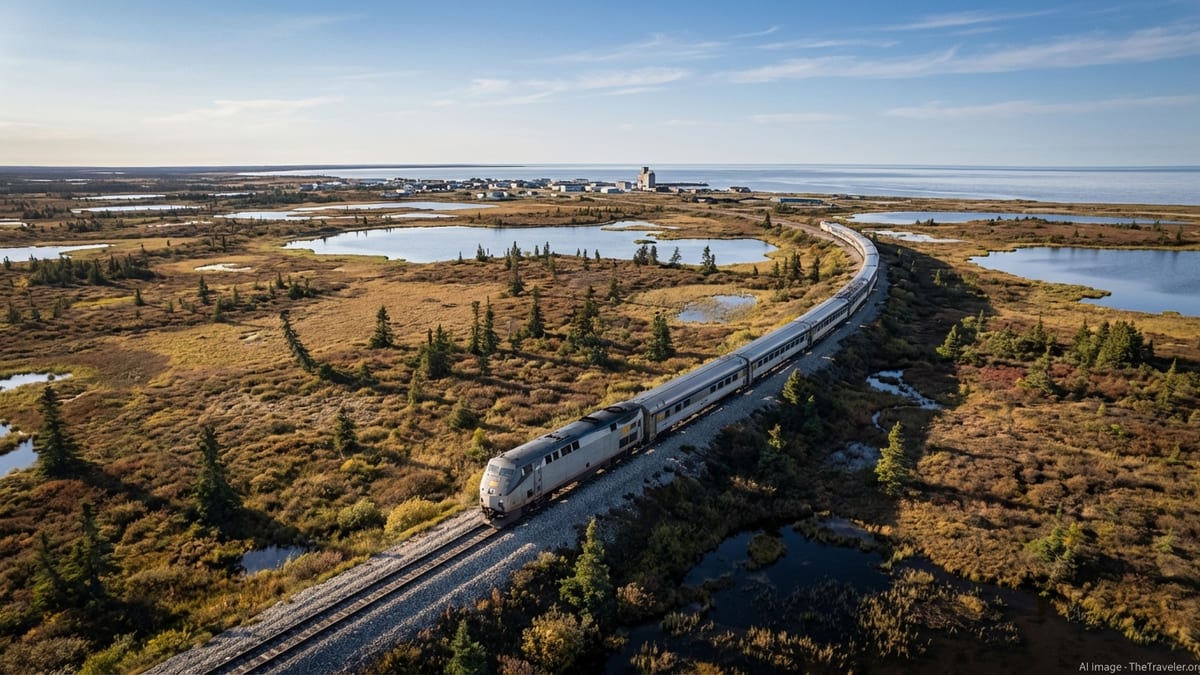
The train journey from Winnipeg to Churchill is one of Canada’s classic rail adventures. Operated by VIA Rail, the Winnipeg–Churchill service is currently the only overland link between Churchill and the rest of the country. Trains typically run twice per week in each direction, covering roughly 1,700 kilometers over about 45 to 48 hours. The route traverses prairie, boreal forest, muskeg, and finally treeless tundra as you approach the shores of Hudson Bay.
Northbound trains generally depart Winnipeg’s Union Station around midday on designated days, arriving in Churchill two mornings later. Southbound services typically leave Churchill in the evening and roll into Winnipeg late in the afternoon two days afterward. Along the way, the train stops at communities including The Pas, Wabowden, Thompson, and Gillam, with a mix of scheduled and request stops serving remote settlements and lodges. Exact departure days and times can vary slightly, so always check the current timetable when planning.
VIA Rail usually offers at least two broad classes of service on the Winnipeg–Churchill route: Economy seats and a sleeper option (often called Sleeper Plus or similar). Economy travelers have reclining seats and access to a dining car where meals can be purchased. Sleeper passengers have access to berths or small cabins, showers, and meals included in the fare. Given that you will spend two nights on board, many travelers find the extra comfort and privacy of a sleeper well worth the higher cost, especially during busy seasons when the train can be full.
The train is more than just transportation; it is part of the Churchill experience. You can watch the landscape change slowly from your window, meet local residents who rely on the train for essential travel, and enjoy a rhythm very different from modern air travel. The trade-off is time. The trip is long, and delays are possible if conditions affect the track. If you choose the train, avoid tight onward connections, carry any medication and essentials in your day bag, and embrace the journey as a highlight of your trip rather than just a way to get from A to B.
Combining Train and Air for Flexible Itineraries
Travelers with time and curiosity often design itineraries that blend rail and air travel, taking advantage of intermediate stops such as Thompson or Gillam. One popular approach is to ride the train one way and fly the other. For example, you might take the northbound train from Winnipeg to Churchill, then fly back to Winnipeg after your stay. This allows you to experience the iconic rail journey without committing to four full days on board.
Another strategy is to break up the train trip. You could ride the train from Winnipeg to Thompson or Gillam, spend a night or two exploring those communities, and then connect with a regional flight for the final leg into Churchill. This can make sense if train schedules align better with your availability, or if you are seeking a more varied northern experience. Keep in mind that smaller airports typically have limited services, so you will need to plan lodging, ground transportation, and meals carefully.
When mixing train and air, careful attention to timing is critical. Schedules for both modes can change seasonally, and services may operate only on specific days of the week. It is safer to plan at least one buffer night in any connecting city, particularly Winnipeg, rather than trying to connect off a long train journey and straight onto a flight. Allowing extra time reduces stress if the train is delayed or a flight must be rescheduled due to weather.
Cost is another consideration. Train tickets, especially in sleeper class, can be comparable in price to flights, depending on sales and season. A combined itinerary might not save you money, but it can enrich the overall experience and give you a better feel for northern Manitoba’s vast distances and communities. When planning, compare the full cost of each scenario, including accommodation, meals on board, and any extra nights you might need between segments.
Seasonal Factors, Weather, and When to Travel
Churchill is a true four-season destination, but the season you choose has a big impact on your travel logistics. The busiest time of year runs from roughly early October to mid-November, when polar bears congregate near the shore of Hudson Bay waiting for the sea ice to form. During this period, flights, trains, and accommodations can be heavily booked. Prices are typically higher, and last-minute options are limited. Reserving your seat and bed well in advance is strongly advised.
Winter, from roughly December through March, brings long nights and excellent chances to see the northern lights on clear evenings. Extreme cold, snow, and high winds are common, which can challenge both rail operations and aviation. However, modern equipment and experienced operators are used to these conditions. Travelers should remain flexible, dress for arctic temperatures, and build extra time into their plans in case of weather delays, particularly around storms.
Summer and early autumn offer a different experience. July and August can bring relatively mild conditions, wildflowers on the tundra, and opportunities for beluga whale watching on the Churchill River. Train and flight schedules usually continue year-round, but demand is somewhat more spread out across the warmer months, making it slightly easier to secure bookings. That said, some wildlife viewing activities are seasonal, so be sure your travel dates match the experiences you are seeking.
Shoulder seasons in the far north are inherently unpredictable. Thawing muskeg can affect railbeds, heavy rains can complicate operations, and sea ice conditions impact any ship-based visits. While current infrastructure is far more robust than in years past, travelers should still think of Churchill as a frontier destination where nature occasionally has the final say. Staying in close contact with your airline, rail provider, or tour operator and monitoring communications in the days before departure is a smart precaution.
Practical Logistics: Tickets, Luggage, and Budgeting
Booking early is the single most important step in planning travel to Churchill. Train space, especially in sleeper class, and flight seats during peak seasons can sell out far ahead of departure. Once you have settled on your approximate dates and experience goals, secure transport first, then arrange accommodation, tours, and other details around your confirmed arrival and departure.
VIA Rail uses a tiered booking system, with different fare levels in Economy and sleeper categories depending on demand and flexibility. Lower fares generally come with more restrictions on changes or refunds, while fully flexible tickets cost more. Airlines serving Churchill follow similar patterns, with prices fluctuating according to season, advance purchase, and overall demand. Monitoring fares a few months ahead and being ready to book when you see an acceptable price can help you manage costs.
Luggage allowances vary between providers and by ticket type. As a general rule, travelers on the train can expect to bring at least one carry-on and one checked bag within a specified weight limit, with additional or oversize items potentially incurring extra fees. On regional flights, weight limits are often stricter than on large commercial jets, and aircraft may be smaller. This is especially important if you are carrying heavy camera gear or winter clothing. Review baggage policies carefully before packing, and consider traveling with soft-sided bags that can be more easily stowed in small compartments.
Churchill is an expensive destination compared with many southern Canadian towns, due largely to the cost of getting supplies in and out. Transport costs are a significant portion of most visitors’ budgets. In addition to tickets, factor in travel insurance, any change fees you might face if weather affects your plans, and the cost of extra nights in Winnipeg or other gateway communities in case you need to wait out a storm. Planning conservatively with time and money will make the trip less stressful and more enjoyable.
Arriving in Churchill: On-the-Ground Transfers and Orientation
Upon arrival, whether by plane or train, you will find that Churchill is compact and easy to navigate. The train station and airport are both within a short drive of accommodations and tour offices. Many hotels and tour operators offer pre-arranged transfers, especially during busy seasons when they coordinate closely with scheduled arrivals. If you have booked a package, your transportation from the airport or train station is often included, and a representative may meet you upon arrival.
Independent travelers can arrange local taxis or, in some seasons, limited rental vehicles. Because there is no road link to the south, vehicle fleets in Churchill are small, and rental options may be limited, particularly during peak times. Booking any rental well ahead of time is recommended if you plan to explore independently rather than exclusively through guided tours. Walking is practical for short distances in town, but winter conditions and wildlife safety mean you should respect local advice about where and when it is safe to move around.
Once you have settled into your accommodation, it is helpful to stop by visitor information services or Parks Canada staff, often based in the heritage railway station or local interpretive centers. They provide current information about wildlife safety, trail access, and any operational changes affecting tours or transport. They can also confirm your departure details a day or two before you leave, which is useful in a place where plans are shaped by tides, ice, and weather.
Because Churchill’s economy is closely tied to tourism, especially during peak seasons, local operators are experienced in coordinating around incoming trains and flights. Staying communicative, confirming pickup times, and sharing any schedule changes with your hosts or tour guides ensures that someone is expecting you and ready to adapt as needed. This cooperative spirit is one of the charms of traveling in a small northern community.
The Takeaway
Getting to Churchill is unlike traveling to most destinations in North America. With no road access, a limited number of weekly trains, and a small but busy airport, the journey requires more planning, patience, and flexibility than a typical city break. Yet it is precisely this remoteness that has preserved Churchill’s extraordinary wildlife, stark beauty, and sense of frontier adventure.
Whether you choose the fast convenience of a two-hour flight, the slow romance of a two-day train ride, or a combination of both, treat the journey as part of the experience rather than a hurdle to clear. Book early, build in extra time, respect the power of Arctic weather, and lean on the expertise of rail, airline, and tour operators who know the region well. Do that, and the logistics become manageable steps on the way to polar bears, belugas, northern lights, and the windswept shores of Hudson Bay.
For travelers willing to embrace its challenges, Churchill offers one of the most memorable trips in Canada. Your path there may be long and occasionally unpredictable, but the moment you step off the plane or train into the crisp northern air, you will understand why so many visitors say it was more than worth the effort.
FAQ
Q1. Can I drive to Churchill from Winnipeg or elsewhere in Canada?
There is currently no road connecting Churchill to the southern Canadian highway network. Travelers must go by plane, train, or occasionally by ship.
Q2. How long does the train from Winnipeg to Churchill take?
The train journey usually takes around 45 to 48 hours, spanning two nights on board, though exact timing can vary with schedule changes and conditions.
Q3. How often does the train run between Winnipeg and Churchill?
VIA Rail normally operates the Winnipeg–Churchill route about twice per week in each direction, but travelers should always confirm the latest timetable before booking.
Q4. Is it better to fly or take the train to Churchill?
Flying is far faster and convenient if your time is limited, while the train offers a slower, scenic experience. Many visitors combine both, taking the train one way and flying the other.
Q5. Which city is the main gateway for flights to Churchill?
Winnipeg is the primary gateway city for flights to Churchill, with additional connections available from some northern Manitoba and Nunavut communities.
Q6. How far in advance should I book transportation to Churchill?
For peak seasons such as polar bear viewing in October and November, booking several months in advance is wise for both flights and train tickets, especially in sleeper class.
Q7. Are weather delays common when traveling to Churchill?
Weather in northern Manitoba can be severe, particularly in winter and during storms, so delays and occasional cancellations do occur. Building buffer days into your itinerary is prudent.
Q8. Can I take a cruise ship or boat to Churchill?
Some expedition cruises and cargo vessels visit Churchill seasonally via Hudson Bay, but these are usually arranged as part of specialized trips rather than regular passenger services.
Q9. What are the luggage limits on trains and flights to Churchill?
Luggage allowances vary by operator and ticket type. Train passengers typically get at least one carry-on and one checked bag, while regional flights may have stricter weight limits.
Q10. Do I need a tour package, or can I arrange everything independently?
You can travel independently by booking your own flights or train tickets, accommodation, and tours, but many visitors prefer packages for simplicity and guaranteed coordination in this remote destination.