

Hudson Bay is one of the most remote and storied bodies of water in the world, a sweeping inland sea fringed by boreal forest, tundra and tiny northern communities. Getting there is not as simple as booking a quick flight and rental car. Instead, reaching Hudson Bay means understanding Canada’s northern rail network, seasonal air links, ice-bound shipping routes and the realities of travel in places where there are few roads and the weather can change plans in an instant. This guide walks you through the main ways to reach Hudson Bay today, with a focus on Churchill in northern Manitoba and the coastal communities of Nunavut, and helps you plan a safe, realistic itinerary.
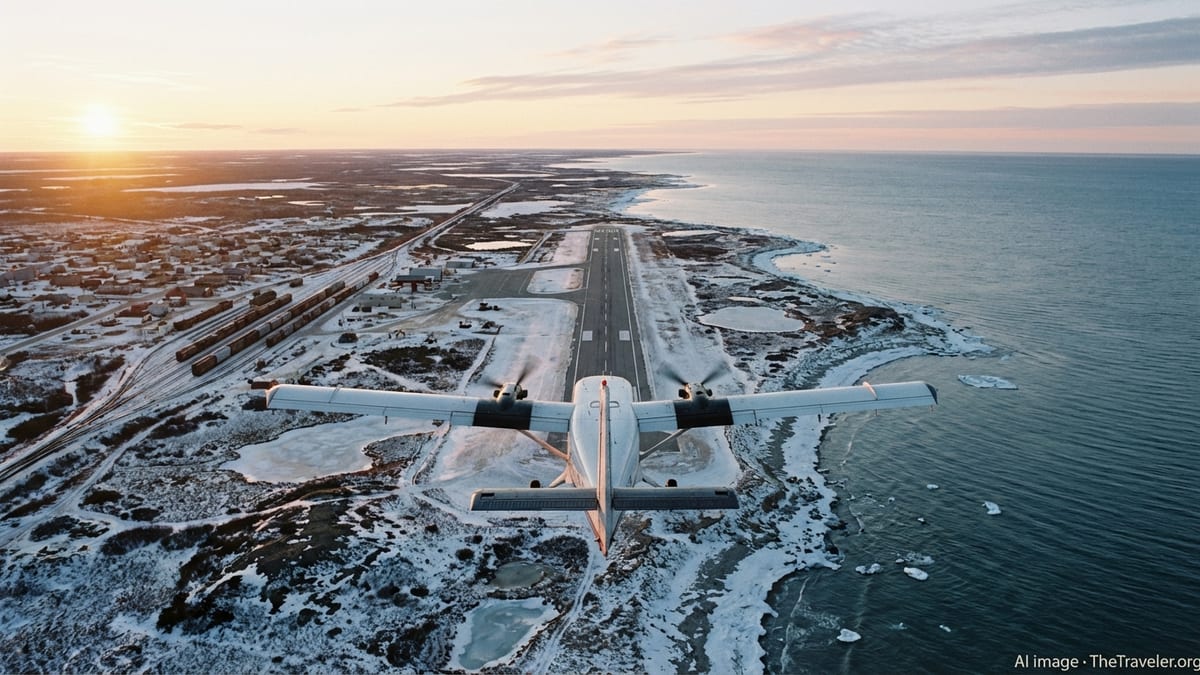
Understanding Hudson Bay and Its Gateways
Hudson Bay covers a vast area of northern Canada, touching Manitoba, Ontario, Quebec and Nunavut. There are no large cities directly on its shores, and only a handful of communities are regularly visited by travelers. For most visitors, Churchill in northern Manitoba serves as the de facto gateway. It sits on the southwest shore of Hudson Bay and offers established tourism infrastructure focused on polar bears, beluga whales and northern lights. Farther north and east, small communities in Nunavut such as Arviat, Rankin Inlet and Sanikiluaq provide access to the bay’s Arctic coastline but see far fewer leisure visitors and have more limited services.
Because there are almost no year round roads connecting these communities to southern Canada, reaching Hudson Bay generally involves a combination of flights and, in Manitoba, a long-distance train. Marine access is important for freight and seasonal sealift operations, but passenger ships are rare and usually limited to expedition cruises. This means most travelers will plan around commercial air schedules and the Winnipeg to Churchill rail service when organizing a journey to Hudson Bay.
When you begin planning, it helps to decide how remote you want to go. Churchill offers the most accessible option, with regular flights, a year round train and a modest range of hotels and guided tours. Reaching more isolated communities along the bay, particularly in Nunavut, requires comfort with small aircraft, flexible timing and higher costs. Your decision will shape which routes, flights and local operators you focus on as you build your itinerary.
Getting to Winnipeg and Other Southern Hubs
Almost every trip to Hudson Bay begins with a flight to a southern hub. For Churchill and the Manitoba coast, Winnipeg is the key starting point. Winnipeg Richardson International Airport is well connected to major Canadian cities such as Toronto, Vancouver, Calgary and Montreal, and also offers a limited number of transborder and seasonal international flights. Travelers coming from farther abroad typically route through one of Canada’s largest airports, then connect to Winnipeg on a domestic leg.
If your goal is to reach Hudson Bay communities in Nunavut, your southern gateway may differ. Travelers headed to Rankin Inlet or other Kivalliq region communities often route through Winnipeg as well, but some itineraries use hubs like Ottawa or Montreal to connect north via regional carriers that specialize in Arctic operations. The exact route will depend on airline partnerships, seasonal schedules and where you are starting from.
When planning connections, build in generous layovers. Weather-related disruptions are common on northern routes, especially in late autumn and winter when blizzards and low visibility can lead to delays. Arriving in your southern hub at least one day before your scheduled departure north reduces the stress of missed connections and gives you a buffer if your first flight is delayed.
Flying to Churchill and Other Hudson Bay Communities
For many travelers, flying is the fastest and most straightforward way to reach Hudson Bay. Churchill, on the west shore of the bay, has a small but busy airport that handles year round scheduled service from Winnipeg via regional carriers. Flight frequency fluctuates by season, with additional capacity added in peak polar bear viewing season in October and November, and during the summer when beluga whale tours draw visitors.
Fares to Churchill can be high compared with more southerly Canadian routes, reflecting the distance, limited competition and small aircraft used. Booking well in advance, especially for autumn and summer, is wise. Many visitors travel on package tours where flights are bundled with accommodation and guided excursions. If you prefer to travel independently, pay close attention to baggage limits and check-in cut-off times, as northern flights often have stricter rules than major trunk routes.
Beyond Churchill, a network of regional airlines links Hudson Bay communities in Nunavut to hubs such as Rankin Inlet and Iqaluit, and from there to southern cities. These flights frequently operate on small turboprop aircraft and may run only a few times per week, particularly in the shoulder seasons. Schedules can shift from year to year, and routes may be adjusted based on demand and government contracts. Travelers should confirm current timetables directly with carriers and factor in the possibility of weather-related disruptions.
In the most remote settlements, such as smaller coastal communities in the Kivalliq and Qikiqtaaluk regions, gravel runways and minimal terminal facilities are the norm. Check with local tourism offices or outfitters in advance to understand what services are available at your arrival point. Even simple arrangements, such as getting from the airstrip into town or to a lodge, may require pre-booked transport.
Taking the Winnipeg to Churchill Train
One of the most distinctive ways to reach Hudson Bay is by rail. Via Rail operates the Winnipeg to Churchill service, often simply called the Churchill train, which runs across the prairies and boreal forest to reach the shores of Hudson Bay. As of late 2025 the route is typically scheduled to operate up to twice weekly in each direction, with a journey time of roughly 45 to 46 hours between Winnipeg and Churchill. It is currently the only overland passenger route connecting Churchill with the rest of Canada.
The train departs from Winnipeg’s Union Station and heads northwest through Manitoba and eastern Saskatchewan before turning north at The Pas. From there it follows the Hudson Bay Railway across low-lying muskeg and subarctic forest. Much of this terrain is inaccessible by road and is dotted with small communities and flag stops where residents rely on the train for travel and supplies. The route itself is a significant part of the experience, offering views of wetlands, lakes, and occasionally wildlife, though passengers should not count on seeing polar bears from the train.
On board, passengers can choose between economy seating and sleeper accommodations when available. Economy offers reclining seats and access to basic onboard services, while sleeper options provide beds and more privacy for the two nights spent on the train. The consist and onboard amenities can vary with the season, and catering is usually simple and functional rather than luxurious. Because the train travels over challenging terrain, journey times can be affected by slow orders and maintenance; it is wise to treat the schedule as approximate and avoid tight connections in Winnipeg.
Tickets for the Winnipeg to Churchill train can sell out in peak wildlife seasons. Booking several months in advance is recommended if you are traveling in late summer for belugas or in autumn for polar bears. Consider breaking up the journey with an overnight stop in a northern town such as Thompson only if you are comfortable with very basic accommodation and limited services. Most visitors ride straight through, treating the train as both transportation and a core part of their Hudson Bay experience.
By Road and Seasonal Ice Roads
Despite its size and importance, Hudson Bay is poorly served by permanent roads. There is no all-season highway to Churchill, and most Manitoba and Nunavut communities on the bay’s shores rely on rail, air or seasonal winter roads for overland access. For the typical visitor, this means that road travel plays a supporting role in a Hudson Bay journey rather than serving as the primary way to reach the coast.
In northern Manitoba and northwestern Ontario, the public highway network takes you only so far. Travelers can drive to hubs such as Thompson or Gillam in Manitoba, and then either connect to the rail line or fly onward. These drives cover long distances on isolated roads where services are sparse. Fuel up whenever possible, carry emergency supplies and be prepared for wildlife on the roadway, especially at dawn and dusk.
Seasonal ice roads and winter roads are constructed across frozen lakes and muskeg to connect some remote communities to the broader road network during the coldest months. These routes are primarily designed for freight transport and essential travel by residents. Conditions change quickly, weight limits apply and formal opening and closing dates can vary each year with the weather. Visitors should not plan to rely on winter roads without local guidance, and in many cases hiring an experienced local operator is the only safe and practical option.
For most travelers focused on Hudson Bay’s wildlife or northern lights, combining standard highways in the south with a scheduled flight or the Churchill train in the north is the most realistic strategy. Road-based expeditions deeper into the Hudson Bay lowlands are specialist undertakings that require careful planning, local knowledge and serious cold-weather preparation.
Marine Access and Expedition Cruises
While Hudson Bay historically served as a major maritime gateway, modern passenger access by sea is limited. The Port of Churchill handles cargo, including seasonal resupply shipments to communities in Nunavut, and there is ongoing investment in its rail and port infrastructure. However, there are no regular passenger ferries linking Churchill with southern Canada, and travelers cannot simply board a scheduled ship to reach Hudson Bay in the way they might in more temperate coastal regions.
Instead, marine access for visitors generally comes in the form of expedition cruises. A small number of polar cruise operators include Hudson Bay on itineraries that may also visit Baffin Island, Greenland or the Northwest Passage region. These voyages often call at Churchill or at remote communities and wildlife sites along the bay’s coast, usually during the brief Arctic summer when sea ice retreats and navigation is safer. Space on these cruises is limited and prices tend to be high, reflecting the specialized vessels and logistics involved.
For adventurous travelers, joining an expedition cruise can provide access to parts of Hudson Bay that are otherwise extremely difficult to reach, including uninhabited islands, bird sanctuaries and traditional hunting areas. Landings are typically made by small inflatable boats, and activities may include guided hikes, cultural visits and wildlife viewing. Because these trips operate in sensitive environments, operators generally follow strict ecological guidelines and may work closely with local communities.
If you are considering a cruise-based approach to reaching Hudson Bay, plan well ahead. Itineraries are often published one to two years in advance, and departures can sell out quickly. Ensure that your travel insurance covers remote evacuation, as medical facilities along the bay’s coast are limited and weather can delay assistance.
Seasonality, Weather and When to Go
Choosing the right time to travel to Hudson Bay is just as important as deciding which route to take. The region experiences long, very cold winters and short, intense summers. Spring and autumn bring rapid transitions in daylight, ice cover and wildlife activity. Each season offers its own appeal, but also specific logistical challenges.
Summer, roughly from late June to August, brings milder temperatures, patches of blooming tundra and long daylight hours. In Churchill, this is prime time for viewing beluga whales in the Churchill River estuary and for hiking along the coast. Flights and trains generally operate on regular schedules, though mosquitoes and black flies can be intense inland. Some Nunavut communities also see more visitors at this time, especially those hosting cultural festivals or community events.
Autumn, from about late September through November, is the iconic season for polar bear viewing near Churchill. As sea ice begins to form on the bay, bears gather along the coast waiting to head out onto the ice to hunt. Tour operators offer specialized excursions using tundra vehicles or guided walks, and demand for both flights and the train surges. Prices are higher and accommodation sells out quickly, so travelers should reserve well in advance and build flexibility into their itineraries to account for storm-related disruptions.
Winter and early spring offer a very different experience. Deep cold, limited daylight and frequent storms make logistics more challenging, but this is also when northern lights displays can be spectacular. Travel at this time of year requires serious cold-weather clothing and an acceptance that schedules may change at short notice. Many casual visitors choose to avoid the darkest months, while committed photographers and adventure travelers embrace the conditions for the chance to see the aurora over Hudson Bay’s frozen surface.
Permits, Safety and Responsible Travel
Travel to Hudson Bay involves more than simply getting from point A to point B. The region is home to Indigenous communities with longstanding ties to the land and sea, fragile ecosystems and wildlife that can be dangerous if approached without proper guidance. Responsible planning means taking local regulations, safety protocols and cultural considerations seriously.
In some parts of Nunavut and northern Quebec, visitors may need permits or permissions to travel on certain lands or to camp outside community boundaries. Requirements can vary by region and may change over time, so it is essential to verify current rules with territorial authorities or local hamlet offices before finalizing backcountry plans. Even where permits are not required, hiring local guides is often the safest and most respectful way to explore.
Wildlife safety is a major concern around Hudson Bay, particularly in areas frequented by polar bears. Travelers should not attempt unsupervised coastal hikes or camping near Churchill or in coastal Nunavut without professional guidance. Tour operators and local outfitters have established safety procedures, including trained bear monitors, deterrent equipment and practices designed to minimize risk to both people and animals.
Finally, travelers should recognize that many Hudson Bay communities rely on limited health care facilities, small local stores and irregular freight deliveries. Bringing only what you need, respecting local supply constraints and supporting community-owned businesses where possible can help ensure that your visit has a positive impact. Travel insurance that includes medical evacuation coverage is strongly recommended, given the distances involved and the cost of specialist aircraft.
The Takeaway
Reaching Hudson Bay is an adventure in itself, shaped by remoteness, climate and a transportation network built around rail lines, small aircraft and seasonal shipping. For most visitors, the practical options center on flying or taking the train to Churchill, or connecting through regional hubs to coastal communities in Nunavut. Road travel plays a limited role, and marine access is typically available only through specialized expedition cruises.
Successful trips hinge on realistic expectations, flexible timing and respect for local conditions. That means allowing extra days on either side of key flights or train journeys, budgeting for higher costs than in southern Canada and preparing for genuine cold-weather conditions even in the shoulder seasons. It also means acknowledging that you are entering places where people live and work year round, not simply a backdrop for wildlife viewing or photography.
With thoughtful planning and a willingness to adapt, a journey to Hudson Bay can be one of the most memorable travel experiences in North America. Whether you are watching belugas roll in the midnight sun, riding the slow train across the muskeg or standing on the shore as sea ice forms, getting there is part of what makes it feel so far from everyday life.
FAQ
Q1. Do I need to fly to reach Hudson Bay, or can I go entirely by land?
For Churchill, you can reach Hudson Bay entirely by land by taking Via Rail’s Winnipeg to Churchill train, but there is no all-season road. For most other communities on the bay, flying is essential.
Q2. How long does the train from Winnipeg to Churchill take?
The Winnipeg to Churchill train typically takes about 45 to 46 hours each way. Because of track conditions and weather, travelers should treat the timetable as approximate.
Q3. How far in advance should I book for polar bear season in Churchill?
For October and November, it is wise to book flights or train tickets and accommodation several months ahead, especially if you want specific tour dates or premium lodging.
Q4. Are there regular ferries or passenger ships to Hudson Bay communities?
There are no standard passenger ferries linking Hudson Bay with southern Canada. Marine access for visitors mainly comes through occasional expedition cruise itineraries.
Q5. Can I drive to Churchill?
There is no all-season highway to Churchill. You can drive as far as northern Manitoba hubs like Thompson or Gillam, then connect by rail or air for the final leg.
Q6. Is it safe to travel independently in Hudson Bay communities?
Independent travel is possible, especially in Churchill, but in remote areas you should work with local guides or operators for wildlife safety, cultural insight and logistics.
Q7. What is the best season to visit Hudson Bay for wildlife?
Summer is ideal for beluga whales and birdlife, while late autumn is prime for polar bears near Churchill. Each season has trade-offs in weather and accessibility.
Q8. Do I need special permits to visit Nunavut communities on Hudson Bay?
Stays within communities usually do not require permits, but some land use, camping and backcountry travel may. Always verify current rules with territorial or local authorities.
Q9. How weather dependent are flights to Hudson Bay?
Flights are quite sensitive to weather, especially in winter and during storms. Delays and cancellations are not unusual, so keeping your schedule flexible is important.
Q10. What kind of clothing should I pack for a trip to Hudson Bay?
Pack layered, cold-weather clothing even in summer, including a windproof outer shell, warm mid-layers, hat, gloves and sturdy waterproof footwear suited to uneven terrain.