

Reaching the Apostle Islands on Lake Superior is part of the adventure. This remote archipelago off northern Wisconsin has no bridges, few year round services, and weather that changes quickly. Planning how you will actually get there, where you will park, and which ferries or boats you will use is just as important as choosing a campsite or cruise. With a little forethought, the journey to the islands can be smooth, scenic, and surprisingly straightforward.
Understanding the Apostle Islands Layout and Seasons
The Apostle Islands sit off the Bayfield Peninsula in northern Wisconsin, scattered along Lake Superior’s south shore. Twenty one islands form Apostle Islands National Lakeshore, managed by the National Park Service, while neighboring Madeline Island, the largest of the group, is outside the park and operates as a lived in community. There are no bridges or public car ferries to the national lakeshore islands, and no roads on them. For visitors, that means every trip beyond the mainland requires a boat, cruise, water taxi, or sea kayak.
Seasonal conditions shape access. The main visitor season runs roughly from late May into October, when Apostle Islands Cruises operates narrated tours and island shuttles out of Bayfield, and the Madeline Island Ferry carries passengers, vehicles, and bikes across to La Pointe. In winter, heavy ice and harsh storms shut down most boat traffic. At times, a windsled or ice road replaces the ferry to Madeline Island, and the national lakeshore becomes the realm of hardy backcountry travelers with specialized skills and equipment.
Shoulder seasons in spring and late fall can be rewarding but require flexibility. Ice out on Lake Superior varies each year, and strong storms can cancel boat trips with little notice. Schedules for cruises, shuttles, and the Madeline Island Ferry are typically published before each season, but operators emphasize that all departures are weather dependent. Planning backup days and building extra time into your itinerary is wise in this part of the Upper Midwest.
Understanding this geography and seasonality helps set realistic expectations. You will not be driving your car around the islands, and you should not expect last minute, on demand departures in poor weather. Instead, the Apostle Islands reward those who arrive with solid transportation plans and a willingness to adapt as Lake Superior dictates.
Driving Routes to the Bayfield Peninsula
Almost every visit to the Apostle Islands begins by driving to the Bayfield Peninsula. The town of Bayfield is the main departure point for Apostle Islands Cruises and the Madeline Island Ferry, while nearby communities such as Washburn and Ashland provide additional lodging and services. From most directions, your route will funnel toward U.S. Highway 2, which parallels the southern shore of Lake Superior across northern Wisconsin.
From the Twin Cities region, many travelers follow Interstate 35 north to Duluth, then continue east on U.S. 2 into Wisconsin. At Ashland, State Highway 13 branches north and then west around the peninsula, passing through Washburn before reaching Bayfield. This drive from Duluth typically takes about two and a half to three hours, depending on traffic and weather, and remains largely rural, with limited services between towns.
From central and southern Wisconsin, one common route is to head toward Eau Claire or Wausau, then work north to U.S. 2 via regional highways. State Highway 13 again forms the final leg to Bayfield. Travelers from Chicago and other points in Illinois often follow Interstate 94 and Interstate 39 or U.S. 51 north before angling across to U.S. 2. Expect a full day of driving from these starting points, with the last stretch on two lane roads through forest and farmland.
Once on the Bayfield Peninsula, distances are short but driving can still be slow, especially during busy summer weekends and fall color season. Highway 13 is the primary loop around the peninsula, and access roads lead from it to key spots like Little Sand Bay and Cornucopia. Pay attention to fuel levels before leaving larger towns; while Bayfield and Washburn have gas stations, options are limited, particularly at night or in the off season.
Key Mainland Access Points: Bayfield, Little Sand Bay, and Beyond
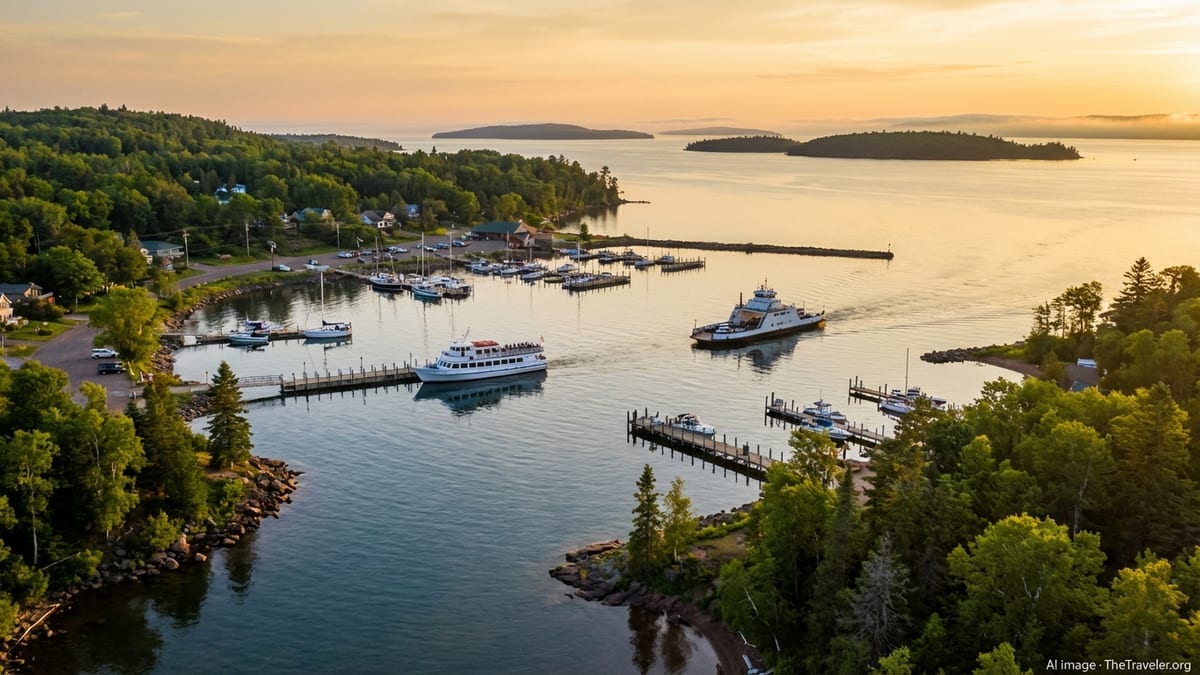
Bayfield is the heart of mainland access to the Apostle Islands. The compact harbor town sits on a hillside above Lake Superior, with marina docks, cruise boats, and the Madeline Island Ferry lining the waterfront. Here you will find ticket offices for Apostle Islands Cruises, charter operators, kayak outfitters, lodging, restaurants, and outfitters for gear. If you plan to take a narrated cruise, use an island shuttle to Stockton or Oak Island, or join a guided kayak trip that departs by motorboat, Bayfield is likely your starting point.
Parking in Bayfield can feel tight in midsummer. Some streets near the harbor have time limits, and cruises often last several hours. Many visitors use all day public parking areas on the edge of downtown and walk to the docks. It is smart to arrive at least 45 minutes before a scheduled cruise or shuttle departure, both to park and to allow time for ticketing and boarding. Because the town is small, walking from most lodgings to the waterfront is practical.
Little Sand Bay, about 15 miles north of Bayfield on the peninsula’s northern shore, serves as another important access point. Reached via State Highway 13 and a short peninsula road, this rustic harbor hosts a small campground, a launch ramp, and docks. Some guided kayak trips use Little Sand Bay as their base for exploring the nearby Sand Island sea caves, and private boaters appreciate the access to the northern islands. Facilities are simpler than in Bayfield, so you should arrive with needed supplies already in hand.
Other mainland access points include the Red Cliff area just north of Bayfield, home to a marina and charter providers, and Cornucopia at the peninsula’s western tip, where outfitters sometimes launch kayak trips to mainland sea caves. These locations can be less crowded than Bayfield but typically have fewer services, so advance communication with tour providers is important. Wherever you start, remember that Lake Superior’s conditions control the schedule, not the other way around.
Ferries, Cruises, and Shuttles: Your Options on the Water
Because there are no bridges to the Apostle Islands, travelers rely heavily on ferries, sightseeing cruises, and island shuttles. The most visible operator for the national lakeshore is Apostle Islands Cruises, a National Park Service authorized concessioner based at the Bayfield harbor. Its well known Grand Tour is a two and a half to three hour narrated cruise that weaves among the islands and often passes dramatic sandstone cliffs and sea caves. Seasonal lighthouse tours and hiking shuttles to islands such as Stockton and Oak add more targeted access for hikers and campers.
Apostle Islands Cruises typically operates from spring into fall, with departure times that may include morning, midday, and late afternoon sailings in peak season. Schedules and offerings can change each year and are updated ahead of each season. Travelers should check current departure times before their trip and build in extra time for boarding. While reservations are not always mandatory for every departure, they are strongly recommended during busy periods, particularly for the most popular tours and shuttles.
In addition to scheduled cruises, several authorized businesses operate water taxis and private boat tours within the national lakeshore. These smaller vessels can be arranged for custom itineraries, direct drop offs at designated island campsites, or focused trips to particular sea cave areas when conditions are safe. Because these services respond to both weather and demand, advance planning and clear communication with operators is crucial, particularly if you are timing a pickup at a backcountry campsite.
For visitors who prefer to remain on foot, combination options are increasingly popular. For example, a traveler might take a shuttle boat to Stockton Island, spend several hours hiking its trails and beaches, then return on the same vessel later in the day. Others might pair a cruise with a separate kayak excursion, using a boat supported launch to reach more remote paddling locations. The key is to think through how each leg of your journey fits together and to avoid relying on last minute arrangements once you are already on the water.
Madeline Island: The Only True Ferry Destination
While the Apostle Islands National Lakeshore has no car ferries to its islands, neighboring Madeline Island offers something different. As the only island in the group with regular vehicle access, Madeline is served by the Madeline Island Ferry Line, which runs between Bayfield and the town of La Pointe. The crossing is short, typically around 20 to 25 minutes, but it feels worlds away, with open Lake Superior views and the national lakeshore islands dotting the horizon.
In the main season, the ferry makes multiple trips daily, generally increasing in frequency during summer and around busy weekends. The boat carries cars, trucks, bicycles, and foot passengers, and reservations for standard runs are not usually required. Instead, vehicles and pedestrians line up at the Bayfield or La Pointe terminal and board on a first come, first served basis. Departure times can expand in midsummer to include early morning and late evening runs, giving day trippers and overnight visitors flexibility.
Madeline Island itself is not part of Apostle Islands National Lakeshore, but it is closely intertwined with the area’s tourism. Once you disembark at La Pointe, you can walk to restaurants, shops, small inns, and the Madeline Island Museum. A road network crosses the island to attractions such as Big Bay State Park and Big Bay Town Park, both known for long beaches and lakeside trails. Because the car fare component is often the most expensive part of the ferry ride, many visitors leave their vehicle in Bayfield and explore the island on foot or by bike, especially if they plan to stay close to town.
Seasonal reality still applies. In winter, when ice thickens enough to halt boat traffic, regular ferry service pauses and specialized windsleds or ice roads sometimes take over, primarily to serve year round residents. For most visitors, that means practical access to Madeline Island is overwhelmingly a spring through fall experience, much like the rest of the Apostle Islands region.
Private Boats, Kayaks, and Guided Adventures
Some of the most memorable Apostle Islands experiences come from getting on the water under your own power, but doing so safely takes judgement and planning. Lake Superior is notorious for very cold water, sudden squalls, and fast changing conditions. The National Park Service and local outfitters emphasize that only properly equipped sea kayaks, typically at least 16 feet long with bulkheads and sprayskirts, are suitable for crossings to the outer islands. Paddlers should be experienced in self rescue, dress for immersion, and check marine forecasts before leaving shore.
For many visitors, guided kayak tours offer a safer and more relaxed option. Several outfitters based in Bayfield, Red Cliff, and on Madeline Island provide half day and full day trips to mainland sea caves or nearby islands when conditions permit. Some also work with motorized support boats that ferry paddlers closer to remote caves and stacks so that less energy is spent on long open water crossings. These boat assisted trips can be a good choice for travelers who want the intimacy of paddling through sea arches and along sandstone walls without committing to advanced expedition style kayaking.
Private boaters, whether arriving with small sailboats, fishing boats, or cruising powerboats, have another layer of freedom in the Apostle Islands. Public launch ramps in Bayfield, Little Sand Bay, and other harbors provide access to the lake, and marinas around the peninsula offer transient slips. Once on the water, boaters can tie up at designated docks, anchor off certain islands, or use their vessel as a base while exploring ashore. Careful attention to charts, shoals, and weather is essential, as is familiarity with park rules about anchoring, docking, and camping.
Whichever non ferry route you choose, it is worth remembering that the remoteness that makes the Apostle Islands so attractive also complicates rescue. Cell service can be inconsistent, fog can develop quickly, and summer thunderstorms can build with little warning. The most successful private paddlers and boaters are conservative in their planning, ready to wait out bad weather, and thoughtful about carrying proper safety equipment including flotation, signaling devices, and navigation tools.
Planning Logistics: Parking, Timing, and Weather Readiness
Logistics can make or break an Apostle Islands trip. Begin with parking. In Bayfield, summer weekends and fall color season fill streets quickly. Day cruise passengers often rely on public lots at the edge of downtown, while overnight visitors may leave vehicles at their lodging or in designated long term areas. If you are taking the Madeline Island Ferry with a vehicle, build in extra time to line up for boarding, especially during busy afternoons when return traffic from the island peaks.
Timing is the second major consideration. Cruises, water taxis, and ferries operate on published schedules, but Lake Superior keeps the final say. Fog, wind, and storms can delay or cancel departures. It is wise to avoid booking tight connections, such as a late afternoon cruise on the same day as a long drive from another state or an evening flight out of a distant airport. Many experienced visitors plan at least one buffer day in the area, using it to explore Bayfield’s shops, orchards, and beaches if the weather cooperates.
Weather readiness is your third pillar. Even on warm summer days, offshore breezes can make temperatures on the water feel significantly cooler. Dressing in layers, bringing windproof outerwear, and carrying a warm hat and gloves can turn a chilly cruise into a comfortable outing. Rain gear, sun protection, and secure footwear are equally important, especially on trips that involve hiking on rocky shorelines or climbing lighthouse stairs.
Finally, communication matters. Confirm departure points and check for any last minute updates from your tour or ferry operator on the morning of your trip. If you are using a water taxi to access a backcountry campsite, verify pickup times and have a shared plan in case of weather delays. Thoughtful logistics do not remove Lake Superior’s unpredictability, but they do leave you more resilient and able to enjoy the journey.
The Takeaway
Getting to the Apostle Islands is less about a single road or ferry and more about understanding a chain of connections. Most travelers drive U.S. 2 and Wisconsin’s Highway 13 to the Bayfield Peninsula, then fan out to harbors such as Bayfield and Little Sand Bay. From there, they rely on a mix of sightseeing cruises, island shuttles, water taxis, and the Madeline Island Ferry to actually reach the islands and experience Lake Superior up close.
Success in this landscape hinges on respecting the lake’s power and planning for its moods. Build in extra time, confirm schedules close to your travel dates, and pack for cool, changeable weather even when forecasts look benign. Decide in advance whether you will remain on foot, join guided excursions, or bring your own boat or kayak, and map how each leg of your journey connects.
When you do, the payoff is significant. Sandstone cliffs glowing in late afternoon light, quiet beaches on outer islands, the low thrum of a ferry engine crossing to Madeline, and the sense of having stepped just far enough off the beaten path. With solid logistics in place, the journey to the Apostle Islands becomes part of the story, not an obstacle standing in your way.
FAQ
Q1. Can I drive my car to any of the Apostle Islands?
Private vehicles cannot reach the Apostle Islands within the national lakeshore. There are no bridges or car ferries to those islands. The only island you can drive on is Madeline Island, which is not part of the national lakeshore and is served by the Madeline Island Ferry between Bayfield and La Pointe.
Q2. Where do most Apostle Islands cruises and shuttles depart from?
Most narrated cruises and island shuttles depart from the harbor in Bayfield on the Bayfield Peninsula. Some services and guided trips also use Little Sand Bay or nearby harbors, but Bayfield is the primary hub with the most options, ticket offices, and visitor services.
Q3. Do I need a reservation for the Madeline Island Ferry?
For standard passenger and vehicle crossings, reservations are generally not required, and the ferry operates on a first come, first served basis. In busy summer periods, it is wise to arrive early, especially if you are bringing a car or trying to catch a specific departure time.
Q4. When is the best time of year to visit the Apostle Islands?
The main season runs from late spring through early fall, roughly late May through October, when cruises, shuttles, and the Madeline Island Ferry operate on regular schedules. Summer offers the warmest conditions and the most departures, while early fall adds spectacular foliage and cooler but often stable weather.
Q5. How early should I arrive before a scheduled cruise or shuttle?
Plan to arrive at least 45 minutes to an hour before departure. This allows time to park, pick up or confirm tickets, and line up for boarding. On busy weekends or holidays, giving yourself even more time can reduce stress and ensure you do not miss your boat.
Q6. Is it safe to kayak to the Apostle Islands without a guide?
Only very experienced paddlers with appropriate sea kayaks, cold water gear, and self rescue skills should attempt independent crossings. Lake Superior’s water is cold, and conditions change quickly. Many visitors choose guided kayak trips or boat supported excursions, which provide local expertise and added safety.
Q7. Are there public transportation options to Bayfield if I do not want to drive?
Public transit to Bayfield is limited. Most visitors arrive by private vehicle or rental car. Some regional tour operators and schools run group shuttles, and a few programs offer dedicated transfers from Duluth or other cities, but you should not rely on scheduled intercity buses reaching Bayfield directly.
Q8. Can I visit the sea caves without getting in a kayak?
Yes, in many cases. Narrated sightseeing cruises often pass below or near major sea cave formations, offering impressive views from the deck. Certain hiking shuttles and boat tours also position you to see cliffs and caves from shore or short trails, depending on lake conditions.
Q9. What happens if bad weather cancels my boat trip?
If a cruise, shuttle, or water taxi is canceled for weather, operators typically offer rebooking or refunds according to their policies. Because Lake Superior conditions can change quickly, it is wise to keep your schedule flexible, plan alternative onshore activities, and avoid time sensitive onward travel immediately after a planned boat trip.
Q10. Do I need a special permit to camp on the Apostle Islands?
Camping on most islands within Apostle Islands National Lakeshore requires a permit from the National Park Service, obtained in advance or at designated offices. If you are camping on Madeline Island at state or town parks, you will follow their separate reservation and permit systems, which are distinct from the national lakeshore’s rules.