

Vatnajökull National Park is one of Iceland’s wildest and most spectacular regions, stretching across the southeast and deep into the country’s interior. Because the park is so large and fragmented, working out how to get there can feel confusing. This guide brings together the main routes, public transport options and tour choices so you can plan a realistic, safe journey to the glaciers, lagoons and volcanic landscapes that make Vatnajökull unforgettable.
Understanding Vatnajökull’s Size and Main Gateways
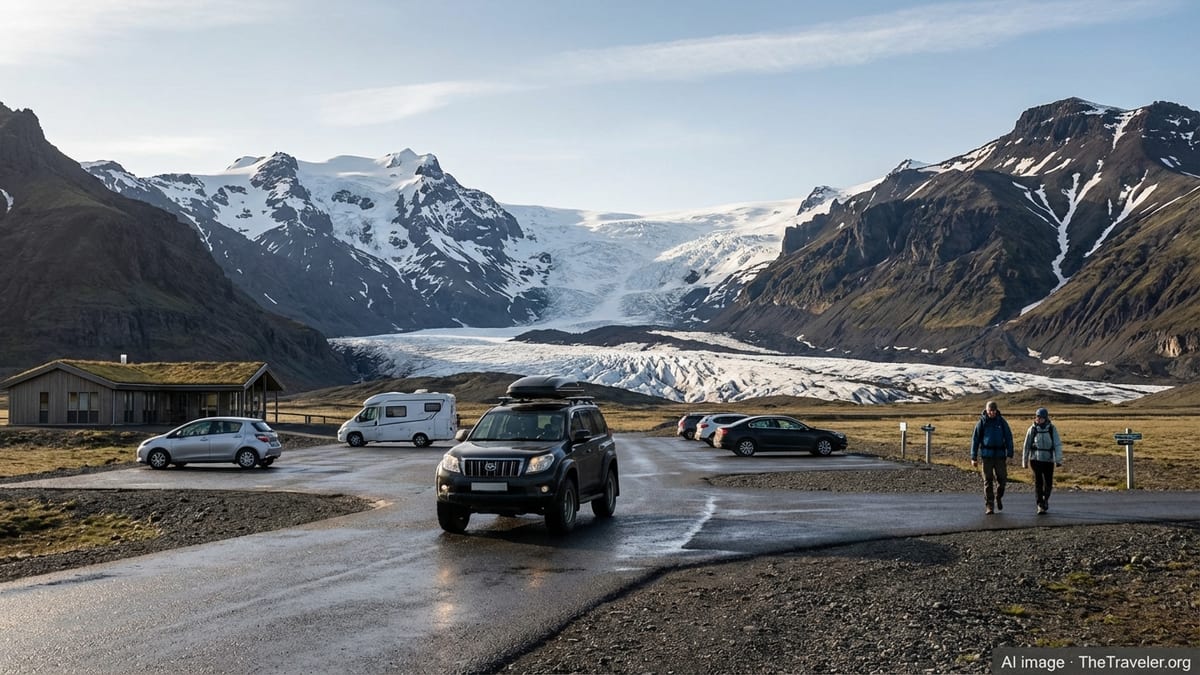
Vatnajökull National Park is not a single fenced reserve but a vast mosaic of glaciers, mountains, canyons and lava fields covering more than 10 percent of Iceland’s landmass. That scale matters when you plan your trip. You do not simply drive to “Vatnajökull” as a single point. Instead, you choose an access area, such as Skaftafell, Jökulsárlón and the south coast sites, or the northern gateways around Dettifoss and Ásbyrgi, and plan your transport around that section.
Most visitors coming from Reykjavík focus on the southern sector, reached via Route 1, the Ring Road. Key entry points along this corridor include the Skaftafell area, Jökulsárlón Glacier Lagoon and nearby Diamond Beach, and a string of glacier outlets visible from the highway. To the north, park sites connect with the Diamond Circle route around Lake Mývatn and Húsavík, including the mighty Dettifoss waterfall and the horseshoe-shaped Ásbyrgi canyon. These areas lie several hundred kilometres from Reykjavík, so advance planning is essential.
Because the park is fragmented, you may spend much of your time driving outside the official boundaries yet still be in the broader Vatnajökull region. Distances between access points are long, and weather can change quickly, especially between the south coast and the highland plateaus. When you design an itinerary, treat each section of the park as a separate destination rather than trying to “do” Vatnajökull in a single rushed day.
Visitor centres at places like Skaftafell and Ásbyrgi act as hubs for hiking maps, ranger advice and local conditions. They are worth building into your arrival strategy. Think of your journey in stages: first reaching the right region along the Ring Road or northern highways, then using local roads, transfers or guided excursions to reach glaciers, canyons and lagoon shores safely.
Driving from Reykjavík and Keflavík: Ring Road Essentials
For most independent travellers, renting a car is the most flexible way to reach Vatnajökull National Park. From Reykjavík, you follow Route 1 east along the south coast. The drive to the Skaftafell area is roughly 320 to 330 kilometres and typically takes about four to five hours in summer under good conditions, longer in winter when snow, ice and strong winds are common. Jökulsárlón Glacier Lagoon lies a little farther east, around five hours from the capital in favourable weather.
Starting at Keflavík International Airport, you first drive toward Reykjavík on Route 41 before joining the Ring Road. Many visitors pick up a rental car at the airport and head straight east, but it is often more comfortable to stay a night in or near Reykjavík, especially after a long flight. The first part of the journey passes through relatively gentle farmland around Hveragerði and Selfoss before the landscape becomes more exposed near the south coast, where wind and sea spray can affect driving conditions.
The road surface along the Ring Road in this region is paved and generally well maintained, but long stretches have few services. Fuel stations cluster around towns like Hvolsvöllur, Vík and Kirkjubæjarklaustur, and again around Höfn beyond the main Vatnajökull gateways. You should keep your tank topped up, especially in winter or during late-night drives, when some smaller stations and cafes may be closed. Plan food and toilet breaks around these hubs instead of assuming frequent stops.
Driving times published by rental companies and mapping tools often assume dry summer roads. In practice, strong crosswinds, rain, drifting snow or icy patches can slow traffic significantly. In recent years, authorities have occasionally closed the Ring Road east of Vík or around Höfn during severe storms and high winds. Build generous time buffers into your schedule, especially between October and April, and avoid planning same-day activities that cannot be rescheduled, such as glacier walks, immediately on arrival.
Car Choice, Seasons and Safety on Icelandic Roads
Your choice of vehicle has a major influence on how comfortable and safe your journey to Vatnajökull will feel. For most summer visitors staying on the paved Ring Road and the short spur roads to sites like Skaftafell and Jökulsárlón, a standard two-wheel-drive car is usually enough. These roads are designed for ordinary vehicles, and rental contracts typically allow them without restrictions. Where access roads are unpaved but well graded, driving slowly and defensively is the key.
If you are visiting in late autumn, winter or early spring, or if you plan to explore gravel side roads near the park, consider a vehicle with higher clearance and, ideally, four-wheel drive. Many highland routes in Iceland are classified as F-roads and are only legal for 4x4 vehicles. These interior tracks are often closed for long periods and can involve river crossings, which should never be attempted in a regular car. Most casual visitors to Vatnajökull do not need to use F-roads, but you should verify each route before setting out and respect any rental company limits written into your contract.
Seasonal conditions are central to any transport plan. In summer, long daylight hours make the lengthy drive from Reykjavík to Vatnajökull feel less pressured, and road surfaces are usually clear, though heavy rain and fog are still possible. In winter, darkness falls early, and stretches of the Ring Road near Vatnajökull can become extremely windy and exposed. Gusts strong enough to overturn light vehicles are not unheard of, and blowing snow can quickly reduce visibility. Before driving, check official road condition maps and daily weather forecasts, and be prepared to delay or reroute if authorities issue warnings.
On top of general road safety, you need to factor in local rules around parking and access. Parking fees are now common at Skaftafell and Jökulsárlón, usually paid by app or at on-site machines, with charges per vehicle. Fees may change, so look for current signage on arrival rather than relying on outdated information. Respect any no-parking zones along the Ring Road itself, especially near one-lane bridges and blind hills. Stopping on the shoulder for photos can be tempting, but it is dangerous on narrow, fast-moving stretches.
Reaching Key Southern Access Points: Skaftafell, Jökulsárlón and Beyond
The southern fringe of Vatnajökull is the most visited part of the park, with several major attractions strung out along the Ring Road between the village of Kirkjubæjarklaustur and the fishing town of Höfn. Skaftafell, a protected area within the park, acts as a natural base for glacier walks and day hikes. Driving east from Reykjavík, you will pass well-known waterfalls such as Seljalandsfoss and Skógafoss before traversing the black sands of the Skeiðarársandur outwash plain. Skaftafell lies on a short spur road clearly signposted from Route 1, roughly four to five hours from the capital in good summer conditions.
Beyond Skaftafell, continuing east along the Ring Road, you reach the Jökulsárlón Glacier Lagoon and Diamond Beach, where icebergs from Breiðamerkurjökull drift out to sea. This area sits within the wider Vatnajökull region and is one of Iceland’s most photographed landscapes. It is about an hour’s drive east of Skaftafell and around five hours from Reykjavík. Parking is available on both the lagoon side and the black sand beach side, and during busy months you can expect a steady flow of tour buses and rental cars, making the area feel quite lively despite its remote setting.
Between these major hubs are multiple viewpoints, smaller glacier lagoons and roadside parking areas where short walks lead to glacier tongues or coastal viewpoints. If you have your own vehicle, allow extra time to stop safely in designated lay-bys rather than racing from one named highlight to the next. Even short detours from the Ring Road can reveal quieter views of Vatnajökull’s ice caps and outlet glaciers, but always stay within marked paths and respect signs warning of crevasses, unstable cliffs or restricted areas.
Accommodation in the southern Vatnajökull area is scattered along the Ring Road in small clusters of hotels, guesthouses and farm stays, with more options near Skaftafell, Jökulsárlón and Höfn. Many tours depart from parking areas at Skaftafell or from roadside meeting points around the lagoon, so when you book activities, check the exact meeting location and build the necessary driving time into your day. In high season, booking lodging close to your chosen access point reduces early-morning driving and allows more flexibility if weather delays an outing.
Accessing Northern Vatnajökull: Dettifoss, Ásbyrgi and the Diamond Circle
While most first-time visitors come in via the south coast, Vatnajökull’s northern edges offer a very different way to experience the park. Here, the main gateway towns are Akureyri and Egilsstaðir, linked by the Ring Road across the interior of north and east Iceland. From Akureyri, it typically takes around two and a half hours to reach Dettifoss, one of Europe’s most powerful waterfalls, by following the Ring Road toward Lake Mývatn and turning onto the access road to the falls. In summer, the paved route along the so-called Diamond Circle tourist circuit connects Dettifoss, Ásbyrgi canyon, Húsavík and Lake Mývatn in a loop that passes through parts of the national park.
Ásbyrgi, a dramatic horseshoe-shaped canyon with lush woodland at its base, hosts a visitor centre and campground and serves as a quieter base for exploring northern Vatnajökull. From the town of Húsavík, best known for whale watching, the drive to Ásbyrgi is relatively short, while Egilsstaðir in the east offers another practical jumping-off point for exploring the northern and eastern parts of the park. Distances in this region are shorter than the marathon south coast drive from Reykjavík, but services are still spread out, so the same principles apply: keep your fuel levels healthy, confirm opening hours in shoulder seasons and pay close attention to road reports before heading into more remote stretches.
Public transport in the north is more limited than along the capital area corridors, and the most convenient way to reach places like Dettifoss and Ásbyrgi is often by rental vehicle or organised excursion. In the main summer season, local tour companies operate day trips from Akureyri and Lake Mývatn that combine waterfalls, volcanic landscapes and canyons. These trips are attractive if you prefer not to drive gravel access roads yourself or if you are travelling without a car and can reach Akureyri by domestic flight or bus first.
Weather patterns in the north can differ markedly from those on the south coast. While snow may linger longer inland around Dettifoss and on higher plateaus, coastal stretches near Húsavík may feel relatively mild. Check forecasts not only for your starting point but for the specific areas you plan to visit, and be prepared for sudden fog or wind changes along canyon rims and high passes.
Public Buses and Scheduled Coaches to Vatnajökull
Travellers without a rental car can still reach parts of Vatnajökull using a mix of public buses and long-distance coaches, especially in summer. Services evolve from year to year, but the basic pattern is that intercity and regional buses run along sections of the Ring Road, with stops at or near key Vatnajökull gateways such as Skaftafell and Jökulsárlón, while urban buses serve shorter local routes around Reykjavík and other towns. Summer timetables are usually more frequent, and some routes only operate between roughly mid May and mid September.
Along the south coast, private coach companies operate regular services from Reykjavík that stop at Skaftafell and, in some cases, at Jökulsárlón or nearby roadside stops. These may run daily in peak season and less often in spring and autumn. Journey times are typically in the range of five to six hours from Reykjavík to Skaftafell, reflecting a combination of distance, rest breaks and lower average speeds for large buses. In winter, schedules are more limited and can be disrupted by weather, with occasional cancellations if the Ring Road closes or conditions deteriorate.
To the north, buses and coaches link Akureyri and Egilsstaðir with smaller settlements along the Ring Road and the Diamond Circle region, though direct bus access all the way to sites such as Dettifoss or Ásbyrgi may not be available on every route. Travellers often combine a long-distance bus trip with a pre-arranged local transfer or guided tour for the final leg into the park. Booking tickets in advance is strongly recommended during the main travel season, as capacity on long-distance coaches can be limited, especially on days with good weather forecasts.
Because services and operators change over time, and special departures may be added in response to demand, you should always check the most recent schedules and route maps a short time before travelling. When planning a tight itinerary, allow for the possibility of delays. High winds, snow and ice can slow buses just as they do private cars, and while professional drivers are experienced in local conditions, safety decisions can lead to route changes or late arrivals. Keeping your accommodation flexible on days that involve long bus journeys can reduce stress if plans shift.
Tours and Day Trips: Visiting Vatnajökull Without Driving
If you prefer to avoid Iceland’s sometimes challenging driving conditions, guided tours are an excellent way to reach Vatnajökull National Park. From Reykjavík, several operators run very long day trips that travel east along the south coast to Jökulsárlón and nearby glaciers, often combining scenic stops at waterfalls with a boat ride on the lagoon or a short glacier walk. These outings typically last 13 to 15 hours, meaning an early morning departure and late evening return, but they allow you to experience the region without arranging your own transport or accommodation along the route.
Multi day tours offer a more relaxed pace. These tours usually include overnight stays in guesthouses or hotels along the south coast, with time built in for activities such as ice-caving, longer glacier hikes or photo stops at black sand beaches and coastal cliffs. Because transport, lodging and guiding are bundled together, multi day trips can be good value for travellers who want to see several regions of Iceland, not just Vatnajökull, in a limited time. They also give guides more room to adjust the itinerary if weather forces changes, something that is harder to do on a strict day-trip schedule.
Within Vatnajökull itself, especially at hubs like Skaftafell and Jökulsárlón, local companies run short excursions that you can join once you have reached the area by car or coach. Examples include half-day glacier walks, zodiac or amphibious boat tours on glacier lagoons, and, in winter, ice-cave tours inside the glacier. These activities almost always require advance booking, particularly in July and August or around holiday periods, and many operators specify minimum ages, fitness levels and clothing requirements.
When comparing tour options, look beyond price to consider group size, cancellation policies and the flexibility to adapt to conditions. Larger coaches may feel less intimate but can be more affordable, while smaller group tours often allow more spontaneous photo stops or minor route adjustments. Confirm whether your chosen tour provides hotel pickup in Reykjavík or requires you to meet at a central bus terminal, and clarify exactly where the tour returns you at the end of the day so you can coordinate onward connections.
Practical Tips for Parking, Fuel, and On the Ground Logistics
However you reach Vatnajökull National Park, a few practical details can make your journey smoother once you are on the ground. Parking management has become more structured at popular sites, with paid parking in place at Skaftafell and Jökulsárlón and, increasingly, at other heavily visited locations. Fees typically apply per vehicle per day or per visit and are often payable via mobile apps or automated machines rather than staffed booths. Check signs carefully on arrival to understand the current rules, payment methods and any time limits.
Fuel planning is especially important in the Vatnajökull region. While there are petrol stations in most towns and some larger roadside stops, distances between them can be substantial. Many modern stations are self-service and accept cards, but staff hours can be limited. Make it a habit to top up whenever your tank drops to around half full rather than assuming the next station will be open and accepting your particular card. In winter, this habit provides an additional safety margin should you be forced to wait out bad weather in your vehicle.
Mobile coverage along the main routes is generally reasonable but can drop in more remote stretches, especially near mountains or in deep valleys. Download offline maps before you set out, and store key addresses for visitor centres, accommodations and emergency contacts on your device and on paper. If you are using a navigation system, double check that it is routing you via paved, permitted roads rather than interior tracks or closed F-roads that your rental contract does not allow.
Finally, be realistic about how much you can cover in a single day. The distances involved in reaching Vatnajökull mean that trying to combine a long drive from Reykjavík with demanding physical activities such as full-day glacier climbs can be exhausting and, at times, unsafe. Whenever possible, break your journey with an overnight stay somewhere along the south coast or in the north, and treat the drive itself as part of the experience rather than simply a transfer. Slowing down increases your margin for dealing with weather, road works or unexpected closures and gives you more time to appreciate the extraordinary landscapes unfolding outside your window.
The Takeaway
Getting to Vatnajökull National Park is less about navigating a single access road and more about understanding how this enormous protected area fits into Iceland’s wider road and transport network. Whether you arrive via the busy south coast corridor from Reykjavík, thread your way in from Akureyri and the Diamond Circle, or join an organised tour that handles logistics on your behalf, a little preparation goes a long way. Distances are long, services are scattered and weather can change swiftly, but with realistic expectations and flexible timing, the journey can be as memorable as the glaciers and canyons themselves.
Choosing between self-driving, buses and tours largely comes down to your confidence behind the wheel and your appetite for independence. Rental cars offer freedom to stop where and when you like, but they also require you to monitor road conditions and adapt to storms or closures. Buses and coaches reduce the stress of driving yet demand careful attention to timetables and connection points, while guided tours bundle transport and activities into a straightforward package that suits many first-time visitors.
Whichever route you choose, focus first on reaching the right gateway area for your interests, whether that is Skaftafell’s hiking trails, the ice-strewn shores of Jökulsárlón or the dramatic northern canyons around Dettifoss and Ásbyrgi. From there, local visitor centres, guides and signage will help you make the most of your time on the ground. With thoughtful planning, your journey to Vatnajökull can become a highlight of your Icelandic adventure rather than just a long drive on the map.
FAQ
Q1. How long does it take to drive from Reykjavík to Vatnajökull National Park?
The drive from Reykjavík to the Skaftafell area of Vatnajökull usually takes around four to five hours in good summer conditions, and longer in winter when roads can be icy or affected by strong winds.
Q2. Do I need a 4x4 vehicle to reach Vatnajökull?
For the main access points along the south coast, such as Skaftafell and Jökulsárlón, a regular two-wheel-drive car is normally sufficient in summer, but a 4x4 is advisable in winter or if you plan to use gravel side roads.
Q3. Is it possible to visit Vatnajökull as a day trip from Reykjavík?
Yes, several companies offer long day trips from Reykjavík to Jökulsárlón and nearby glaciers, but these tours are very full days, often 13 hours or more, with much of the time spent on the road.
Q4. Can I reach Vatnajökull by public bus?
In summer there are long-distance buses and coaches from Reykjavík that stop near Skaftafell and, in some cases, Jökulsárlón, as well as routes in the north, but services are limited and schedules change seasonally.
Q5. How do I get to the northern part of Vatnajökull, like Dettifoss and Ásbyrgi?
Most visitors reach the northern sector by driving from Akureyri or Egilsstaðir via the Ring Road and local access roads, or by joining guided tours that include Dettifoss, Ásbyrgi and the wider Diamond Circle route.
Q6. Are roads to Vatnajökull open year round?
The main Ring Road routes to the south and north are maintained year round, but sections can close temporarily during storms or heavy snow, especially in winter, so it is essential to check current road conditions before travelling.
Q7. Is parking at Vatnajökull attractions free?
Parking at major sites such as Skaftafell and Jökulsárlón is usually paid, with fees per vehicle and payment handled through machines or mobile apps, while smaller roadside viewpoints may remain free.
Q8. Can I visit Vatnajökull straight after landing at Keflavík Airport?
It is technically possible to drive toward Vatnajökull right after landing, but because the journey is long and conditions can be demanding, many travellers choose to rest in or near Reykjavík before tackling the drive.
Q9. What is the safest season to drive to Vatnajökull?
Generally, late spring to early autumn offers the safest driving conditions, with clearer roads and long daylight hours, though even in summer you should still watch for rain, fog and strong winds.
Q10. Do I need to book tours in advance once I reach Vatnajökull?
Yes, it is strongly recommended to book activities such as glacier walks, ice-cave tours and boat trips on glacier lagoons in advance, especially in the busy summer months, to secure a place and avoid disappointment.