

The United Arab Emirates operates one of the most structured and enforcement-driven immigration systems in the world. For foreigners assessing a move, the central question is not only how to arrive, but how to establish and maintain legal status over time. This briefing outlines the principal lawful pathways to live in the UAE and the compliance obligations that determine whether a relocation is viable and sustainable.
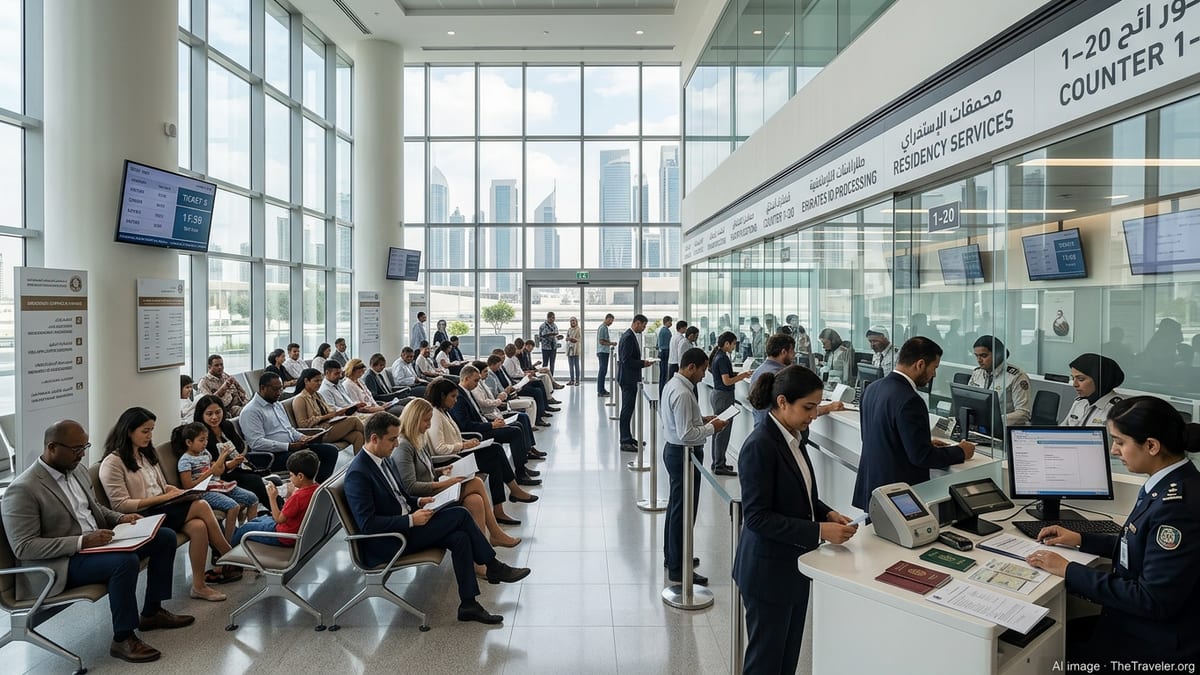
Core Legal Principles For Living In The UAE As A Foreigner
Foreigners may not live or work in the United Arab Emirates without a valid entry permit and, for longer stays, a residence visa linked to a clearly defined purpose such as employment, study, investment, or family reunification. Entry permission and residence status are administered mainly by two authorities: the Federal Authority for Identity, Citizenship, Customs and Ports Security for most emirates and the General Directorate of Residency and Foreigners Affairs for Dubai. The legal right to reside is always time-limited and conditional.
Legal residence is usually sponsored. Sponsorship can be provided by an employer, an educational institution, a family member who already holds residence, or a company that the foreigner owns or invests in. The sponsor is responsible for initiating and maintaining the residence visa, including renewals and cancellations. Independent or unsponsored long-term residence is rare and confined to specific categories such as some multi-year investor programs.
Entry and residence permissions are separate but linked stages. A foreigner generally enters with a visit visa, visa-on-arrival, or pre-arranged entry permit, then completes in-country “status change” procedures to obtain a residence visa and Emirates ID. Remaining in the country after a visit status expires without converting to residence, or after a residence visa is cancelled or expires, results in overstay and financial penalties.
Critically, the UAE draws a sharp distinction between permission to reside and permission to work. A residence visa alone does not always confer the right to work. In most cases, employers must obtain a work permit or labor approval in parallel. Working for any entity other than the registered sponsor, or performing unlicensed freelance activity, can be treated as illegal work even where the individual holds a valid residence visa.
Primary Legal Pathways To Residence In The UAE
Most foreigners who move legally to the UAE follow one of several established residence routes. Each route has its own eligibility, duration and renewal rules, and documentation requirements. In practice, many relocation decisions begin by selecting which of these pathways is realistic given personal, professional and financial circumstances.
The main categories in current use include standard employment residence visas for private sector or government jobs, residence via free zone or mainland company ownership or investment, family sponsorship by an existing resident, higher-income long-term residence schemes often referred to as golden or green visas, and specialized categories such as student visas or certain virtual work programs administered at emirate level. Availability and detailed conditions for each route are periodically adjusted through policy reforms, so timing of an intended move is a relevant variable.
Employment-linked residence remains the most common path for foreign professionals. Under this model, a UAE-based employer sponsors the individual, arranges the work permit where required, and then secures a residence visa typically valid for two or three years at a time. If employment ends, the residence visa is cancelled and the individual must either secure new sponsorship or leave the country after any applicable grace period.
Investor and business routes have expanded in recent years and are increasingly used by entrepreneurs, consultants and remote-service providers. Free zone company formation packages routinely include eligibility for one or more residence visas, with the company acting as sponsor. These models can be attractive for globally mobile professionals who want a UAE base without a traditional local employment contract, provided they are prepared for company registration, license renewal and associated compliance costs.
From Entry To Residency: Legal Sequencing Of A Move
Legally moving to the UAE is a staged process that starts before arrival. Many nationalities require a pre-arranged entry permit for work, study or long-term residence; others may enter visa-free or with visa-on-arrival for short visits and then convert status inside the country. The critical compliance point is that conversion to residence status must be initiated and completed before the underlying visit visa or entry permit expires, as grace periods have been shortened or removed for many categories.
Once in the UAE, the sponsor begins residence formalities by applying for an entry permit if not already issued, completing medical screening and biometrics, then obtaining a residence visa stamp or electronic endorsement and an Emirates ID card. These steps must be carried out through authorized channels of the federal or emirate-level immigration authorities, often with the support of licensed typing or service centers. Skipping steps, relying on informal intermediaries, or attempting to work while still on a visit status all introduce legal risk.
During this transition phase, timing is important. Policy updates over the past two years have reduced or removed automatic overstay grace days for many visitors, and overstaying even a short period between the end of a visit visa and activation of residence now commonly triggers daily fines. Foreigners who plan to convert to residence inside the country must therefore allow sufficient time to complete medicals, biometrics and security checks before the visit status expires.
After the residence visa is issued, the move becomes legally durable, but only as long as the conditions for sponsorship remain in place. Residence visas are typically granted for one to ten years depending on category. However, continuous residence is not entirely unconditional; for example, extended absence from the UAE beyond a set number of consecutive months can, in many categories, lead to visa cancellation unless special permission has been obtained in advance.
Maintaining Legal Status: Renewals, Cancellations, And Overstay Risks
Compliance after arrival is as important as securing initial residence. Residence visas must be renewed before expiry. Renewal requires that the original basis for sponsorship still exists, such as active employment or a valid trade license for company owners, as well as updated medical checks and a valid Emirates ID. Failure to renew on time leads to visa expiry and overstay, with daily fines and potential blocks on future applications.
When employment ends or a business closes, the sponsoring entity is usually obliged to cancel the residence visa. Following cancellation, foreign nationals are granted a limited window to either leave the country or secure new sponsorship. Over the past year, enforcement campaigns have targeted visa violators, and authorities have identified large numbers of individuals living in the UAE without valid status. This environment makes reliance on informal understandings about grace periods increasingly risky.
Overstay penalties have been standardized and adjusted several times, and as of early 2026 information from advisory platforms indicates that general daily overstay fines in regular circumstances are in the approximate range of several dozen dirhams per day. Separate announcements have temporarily waived fines for some travelers unable to depart due to exceptional regional disruptions, but such measures are specific and time-bound. Overstay fines must usually be settled before departure, visa renewal, or status change, and unpaid fines can impede future entry.
Beyond financial penalties, prolonged irregular stay can trigger more serious consequences such as deportation orders and entry bans. Immigration files from previous overstays or absconding cases are increasingly cross-checked when new residence applications are submitted. For foreigners who intend to use the UAE as a long-term base, maintaining an unbroken record of lawful presence is therefore a core strategic objective.
Legal Work And Sponsorship Structures For Foreigners
For many relocating foreigners, the main objective is not only to live in the UAE but also to work there legally. The legal framework links the right to work closely with sponsorship and business licensing structures. Working for a UAE-based employer typically requires both a valid residence visa and a work permit obtained through the relevant labor authority or free zone. Unauthorized employment, including side jobs not covered by permits, is treated as a violation even if the person holds valid residence.
Company formation-based residence is a distinct sponsorship model. In free zones and on the mainland, company shareholders or certain senior managers can in many cases obtain residence visas sponsored by their own entity. In these arrangements, the company must maintain a current trade license, meet any office space requirements, and stay in good standing with regulatory and tax authorities. If the company license lapses or is revoked, the linked residence visas are at risk.
Some emirates and free zones also support structured freelance or sole practitioner permits linked to residence visas. These options can create a legal framework for independent professionals, but require that all billed activity is conducted under the licensed entity or permit. Operating informally for overseas clients while physically present in the UAE, without any local license or sponsorship, can be interpreted as illegal work if detected during inspections, audits, or banking reviews.
Foreigners considering relocation primarily for tax or asset structuring reasons should understand that the immigration system is not separate from corporate and regulatory oversight. Authorities have increased scrutiny of shell or dormant companies created solely to support residence visas without genuine business activity. In practice, maintaining credible operations, or at least demonstrable intent to operate, significantly reduces the risk of immigration or licensing challenges.
Irregular Pathways And Legalization Measures
From time to time, the UAE has introduced amnesty or status-regularization schemes for foreigners who have fallen out of status, for example through overstays, expired residence visas, or unresolved employment disputes. These initiatives generally allow eligible individuals to leave without fines, switch sponsors, or adjust their status within specified windows. Recent programs have run through set deadlines and have been tied to wider enforcement drives against visa violators.
While these measures can provide a safety net, they should not be viewed as a predictable or repeatable pathway for relocation. Amnesty periods are temporary, subject to strict eligibility criteria, and often exclude serious violators or those who entered unlawfully. Authorities have also stepped up detection of irregular residents through workplace inspections, data matching between immigration and labor systems, and fines for employers that shelter or employ individuals without valid documents.
Attempting to move to the UAE through informal channels such as tourist-to-worker conversions arranged by unlicensed agents, or remaining after visa expiry in the expectation of future amnesty, now involves significant legal risk. Individuals in such situations can face detention pending deportation, blacklisting, and long bans on re-entry. For professionals assessing a move as part of their long-term career or business strategy, reliance on properly documented legal routes is essential.
In parallel, enforcement of employer obligations has intensified. Companies that fail to cancel visas of departed employees, continue to sponsor individuals without real employment, or charge workers for sponsorship in violation of regulations have been subject to penalties. This creates a more controlled sponsorship environment but also means foreigners should verify that prospective sponsors are reputable and compliant before tying their status to them.
The Takeaway
Legally moving to the United Arab Emirates as a foreigner involves more than obtaining a single visa document. It requires selecting an appropriate residence pathway, sequencing entry and status change steps correctly, and maintaining full compliance with sponsorship and work-permit rules throughout the stay. The system is structured, highly codified and backed by active enforcement, particularly in relation to overstays and unauthorized work.
For individuals and families evaluating relocation, two strategic questions are central. First, is there a robust and sustainable basis for sponsorship, whether through an employer, an owned business, or a qualifying investment or family relationship. Second, is there a realistic plan to manage renewals, possible job changes, business continuity and exit scenarios within the timelines mandated by immigration rules.
Foreigners who approach the UAE with a long-term compliance mindset, supported by accurate and current regulatory information, generally find the legal framework predictable and navigable. Those who rely on informal advice, unlicensed intermediaries or assumptions about grace periods face a materially higher risk of fines, disruption and loss of residence rights. As policy adjustments continue, periodic review of immigration conditions is an integral part of any serious relocation strategy to the UAE.
FAQ
Q1. Can a foreigner live in the UAE long term on a visit visa?
Long-term residence is not legally possible on a visit visa. Visit visas are for short stays and do not confer the right to reside, work, or enroll children in school on an ongoing basis. To live in the UAE, a foreigner must obtain a residence visa linked to a recognized purpose such as employment, business ownership, study, or eligible family relationship.
Q2. Is it legal to work remotely for a foreign employer while living in the UAE on a visit visa?
Regulations focus on both place of work and immigration status. Engaging in ongoing work activity while physically in the UAE on a visit visa can be treated as unauthorized work, particularly if local clients or entities are involved. Individuals considering remote work from the UAE should secure an appropriate residence status and, where applicable, a local license or permit that aligns with their activities.
Q3. How much time is typically allowed after a residence visa is cancelled to stay legally in the UAE?
The grace period after residence visa cancellation varies by category and has been adjusted in recent reforms. In many cases a limited number of days are granted to either leave the country or obtain new sponsorship. Because these rules change, foreigners should verify the current grace period at the time of cancellation rather than relying on older informal guidance.
Q4. What are the consequences of overstaying a visa in the UAE?
Overstaying a visit or residence visa results in daily monetary fines that accumulate until the individual leaves, regularizes status or is otherwise processed by authorities. In addition to financial penalties, significant or repeated overstays can lead to deportation orders, re-entry bans, and complications for any future residence or work permit applications in the UAE.
Q5. Can a foreigner change from one sponsor to another without leaving the UAE?
In many circumstances a change of sponsor is possible from within the country, subject to immigration rules and any labor law constraints. This usually involves cancellation of the old residence visa, issuance of new entry permission and medical screening under the new sponsor. However, eligibility and procedures depend on visa category, emirate, and contract conditions, so individual cases must follow the applicable official process.
Q6. Is setting up a free zone company a legal path to live in the UAE?
Yes, many free zones offer company formation packages that legally support residence visas for owners and sometimes staff. The company then acts as sponsor. To remain compliant, the company must maintain a valid trade license, meet regulatory obligations and avoid being a purely nominal entity. Residence rights will generally lapse if the company fails to renew its license or is deregistered.
Q7. Does holding a residence visa automatically allow employment with any UAE company?
No. A standard residence visa is typically tied to a specific sponsor. Working for any entity other than the sponsoring company or outside the scope of the issued permit is usually considered illegal work. Transfers between employers require formal change-of-sponsor procedures and, where relevant, updated labor approvals.
Q8. Are there legal options to stay in the UAE without an employer, for example as a retiree or high-net-worth individual?
The UAE has introduced residence categories that can, under defined conditions, allow longer-term stay without a traditional employment sponsor, such as certain investor, property owner, retiree, or long-duration residence schemes. These normally require meeting income, asset, or investment thresholds and maintaining those conditions over time. Availability and criteria differ by emirate and are revised periodically.
Q9. What role does the Emirates ID play in legal residence?
The Emirates ID is the official identity card issued to UAE residents and is required for most formal transactions, including banking, utilities, telecoms and rental contracts. It is linked to the individual’s residence visa status. If the residence visa expires or is cancelled, the Emirates ID becomes invalid, and access to many services will be restricted.
Q10. How can foreigners ensure they stay updated on changes to UAE immigration rules?
Immigration policies in the UAE are subject to frequent adjustment. Foreigners should monitor official announcements from federal and emirate-level immigration authorities, verify key details directly with authorized service centers, and treat informal or outdated advice with caution. For complex or high-stakes relocations, consulting qualified immigration or relocation professionals can help ensure that decisions are based on the latest regulatory framework.