

Standing on the summit of Kilimanjaro is an achievable goal for many trekkers, but picking the right route is the single most important decision you will make. Each route up Africa’s highest peak has its own character, fitness demands, and acclimatization profile.
Matching your current fitness, trekking experience, and appetite for challenge with the right trail can be the difference between a safe, memorable summit and a miserable retreat at high altitude. This guide breaks down the main Kilimanjaro routes through the lens that matters most for success: your body, your experience, and how many days you can spend on the mountain.
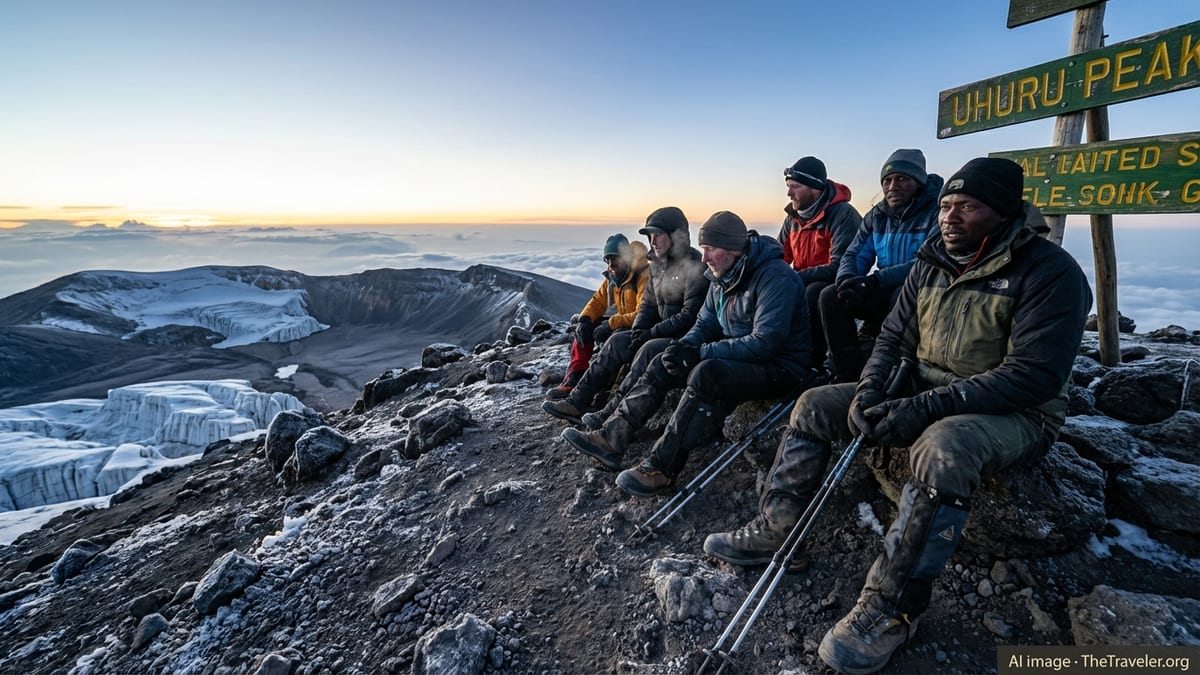
Understanding Kilimanjaro’s Routes and What Really Matters
There are six primary ascent routes used by most reputable operators on Kilimanjaro: Marangu, Machame, Lemosho, Rongai, Northern Circuit, and Umbwe. A seventh, Shira, is a higher-starting variant of Lemosho. All converge on the same summit, Uhuru Peak, at 5,895 meters, but they differ sharply in length, steepness, crowd levels, and how well they allow your body to acclimatize to altitude. Those differences translate into very different summit success rates, especially when you compare shorter itineraries of five or six days to longer walks of eight or nine days.
Across operators, longer routes that allow more time to acclimatize consistently see higher summit success rates, often above 85 to 90 percent on eight-day Lemosho and nine-day Northern Circuit itineraries. In contrast, fast five or six day ascents on Marangu, Machame, or Umbwe tend to have substantially lower success rates for reaching Uhuru Peak. The mountain does not reward rushing; your body needs time to adjust to the thin air. For most reasonably fit people, route choice and duration matter more than elite fitness. A strong but impatient marathon runner on a five-day climb may fare worse than a moderately active hiker on a conservative eight-day plan.
When deciding, look beyond marketing labels like “easiest” or “most scenic.” Ask hard questions about daily altitude gains, where the high camps are placed, how often the route follows the “climb high, sleep low” pattern, and what success rates operators report by route and number of days. Then overlay those facts with an honest appraisal of your recent activity levels and previous experience walking for multiple long days at altitude or in the mountains.
Assessing Your Fitness and Experience Before You Pick a Route
Before you compare the routes in detail, it is worth spending a moment on yourself. Kilimanjaro is a non-technical trek rather than a climb, but it is still a demanding high-altitude expedition. On most routes, you will walk five to seven hours a day, with one very long summit day that can run 12 to 16 hours door to door. Trails are generally well trodden, but some days involve long, steady ascents over rocky ground, short scrambles, or traverses across exposed but non-technical slopes.
If you regularly hike or hill-walk for several hours at a time and do some form of cardio training during the week, you are likely fit enough for Kilimanjaro provided you respect the altitude and allow enough days. If you are relatively sedentary, have not walked for more than a couple of hours in recent months, or are carrying unresolved injuries, you will either need to invest in a structured training plan or select the routes and itineraries that minimize daily strain and maximize acclimatization.
Experience matters just as much as raw fitness. Trekkers who have previously spent time above 3,000 meters typically understand how altitude affects appetite, sleep and pace, and they are better at recognizing early symptoms of acute mountain sickness. Those who have done multi-day treks know how they handle consecutive days of effort and basic camp routines. First-time trekkers can absolutely summit Kilimanjaro, but they do best on routes that are forgiving, allow rest and acclimatization days, and avoid brutally steep ascents.
As you read through the routes below, keep two honest self-assessments in mind: how you fare on a typical six to eight hour hike at home, and how much previous exposure you have to high altitude. If both answers are “not much,” you will want the longest, most gradual option your schedule and budget allow.
Marangu Route: Shorter, Simpler, and Best for Hikers Who Value Huts
Marangu is the oldest and most established trail on Kilimanjaro, often nicknamed the “Coca-Cola Route.” It approaches the mountain from the southeast and is unique in offering dormitory-style hut accommodation instead of tents. For some trekkers, especially those nervous about camping or heading up in the rainy season, the lure of solid roofs, mattresses, and communal dining halls is compelling. The walking itself is on well-graded paths with relatively gentle gradients compared to some western and southern approaches.
These comforts, however, can mask serious drawbacks if you are not careful with the itinerary. Marangu is usually sold as a five or six day trek, which leads to a rapid ascent profile. Many groups go from the park gate to almost 3,000 meters on day one and are attempting the summit from around 4,700 meters by day four or five. That pace leaves limited time for the body to adapt, which is a major reason why Marangu tends to show lower summit success rates compared with longer, camping-based routes. Simply put, the route can be physically easier underfoot, but physiologically tougher because of the quick gain in altitude.
Marangu can be a sensible choice for trekkers with modest fitness who are anxious about tent life or heavy rain, provided you choose at least a six day version that includes an extra acclimatization day at Horombo Hut. It is less ideal for those prone to altitude issues, for climbers aiming to maximize summit odds at all costs, or for anyone seeking solitude and wilderness. The path is busy, the huts can feel crowded, and the scenery, while pleasant, is less varied than on some of the western approaches.
Machame and Lemosho: Balanced Routes for Moderately Fit First-Timers
If you are in reasonable hiking shape and this is your first high-altitude expedition, the Machame and Lemosho routes often hit the sweet spot. Both approach Kilimanjaro from the southwest, traverse the scenic Shira Plateau, and join near Lava Tower before winding below the striking Barranco Wall. They are known for varied landscapes, from lush rainforest to moorland and alpine desert, and they follow a profile that suits acclimatization, with several days that include a “climb high, sleep low” pattern.
Machame, sometimes called the “Whiskey Route,” is one of the most popular trails on the mountain. The standard itinerary runs 6 or 7 days, with the longer option offering better acclimatization and higher summit success. The walking can be steep in places, particularly on the first and second days and on the Barranco Wall, and the camps can feel busy in peak season. Machame is well-suited to those with decent cardiovascular fitness who are comfortable with some steep ascents and do not mind a social, sometimes crowded trail.
Lemosho starts farther to the west and initially sees fewer trekkers, especially on the lower forest and moorland sections. It is typically offered over 7 or 8 days, and that extra time translates directly into excellent acclimatization and strong success rates. Many experienced operators regard Lemosho as one of the most balanced routes on Kilimanjaro, combining quieter early days, stunning views of the Shira Plateau and Western Breach, and a gradual height gain that gives first-time high-altitude trekkers a real advantage.
From a fitness and experience perspective, both Machame and Lemosho are ideal for trekkers who can train to comfortably walk six to seven hours a day with a light daypack and are willing to sleep in tents. If you are undecided and your schedule allows, opt for the longer version of each route: seven days for Machame, eight days for Lemosho. Those extra acclimatization days are often the hidden difference between those who touch Uhuru Peak and those who turn back feeling unwell above Barafu Camp.
Rongai and Northern Circuit: Gradual Gains for Cautious or Inexperienced Climbers
Rongai and Northern Circuit both approach Kilimanjaro from the north, away from the busier southern and western flanks. For trekkers particularly worried about altitude or seeking a quieter, more remote experience, these routes deserve careful consideration. They favor gradual height gain, lower crowd levels, and in the case of the Northern Circuit, the longest itineraries on the mountain.
Rongai is the only route that starts near the Kenyan border. It is generally drier than the southern approaches, which can make it attractive during the main rainy seasons. The early days follow gentle gradients through forest and heather zones, and the overall ascent profile is considered more gradual than Machame or Marangu. Standard itineraries run 6 or 7 days, with the longer version significantly improving acclimatization and summit prospects. Because the camping areas are smaller and the route is used by fewer groups, Rongai also appeals to trekkers who prefer quieter campsites and less congested trails.
The Northern Circuit is the longest standard route on Kilimanjaro, typically completed in 8 or 9 days. After initially sharing part of the Lemosho or Shira approach, it swings around the remote northern slopes of the mountain, offering wide views and a strong sense of wilderness. The extended duration and gentle day-to-day height gains give the body ample time to adapt to altitude, and many operators report some of their highest summit success rates on this route. For fit but inexperienced high-altitude trekkers, it is one of the most forgiving options, though you must be willing to spend more days and budget on the mountain.
From a fitness standpoint, both Rongai and Northern Circuit still require you to handle full trekking days and one very long summit push, but they spread the workload more evenly. If your cardio base is modest, you prefer steady, less steep hiking, and you want to maximize your odds of feeling strong on summit night, these northern routes are particularly attractive. The trade-off comes in additional time and cost, especially on the Northern Circuit, which involves more days of park fees, staff support, and logistics.
Umbwe and Shira: Routes for Experienced or Highly Fit Trekkers
Umbwe and Shira are specialist options that are rarely recommended for first-time high-altitude trekkers. They involve either very rapid ascent or a high starting point, which both compress the acclimatization window and make them better suited to climbers with significant mountain experience and strong fitness.
Umbwe is the steepest and most direct line up Kilimanjaro’s southern flank. It climbs quickly from the forest into the high alpine zones over the course of just a couple of days, often linking with the Machame route around Barranco. The path can be relentlessly steep, and the short itineraries usually proposed on Umbwe leave very little time for adaptation. This combination of physical strain and fast altitude gain leads to some of the lowest summit success rates and a higher incidence of altitude-related problems. For these reasons, responsible operators typically steer novice clients away from Umbwe.
Shira, by contrast, begins on the Shira Plateau at a relatively high elevation reached by vehicle transfer. While the walking from there can be moderate, the initial jump in sleeping altitude exposes trekkers to thinner air from day one. People who are slow to acclimatize or have never been above 3,000 meters before can find this abrupt transition challenging. Like Lemosho, Shira later connects with the southern circuit of routes around Lava Tower and Barranco, but the risk is front-loaded in those first nights at altitude.
Both Umbwe and Shira can be rewarding for very well-prepared, mountain-experienced trekkers who know how their bodies handle altitude and who are deliberately seeking a more intense challenge. If that does not describe you, there is rarely a compelling reason to choose these routes over more gradual, forgiving options such as Lemosho or Northern Circuit.
How Many Days Should You Spend on Kilimanjaro?
Regardless of which route you choose, the number of days you spend on the mountain is one of the strongest predictors of your summit chances. More days almost always mean better acclimatization and higher success rates. That does not mean you must choose the very longest option available, but it does mean that you should be wary of compressed itineraries marketed as cheaper or “fast-track” climbs.
Five-day itineraries, whether on Marangu or Umbwe, involve large altitude gains and scant time for the body to adjust. They are generally not recommended for first-time high-altitude trekkers or for anyone with a history of altitude sickness. Six-day plans are a marginal improvement, but still on the tight side. Many operators and high-altitude doctors recommend at least seven days on the mountain, with eight or nine being ideal for conservative acclimatization.
For moderate to well-conditioned trekkers without prior altitude problems, a seven-day Machame or Lemosho, or a seven-day Rongai, is a sound baseline. If you are older, have limited mountain experience, or are particularly worried about altitude, consider eight-day Lemosho or eight to nine-day Northern Circuit. The extra night or two costs more but significantly increases the likelihood that you will feel well enough on summit day to turn your training into a successful ascent.
When you compare itineraries, pay attention to where the additional day is spent. An acclimatization day that includes a hike up to a higher point during the day and a return to the same camp to sleep is particularly useful. Routes that incorporate this pattern around Lava Tower, Mawenzi Tarn, or the northern slopes generally give your body a better chance to adapt than routes that simply march steadily upward with little variation in daily sleeping altitude.
Matching Routes to Common Fitness and Experience Profiles
Once you understand how the routes differ, the next step is to match them to your own profile. For many travelers, the decision becomes clearer when viewed through a few typical scenarios. Imagine, for example, a moderately active hiker in their thirties who exercises a few times a week but has never been above 3,000 meters. They want a scenic route and can spare eight or nine days. In that case, Lemosho over eight days or Northern Circuit over nine days would offer an excellent balance of acclimatization, scenery, and reasonable daily effort.
Consider a second scenario: an older trekker in their fifties or sixties who walks regularly on local hills but has no previous camping experience and is uneasy about sleeping in a tent. They are willing to train for several months and can take seven days off for the climb. For them, Marangu over six days with a dedicated acclimatization day at Horombo Hut might be a more comfortable introduction, provided they accept a somewhat lower overall success probability than longer camping routes.
Now picture a very fit, mountain-experienced trekker who has already tackled high passes in the Andes or Himalayas. They run or cycle regularly and are comfortable on steep terrain. This person might be drawn to a slightly more direct or challenging route, such as a seven-day Machame or a long Northern Circuit, to enjoy big days without being overly concerned about gradual height gain. Even then, most high-altitude experts would still advise them to err on the side of more days rather than fewer.
By thinking in terms of real-life profiles like these, you can better see where you fit. Be wary of overestimating your abilities. Kilimanjaro’s thin air is an equalizer that can humble even the fittest athletes if they push too hard too fast. It is usually safer to underestimate your capacity and select a longer, more forgiving route than to gamble on a short, intense option that leaves no room to adjust if your body struggles with altitude.
The Takeaway
Choosing the right Kilimanjaro route is less about chasing the “best” trail in abstract terms and more about finding the line that best matches your fitness, experience, and timeline. Marangu offers huts and gentler gradients but pushes altitude quickly. Machame and Lemosho balance scenery and acclimatization for reasonably fit first-timers, with Lemosho slightly quieter and more gradual. Rongai provides a drier, more remote northern approach with steady gains, while the Northern Circuit stretches the climb into the most forgiving acclimatization profile on the mountain. Umbwe and Shira, meanwhile, remain specialist options suitable only for highly experienced and well-acclimatized trekkers.
Across all these choices, one principle remains constant: take as many days as your schedule and budget allow. Longer itineraries on routes with good “climb high, sleep low” patterns consistently deliver higher summit success and safer experiences. Combine that with honest self-assessment, realistic training, and a reputable operator that prioritizes health over speed, and Kilimanjaro becomes not an extreme gamble but a challenging, achievable adventure.
FAQ
Q1. I am a beginner with average fitness. Which Kilimanjaro route should I choose?
For most first-time trekkers with average fitness, an eight-day Lemosho or a seven to nine-day Northern Circuit is ideal. These routes offer gradual altitude gain, excellent acclimatization, and diverse scenery, giving you strong summit chances without overly aggressive daily climbs.
Q2. Is Marangu really the easiest route?
Marangu is often described as the easiest because the walking gradients are moderate and you sleep in huts rather than tents. However, its standard five or six day itineraries mean a faster ascent, which can make acclimatization harder. It may feel easier underfoot, but physiologically it can be more demanding than longer, camping-based routes.
Q3. How fit do I need to be to climb Kilimanjaro?
You do not need to be an elite athlete, but you should be able to walk comfortably for six to seven hours a day on consecutive days while carrying a light daypack. A few months of regular hiking, brisk walking, or cardio training before your trip will make the experience safer and more enjoyable.
Q4. Does choosing a longer route really increase my summit chances?
Yes. Longer routes and itineraries generally provide better acclimatization, which reduces the risk of altitude sickness and improves your chances of reaching Uhuru Peak. Many operators report significantly higher success rates on eight or nine-day climbs compared with five or six-day versions of the same route.
Q5. Which route is best if I am worried about altitude sickness?
If you are particularly concerned about altitude, prioritize routes with gradual ascent and extra days, such as the eight-day Lemosho or nine-day Northern Circuit. These itineraries allow your body more time to adapt to the thinner air, which is one of the most effective ways to reduce altitude-related problems.
Q6. I do not like camping. Is Marangu my only option?
Marangu is the only standard route offering hut accommodation on the mountain, so if you strongly prefer solid roofs to tents, it is the natural choice. That said, modern expedition tents are robust and comfortable, and many trekkers who were initially hesitant about camping find that they sleep well and adapt quickly on the camping routes.
Q7. Are there routes suitable for very fit, experienced climbers seeking a challenge?
Highly fit and experienced mountain trekkers sometimes choose steeper or more direct lines such as the Umbwe route, or they may opt for fast itineraries on Machame. However, even for strong climbers, most experts still recommend allowing sufficient days for acclimatization rather than compressing the schedule purely for the sake of challenge.
Q8. Which route should I consider if I want fewer crowds?
If you value quieter trails and camps, look at Lemosho, Rongai, or the Northern Circuit. Lemosho tends to be less busy in its early stages, Rongai sees fewer groups on the northern approach, and the Northern Circuit is currently one of the least crowded options on the mountain due to its length and remoteness.
Q9. How should my age influence my choice of route?
Age by itself is less important than overall health and conditioning, but older trekkers often appreciate routes and itineraries with gentler daily gains and extra acclimatization days. An eight-day Lemosho, seven-day Rongai, or eight to nine-day Northern Circuit can be good choices for older climbers who still have a reasonable fitness base.
Q10. What if I have limited vacation time but still want a safe climb?
If your time is restricted, focus on a seven-day itinerary rather than the shortest five or six-day versions. A seven-day Machame, Lemosho, or Rongai represents a practical compromise between time and acclimatization. If possible, add an extra acclimatization day rather than choosing a faster route that substantially raises the risk of altitude problems.