

Mount Kilimanjaro is one of the world’s most accessible high peaks, yet planning a successful climb is far from simple. Between choosing a route, understanding real-world costs, preparing for altitude and cold, and navigating permits, visas, and logistics, there are many decisions that can make or break your trip.
With thoughtful planning and realistic expectations, however, Kilimanjaro can be an achievable and life-defining adventure for fit trekkers with no technical climbing experience.
Understanding Kilimanjaro and When to Go
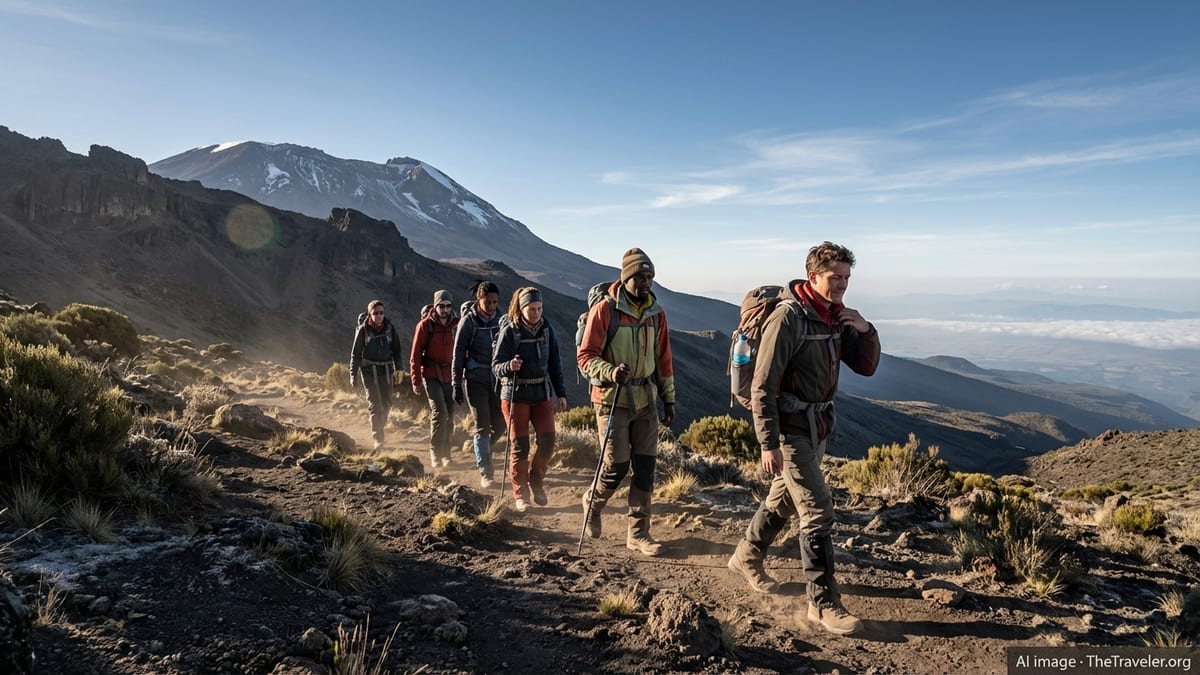
Mount Kilimanjaro rises to 5,895 meters above sea level and dominates northern Tanzania near the Kenyan border. Although it is often described as a “walkable” mountain because standard routes do not require ropes, technical climbing skills, or crampons under normal conditions, it is still a serious high-altitude expedition. Climbers cross distinct climate zones, from humid rainforest to alpine desert and an arctic summit, over a few days. This rapid transition is what makes timing and acclimatization so important when planning a trip.
Kilimanjaro can technically be climbed year-round, but conditions vary dramatically. The broad pattern is defined by two dry seasons and two rainy seasons that influence trail conditions, views, and summit success rates. The most reliable windows are generally from January to early March and from June to October, when rainfall tends to be lower and skies clearer at higher elevations. During these dry months, success rates are markedly higher and trails are safer underfoot, albeit busier.
The long rains usually fall from mid March into May or early June. During this period, lower slopes can become extremely muddy, cloud cover is common, and heavy afternoon showers can make trekking slower and more hazardous. A shorter rainy period typically develops around November and sometimes continues into mid December, with lighter but frequent showers. A handful of routes remain viable even in these wetter months, but most operators recommend the main dry seasons for first-time climbers who want the best combination of safety, comfort, and summit chances.
Crowds follow the weather. July, August, and early September, as well as late January and February, see the highest numbers of climbers and the greatest pressure on camp infrastructure. If you are looking for fewer people without plunging into truly wet conditions, transitional shoulder periods such as early March or late October can be good compromises. Flexibility with your start date can help you avoid peak days, which some outfitters track in detail when planning departures.
Choosing a Route and Itinerary
Route choice is one of the most important decisions you will make when planning a Kilimanjaro trip. The mountain offers several established trekking routes, each with distinctive scenery, crowd levels, acclimatization profiles, and typical durations. While all standard routes can lead to the summit, the wrong match for your fitness, experience, and schedule can significantly reduce your chances of reaching Uhuru Peak.
The Machame Route is among the most popular options, often marketed as the “Whiskey Route” because it is considered more challenging than the gentler “Coca-Cola” Marangu Route. Machame is typically done over six or seven days, includes camping rather than huts, and offers varied scenery with good opportunities for the “climb high, sleep low” approach that aids acclimatization. This balance of views, acclimatization, and cost makes it a strong choice for many trekkers prepared for moderately strenuous days.
The Marangu Route is the only route that uses huts for overnight accommodation rather than tents. Traditionally completed in five or six days, it has a reputation as the most straightforward path, though that perception can be misleading. The shorter standard itineraries offer fewer acclimatization days, and success rates can be lower when climbers rush the ascent. Still, for those who prefer dormitory-style huts to camping, Marangu remains appealing, especially in wetter months when hut shelter can make a tangible difference in comfort.
Routes such as Lemosho and Northern Circuit are designed for longer, more gradual acclimatization. Lemosho begins on the mountain’s western side and typically runs seven or eight days, combining excellent scenery, lower early-stage crowds, and a good acclimatization profile. The Northern Circuit is even longer, often nine days, circling around the quieter northern flanks before joining the summit approach. These extended itineraries cost more but consistently deliver higher summit success rates and a more relaxed pace for those with the time and budget.
Budgeting: What a Kilimanjaro Climb Really Costs
Climbing Kilimanjaro is significantly more expensive than a typical multi-day trek elsewhere in Africa or Asia, largely because of mandatory park fees, the size of the support team required, and logistical overhead. Understanding the components of the total cost will help you set a realistic budget and recognize when a quote is suspiciously low and likely cutting essential corners such as porter welfare or safety equipment.
At the core of any Kilimanjaro budget are Kilimanjaro National Park fees. These include daily conservation fees, overnight camping or hut fees, and a one-time rescue fee. Updated schedules for 2026 show conservation fees for adults above 16 years at roughly a significant per-day charge, camping fees per night for camping routes, or hut fees per night on Marangu, plus a smaller fixed rescue fee per climber. For a typical seven-day camping route such as Machame, park fees alone can exceed one thousand US dollars per person before adding the operator’s logistics, food, staff wages, and profit margin.
When you receive quotes from outfitters, you are usually looking at an inclusive package that bundles these mandatory park fees with guiding services, porters, tents, communal equipment, mountain food and water treatment, and airport-hotel-mountain transfers. As a rough guideline, multi-day packages for standard routes in 2025 and 2026 typically range from about 1,700 to 2,000 US dollars at the bare-bones budget end, 1,900 to 2,500 dollars for solid mid-range climbs, and upward of 3,000 to more than 6,000 dollars for higher-end or private luxury arrangements. Substantial differences in pricing often track differences in acclimatization days, guide experience, group size limits, and ethical standards for porter treatment.
On top of the package price, you will need to budget for international flights to Kilimanjaro International Airport, which for many travelers from North America or Europe can range from several hundred to more than a thousand US dollars depending on season and routing. Additional costs include Tanzanian visa fees, which for many nationalities fall in the 50 to 100 dollar range, comprehensive travel insurance with high-altitude coverage, gear purchases or rentals, and tips for your mountain crew. Tipping guidelines typically amount to a few hundred dollars per climber on a standard trip, distributed among guides, cooks, and porters at the end of the climb.
Visas, Permits, and Regulations
All Kilimanjaro climbs must be conducted through a licensed tour operator registered with Tanzanian authorities. Independent, unguided ascents are not permitted. The operator is responsible for obtaining park permits, registering your group at entrance gates, and paying all associated fees to Kilimanjaro National Park prior to or upon entry. As a climber, you rarely handle permit paperwork directly, but these requirements influence your dates and the nonrefundable portions of your payments.
Travelers from most countries will need a visa to enter Tanzania. For many nationalities, including most European Union citizens and travelers from several other regions, a single-entry tourist visa is available on arrival or through Tanzanian e-visa systems for a set fee. Citizens of the United States typically require a multiple-entry visa that costs more but remains valid for a longer period. Because entry policies and fees can change, it is prudent to verify current official guidance shortly before travel and allow time to complete online applications if required.
Recent shifts in global visa policies also have implications for Tanzanian travelers planning trips abroad, but for incoming climbers the primary concern remains Tanzanian entry rules rather than third-country regulations. Even so, you should confirm that your passport will remain valid for at least six months beyond your intended exit date and that you have at least two blank pages for entry and exit stamps. Airline staff commonly check these details at your departure airport and may deny boarding if requirements are not met.
Within Tanzania, authorities have tightened enforcement of regulations around porter welfare and licensed guiding. Reputable operators work with organizations that promote fair wages, proper loads, and humane treatment for porters. While this may add marginally to costs, it protects both workers and climbers. When comparing companies, look beyond headline prices and ask directly about maximum porter loads, tipping structures, and membership in recognized porter advocacy projects. Choosing outfits that follow these regulations supports sustainable tourism and reduces the risk of labor disputes affecting your trip.
Training, Health, and Acclimatization
Kilimanjaro is a non-technical mountain, but that does not mean it is easy. The primary challenges are altitude, cumulative fatigue from several days of hiking, and the abrupt shift from warm lowlands to frigid summit conditions. To increase your chances of success, you should begin structured physical preparation several months before departure, focusing on cardiovascular endurance, leg strength, and time on your feet carrying a daypack.
A typical Kilimanjaro day involves four to seven hours of hiking at a gentle but steady pace, with summit night often stretching to eight or more hours of ascending scree and then descending back to lower camps. Training hikes on hills or mountains near home, ideally with similar daily elevation gain, are excellent preparation. If you live at sea level, consider weekend trips to modest altitude if possible, though this is not mandatory. The more your body is used to walking uphill for several hours day after day, the better you will handle the real thing.
Acclimatization is perhaps the single most critical factor in summit success. The risk of acute mountain sickness rises once you climb above about 2,500 meters, and Kilimanjaro’s summit is far higher than that. Routes that add extra days above 3,000 meters give your body more time to adjust, making symptoms less likely or less severe. When planning, favor itineraries of at least seven days on the mountain, and be wary of compressed schedules that promise a fast ascent primarily to lower the sticker price. Operators with consistently high success rates tend to promote slower itineraries and include acclimatization tactics such as extra hikes above camp before descending to sleep.
Before departure, consult a travel-medicine or altitude-experienced physician about vaccinations, malaria prevention for the wider Tanzania region, and the use of medications such as acetazolamide for altitude. While no pill guarantees acclimatization, some medications can help your body adjust more effectively when used according to medical advice. Comprehensive travel insurance that explicitly covers trekking to nearly 6,000 meters, emergency evacuation from Kilimanjaro, and trip cancellation is also prudent. Read policies carefully and carry documentation on the mountain, as rescue decisions may rely on proof of coverage.
Gear, Packing, and On-the-Ground Logistics
A well-planned kit is essential for staying safe and relatively comfortable as you move from humid forest to exposed summit slopes. Temperatures on Kilimanjaro can range from tropical heat at the trailheads to well below freezing at night above 4,000 meters and on summit day. The key is layering: base layers that wick moisture, insulating mid-layers like fleece or lightweight down, and a waterproof, windproof outer shell. You will also need hiking boots that you have thoroughly broken in prior to the trip, as blisters are an avoidable yet common reason climbers struggle.
Most operators supply large communal tents, sleeping mats, and cooking equipment, but climbers typically bring or rent their own sleeping bags rated to cold conditions, along with a headlamp, trekking poles, and a duffel bag that porters will carry. Daypacks are used for water, extra layers, and personal items you need while walking. If you do not already own appropriate cold-weather gear, many companies offer rental options in Moshi or Arusha. Renting can reduce upfront costs, but you should verify the quality and condition of rental gear and try it on early enough to make adjustments if something does not fit properly.
On the ground, your operator will usually arrange airport transfers, pre- and post-climb hotel nights, and transport to and from the park gates. Most trips involve at least one full day in Moshi or Arusha before the climb for gear checks and final briefings. This is your opportunity to ask last-minute questions, refine packing decisions, and pick up or exchange rented equipment. It is also wise to use this time to hydrate, rest after long-haul flights, and adjust to the local time zone before the physical demands of the mountain begin.
Nutrition and hydration logistics are handled largely by your support team, but you can increase comfort by bringing personal snacks that you know you tolerate well at altitude, such as energy bars, nuts, or electrolyte drink mixes. While water is treated on the mountain, some climbers prefer to carry additional purification tablets or filters for peace of mind. Plan for at least three to four liters of water consumption per day, more on hotter lower sections and during summit attempts.
Booking Smart and Choosing an Operator
The choice of tour operator has enormous influence on your Kilimanjaro experience, affecting everything from safety systems and guide competence to camp hygiene and porter treatment. Hundreds of companies advertise Kilimanjaro climbs, ranging from local outfits based in Moshi or Arusha to international agencies that subcontract to in-country partners. Sorting through the options requires careful attention to more than just price and marketing photographs.
Start by looking for operators that employ experienced, English-speaking head guides with formal training in mountain first aid and altitude management. Ask potential companies about their summit success rates, maximum group sizes, and whether they carry oxygen and pulse oximeters. While oxygen is not a substitute for proper acclimatization, having it available for emergencies is an indicator of a safety-focused operation. Clear evacuation procedures and radio or mobile communication protocols are also important, particularly during bad weather.
Ethical porter treatment is another key marker of professionalism. Questions to ask include how many porters they allocate per climber, what maximum loads porters carry, and whether they provide proper clothing, food, and shelter for staff. Membership in recognized porter assistance initiatives and transparent tipping recommendations can signal that an operator takes these issues seriously rather than viewing staff as an area to cut corners.
Booking channels also matter. Directly engaging with a reputable Tanzanian company can sometimes yield better value and more flexible tailoring of itineraries. International agencies can provide additional consumer protections and more familiar pre-trip communication but often add margins to cover their own overhead. In all cases, request a detailed breakdown of what is included and excluded in the quote, including park fees, internal transfers, gear rental options, tipping guidelines, and payment and cancellation policies. With this information, you can make meaningful comparisons and avoid surprises when you arrive in Tanzania.
The Takeaway
Planning a Kilimanjaro trip is an exercise in balancing ambition, budget, and realism. The mountain’s height and challenging environmental conditions demand respect, but they do not require technical climbing experience. With several months of physical preparation, an itinerary that allows for gradual acclimatization, and a reputable operator that takes safety and porter welfare seriously, fit trekkers can give themselves a genuinely strong chance of standing on the roof of Africa.
Costs are substantial, and corners should not be cut on essentials such as park fees, qualified guiding, and adequate equipment. Rather than hunting for the cheapest advertised price, travelers are better served by understanding how fees and logistics add up and choosing an operator that is transparent about where the money goes. A realistic budget that includes flights, visas, insurance, and tips alongside the core climb package will prevent financial stress from overshadowing your experience.
Ultimately, the success of a Kilimanjaro expedition lies in preparation long before you set foot in Tanzania. Clarify when you will climb, which route matches your fitness and time constraints, and what personal training and medical preparations you need. Organize your paperwork, gear, and expectations carefully, and you will arrive at the trailhead focused on the journey rather than last-minute details. For many, that journey becomes one of the defining adventures of their travel lives.
FAQ
Q1. Do I need technical climbing experience to summit Kilimanjaro?
Technical climbing experience is not required for Kilimanjaro’s standard trekking routes, which are essentially demanding high-altitude hikes. You do, however, need solid fitness, mental resilience, and a willingness to walk slowly and steadily for several days in variable weather and thin air.
Q2. How many days should I plan for the climb itself?
Most experts recommend at least seven days on the mountain, including both ascent and descent. While some itineraries advertise five or six days, the extra time improves acclimatization and significantly increases summit success rates while reducing the risk of altitude-related illness.
Q3. What is the best time of year to climb Kilimanjaro?
The most popular and generally favorable periods are from January to early March and from June to October, which tend to be drier with clearer skies. The long rainy season around April and May and the shorter rainy period around November bring more mud, clouds, and higher weather-related risks, especially for first-time climbers.
Q4. How much does a Kilimanjaro climb typically cost?
A properly organized, fully supported Kilimanjaro climb commonly ranges from around 1,900 to 2,500 US dollars per person for a solid mid-range trip, with budget options slightly lower and premium or private climbs much higher. When you factor in park fees, flights, visas, insurance, tips, and gear, many travelers end up spending significantly more than the headline package price.
Q5. How fit do I need to be to attempt Kilimanjaro?
You should be capable of hiking uphill for several hours a day while carrying a light daypack, on consecutive days, and still feel reasonably strong. Regular cardiovascular training, such as brisk walking, running, or cycling, combined with hill or stair work and weekend hikes in the three to six months before departure, is a sound fitness baseline for most aspiring climbers.
Q6. What are the main risks on Kilimanjaro?
The principal risks include acute mountain sickness and related altitude complications, hypothermia or frostbite in cold summit conditions, slips and falls on rough or muddy terrain, and exhaustion from underestimating the effort required. Choosing a gradual itinerary, listening to your guides, dressing appropriately in layers, and staying well hydrated all help manage these risks.
Q7. Can I climb Kilimanjaro independently without a guide?
No. Tanzanian regulations require all Kilimanjaro climbers to use a licensed guide and support team arranged through an authorized operator. Independent ascents without guides are not permitted, and attempts to do so can result in removal from the park and fines.
Q8. What kind of accommodation will I have on the mountain?
On most routes, you will sleep in tents set up and taken down by your support crew at designated campsites. The exception is the Marangu Route, which uses simple mountain huts with dormitory-style bunks and shared facilities. Regardless of the route, accommodations are basic and focused on practicality rather than comfort.
Q9. Do I need special insurance for a Kilimanjaro climb?
Yes. You should obtain travel insurance that explicitly covers trekking to nearly 6,000 meters, emergency medical treatment, evacuation from the mountain, and trip interruption or cancellation. Not all standard travel policies include high-altitude trekking, so read the fine print carefully and carry proof of coverage during the climb.
Q10. How far in advance should I book my Kilimanjaro trip?
For popular dry-season dates, booking six to nine months in advance is sensible, especially if you have fixed travel windows or want a specific route and group size. Shoulder-season climbs can sometimes be arranged with less lead time, but earlier booking still helps you secure flights, visas, and preferred operators without last-minute stress.