

Northern Tanzania is one of Africa’s classic safari regions, a place where wide grass plains, volcanic craters and baobab-dotted hills come together with some of the continent’s most reliable big game viewing. Planning a trip here is rewarding but can feel complex.
Distances are long, seasons matter, and the logistics of getting from Kilimanjaro airport to a sunrise game drive on the Serengeti can raise a lot of questions. With a clear understanding of routes, timing and on-the-ground arrangements, you can turn a good safari into a truly exceptional one.
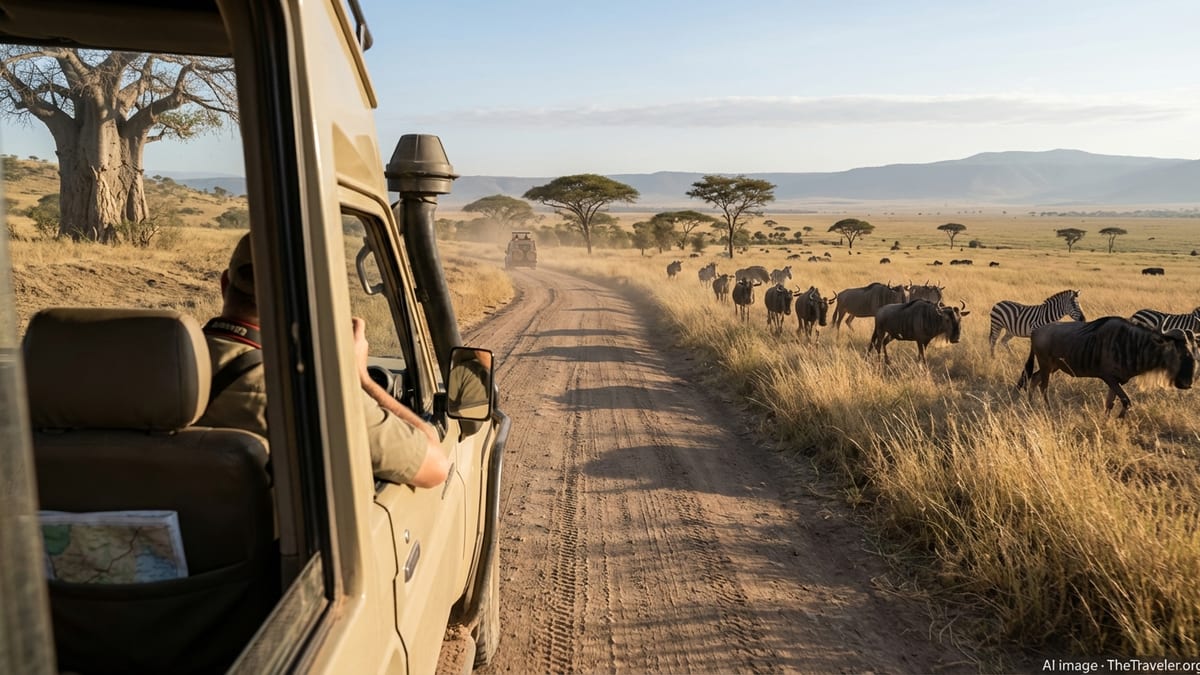
Understanding Northern Tanzania’s Safari Circuit
Most visitors to northern Tanzania follow some version of what is known as the northern safari circuit. This is a loose loop of protected areas that typically begins and ends in Arusha, the region’s main gateway town. Kilimanjaro International Airport, roughly an hour from Arusha, receives international flights, while Arusha has its own smaller airport that connects to bush airstrips in the national parks. From here, you head west and south into a cluster of reserves that can be combined in different ways depending on your time and interests.
The core of the circuit consists of Serengeti National Park, the Ngorongoro Conservation Area, Lake Manyara National Park and Tarangire National Park. Together they offer a mix of open savanna, acacia woodland, alkaline lakes and highland forest, and support everything from lions and elephants to flamingos and rare black rhinos. Many itineraries will prioritize Serengeti and Ngorongoro as anchor destinations, with Lake Manyara and Tarangire used as shorter stops at the beginning or end of a trip.
Beyond these headline parks are several lesser-known areas that appeal to repeat visitors or travelers looking to avoid crowds. Private concessions on the eastern fringe of the Serengeti, community conservancies around Tarangire, and the volcanic landscapes of Lake Natron provide a more off-grid feel. They often involve rougher roads and more flight time, but they reward those extra logistics with quieter sightings and more flexible activities such as walking safaris and night drives, where regulations allow.
Understanding the geography of the circuit is fundamental to smart planning. Roads fan out from Arusha through the village of Mto wa Mbu towards Lake Manyara and the Ngorongoro highlands, then down into the plains of the Serengeti. Much of this route is on good tarmac, but substantial sections within the parks are graded dirt that can be corrugated, dusty or muddy depending on the season. This has implications for drive times, how long you want to spend in a vehicle on any given day, and whether it makes sense to incorporate bush flights to shorten certain legs.
Choosing the Right Route for Your Safari
The simplest route through northern Tanzania follows a classic progression from smaller, more contained parks to the broad expanses of the Serengeti. Many travelers will spend one or two nights in Tarangire or Lake Manyara, two nights on the Ngorongoro Crater rim, and three or more nights in the Serengeti, before either driving or flying back to Arusha. This kind of linear itinerary works well for first-time visitors who want to see as much as possible in a week to ten days, and it can be tailored with different accommodation levels, from basic tented camps to high-end lodges.
More elaborate routes add variety by looping through different sections of the Serengeti or combining northern Tanzania with Kenya’s Maasai Mara. The Serengeti alone is vast, and its southern, central, western and northern areas can feel like separate parks. Rather than spending all of your time in one sector, it can be worth splitting a stay between two different areas that align with where the wildlife is at the time of year you visit. If you are particularly focused on the Great Migration, building an itinerary that follows the herds through these regions is often the most important planning consideration.
Travellers with ten to fourteen days can consider routes that incorporate more time off the main roads. One scenario might begin with Tarangire’s elephants and baobabs, continue to a quieter area of the Ngorongoro highlands or a nearby conservation area for walking, then add a mobile camp that tracks the migration in the Serengeti. Another option is to end the safari with a few days in a private concession where guest numbers are controlled and the guiding can be more flexible. In all cases, it is useful to plan your movements in a logical, westward flow from Arusha, avoiding unnecessary backtracking that can eat into game viewing time.
There are also more specialized routes aimed at photographers, birders or families. Photographic itineraries might spend longer in fewer places, minimizing travel days and maximizing dawn and dusk game drives. Bird-focused routes can spend extra time in Tarangire’s wetlands or Lake Manyara’s forest and lakeshore. Family-friendly routes often keep daily drives shorter and incorporate downtime at lodges with pools and open space for children. Being clear about your priorities at the planning stage helps shape the route and the pace of the trip.
Seasonality and the Great Migration
Timing is everything in northern Tanzania, particularly if you hope to intersect with the Great Migration. This annual movement of more than a million wildebeest, accompanied by zebras and gazelles, traces a circular path through the Serengeti and Kenya’s Maasai Mara in search of fresh grazing. While exact dates vary with rainfall and climate patterns, the broad cycle remains fairly consistent and can be used as a framework for choosing where and when to travel.
From roughly January to March, the herds typically concentrate on the short-grass plains of the southern Serengeti and the Ndutu area, where conditions favor calving. During these months, hundreds of thousands of calves are born within a short span of time, creating a surge of predator activity. April and May see the herds start to move northwest into the central Serengeti as the long rains replenish grasslands and waterholes. Visitor numbers tend to dip during this so-called green season, which can mean competitive prices and fewer vehicles at sightings for those willing to accept some rain and muddy tracks.
By June and into early July, many of the herds are moving through the western corridor of the Serengeti, with some groups tackling the Grumeti River and its resident crocodiles. Later in July, August and September, a large proportion of the migration is usually in the northern Serengeti and spilling into the Maasai Mara, where the famous Mara River crossings take place. This is high season in terms of both wildlife drama and tourist numbers, so camps fill early and rates are typically at their peak.
As the short rains begin in November and December, the herds often start to drift back south through the eastern Serengeti, setting up the cycle for another year. For travelers less fixated on river crossings, this shoulder period can be an attractive time to visit. Landscapes are lush, the light is beautiful, and there are still plenty of predators following the herds, but visitor numbers are thinner than in mid-year. Throughout all seasons, remember that wildlife movements are influenced by rainfall, and no operator can guarantee precise dates. Building in a few extra days in your chosen area increases your odds of catching significant migration activity.
How Many Days You Need and Sample Itineraries
The number of days you allocate to your safari will shape not just how many parks you visit, but how deeply you experience each one. Very short itineraries of four or five days are possible if you fly directly into the Serengeti, but they tend to feel rushed, and travel days eat into game time. For most visitors, a minimum of seven nights in the bush is a more comfortable starting point, especially if you are combining your safari with time on the coast or in cities before or after.
A common one-week route might begin with one night near Tarangire or Lake Manyara, followed by one night on the Ngorongoro Crater rim, and then three or four nights in the central or northern Serengeti before flying back to Arusha. This gives you an introduction to different ecosystems, including crater grasslands and riverine woodland, while ensuring that you spend the largest portion of your time in the park with the most extensive wildlife viewing. If you can stretch to ten nights, you could add an additional night each in Tarangire and Ngorongoro, or split your Serengeti stay between two areas.
Longer itineraries of twelve to fourteen nights allow for more creative routing. One option is to spend three nights in Tarangire, two in the Ngorongoro highlands with a day trip into the crater, and four to five nights in a mobile or semi-permanent camp that follows the migration in the Serengeti. Another scenario is to design a cross-border itinerary that links the northern Serengeti with Kenya’s Maasai Mara, timed for the river crossing season. In all cases, it is wise to avoid the temptation to add too many one-night stops, as packing, driving and checking in can leave you exhausted.
When considering sample itineraries, also think about your arrival and departure times. Many international flights into Kilimanjaro arrive in the evening, which usually necessitates at least one night in or near Arusha before you head into the parks. Similarly, early morning departures may require you to end the safari with a final night near town rather than in the bush. Scheduling this buffer time reduces stress, allows for delays, and provides a chance to rest, adjust to the time zone and check your gear before you commit to early departures and long days of game driving.
Getting There, Visas and Health Considerations
Most northern Tanzania safaris begin in Arusha, reached either through Kilimanjaro International Airport or the smaller Arusha Airport. Kilimanjaro receives direct or same-day connections from several African and Middle Eastern hubs, while Arusha Airport is primarily used for domestic light aircraft flights into and out of the parks. Some visitors also arrive overland from Kenya, particularly from the Maasai Mara or Nairobi, then connect by road to Arusha or directly into the Ngorongoro region.
Entry requirements for Tanzania can change, so it is essential to check the latest information from official government channels before you travel. As of late 2025, most foreign visitors need a visa to enter Tanzania, which can often be obtained as an e-visa in advance or on arrival at major points of entry. A passport with at least six months of validity beyond your planned departure date and at least one blank page is generally required. You should carry proof of your onward or return travel and be prepared to demonstrate that you have sufficient funds for your stay.
Yellow fever vaccination requirements depend on where you are arriving from and any transit stops you have made on the way. Tanzania may require proof of vaccination if you are coming from, or have transited through, a country where yellow fever is considered endemic, including long airport layovers. Travelers should consult a travel medicine clinic or their national health authority well in advance to confirm whether they need this certificate and to discuss other recommended vaccinations and prophylaxis, such as malaria prevention and routine immunizations.
Health and safety on safari involve common sense as well as preparation. Tap water is not recommended for drinking in most parts of Tanzania, including lodges and camps, so you should rely on treated or bottled water. Sun exposure at altitude and on open game vehicles can be intense, so pack high-factor sunscreen, a wide-brimmed hat and lightweight long sleeves. If you take prescription medications, bring enough for your entire trip plus a small surplus, carried in original packaging along with a copy of the prescription. Travel insurance that covers medical evacuation is strongly advised, as remote safari locations are far from tertiary hospitals.
On-the-Ground Logistics and Daily Life on Safari
Once you are in northern Tanzania, the day-to-day rhythm of a safari is part of its appeal. Most itineraries revolve around the prime wildlife viewing hours at dawn and late afternoon, when temperatures are cooler and animals are more active. Many camps will offer an early wake-up with coffee or tea, followed by a morning game drive of three to four hours, returning to camp for a late breakfast or lunch. After a rest during the hottest part of the day, you head out again for a late-afternoon drive, often staying out until sunset.
Travel between parks is usually by 4x4 vehicle on guided road transfers or by light aircraft on scheduled or chartered bush flights. Road-based safaris are more economical and let you see village life and landscapes up close, but they can involve long hours on rough surfaces, especially when crossing from the Ngorongoro highlands into central Serengeti. Air safaris shorten these distances considerably, allowing you to maximize time in each area, but they come at a higher cost and impose strict luggage limits, often around 15 kilograms in soft-sided bags.
Your guiding team is central to how you experience the parks. On a private vehicle, a guide and often a driver accompany only you and your travel companions, tailoring pace, sightings and photography stops to your interests. In shared vehicles, you join other guests from the same lodge or camp, which can be more social and cost-effective. English is widely spoken in the tourism industry, and many guides also speak additional languages. Tips are customary and form a significant part of staff income, so discuss typical tipping norms with your operator and budget accordingly.
In terms of communication and power, most established lodges have some form of electricity, whether from mains power, generators or solar systems, and can charge camera batteries and phones at certain hours. Internet access has improved but remains variable and often limited to common areas. Many travelers treat this as part of the experience and use the time offline to disconnect. Laundry services are often available at camps, although some may not launder certain garments. This can help you pack lighter, especially if you are flying between parks with luggage restrictions.
Costs, Accommodation Styles and Booking Strategy
A northern Tanzania safari is a significant investment, and understanding the cost drivers can help you plan realistically and avoid unwelcome surprises. Prices vary widely depending on season, level of comfort, form of transport and whether you are on a private or group itinerary. Low or green season months, typically around April, May and sometimes November, tend to be more affordable, while peak migration months in the central and northern Serengeti are among the most expensive times to travel. Lodge-based safaris with scheduled departures can be cheaper than fully tailor-made private safaris.
Accommodation comes in several broad categories. At the most economical end are simple tented camps and basic lodges, usually with en-suite bathrooms and solid game viewing but fewer frills. Mid-range properties offer more spacious rooms or tents, higher levels of comfort and a wider range of services. At the top end are luxury lodges and mobile camps with gourmet meals, spacious canvas suites and immersive design. Some camps are fixed in place year-round, while others are semi-mobile, moving seasonally to follow the migration. Choosing a mobile or migration-focused camp can dramatically increase your chances of being close to the herds at a given time of year.
Booking well in advance, particularly for peak seasons, is strongly recommended. For travel around key migration periods or holiday weeks, securing your spaces six to twelve months ahead is often wise. This is especially true if you have specific dates that cannot be shifted, or if you are traveling as a family or group that requires multiple rooms. Last-minute deals do exist, particularly in shoulder seasons, but they come with less choice of camps and routes. Working with a reputable operator who has recent, on-the-ground knowledge of Tanzania’s parks can streamline the process and help balance your wish list with practical constraints.
When comparing quotes, look carefully at what is included and excluded. Some itineraries are fully inclusive of meals, local drinks, game activities, park fees and internal flights, while others price these elements separately. Park and conservation fees in Tanzania are significant and subject to change, and they can add substantially to the per-night rate. Clarify whether special activities such as night drives, walking safaris or hot air balloon rides in the Serengeti are included or must be booked and paid for separately. Transparent communication at the planning stage avoids unexpected costs once you are on the ground.
Safety, Ethics and Responsible Travel
Northern Tanzania’s parks are well established tourism destinations, and millions of visitors have enjoyed safaris here safely. However, it is important to stay informed about current conditions. National governments periodically update travel advisories that cover issues such as crime, political demonstrations, terrorism risk and local laws. In late 2025, for example, the United States raised its advisory level for Tanzania, citing concerns about crime, potential unrest and discrimination against LGBTQ+ people. Travelers should read the latest guidance from their own foreign ministry or state department and factor this into their personal risk assessment and planning.
On safari, most safety considerations center on wildlife and the environment. Parks have rules for a reason, and your guide will brief you on how to behave around animals, including staying in the vehicle unless instructed otherwise, keeping noise levels low and not feeding or harassing wildlife. Camps are typically unfenced, so staff may escort you to and from your tent or room after dark. It is essential to follow their instructions, even when sightings feel exciting. Accidents are rare, but they usually occur when people step outside established safety protocols or approach animals too closely.
Ethical considerations include how your safari impacts local ecosystems and communities. Many lodges and operators now emphasize conservation, community partnerships and reduced environmental footprints. Choosing companies that employ local staff in meaningful roles, contribute to anti-poaching and habitat projects, and minimize waste and water use can make your trip part of a positive story. Ask prospective operators about their policies on off-road driving, wildlife interaction, and support for nearby villages and schools, and favor those whose answers show long-term commitment rather than marketing slogans.
Social and cultural norms are another important aspect of responsible travel. Tanzania is generally conservative, and displays of affection in public, particularly same-sex affection, may attract negative attention. Modest dress is appreciated in towns and villages, even if shorts and T-shirts are acceptable within the confines of safari camps. Always ask permission before photographing people, and consider buying crafts and services from local artisans and guides to ensure your tourism spending circulates in the communities that host you. Small choices made by individual travelers can collectively shape how tourism is perceived.
The Takeaway
Planning a northern Tanzania safari requires careful thought about where to go, when to travel and how to move between parks. The region’s classic circuit, anchored by Serengeti National Park and the Ngorongoro Crater, offers remarkable wildlife viewing in a relatively compact area, but its variety of landscapes and seasonal shifts mean that no two trips are the same. By aligning your route with the movements of the Great Migration, choosing a realistic number of stops for the days you have available, and balancing road transfers with flights where appropriate, you can create an itinerary that feels both immersive and manageable.
Logistics such as visas, health precautions, insurance and luggage restrictions may not be as thrilling as watching lions on the hunt or wildebeest crossing a river, but they are essential building blocks of a smooth journey. So too is an understanding of the region’s broader context, from travel advisories to community relationships. The more informed and intentional you are at the planning stage, the more relaxed you can be once you are sitting in an open vehicle watching elephants file past against a backdrop of baobab trees.
In the end, a well-planned northern Tanzania safari is about more than ticking off flagship species. It is an opportunity to spend unhurried time in some of Africa’s most significant ecosystems, to learn from guides who know these landscapes intimately and to support conservation and community initiatives that help safeguard them. With thoughtful attention to routes, timing and logistics, you can step into this world prepared, present and ready to appreciate one of the planet’s great wildlife theaters.
FAQ
Q1. How far in advance should I book a northern Tanzania safari?
For peak periods aligned with the Great Migration or major holidays, aim to book at least nine to twelve months in advance, especially if you want specific camps or room types. For shoulder seasons, four to six months is often sufficient, though booking earlier usually gives you more choice and stable pricing.
Q2. What is the best time of year to visit if I am not focused on the Great Migration?
If the migration is not your main priority, consider June through October for generally dry conditions and good game viewing, or November and early December for lusher scenery and fewer visitors. April and May can also be rewarding for experienced travelers willing to accept rain and rougher roads in exchange for quieter parks and attractive rates.
Q3. Is it better to drive or fly between parks in northern Tanzania?
Both options have advantages. Driving is more economical and lets you experience changing landscapes and local life along the way, but it involves long days on sometimes rough roads. Flying on light aircraft is faster and more comfortable, maximizing your time in each park, but it adds cost and imposes strict luggage limits. Many itineraries mix the two, driving out from Arusha and flying back.
Q4. Do I need a yellow fever vaccine to visit Tanzania?
You may need proof of yellow fever vaccination if you are arriving from, or have recently transited through, a country where yellow fever is present, including lengthy airport layovers. If you are flying directly from a country without yellow fever risk, it may not be required. Because regulations and country lists can change, always confirm the latest rules with official health and immigration authorities before travel.
Q5. How many days should I spend in the Serengeti?
For a first visit, plan at least three to four nights in the Serengeti, ideally split between two areas if time allows. This gives you several full days of game drives and helps offset the time spent traveling to and from the park. If your focus is the migration or photography, five or more nights can be worthwhile, especially if you are visiting in a busy season.
Q6. Is a safari in northern Tanzania suitable for children?
Many lodges and operators welcome families, and children often enjoy the wildlife and outdoor lifestyle. However, long drives, early starts and the need to remain quiet at sightings can be challenging for very young children. Family-friendly itineraries typically reduce the number of different stops, include downtime at lodges with pools and open space, and may impose age limits on certain activities such as walking safaris.
Q7. What kind of clothing and gear should I pack?
Pack lightweight, neutral-colored clothing that can be layered, as mornings and evenings can be cool while midday temperatures are warm. A wide-brimmed hat, sunglasses, high-factor sunscreen and a light jacket are essential. Closed shoes are recommended for walking around camp. For photography, bring a camera with a zoom lens, extra memory cards and spare batteries, as charging may not always be available during the day.
Q8. How safe is it to travel as an LGBTQ+ person in Tanzania?
Tanzania has laws and social attitudes that are not supportive of LGBTQ+ identities, and some foreign governments advise LGBTQ+ travelers to exercise particular caution. Discretion is important, especially outside the relatively controlled environment of lodges and camps. Before traveling, review up-to-date travel advisories from your own government, consider your personal risk tolerance, and discuss any concerns with your operator in advance.
Q9. Are tipping and gratuities expected on safari?
Yes, tipping is customary and forms an important part of income for guides, drivers and camp staff. Many operators provide suggested tipping guidelines, often expressed as a range per guest per day for guides and a communal amount per stay for general staff. It is helpful to bring small denominations of cash in a widely accepted currency and to allocate an approximate gratuity budget before you depart.
Q10. Can I combine a northern Tanzania safari with a beach stay?
Combining a safari with time on the coast is a popular way to round out a trip. After several days in the bush, many travelers fly to the islands of the Zanzibar archipelago or the mainland coast for relaxation, snorkeling or diving. Domestic flights connect Arusha and the Serengeti with coastal destinations, making it relatively straightforward to move from game viewing to the beach within a single itinerary.