

Pilanesberg National Park is one of South Africa’s most accessible Big Five reserves, close enough to Johannesburg and Pretoria for an easy day trip yet wild enough to feel like a full safari escape.
Planning a Pilanesberg safari involves choosing between self-drive or guided game drives, day trips or overnight stays, and a wide range of lodges from family-friendly resorts to secluded luxury retreats. This guide walks you through the essentials, from when to go and how to get there to picking a lodge and understanding practical logistics.
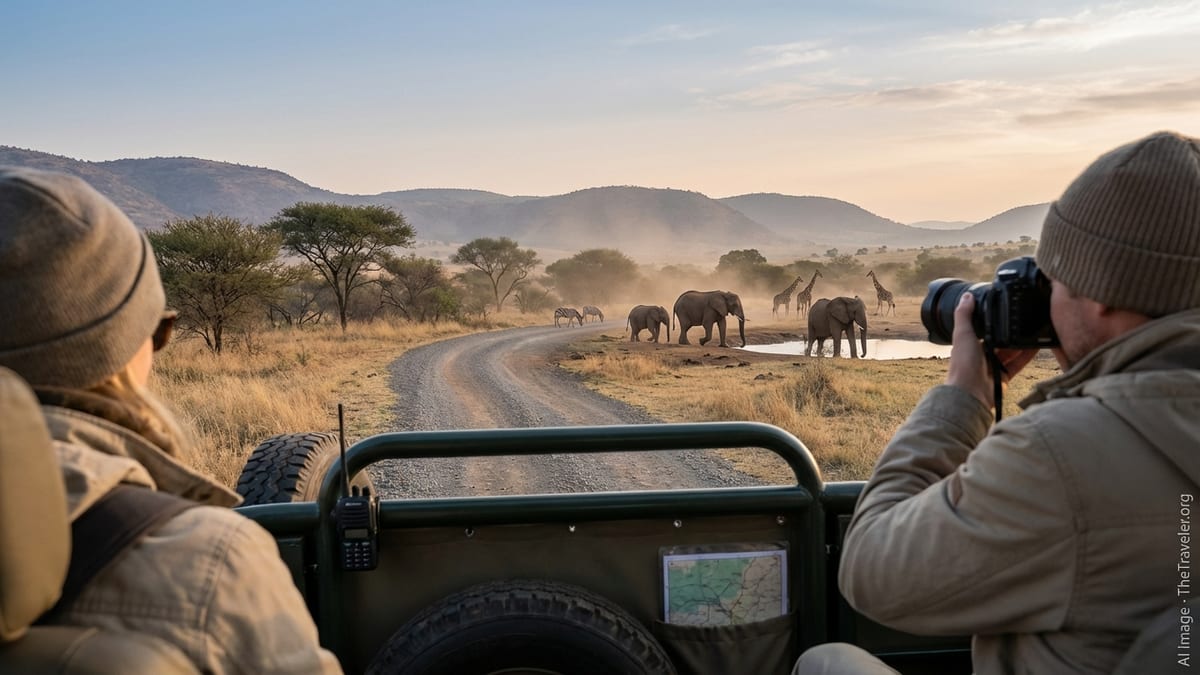
Why Choose Pilanesberg for Your Safari
Pilanesberg National Park lies in the crater of an ancient volcano in South Africa’s North West Province, covering roughly 550 square kilometres of varied terrain. Its circular ring of hills, open plains, dams and woodland makes for excellent game viewing and dramatic scenery, particularly at sunrise and sunset. The park is known for hosting the Big Five along with cheetah, wild dog, giraffe, zebra, hippo and a rich array of antelope and birdlife.
One of Pilanesberg’s biggest advantages is that it is officially considered malaria free. Unlike many of South Africa’s lowveld reserves, visitors generally do not need to take malaria prophylaxis here, which simplifies planning and makes Pilanesberg especially attractive for families with young children or travellers who prefer to avoid antimalarial medication.
Accessibility is another key draw. Pilanesberg is within driving distance of Johannesburg and Pretoria, with paved roads all the way to the park gates. Several public access gates serve different parts of the park, and there is even a small airport adjacent to the reserve. This combination of convenience and genuine wilderness has helped make Pilanesberg one of the country’s most popular safari destinations.
Finally, Pilanesberg offers flexibility in style and budget. Travellers can choose everything from self-drive day safaris with a picnic lunch to fully inclusive luxury lodge stays with gourmet dining and spa treatments. Many lodges also cater exceptionally well to children, with junior ranger activities and child-friendly game drives, which is not always the case in more remote reserves.
When to Go and How Long to Stay
Pilanesberg is open throughout the year and there is no single “wrong” time to visit. However, your experience will differ depending on the season. The dry months, roughly from April to September, usually offer the best game viewing. Vegetation thins out, water becomes scarcer, and animals tend to concentrate around dams and waterholes, making them easier to spot. Days are sunny and mild, while early mornings and evenings can be cold, especially in mid-winter.
The summer months from October to March are hot and wetter, with afternoon thunderstorms common. The bush is greener and thicker, which can make spotting animals more challenging, but this is also the birthing season for many species and a wonderful time for birding. The dramatic skies and lush landscapes make for striking photographs. Because Pilanesberg is relatively compact, even in greener months it can still deliver rewarding sightings if you plan your drives around water sources and known game-viewing loops.
In terms of gate times, Pilanesberg’s public gates open early and close just before sunset, with exact hours changing seasonally. Typically, gates open around 05:30 in the height of summer and 06:30 in mid-winter, closing between 18:00 and 19:00 depending on the month. Visitors must exit the park or be back in their lodge before closing time, and access is generally restricted in the final hour to avoid late entries.
For a first-time visit, a two- or three-night stay is ideal, giving you multiple dawn and dusk game drives when animals are most active. That said, Pilanesberg is one of the few Big Five parks where a day trip can genuinely feel worthwhile, especially if you depart early from Johannesburg or stay in nearby Sun City. Many travellers also combine a night or two in Pilanesberg with a stay at Sun City’s resorts or a broader itinerary through the North West and Gauteng provinces.
Getting There and Navigating the Park
Pilanesberg is approximately 2.5 to 3 hours’ drive from Johannesburg or Pretoria, largely on good tarred roads. Most visitors approach via the N4 or N1 highways and then follow provincial routes towards Sun City and the various park gates. Because travel times can be affected by traffic leaving the cities, it is wise to depart early in the morning, especially if you are planning a same-day safari.
The park is served by several public entry gates, including Bakubung, Bakgatla, Manyane, Kwa Maritane and Bosele. Each gate provides access to different parts of the reserve and to nearby lodges. For example, Manyane and Bakgatla gates are on the eastern and north-eastern side of the park, while Bakubung and Kwa Maritane gates lie closer to Sun City and the southern approaches. In addition, private access gates serve the Black Rhino Game Reserve and Shepherd’s Tree concession, which are only for guests of lodges in those sectors.
Self-drive visitors should note that you do not generally need to pre-book a permit to enter Pilanesberg; you pay your conservation and vehicle fees at the gate on arrival. A standard sedan or compact car is usually sufficient for the park’s network of tar and gravel roads, as 4x4 vehicles are not required for most routes under normal conditions. That said, after heavy rain some gravel loops may be closed temporarily or best accessed with higher clearance, so it is important to heed signboards and ranger advice.
Inside the park, road signage is reasonably clear, and detailed printed maps are available at gates, rest camps and visitor centres. Main loops link a series of dams, hides and viewpoints, which are worthwhile focal points during a day’s game viewing. Speed limits are enforced to protect wildlife and other visitors, and you must remain in your vehicle except at designated picnic spots and viewpoints. Distances can be deceptive, so factor in plenty of time to return to your gate or lodge before closing time.
Day Trips vs Overnight Safaris
One of the first decisions you will make when planning a Pilanesberg safari is whether to visit as a day trip or stay overnight. Each option has advantages, and the right choice depends on your time, budget and travel style.
A day trip is especially appealing for travellers based in Johannesburg, Pretoria or Sun City. If you depart early, you can be at a park gate shortly after opening, giving you a full morning of game viewing before lunch at one of the camps or picnic sites. Many tour operators offer full-day packages that include return transfers, conservation fees and one or two guided game drives in open vehicles. This can be a stress-free way to visit if you prefer not to drive or are unfamiliar with South African roads.
However, day trips inevitably mean you miss some of the best game-viewing windows at dawn and dusk, especially in winter when daylight hours are shorter. Overnight stays allow you to join lodge-run sunrise and sunset drives that go deeper into the park, with expert rangers who know animal territories and recent sightings. Being in the park overnight also immerses you in the sounds of the bush, from distant lion calls to the chatter of nocturnal birds and insects, which is a major part of the safari experience.
If your schedule allows, even a single night at a lodge can dramatically enhance your Pilanesberg experience. A typical overnight package includes afternoon high tea followed by a sunset drive, dinner on return, an early morning wake-up with coffee, then a dawn drive and breakfast. Two or three nights provide time to explore different sectors of the park and simply relax between drives, using facilities such as pools and spas without feeling rushed.
Choosing the Right Lodge or Camp
Pilanesberg’s accommodation ranges from simple chalets and campsites to five-star luxury lodges, many clustered around the main gates or in private concessions. When choosing where to stay, consider your budget, whether you are self-catering or prefer inclusive packages, and whether you are travelling as a couple, family or group.
Near the eastern and north-eastern gates, resort-style properties offer a mix of self-catering chalets, camping and standard rooms, often with shared facilities such as restaurants, pools and playgrounds. These are popular with families and self-drive visitors who appreciate the flexibility of self-catering along with access to organised game drives, kids’ activities and basic shops.
Mid-range lodges within or bordering the park tend to offer comfortable hotel-style rooms or thatched chalets, often on a half-board or full-board basis with game drives included. Well-known properties near Bakubung and Kwa Maritane gates fall into this category, blending resort amenities like tennis courts and conference facilities with the wilderness setting. They are ideal for those who want a structured safari experience with professional guides but at a more accessible price point than the ultra-luxury lodges.
Luxury lodges in Pilanesberg and the adjacent Black Rhino Reserve offer more exclusive experiences, with fewer rooms, personalised service and high-end touches such as private plunge pools, spa treatments and gourmet dining. Many operate on a fully inclusive basis, bundling meals, selected drinks and two daily game drives into the nightly rate. These lodges are well suited to honeymooners, couples and travellers seeking a more intimate, boutique-style safari.
Understanding Costs, Fees and Booking Logistics
Budgeting accurately for a Pilanesberg safari requires looking beyond just the nightly rate at your chosen lodge. For self-drive visitors, there are per-person conservation fees and a separate vehicle fee payable at the park gates. These tariffs distinguish between South African citizens, Southern African Development Community (SADC) residents and international visitors, with international rates higher than local ones. Tariffs are periodically adjusted, so it is important to check up-to-date amounts just before you travel and to carry sufficient funds or a payment card accepted at the gate.
Lodge rates can vary widely depending on season, lodge category and inclusions. Fully inclusive luxury lodges typically bundle accommodation, three meals a day, teas and coffees, and two guided game drives into the nightly rate, with premium drinks and optional activities such as spa treatments or hot-air ballooning charged separately. Mid-range lodges may offer bed-and-breakfast, half-board or full-board options, with game drives added as extras or included in packages.
When booking, consider whether you prefer to assemble your own package or use an operator to build a complete itinerary including transfers, accommodation and activities. Using a specialist Pilanesberg booking service or safari tour operator can be particularly helpful if you are combining multiple destinations, travelling in a larger group, or visiting at peak periods when popular lodges fill quickly. Most operators can advise on current specials, child policies and which lodges best match your priorities.
Advance booking is strongly recommended during South African school holidays, long weekends and the peak winter safari season. Some exclusive-use lodges and smaller luxury properties have limited capacity and may be sold out months in advance for weekends and prime dates. Flexibility with travel dates can open up more options and better rates. Once your booking is confirmed, keep a copy of your reservation and lodge contact details handy for presentation at security checkpoints and gates.
How Game Drives Work: Self-Drive vs Guided Safaris
Pilanesberg lends itself well to both self-drive exploration and guided safaris in open vehicles. Many visitors blend the two, using guided drives for expert interpretation and deeper access while also enjoying the freedom of exploring at their own pace between lodge activities.
Self-drive safaris give you control over your schedule and route. With a park map, you can plan loops that take in several dams, hides and viewpoints, stopping whenever you wish for photos or to watch animals. A standard sedan is normally adequate, and most roads are suitable for cautious drivers. The key is to start early or head out in the late afternoon, respect speed limits, and never exit your vehicle except at designated safe areas. Carry water, snacks, sunscreen and a hat, as you may be in the vehicle for several hours at a time.
Guided game drives are typically conducted in open-sided 4x4 vehicles with a trained field guide who understands animal behaviour, tracks and current sightings. Lodge-based drives usually last around three hours and depart at dawn and late afternoon, often including a coffee stop in the morning and a sundowner stop in the evening. Guides communicate with each other by radio, which can increase your chances of finding more elusive species such as lions and leopards.
Day visitors who are not staying in the park can also book guided drives through certain lodges or activity operators. These may depart from gates or nearby resorts and follow similar schedules, with early-morning and late-afternoon departures the most productive. If you are travelling with children, check minimum age policies for guided drives; some lodges run special “bush bumble” activities for younger children who are too small for standard big game drives.
Practical Tips for a Smooth Pilanesberg Safari
Thoughtful preparation can make the difference between a stressful and a seamless Pilanesberg safari. Start by ensuring your travel documents are in order: international visitors will need valid passports, and South African citizens should carry an identity document, as local tariffs for conservation fees and some discounts require proof of citizenship. If you are renting a car, check that your licence is accepted and that your rental agreement allows travel on gravel roads.
Although Pilanesberg is malaria free, general travel health precautions still apply. Visit a travel clinic or consult your doctor several weeks before departure to confirm recommended vaccinations for travel in South Africa, especially if you are coming from or via regions with specific health requirements. Bring any chronic medication in original packaging along with a copy of your prescriptions. Lodges can usually assist with basic first aid, and nearby towns and cities host full medical facilities in case of emergencies.
Packing appropriately for the season will greatly enhance your comfort on game drives. In winter, early mornings and evenings can be very cold in open vehicles, so bring a warm jacket, beanie, gloves and layered clothing. In summer, lightweight breathable clothing, a wide-brimmed hat, high-factor sunscreen and sunglasses are essential. Neutral colours such as beige, khaki and olive work best on drives, while bright whites and very vivid colours are better kept for lodge time. Closed-toe shoes are preferable for walking around camps and climbing into vehicles.
Finally, respect park rules and wildlife at all times. Do not feed animals or attempt to attract their attention, keep noise to a minimum at sightings and switch off your engine when stopped to avoid disturbing animals and other visitors. Maintain a safe distance, particularly from elephants and rhinos, and follow your guide’s instructions without argument. Ethical behaviour protects both wildlife and travellers and preserves the quality of the experience for everyone.
The Takeaway
Planning a Pilanesberg safari is an exercise in balancing convenience with adventure. The park’s proximity to major cities, malaria-free status and wide range of lodges make it one of the most user-friendly Big Five destinations in South Africa. Whether you opt for a quick day trip from Johannesburg, a family break at a resort-style camp or a fully inclusive stay at a luxury lodge, careful attention to logistics, seasons and booking details will pay off in richer wildlife encounters and a more relaxed experience.
By understanding the differences between self-drive and guided safaris, familiarising yourself with gate times and fees, and choosing accommodation that matches your budget and travel style, you can create a Pilanesberg itinerary that feels tailored rather than generic. Combined with a respectful approach to the environment and realistic expectations about wildlife viewing, this preparation turns a simple visit into a memorable journey into South Africa’s volcanic heartland.
FAQ
Q1. Is Pilanesberg National Park really malaria free?
Pilanesberg is widely regarded as a malaria-free Big Five reserve, and routine malaria prophylaxis is not generally recommended for visits there. However, travellers should still consult a health professional before departure, especially if combining Pilanesberg with other regions where malaria may be present.
Q2. How long does it take to drive from Johannesburg to Pilanesberg?
The drive from Johannesburg or Pretoria to Pilanesberg typically takes between 2.5 and 3 hours each way, depending on traffic and your exact starting point. Leaving early in the morning helps you avoid congestion and arrive close to gate opening time.
Q3. Do I need a 4x4 vehicle for a self-drive safari in Pilanesberg?
No, a standard sedan or compact car is usually sufficient for Pilanesberg’s network of tarred and well-maintained gravel roads. A 4x4 is only useful for comfort and clearance on rougher stretches, and most visitors manage comfortably in regular rental vehicles when they drive cautiously.
Q4. Can I visit Pilanesberg as a day trip, or should I stay overnight?
You can do both. A day trip from Johannesburg, Pretoria or Sun City can be rewarding if you plan an early start and maximise your time in the park. However, staying one or more nights at a lodge allows you to enjoy dawn and dusk game drives, when wildlife is most active, and gives you a fuller safari experience.
Q5. What are the typical gate opening and closing times?
Gate times vary by season, but as a guideline, Pilanesberg’s public gates usually open between 05:30 and 06:30 and close between 18:00 and 19:00. Exact times are posted at gates and on official information channels, and visitors must exit or reach their lodge before closing each day.
Q6. Are guided game drives included in lodge rates?
Many mid-range and luxury lodges in Pilanesberg include two guided game drives per day in their standard rates, usually one at sunrise and one at sunset. Some resort-style or self-catering accommodations may charge separately for drives, so it is important to check what is included when comparing options.
Q7. Is Pilanesberg suitable for children and families?
Pilanesberg is particularly family friendly, partly because it is malaria free and partly because several lodges and resorts offer family rooms, kids’ clubs and junior ranger programmes. Always confirm minimum age policies for game drives, and ask whether the lodge offers dedicated activities for younger children.
Q8. What should I pack for a Pilanesberg safari?
Pack neutral-coloured clothing, a warm jacket for early morning and evening drives, comfortable closed shoes, a hat, sunscreen, sunglasses and a reusable water bottle. A good pair of binoculars and a camera or smartphone with sufficient storage will help you make the most of wildlife sightings.
Q9. Do I need to book accommodation and activities in advance?
Advance booking is strongly recommended, especially for weekends, South African school holidays and the peak dry season. Popular lodges and exclusive-use properties can sell out months in advance, and booking early increases your choice of lodges, room types and activity slots.
Q10. Are there extra activities besides game drives?
Yes. In addition to game drives, some operators offer hot-air balloon flights, bush walks with qualified guides, spa treatments, photographic safaris and cultural excursions in the surrounding region. Availability varies by lodge and season, so check options and pre-book where necessary if certain activities are a priority for your trip.