

Spain is a country that rewards travelers who slow down. With record visitor numbers and busy city centers, racing through five cities in seven days is a recipe for fatigue and frustration. A calmer approach, built around fewer bases, realistic transit times, and off-peak moments, lets you experience Spain’s food, culture, and neighborhoods without feeling rushed.
Why Spain Rewards a Slower Itinerary
Spain has been breaking tourism records in recent years, welcoming tens of millions of international visitors annually. That success means the main sights in Barcelona, Madrid, and Seville are rarely empty, especially in summer. Trying to “see it all” in a short window often leaves travelers stuck in queues and on trains rather than in plazas and cafes. A slower itinerary acknowledges the reality on the ground and prioritizes depth over sheer distance.
Domestic travel trends inside Spain are shifting the same way. Spaniards themselves are taking slightly fewer trips overall but staying longer in each place and spending more per journey, favoring quality time and extended stays instead of constant hopping. That is a useful model for visitors: pick a handful of bases, allow time for wandering, and accept that you will not cover the whole map in one go.
A slow Spain trip also gives you breathing room to adapt. Trains run late, restaurants close between lunch and dinner, and a neighborhood festival can detour your plans. When your schedule is not packed minute by minute, those surprises become part of the fun instead of a source of stress.
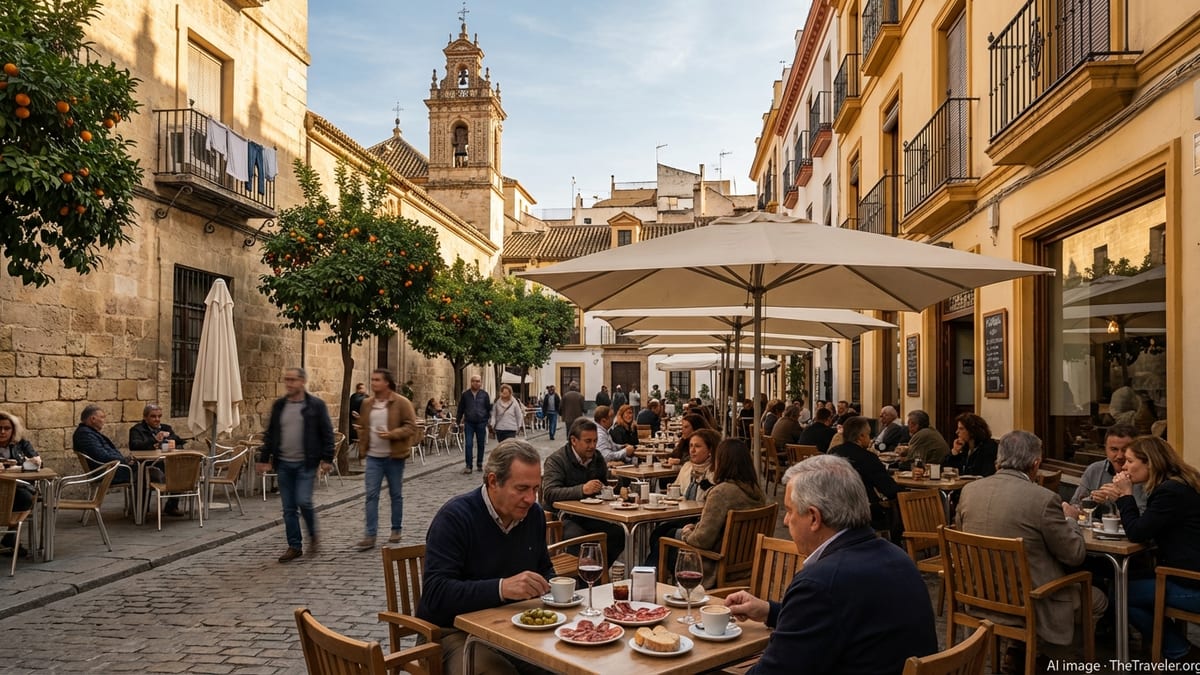
Most importantly, moving more slowly allows you to connect with the rhythms of everyday life. Watching the early evening paseo in a small town, lingering over a menu del día at lunch, or returning to the same cafe twice builds memories that are impossible to create when you are sprinting from one checklist attraction to the next.
Choosing When to Go So You Are Not Competing With Crowds
Timing has a huge impact on how rushed your Spain trip feels. The peak of international tourism arrives in July and August, when coastal regions and major cities record their highest visitor numbers and hotel occupancy. Heat waves are increasingly common in summer, especially in inland areas like Madrid, Córdoba, and Seville, making midday sightseeing exhausting and pushing more activity into the same cooler hours of morning and evening.
If you want a calmer experience, look closely at the shoulder seasons. Late March through early June and late September through early November generally offer milder temperatures and shorter queues, with enough daylight for long walks and outdoor terraces. Many of Spain’s biggest cultural events, from Semana Santa processions to autumn film festivals in San Sebastián and Seville, fall in these windows, which means you can tap into local life without the extreme summer crush.
Even within shoulder seasons, it pays to check for major events in your target cities. Spring fairs in Seville, Las Fallas in Valencia, and popular music festivals around Barcelona and the Mediterranean coast can significantly tighten availability and push prices up. If you want to attend, book early and project more downtime into your schedule. If you prefer quiet streets, try to avoid those specific weeks or choose a different base nearby and visit for just a day.
For beach time without the sense of being overwhelmed, consider June or late September on the Mediterranean, or late spring on the Atlantic coast in Galicia and the Basque Country. Water may be cooler than in August, but trains, boardwalks, and restaurants are less saturated, and you will spend far less time queuing for ferries, sunbeds, or tables.
Designing a Realistic Route With Fewer Bases
The biggest cause of rushed trips in Spain is overambitious routing. On a map, the country looks compact and well connected. In practice, each change of base consumes more time and energy than travelers expect. A healthy rule of thumb is to limit yourself to one “main” region per week, with at most two or three overnight bases, and to cluster destinations that share airports or high-speed rail lines.
For a first visit of 9 to 10 days, a calm structure might look like this: three or four nights in Barcelona or Valencia on the Mediterranean coast, three nights in Madrid as a central hub, and two or three nights in a smaller city or town reachable by direct train. Each base becomes a springboard for one or two nearby day trips, but you always return to the same bed. That rhythm cuts unpacking time and helps you develop familiarity with a neighborhood.
On a two-week itinerary, you might choose between a north-focused route and a south-focused route instead of trying to do both. A northern arc could link Madrid with the Basque Country and Galicia, mixing cities like Bilbao and San Sebastián with countryside and coast. A southern arc might pair Madrid with Seville and either Córdoba, Cádiz, or Granada, allowing at least three nights in each stop. In both cases, aim for a minimum of two full days per base, not counting arrival and departure days.
Build your route around direct, high-frequency connections rather than forcing awkward hops. Madrid is the primary rail hub for long-distance trains, while Barcelona and Valencia anchor the eastern Mediterranean. The more you can move in simple legs between those hubs and nearby regional cities, the less likely you are to be stranded by a canceled connection or lose a half day to backtracking.
Using Spain’s Trains and Local Transport Without Rushing
Spain’s high-speed rail network is one of the most extensive in Europe, and it is your best ally if you want to avoid rushed travel. Fast services connect Madrid with Barcelona, Seville, Málaga, Valencia, Alicante, and other major cities in roughly two and a half hours or less on many routes. Several operators now compete on key corridors, so fares can be reasonable if you book in advance and travel outside peak holiday weekends.
Even with strong rail infrastructure, it is easy to misjudge timing. Treat any day that involves a long train ride as a light sightseeing day rather than trying to squeeze in a packed itinerary on both ends. Factor in the time to get to the station, navigate security where required, and reach your accommodation from the arrival station. When you add those elements, a two-and-a-half-hour train can control most of your usable day.
For shorter distances, regional trains and buses work well but often run less frequently. In rural areas and smaller towns, a bus might only run a few times a day. Confirm schedules a day or two in advance and avoid planning essential connections that rely on the last departure of the day. Renting a car can be helpful in regions like rural Andalusia, inland Galicia, or parts of Castilla y León, but driving into historic centers can be stressful due to narrow streets, low-emission zones, and scarce parking.
Within cities, walking and public transport are usually enough. Metro systems in Madrid, Barcelona, and Valencia are efficient, and tram networks or buses fill in gaps. Allow for the fact that many Spanish neighborhoods are hilly or paved with cobblestones; getting from one quarter to another can take longer than map apps suggest. If you give yourself generous transit windows and resist the urge to cram multiple districts into a single morning, you are far less likely to feel like you are racing the clock.
How Many Days to Spend in Spain’s Major Regions
Allotting realistic time blocks to each region is essential if you want your trip to feel unhurried. In Madrid, plan at least three nights to balance museum visits with time in parks and neighborhoods. That gives you one day for the city’s major art museums, one day for historic quarters and food markets, and one flexible day that could include a half-day side trip to a nearby town such as Toledo or Segovia without feeling frantic.
Barcelona also deserves a minimum of three nights, especially given its current visitor numbers. The architecture of Antoni Gaudí, the waterfront, and the historic Barri Gòtic are spread out enough that you will want to slow your pace. Many travelers underestimate how much advance planning is now required for major sights, which often use timed entries. Allow buffer hours so you are not rushing between reserved slots on opposite sides of the city.
In Andalusia, distances can be deceptive. Seville, Córdoba, Granada, and Málaga are all tempting, but trying to visit all of them in under a week will keep you on the move. A calmer approach is to choose two cities and spend three nights in each, then add a smaller whitewashed town or coastal base if you have extra time. This gives you mornings for monuments and long, shaded afternoons for siestas or leisurely tapas rather than nonstop touring in the midday heat.
The north of Spain lends itself particularly well to unhurried travel. The Basque Country, Cantabria, Asturias, and Galicia are cooler in summer and rich in small coastal towns, hiking routes, and local food traditions. Because public transport is less dense than in the main rail corridors, give yourself extra days to account for weather, bus schedules, and the temptation to linger when you discover a village or viewpoint you love.
Building Downtime Into Each Day
One of the most effective ways to avoid feeling rushed in Spain is to plan for deliberate downtime. Instead of booking activities from breakfast to late evening, design each day around one main sight, one neighborhood to explore, and plenty of open space. Put those anchor activities in the morning and early evening, leaving the hottest part of the day for rest, long lunches, or a swim if you are near the coast.
Spanish daily rhythms naturally encourage a slower pace. Many shops close for a few hours in the afternoon, dinner often starts later than in northern Europe or North America, and social life spills out onto terraces and plazas in the evening. If you align your schedule with these patterns rather than fighting them, your days will feel less compressed. This might mean a late breakfast, a mid-morning museum, a long lunch, a rest in your hotel, then an evening stroll and simple dinner.
Consider setting non-negotiable “empty” blocks in your itinerary. For example, protect one afternoon in every three as unscheduled time, regardless of where you are. Use that space for whatever emerges: a neighborhood festival you did not know about, a new friend’s restaurant recommendation, or simply a chance to sit in a square with a book. Those unscripted hours often become the most memorable part of a trip.
Sleep is also part of an unrushed plan. Constantly catching early trains and staying out late every night is not sustainable for most travelers, especially in the summer heat. Alternate later nights with earlier ones, cluster early departures together, and avoid planning a major sightseeing day immediately after a long travel day whenever you can.
Making Room for Local Culture Without Overbooking
Spain’s cultural calendar is dense, from religious processions and regional fairs to international film and music festivals. Participating in these events can be a highlight of your trip, but they also create pressure if you try to chase too many of them. A better strategy is to choose one or two cultural experiences that align with your interests and build gentle flexibility around them rather than filling your schedule with ticketed events every night.
If you are interested in festivals, think carefully about scale. Massive events like Semana Santa in Andalusia, San Fermín in Pamplona, or summer music festivals along the Mediterranean can transform cities, filling hotels and public transport. They are unforgettable but rarely feel “slow.” For a more relaxed experience, consider smaller town festivals, gastronomic fairs in Galicia or the Basque Country, or off-season events like film and documentary festivals in coastal cities when beach crowds have thinned.
Local culture is not limited to big calendar dates. Spending time in neighborhood markets, community cultural centers, or small live-music venues can be just as rewarding and much less rushed than scrambling for the most famous experiences. Ask at your hotel or at a tourist information office what is happening that week beyond the headline sights. Often you will find small exhibitions, street performances, or local sporting events that require no advance booking and offer a more grounded perspective on daily life.
As overtourism becomes a concern in Spain’s hottest destinations, engaging with local culture responsibly is part of traveling slowly. Choosing locally owned accommodations, dining a few blocks away from the busiest plazas, and visiting secondary museums or lesser-known neighborhoods can reduce pressure on crowded hotspots while giving you a more nuanced, less hurried view of each city.
The Takeaway
Planning a trip to Spain without feeling rushed begins long before you land. It starts with accepting that you cannot see everything, choosing one or two regions instead of the entire country, and matching your route to the realities of trains, buses, and crowds. Limiting your number of bases, allowing at least two or three full days in each stop, and treating travel days as light days, not blank slates, immediately lowers the pace.
Once you are on the ground, follow Spain’s own rhythms: slow lunches, late sunsets, and evenings in plazas rather than sprinting between distant neighborhoods. Resist the urge to fill every gap with an activity. The more unscheduled time you defend, the more space you create for spontaneous discoveries and genuine rest.
In a country where visitor numbers continue to grow, slowing down is not just a personal preference but a practical strategy. It reduces the stress of queues and heat, lessens your impact on overburdened areas, and allows you to direct your energy toward smaller streets, local businesses, and quieter corners. You leave with clearer memories, fewer blurred photos from train windows, and a stronger sense of connection to the places you chose.
Spain rewards those who give it time. By structuring your trip around depth, realistic pacing, and soft edges rather than rigid checklists, you trade the rush for something far more valuable: the feeling that, for a little while, you actually lived there.
FAQ
Q1. How many days do I need in Spain for an unrushed first trip?
For a first visit, 9 to 14 days is a comfortable range if you focus on one or two regions and limit yourself to two or three overnight bases.
Q2. Is it realistic to visit Barcelona, Madrid, and Andalusia in one week?
It is technically possible but will feel rushed. In one week, it is better to choose either Barcelona and Madrid or Madrid and one Andalusian city.
Q3. What is the best month to visit Spain to avoid feeling rushed by crowds?
Late April, May, late September, and October usually balance pleasant weather with lighter crowds compared with peak July and August holidays.
Q4. How far in advance should I book trains and tickets for major sights?
For popular high-speed trains and headline attractions, booking a few weeks ahead is sensible, especially in spring and autumn when demand is strong.
Q5. Is renting a car in Spain necessary for a relaxed trip?
In major cities and on main routes it is not necessary. A car is most useful for rural areas and small towns where public transport is limited.
Q6. How many cities should I include in a two-week Spain itinerary?
For a calm pace, plan on three or at most four main bases in two weeks, using day trips rather than constant hotel changes to see nearby places.
Q7. Are Spain’s summer temperatures too high for slow sightseeing?
Inland cities can be very hot in July and August. A slower trip at that time works better along the northern coast or with long midday breaks.
Q8. Can I travel around Spain using only trains and buses without feeling rushed?
Yes, especially on major corridors. Build extra time into your schedule, avoid tight same-day connections, and treat long journeys as light days.
Q9. How much unplanned time should I build into each day?
Leaving at least a few hours each afternoon or evening open gives you space to rest, adjust to delays, and enjoy spontaneous discoveries.
Q10. Is it worth visiting smaller towns if my time in Spain is limited?
Yes. Adding even one or two smaller towns can slow your rhythm, offer quieter streets, and create a welcome contrast with the big-city energy.