

Botswana is one of Africa’s most rewarding safari destinations, combining pristine wilderness with a long-standing commitment to low-impact, high-quality tourism. From the lagoons of the Okavango Delta to the elephant-filled riverfront of Chobe and the stark beauty of the Kalahari, this is a country where wildlife still rules the landscape.
Planning a trip here, however, requires more forethought than many other destinations: routes are remote, costs can be high, and logistics are not always straightforward. With smart planning, you can craft an itinerary that matches your budget and comfort level while making the most of Botswana’s extraordinary ecosystems.
Understanding Botswana’s Safari Landscape
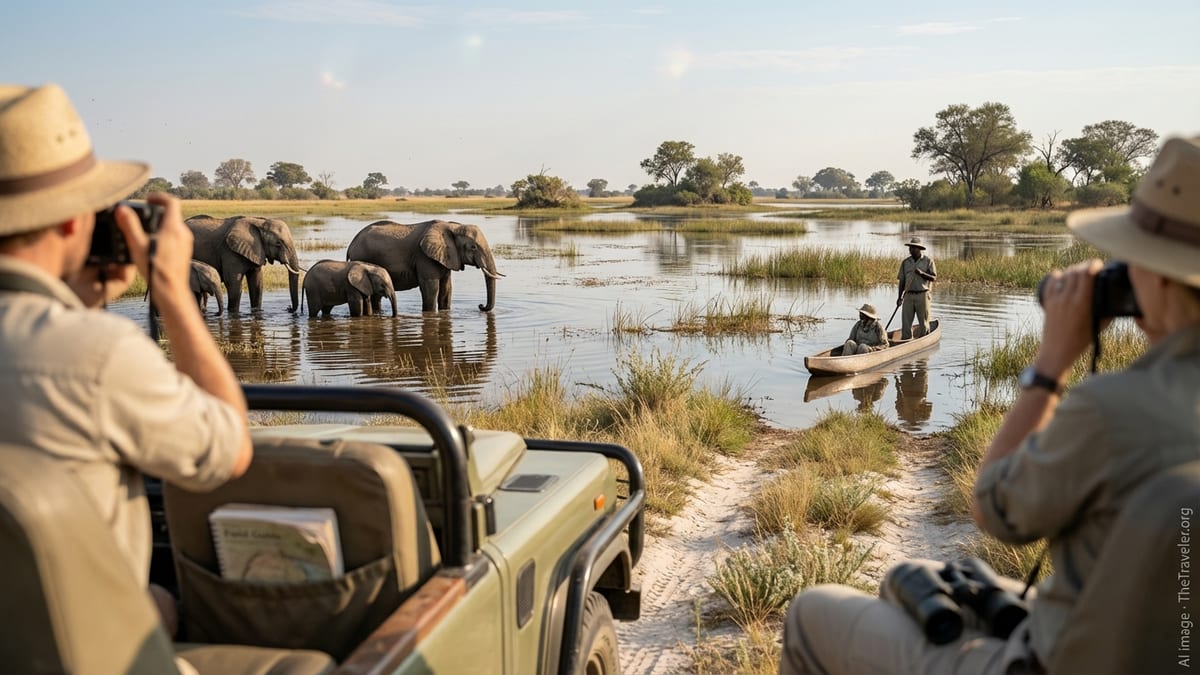
At the heart of most itineraries is the Okavango Delta, a vast inland wetland where the Okavango River fans out into countless channels, islands, and floodplains. This unique ecosystem is home to elephants, hippos, lions, leopards, wild dogs, and exceptional birdlife. Many of the most exclusive lodges sit on private concessions in and around the Delta, accessible only by light aircraft. Game viewing is typically a mix of vehicle-based drives and water-based activities such as mokoro (dugout canoe) excursions and motorboat trips when water levels allow.
To the northeast, Chobe National Park is famous for some of Africa’s highest concentrations of elephants, particularly along the Chobe River near the town of Kasane. Here, travelers can combine classic game drives with boat safaris that get you close to drinking elephants, wallowing hippos, and large herds of buffalo. Further south, the Savuti region within Chobe is known for its predators and open savannah landscape, appealing to those who want intense big-cat viewing and a more rugged environment.
Complementing these iconic areas are the Moremi Game Reserve, which protects a large part of the Okavango ecosystem, and the Makgadikgadi and Nxai Pan complex, where vast salt pans and seasonal zebra migrations offer a very different kind of safari. To the south lies the Central Kalahari Game Reserve, an arid semi-desert that comes alive after the rains with grazing antelope and predators following in their wake. The diversity of Botswana’s parks allows for itineraries that mix water and land safaris, remote wilderness and easier-access regions connected by road.
Much of Botswana’s tourism model is built around the idea of fewer visitors paying higher rates, which in turn funds conservation and keeps wildlife areas relatively undisturbed. This means you will often encounter fewer vehicles around sightings than in busier safari countries, but it also means that accommodation and logistics can be more expensive. Understanding how the main regions connect, and how long it takes to travel between them, is essential when sketching out your route and budgeting your time.
When to Go and How Long to Stay
Botswana is a year-round destination, but the experience changes significantly with the seasons. From roughly May to October, the country is in its dry season. Skies are typically clear, vegetation thins out, and wildlife congregates around remaining water sources. This is peak safari season, especially from July to October, when the Okavango Delta is usually at its fullest and animal densities along the Chobe River can be spectacular. It is also the most expensive time to visit, as lodge and tour rates rise in line with demand.
The green season, generally from November to March, brings higher temperatures, afternoon thunderstorms, and lush vegetation. In the Okavango and Chobe, wildlife is more dispersed and access to some areas can be more challenging, but this period has its advantages. Prices at many camps and lodges can drop considerably compared with peak months, birding is excellent, and landscapes are at their most photogenic. In regions like the Central Kalahari and the Makgadikgadi and Nxai Pans, the arrival of the rains triggers a burst of new grazing and draws herbivores and predators into otherwise dry areas.
Shoulder months such as April, May, and early June, as well as late October and early November, can offer a good compromise between value and game viewing. Temperatures are often more comfortable than in the height of summer, rates may still be lower than peak, and wildlife viewing is usually very good. If your dates are flexible, adjusting your trip by a few weeks can make a noticeable difference in both cost and availability.
In terms of trip length, a minimum of seven to ten days in Botswana is advisable if you want to visit at least two contrasting areas without feeling rushed. Many travelers allocate three nights per region, which allows for two full days of activities and time for travel in and out. For first-time visitors, a classic ten- to twelve-day itinerary might include the Okavango Delta or Moremi Game Reserve, Savuti or the Chobe Riverfront, and perhaps a night or two in the Makgadikgadi or Central Kalahari for variety. If you have less than a week, it can be better to focus on just one or two key areas rather than trying to cover too much ground.
Key Safari Routes and Itinerary Ideas
One of the most popular entry points to Botswana’s safari circuit is Maun, often referred to as the gateway to the Okavango Delta. A typical fly-in route might start with two or three nights in a Delta camp that offers a mix of land and water activities, followed by a similar stay in the Moremi Game Reserve or a private concession with strong predator viewing. From there, you can fly onward to Savuti or the Chobe Riverfront, then exit via Kasane, which has road access to neighboring countries and an airport with regional connections.
Another classic route links Kasane and Maun by road or by a combination of road and internal flights. Starting in Kasane, you might spend three nights exploring the Chobe Riverfront by boat and vehicle before heading south through Chobe National Park and into Savuti. After a further two or three nights there, continue to Moremi and eventually Maun. This overland approach is especially popular with guided mobile safaris and self-drive travelers, as it allows you to see the transition from riverine woodland to open savannah and floodplain ecosystems.
For those seeking more offbeat experiences, routes that combine Botswana’s pans and desert regions can be very rewarding. An itinerary could include Maun, a few days in the Makgadikgadi or Nxai Pan area to explore the salt flats and watch for seasonal migrations, and then time in the Central Kalahari Game Reserve. These landscapes are more subtle than the Delta or Chobe but offer a strong sense of space and solitude, along with excellent opportunities to see species adapted to arid conditions, such as oryx, springbok, and brown hyena.
Travelers with extra time sometimes build Botswana into a broader regional trip, linking it with Victoria Falls in Zimbabwe or Zambia, or with Namibia’s Caprivi region. Kasane is within easy reach of the Falls by road, making it straightforward to add a few days at one of Africa’s great natural wonders before or after your Botswana safari. However, each border crossing adds to the logistical complexity, so such extensions are best organized well in advance, especially during busy months.
Costs, Park Fees, and Budget Planning
Botswana has a reputation as a premium safari destination, but costs vary widely depending on travel style, season, and level of comfort. As of the 2026 season, travelers can broadly think in three categories for guided safaris. Budget or basic safaris, often involving camping or simple lodges, typically range from about 200 to 400 US dollars per person per night. Mid-range lodge-based itineraries commonly fall in the 450 to 750 US dollar per night bracket, while high-end and luxury safaris in remote private concessions can run from 800 US dollars to well over 2,000 US dollars per person per night.
These nightly rates usually include accommodation, meals, and standard game activities such as shared vehicle drives and, in the Delta and other water-based areas, boat or mokoro outings when conditions allow. Soft drinks and local alcoholic beverages may also be included at mid-range and luxury properties. What is not always included are internal flights between camps, some specialized activities, and gratuities. In remote regions served by light aircraft, per-flight costs can add several hundred dollars per person to the total bill, so it is important to clarify whether transfers are bundled into quoted package prices.
Beyond accommodation and tours, travelers should account for park entry, camping, and vehicle fees if they are on self-drive or mobile safaris. In Chobe National Park, for example, current daily entry fees for international adults are set in Botswana pula and can be roughly equivalent to about 20 US dollars per day, with additional charges for foreign-registered vehicles and separate campsite fees per night for areas such as Ihaha and Savuti. While exact figures are subject to periodic review, these park charges can add up over multi-day stays, particularly for groups and 4x4 vehicles towing trailers.
International flights to Botswana, travel insurance, visas for neighboring countries if your route crosses borders, and pre- or post-safari nights in gateway towns like Maun, Kasane, or Gaborone also need to be built into the budget. As a rough guide, many travelers on a moderate mid-range itinerary of eight to ten days, excluding international flights, might expect to spend from around 4,000 to 7,500 US dollars per person once internal logistics and park fees are included. Careful planning, clear communication with tour operators about what is and is not included, and booking well ahead for peak months will all help to avoid unwelcome surprises.
Guided, Fly-In, or Self-Drive: Choosing Your Style
The way you move through Botswana has a major impact on both the experience and the final cost. Fly-in safaris connect remote camps by light aircraft, minimizing travel time and giving spectacular aerial views of the landscape. They are the most convenient and usually the most expensive option, favored by those with limited time or a preference for small, high-service properties where almost everything is taken care of. Daily rates at such camps often include guided activities, meals, and drinks, so while the upfront cost is high, there are relatively few variables on the ground.
Guided overland or mobile safaris provide a more immersive and often more economical alternative. In this model, you travel by 4x4 vehicle with a professional guide and support team, staying in semi-permanent tented camps that move with you or in a combination of mobile camps and fixed lodges. Good operators provide walk-in tents, proper beds, and hearty meals, along with the advantage of a consistent guide who gets to know your interests. Per-night prices are usually lower than comparable lodge-based fly-in safaris, and because routes are often flexible, these trips can be tailored to prioritize particular regions or wildlife experiences.
Self-drive safaris appeal to experienced travelers who value independence and are comfortable handling a 4x4 on rough roads. In Botswana, many rental companies offer fully equipped vehicles with rooftop tents, camping gear, and safety equipment. Daily vehicle rental rates for a capable 4x4 typically fall in the low to mid hundreds of US dollars, with higher prices during peak season. While self-drive can reduce overall costs compared with high-end lodge packages, it is not a budget option in the same way as backpacking in other parts of the world, especially once park fees, fuel, and equipment are factored in.
Choosing between these styles often comes down to your comfort with remote travel, tolerance for long drives and basic conditions, and how much responsibility you are prepared to assume for navigation and safety. For many first-time visitors, a hybrid approach works well: a guided or fly-in stay in the Okavango Delta combined with a shorter self-drive or guided overland segment in more accessible areas. Discussing your expectations frankly with a reputable operator or travel planner is the best way to match your preferred style with Botswana’s realities on the ground.
Self-Drive and Mobile Safari Logistics
Those who opt for self-drive or mobile safaris in Botswana should be prepared for genuinely wild conditions. Roads inside national parks and reserves can be deeply sandy, rutted, or waterlogged depending on the season. Navigation is not always intuitive, and cellular coverage is limited or nonexistent in many key wildlife areas. For this reason, rental companies and operators typically recommend a high-clearance 4x4 vehicle, ideally with low-range gearing, and often include equipment such as recovery gear, spare tires, and basic tools.
Safety planning is critical. Many specialist 4x4 rental firms include a satellite phone in their Botswana packages so that travelers can call for assistance in areas without mobile coverage. Daily vehicle checks of fluids, tire pressure, and fuel levels are standard practice. Fuel stations can be far apart, so carrying additional fuel in jerrycans and planning refueling stops carefully is essential, particularly when crossing large reserves or traveling to remote campsites such as Savuti or Linyanti. A well-stocked first-aid kit, adequate drinking water, and a clear understanding of emergency procedures should be considered non-negotiable.
Campsites in Botswana’s parks are often unfenced, which is part of the appeal but also a responsibility. It is common for elephants, hyenas, and even big cats to pass through or near camping areas at night. Travelers must follow park regulations, secure all food, avoid walking around in the dark, and never feed wildlife. Booking official campsites far in advance is important, as spots at sought-after locations along the Chobe Riverfront or inside the Moremi Game Reserve are limited and tightly controlled.
Weather and seasonality also affect self-drive plans. In the wet season, some routes become difficult or impassable, and detours may be lengthy. In the cool, dry months, dust and nighttime temperatures can be challenging, especially for campers. Before you set off, it is wise to consult recent road and park condition reports, confirm gate opening hours, and allow extra time between points so that you are not driving after dark. A conservative approach to daily distances improves safety and leaves more time for enjoying the wildlife along the way.
Practical Planning: Visas, Health, Money, and Safety
Most travelers to Botswana will arrive by air into Maun, Kasane, or the capital, Gaborone, often via regional hubs in South Africa or other neighboring countries. Entry requirements vary by nationality, and many visitors from Europe and North America can enter visa-free for short stays, but requirements do change, so it is important to verify the latest regulations with an official source before travel. Your passport should have sufficient blank pages and be valid for at least six months beyond your planned departure date.
Health preparation commonly includes discussing routine vaccinations and any recommended additional immunizations with a travel medicine specialist several weeks before departure. Much of northern Botswana lies in a malaria zone, especially during the rainy season, so protective measures such as insect repellent, long sleeves in the evenings, and, where advised, prophylactic medication are important. Safe drinking water is routinely provided at reputable lodges and camps, but those traveling independently should be cautious about water sources and food hygiene.
In terms of money, Botswana’s currency is the pula, though many safari operators quote and accept payments in major foreign currencies for pre-booked packages. Within towns such as Maun, Kasane, and Gaborone, banks and ATMs are available, and credit cards are widely accepted by established hotels and tour operators. In remote areas, however, card facilities and cash access can be limited. It is sensible to carry a mix of cards and some cash for fuel, tips, small purchases, and any park or community fees that must be settled on the spot.
As for safety, Botswana is widely considered one of Africa’s more stable and secure safari destinations. Crime rates affecting tourists are generally low, particularly in remote wildlife areas where access is controlled. The greatest risks are environmental and wildlife-related rather than criminal. Following the guidance of professional guides, maintaining safe distances from animals, and respecting park rules are central to minimizing those risks. Travelers undertaking self-drive itineraries should also leave their routes and expected arrival times with their rental company or a trusted contact, and be sure they know how to reach emergency medical services, including air evacuation providers where applicable.
The Takeaway
Planning a trip to Botswana is as much about understanding its conservation-led tourism approach as it is about choosing specific parks and lodges. The country deliberately prioritizes low-density, higher-value travel, which results in quieter wildlife areas and often outstanding guiding, but it also means that advance planning, realistic budgeting, and clear expectations are vital. Whether you are drawn to the waterways of the Okavango, the elephant herds of Chobe, or the big skies of the Kalahari, taking the time to align your route, season, and travel style with your priorities will pay dividends.
For many travelers, the key decisions revolve around three questions: when to go, how to move between areas, and what level of comfort they want to pay for. Fly-in safaris and high-end lodges offer an exceptionally seamless experience at a premium price. Guided mobile safaris provide a rich sense of immersion and continuity with a professional team looking after logistics. Self-drive adventures give maximum independence but demand confidence, preparation, and respect for a truly wild environment. There is no single right answer, only the combination that best fits your budget, time frame, and appetite for adventure.
Whatever shape your itinerary takes, Botswana rewards those who travel thoughtfully and responsibly. Booking with reputable operators, clarifying inclusions and exclusions in advance, and giving yourself enough time in each destination will help ensure that your investment of time and money yields the wildlife encounters and wilderness experiences you are hoping for. With a well-structured plan and a flexible mindset, a safari in Botswana can be not only a memorable holiday but also a meaningful contribution to the conservation of some of Africa’s most precious ecosystems.
FAQ
Q1. How far in advance should I book a Botswana safari?
For peak season stays between about July and October, it is advisable to book 9 to 12 months in advance, especially for popular Okavango Delta camps and prime Chobe Riverfront lodges. For green season trips or less well-known areas, 4 to 6 months can sometimes be sufficient, but earlier is always safer if you have fixed dates or specific properties in mind.
Q2. Is Botswana suitable for a first-time safari traveler?
Yes, Botswana is an excellent choice for a first safari, particularly if you value uncrowded wildlife viewing and well-managed protected areas. First-time visitors often opt for guided or fly-in itineraries so that logistics and safety are handled by professionals, leaving them free to focus on the experience rather than navigation or camp setup.
Q3. Can I visit Botswana on a tighter budget?
While Botswana leans toward the higher end of the safari price spectrum, there are ways to manage costs. Choosing the green or shoulder seasons, considering mobile camping or simpler lodges, and limiting the number of different locations can bring prices down. However, even budget trips here are not usually as inexpensive as independent travel in some other African countries.
Q4. Do I need a 4x4 vehicle for a self-drive safari?
For most national parks and wildlife reserves in Botswana, a proper 4x4 with good ground clearance is strongly recommended and, in many areas, essential. Road conditions can include deep sand, mud, and water crossings depending on the season. A conventional sedan or two-wheel-drive vehicle is generally not suitable for entering parks such as Chobe, Moremi, or the Central Kalahari.
Q5. What kind of clothing should I pack for a Botswana safari?
Pack lightweight, neutral-colored clothing for daytime, a warm layer for cool mornings and evenings, and a waterproof jacket in the rainy season. A broad-brimmed hat, sunglasses, sunscreen, and closed shoes are important. Many camps offer complimentary laundry services, so you can pack relatively light and plan to wash and rewear key items during your stay.
Q6. Is it safe to drink the water in Botswana?
In established lodges, camps, and hotels, drinking water is usually safe and often filtered or bottled, and staff will advise you if tap water is not recommended. When self-driving or camping independently, you should treat or boil any water collected from natural sources and carry a sufficient supply of bottled or purified water for your planned route.
Q7. How much should I tip guides and camp staff?
Tipping is customary but discretionary. Many travelers budget a per-day amount to be split between their guide and the general staff pool. The exact figures vary with the level of the camp and your satisfaction, but it is helpful to ask your operator for current guidance before you travel so you can bring appropriate cash in a suitable currency.
Q8. Are children welcome on safari in Botswana?
Policies vary by camp and activity. Some high-end lodges have minimum age requirements, especially for walking safaris and mokoro trips, while others actively welcome families and offer child-focused programs. If you are traveling with younger children, discuss age limits, safety considerations, and sleeping arrangements with your operator during the planning stage.
Q9. Will I have mobile phone and internet coverage?
Mobile phone coverage is generally good in and around towns such as Maun, Kasane, and Gaborone but becomes patchy to nonexistent inside many parks and remote concessions. Some lodges offer limited Wi-Fi, often in common areas only, and usually sufficient for basic messaging rather than heavy data use. If constant connectivity is essential, a safari in Botswana may not be the best fit.
Q10. What wildlife can I realistically expect to see?
Botswana offers excellent chances to see elephants, hippos, buffalo, giraffes, various antelope species, lions, leopards, and often wild dogs, particularly in the Okavango Delta, Moremi, Savuti, and Chobe. Sightings can never be guaranteed, but with two or more full days in each key area and the guidance of experienced trackers, most visitors experience a wide range of iconic African wildlife along with rich birdlife and smaller creatures that make the ecosystem so vibrant.