

Brazos Bend State Park, less than an hour from downtown Houston, is one of Texas’s most rewarding easy escapes for hikers, campers, birders, and anyone curious about sharing a landscape with American alligators. Planning a visit here means thinking about more than just where to pitch your tent or which trail to hike.
You will need to consider seasons, reservations, wildlife etiquette, and even night-sky viewing. This guide walks you step by step through how to plan a trip to Brazos Bend State Park, with a focus on hiking, camping, and practical tips that will help you enjoy the park safely and responsibly.
Understanding Brazos Bend State Park
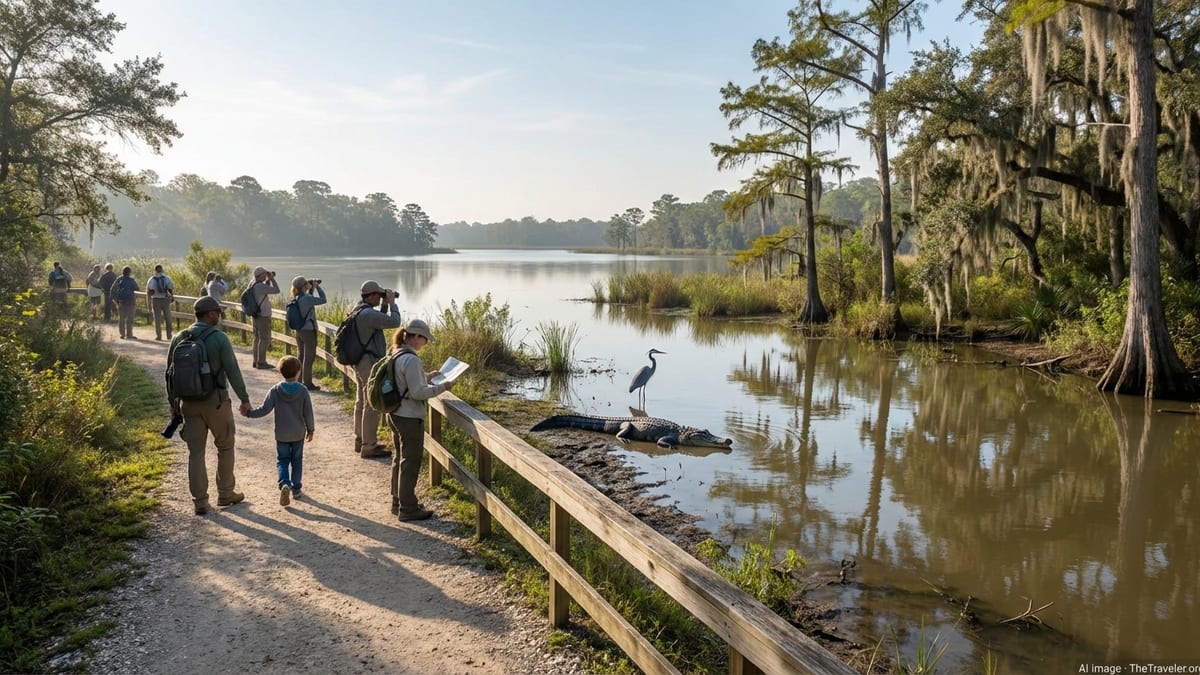
Brazos Bend State Park covers roughly 5,000 acres of bottomland forest, wetlands, lakes, and coastal prairie along the Brazos River near Needville, Texas. The terrain is mostly flat, with shaded live oaks and cypress trees framing quiet lakes and marshes. What makes the park famous is the healthy population of American alligators that inhabit its waters, along with rich birdlife, white-tailed deer, feral hogs, and numerous reptiles and amphibians. The combination of wildlife, easy trails, and accessible viewpoints makes the park a favorite for families and nature photographers.
The park is open daily, with typical hours from 8 a.m. to 10 p.m. Entry is charged per person rather than per vehicle for visitors age 13 and older, while younger children enter free. A Texas State Parks Pass covers the day-use fee for pass holders and guests in the same vehicle, which can be a solid value if you plan to visit several state parks within a year. Because the park is popular with both day-trippers and campers, particularly on mild-weather weekends, it regularly reaches vehicle capacity. Advance reservations are strongly recommended for both day passes and camping to avoid being turned away at the entrance.
Despite its proximity to Houston, Brazos Bend feels remarkably wild. The park’s wetlands are seasonal and dynamic. Water levels can flood trails or leave shorelines muddy, and the presence of large reptiles shapes every aspect of how people move around the park. That sense of wildness is part of the appeal. You are visiting the alligators’ home, not a manicured urban park, so a successful trip begins with realistic expectations about conditions and respectful behavior toward the wildlife that lives here.
When to Go and How Long to Stay
Timing your visit to Brazos Bend makes a substantial difference in what you see and how comfortable you feel. The park is in a humid subtropical climate. Summer afternoons are typically hot and often humid, with high temperatures commonly in the 90s Fahrenheit and the heat index even higher. Winters are mild, with average lows around the low 40s Fahrenheit in January and pleasant daytime temperatures. Spring and fall are widely considered the best times to visit. These shoulder seasons offer relatively comfortable temperatures, fewer biting insects than midsummer, and excellent wildlife viewing.
Alligator viewing is usually best in spring and fall, when reptiles are more likely to bask close to shore on sunny, moderate days. In high summer, alligators often retreat into deeper water to keep cool, and in cold snaps they may be less visible as they become torpid in dens and deeper pools. Birding is good year-round, but winter and early spring bring migratory waterfowl and raptors to the lakes and surrounding prairie. If your main aim is photography or wildlife observation, targeting a stretch of stable, mild weather in spring or fall will significantly improve your chances of seeing a variety of animals.
For most visitors, a day trip provides enough time to walk one or two of the signature lake loops, visit the nature center, and perhaps enjoy a picnic. If you want to sample several trails at a relaxed pace, do some sunrise or sunset photography, and experience the dark skies and observatory programs on a Saturday, consider staying one or two nights. A weekend visit allows you to see the park in different lights and temperatures, which is especially rewarding for wildlife activity.
Getting There, Reservations, and Practical Logistics
Brazos Bend State Park sits southwest of Houston, near Needville, reachable by a network of state highways and farm-to-market roads. Most visitors arrive by private vehicle. The final stretch runs along FM 762 to the park entrance. Road conditions are generally good, but heavy rains can cause localized flooding in the region, so it is wise to check forecasts and any park alerts before setting out. Fuel, groceries, and other supplies are available in nearby towns, but services immediately adjacent to the park are limited, so arrive reasonably well provisioned.
The park now strongly encourages or requires advance reservations for both day use and camping during busy periods. You can reserve a day pass for a specific date and arrival window, which guarantees entry, or hope for same-day availability at the gate. Because the park often fills to capacity on mild-weather weekends and holidays, day-pass reservations are the safest choice. For camping, the reservation system shows real-time availability for specific campsite types and dates. Popular weekends, school breaks, and spring wildflower season can book up well in advance, so planning a month or more ahead is prudent.
Entrance fees are paid per person upon entry or through your reservation. In addition, you will pay nightly fees for any campsite or screened shelter you reserve. Information and prices can change, so use the official Texas Parks and Wildlife Department channels for the most current details. At check-in, staff usually provide a park map, trail information, and reminders about alligator etiquette and other rules. Review this information carefully before heading to the lakes or trails, particularly if it is your first visit or you are traveling with children.
Cell coverage within the park can be inconsistent, depending on your carrier and exact location. Do not assume you will have reliable data at your campsite or on the trails. Download trail maps, confirm directions, and screenshot your reservation details before leaving home. Printouts of maps, campsite numbers, and reservation confirmations can be useful backups in case your phone battery runs low or the signal drops.
Hiking the Lakes and Wetlands
Brazos Bend’s trail system is designed to showcase its wetlands, lakes, and bottomland forest rather than to challenge hikers with elevation gain. Most routes are short, flat loops suitable for families and casual walkers, though the combination of sun, humidity, and uneven surfaces can still be tiring. The park’s signature hikes circle lakes where alligators, wading birds, and turtles crowd the shallows, while others wander through quiet woods or prairie.
Elm Lake Loop and 40 Acre Lake Trail are among the most popular walks in the park. Each is roughly 1.2 to 1.7 miles long and typically listed as moderate due to uneven surfaces and frequent wildlife encounters rather than steep terrain. Elm Lake offers some of the best wildlife viewing anywhere in the park, with broad views of open water and vegetated edges where alligators bask and herons stalk fish. The loop around 40 Acre Lake is similarly rich with wildlife, and an observation tower provides elevated views across the wetlands. Connecting segments between the two lakes allow you to extend your walk into a longer excursion if conditions and your energy level permit.
Other trails lead away from the lakes into bottomland forest and prairie. The Pilant Slough Trail follows a meandering slough through shady woods and is accessible from near the nature center. The Red Buckeye Trail offers a quieter walk through the woods for visitors seeking a bit more solitude, while the Prairie Trail crosses open grasslands to an elevated platform with broad views of restored coastal tallgrass prairie and seasonal wetlands. The Big Creek Loop and Live Oak Trail provide longer routes for those who want to explore more of the park’s perimeter and creeks, still without significant elevation change.
For visitors with mobility concerns, the Creekfield Lake Trail is an accessible loop near the nature center that showcases typical wetland scenery with a paved or improved surface and interpretive signage. The park also maintains an all-terrain wheelchair that can be reserved for use on suitable trails. Regardless of which route you choose, carry water, wear closed-toe shoes, and stay on designated paths. Deep mud, hidden holes, and the presence of alligators and snakes make off-trail wandering dangerous and strongly discouraged.
Camping, Overnight Stays, and Night-Sky Experiences
Camping is one of the best ways to experience Brazos Bend, allowing you to watch dawn break over the lakes, listen to night sounds, and explore the park when day-use crowds thin. The main camping areas offer a mix of sites with water and electric hookups, as well as more basic sites. One prominent loop, the Burr Oak Camping Area, consists of roughly 40 sites with water, a 50-amp electric hookup, picnic tables, fire rings, and access to restrooms with showers nearby. These sites are suitable for tent campers, trailers, and small to medium recreational vehicles.
Standard practice in Texas state parks is to limit each campsite to a set number of people and vehicles, typically eight people per site and one or two vehicles with an additional fee for extra vehicles. Quiet hours are enforced at night to preserve the natural soundscape and help wildlife and other campers rest. Fires are allowed only in designated fire rings or grills and may be restricted during burn bans. Campsite fees are charged per night and are paid in addition to park entrance fees, though many campers hold a state parks pass to reduce the overall cost of frequent visits.
For visitors who prefer solid walls, screened shelters and other roofed accommodations are sometimes available at Brazos Bend, depending on current facility offerings and maintenance. These shelters typically provide basic shelter from insects and rain, often with nearby communal restrooms, but no linens or climate control. They are a good compromise for families who want a camping feel without managing tents and rain flies. Check the reservation system for up-to-date options when planning your stay.
An especially distinctive feature of Brazos Bend is the George Observatory, located within the park and operated by the Houston Museum of Natural Science. On most Saturday nights, weather permitting, the observatory opens to the public with ticketed programs that include access to telescopes and night-sky interpretation. A park entry pass is still required in addition to observatory tickets. Combining a camping trip with a Saturday-night observatory visit makes for a memorable weekend, but you should reserve both your campsite and observatory tickets ahead of time, as both can sell out during popular times of year.
Alligators, Wildlife, and Staying Safe
Alligators define the Brazos Bend experience. They are the park’s top predators and a major draw for visitors, yet they demand respect. Brazos Bend has a long record of coexisting safely with its alligators, a success that depends on strict adherence to park rules. The key principle is distance. The park advises visitors to stay at least 30 feet away from any alligator. If an alligator is on or close to a trail and you cannot safely maintain that distance, you are expected to turn around and go back rather than trying to pass. The same applies if you encounter one along a lake bank where you hoped to fish or photograph.
Entering the water is prohibited throughout Brazos Bend. Swimming, wading, and letting pets retrieve objects from the water are all forbidden, not only because of the alligators but also because of the park’s overall safety policies. Feeding, harassing, or throwing objects at alligators and other wildlife is illegal and subject to fines and expulsion from the park. Alligators that learn to associate people with food quickly lose their natural wariness and can become dangerous, often resulting in their removal or destruction. By never feeding wildlife and respecting posted guidance, you help protect both yourself and the animals.
The park’s “alligator etiquette” emphasizes a few other key points. Keep pets on a leash no longer than six feet at all times and never allow them to drink from or approach the water’s edge. Avoid tall grasses, piles of sticks, or mounded vegetation near the shoreline during nesting season, typically late spring through summer, because a mother alligator may be guarding a nest nearby. If an alligator opens its mouth, hisses, or moves toward you, these are signs you are too close. Back away slowly without turning your back, avoid sudden movements, and create more distance until the animal relaxes or you can leave the area.
Alligators are not the only safety concern. Venomous snakes live in the park, including species that may bask on trails or under boardwalks, especially in warm weather. Staying on trails, watching where you place your feet and hands, and using a flashlight at night near camp and restrooms are basic precautions. Biting insects, especially mosquitoes and ticks, can be abundant at certain times of year. Bring insect repellent, long sleeves, and long pants if you are sensitive to bites. Heat and sun are perhaps the most common hazards; carry at least a quart of water per hour of exertion, wear a hat and sunscreen, and avoid the hottest midafternoon hours in peak summer.
Planning Your Activities: Hiking, Biking, Fishing, and Beyond
Most visitors come to Brazos Bend for hiking and wildlife viewing, but the park offers a broader range of activities that reward careful planning. Many of the park’s trails are open to both hiking and biking, though surfaces and widths vary. Before bringing a bicycle, check current trail conditions and confirm which routes are suitable for your skill level and equipment. Helmets are strongly recommended for all riders, and required for minors. Sharing trails with pedestrians means riding at courteous speeds, yielding to hikers where appropriate, and being especially mindful on narrow embankments beside water.
Fishing is permitted in several of the park’s lakes and waterways, subject to Texas fishing regulations. Anglers often target freshwater species such as catfish and sunfish. Because alligators also frequent these waters, additional caution is needed. Do not use stringers that trail fish into the water; instead, keep your catch in a sturdy bucket or cooler on shore. If an alligator shows interest in your fishing area or your catch, you are the one who must move. If an alligator attempts to take a fish you have hooked, the safest course is to cut the line rather than competing with an animal that is larger, faster, and far better adapted to the environment.
Birding is another highlight. Wetlands attract herons, egrets, ibis, roseate spoonbills, ducks, and seasonal migrants, while wooded areas host warblers, woodpeckers, and owls. The park publishes a bird checklist and interpretive guide that can help you identify species by season and habitat. Early morning and late afternoon are often the most rewarding times for bird and wildlife activity, as temperatures are cooler and lighting is softer for photography. Binoculars and a telephoto lens will allow you to observe animals at a safe and respectful distance.
Families and casual visitors should factor in time for the nature center, located near Creekfield Lake. Exhibits typically highlight the park’s three main ecosystems and showcase live reptiles such as snakes, turtles, and sometimes young alligators for educational programs. Hours vary with staffing, so check current information at the entrance station or park communications. Interacting with rangers and volunteers at the nature center is one of the best ways to learn about current wildlife activity, recommended trails for your schedule, and any temporary closures or hazards to be aware of that day.
Packing and Preparation Tips
Thoughtful packing will significantly improve your comfort and safety at Brazos Bend. Because the park is low, wet, and often humid, expect soft ground, mud after rains, and high insect activity at certain times. Closed-toe shoes with decent tread are essential; consider waterproof hiking shoes or sandals with secure straps if you anticipate puddles and mud. Lightweight, breathable clothing that dries quickly works well in the heat, and layering allows you to adapt to cool mornings and warm afternoons, especially in spring and fall.
Sun protection is critical in open areas around the lakes and on the prairie. A wide-brimmed hat, sunglasses, and broad-spectrum sunscreen should be standard gear. Insect repellent will help with mosquitoes and biting flies, especially near dusk and in sheltered, shaded spots. Some visitors find that light-colored long sleeves and pants reduce insect bites while also offering sun protection. Carry more water than you think you will need; water fountains and faucets may not be conveniently located along all trails, and the combination of heat, humidity, and walking can dehydrate you quickly.
For campers, in addition to basic gear such as a tent, sleeping bag, and cooking equipment, consider ground cloths or tarps for damp sites, a small fan or battery-powered air mover to improve comfort on still summer nights, and sealable containers for food to deter raccoons and other opportunistic wildlife. Keep all food and trash secured when not in use, and never store food inside your tent. A headlamp or flashlight with extra batteries is indispensable after dark, both for navigating to restrooms and for watching the ground for snakes or trip hazards.
Finally, do some homework before leaving home. Download or print the park trail map, review current alerts for trail closures or flooding, and check the weather forecast for the duration of your trip. If you are traveling with children or a group, review safety rules, including staying together on trails, not running near the water’s edge, and what to do if someone spots an alligator on the path ahead. A few minutes of preparation can prevent confusion once you are in the park and help everyone stay focused on enjoying the scenery and wildlife.
The Takeaway
Planning a trip to Brazos Bend State Park involves a bit more thought than simply choosing a date and tossing a tent into the car. This low-lying landscape of lakes, sloughs, and prairie is shaped by water levels, weather, and the presence of large reptiles that command both caution and admiration. Understanding the park’s rhythms, from ideal seasons for wildlife viewing to the necessity of day-pass and camping reservations, allows you to tailor your visit to your interests and comfort level.
If you approach Brazos Bend with respect for its alligators and other wildlife, attention to trail and water safety, and a realistic plan for heat, sun, and insects, the park rewards you with close-up views of a thriving wetland ecosystem. Stand on the observation tower at 40 Acre Lake, watch a heron lift off across the marsh, listen to the chorus of frogs at dusk, and you will understand why this park has become a beloved escape for Houstonians and a destination in its own right. Whether you come for a day of lakeside hiking or a star-filled weekend of camping and astronomy, thoughtful planning is the key to a safe, memorable Brazos Bend adventure.
FAQ
Q1. Do I really need a reservation to visit Brazos Bend State Park?
Reservations are strongly recommended, especially on weekends and holidays. The park often reaches capacity, and advance day-pass reservations guarantee your entry for a specific date and time window.
Q2. How close can I safely get to an alligator?
Park guidance is to stay at least 30 feet away from any alligator. If you encounter one on or near a trail and cannot maintain that distance, you should turn around and find another route rather than trying to pass.
Q3. Is it safe for children to visit Brazos Bend?
Yes, many families visit safely every year. The key is close supervision. Children should stay on designated trails, avoid running near water, follow alligator etiquette rules, and remain with adults at all times, especially near lakes and wetlands.
Q4. Can I swim, kayak, or paddleboard in the lakes?
No. Entering the water is not allowed at Brazos Bend State Park. Swimming, wading, and launching personal watercraft are prohibited due to safety concerns, including the presence of alligators.
Q5. What kind of camping is available in the park?
The park offers developed campsites with water and electric hookups, suitable for tents and RVs, along with more basic sites and, at times, screened shelters. All overnight stays require reservations and payment of both campsite and entrance fees.
Q6. When is the best time of year to see alligators?
Alligators are usually most visible in spring and fall on sunny, mild days when they bask near shorelines. In the peak of summer heat and during cold spells, they may be less active at the surface and spend more time in deeper water or dens.
Q7. Are the hiking trails difficult?
Most trails at Brazos Bend are short, flat, and rated as moderate mainly due to uneven surfaces, mud, and wildlife presence rather than steep climbs. They are generally suitable for reasonably fit visitors, but heat, humidity, and distance can add to the challenge.
Q8. Can I bring my dog to Brazos Bend?
Leashed pets are allowed in most outdoor areas, but they must be kept on a leash no longer than six feet and under control at all times. Pets should never be allowed near the water’s edge, and they are not permitted in certain buildings and facilities.
Q9. What should I pack for a day of hiking in the park?
Essential items include sturdy closed-toe shoes, plenty of drinking water, sun protection (hat, sunscreen, sunglasses), insect repellent, weather-appropriate clothing, a trail map, and, if you are interested in wildlife viewing, binoculars or a camera with a zoom lens.
Q10. Is the George Observatory open every night?
The George Observatory typically opens for public programs on Saturday nights, weather permitting, and requires a separate ticket in addition to your park entry pass. Hours and schedules can change, so check current details and book tickets before your visit.