

Armand Bayou Nature Center is one of the Houston region’s most immersive windows into pre-settlement coastal prairie, forest, and bayou. Planning a visit here takes a bit more thought than a typical city park outing, but the reward is a day among birds, alligators, and tall grasses that feel worlds away from highways and glass towers.
From choosing the right season and time of day to understanding the trail system, boat and kayak tours, and safety considerations, a little advance planning will help you make the most of this urban wilderness preserve.
Understanding Armand Bayou Nature Center
Armand Bayou Nature Center sits near Pasadena and Clear Lake, southeast of downtown Houston, on roughly 4,000 acres of protected habitat. It is often cited as one of the largest urban wilderness preserves in the United States, a rare expanse of undeveloped bayou, wetland, forest, and restored coastal tallgrass prairie embedded in a heavily industrial and suburban landscape. The setting, near Johnson Space Center and the Bayport industrial corridor, underscores just how unusual this much intact habitat is within a major metropolitan area.
The preserve protects a mosaic of ecosystems: bottomland hardwood forest along the bayou, coastal prairie dotted with wildflowers, freshwater wetlands, and bayou channels lined with marsh vegetation. This diversity supports more than 370 species of birds, mammals, reptiles, and amphibians, including white-tailed deer, armadillos, raccoons, coyotes, alligators, and scores of resident and migratory birds. The bayou lies along the Central Flyway, one of North America’s most important migratory bird routes, making the center a standout site for birdwatching, especially during spring and fall migrations.
In addition to natural habitats, the center includes Martyn Farm, a restored 19th-century Gulf Coast farmstead that interprets regional cultural history around 1895. Outbuildings, gardens, and period demonstrations help visitors connect human history to the surrounding landscape. Between the nature center exhibits, the trail system, the bayou access, and the historic farm, Armand Bayou can easily fill a full day if you plan carefully.
Because the center is a preserve rather than a general-use park, there are rules and access hours designed to protect wildlife and keep the experience quiet and low-impact. Visitors are expected to stay on marked trails, leave pets at home, and observe wildlife from a respectful distance. Understanding these expectations in advance will make your visit smoother and help maintain the wild character that makes the place special.
When to Go, Hours, and Admission
Armand Bayou Nature Center is generally open to the public Wednesday through Saturday from 9 a.m. to 5 p.m., and on Sunday from 12 p.m. to 5 p.m., with last entry at 4 p.m. It is closed on Mondays and Tuesdays, and may have special openings for certain holidays. It is wise to check hours just before your trip, especially around federal holidays or during extreme weather, as schedules can change temporarily.
As of early 2026, standard admission is modest: children aged 4 to 12, seniors 60 and older, college students, teachers, active-duty military, and first responders typically pay a reduced rate, while adults 13 to 59 pay a slightly higher general admission. Children 3 and under are admitted free. The center encourages visitors to purchase admission online in advance, which can help you move quickly through the entry process during busy weekends or special events.
Memberships are available and worth considering if you live in the Houston area or plan multiple visits. Membership usually provides free or discounted admission, reduced pricing on special events and tours, and invitations to member-only programs. Families who enjoy recurring trips in different seasons often find membership cost-effective after only a few visits.
Weather is a critical part of timing your trip. Houston’s coastal climate is hot and humid from late spring through early fall, and mosquitoes can be intense around standing water. Many local visitors prefer October through April, when temperatures are milder and hiking is more comfortable. Early morning and late afternoon are generally the most pleasant times in any season, and they also coincide with peak periods of wildlife activity, particularly for birds and deer.
Getting There and Navigating the Center
Armand Bayou Nature Center’s main entrance sits on Bay Area Boulevard in Pasadena, several miles east of Interstate 45 and roughly 25 miles southeast of downtown Houston. Most visitors arrive by car, driving in from Houston, Pasadena, Clear Lake, or nearby suburbs. Travel times vary with traffic, but a drive from central Houston typically takes 30 to 45 minutes in good conditions. Parking is available on-site, adjacent to the visitor center; there is usually no separate parking fee beyond admission.
Public transportation connections are limited. Some regional buses operate toward Clear Lake and park-and-ride facilities, but reaching the nature center directly typically requires a combination of bus and taxi or rideshare for the final segment along Bay Area Boulevard. If you do not have a car, building in extra time and cost for that last leg is important, especially given the center’s limited hours and firm last-entry time in the afternoon.
On arrival, you will check in at the visitor center, where staff can provide trail information and current conditions. From there, a network of signed trails radiates through forest, prairie, and bayou edges. The layout is designed for self-guided exploration, with trailheads clearly marked and interpretive signage at key points. Staying oriented is straightforward if you keep an eye on trail junction markers and carry a paper or digital trail map.
Because this is a wildlife preserve with sensitive habitats, certain areas may be temporarily closed due to flooding, trail repairs, or nesting seasons. Staff at the front desk can alert you to any such closures and may suggest alternative routes or highlight where recent wildlife sightings have been concentrated. It is worth taking a moment at the start of your visit to ask what they recommend for your interests and the current conditions.
Trails and Self-Guided Exploration
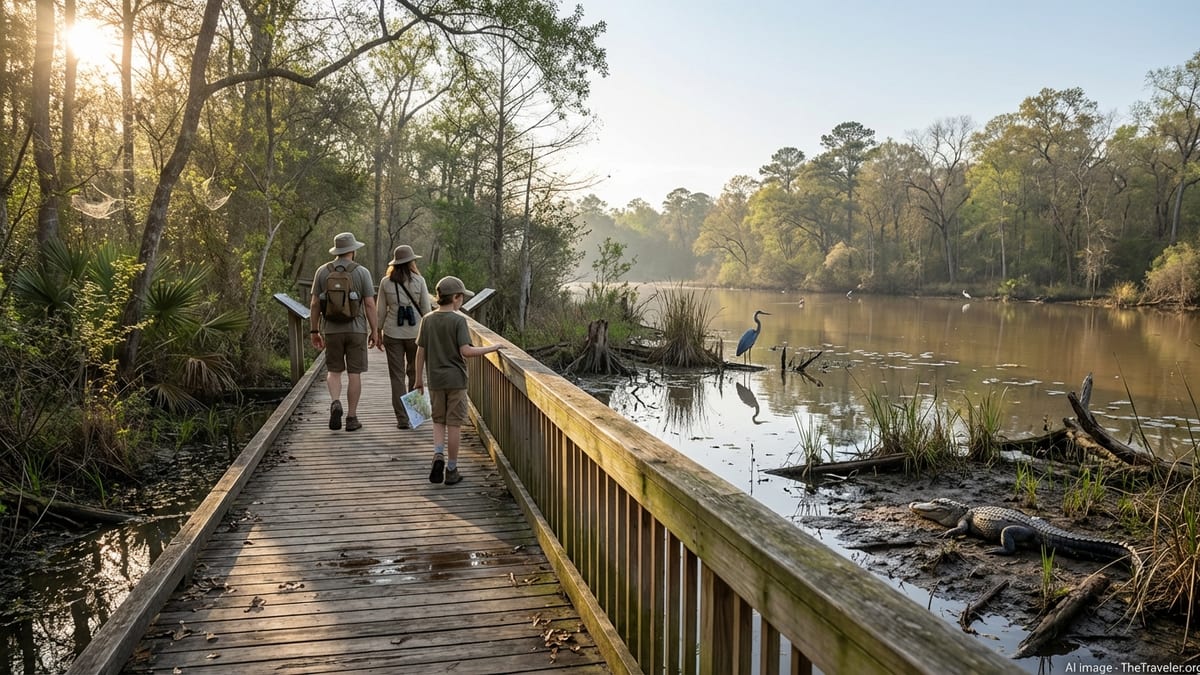
The trail system at Armand Bayou Nature Center offers a range of short, family-friendly walks and longer loops through prairie and forest. Boardwalk sections cross wet, low-lying areas, giving you vantage points over lily pads, cypress knees, and quiet bayou backwaters. Other stretches wind beneath tall trees or across open prairie that can feel surprisingly expansive for such an urban preserve.
For first-time visitors, the shorter loops near the visitor center provide a good overview of the landscape. These trails often link to more extensive routes that reach deeper into the property. The mix of forest shade and open prairie means you should expect sun exposure in some sections, especially midday. In summer, this can be intense, so a hat, sunscreen, and water are essential, even for fairly short walks.
Wildlife sightings along the trails vary by time of day and season. Early mornings often bring encounters with white-tailed deer, armadillos foraging in the underbrush, and a chorus of songbirds. In wetter areas and along boardwalks, visitors sometimes spot turtles basking, herons stalking fish, and, occasionally, alligators in the water or on distant banks. Binoculars dramatically improve your chances of picking out birds in the canopy or across wide stretches of marsh.
The center encourages a “leave no trace” ethic: staying on established paths, carrying out all trash, and avoiding picking flowers, collecting natural objects, or disturbing wildlife. Trails are intended for walking only; bicycles, jogging, and pets are not allowed. These restrictions help keep wildlife relatively undisturbed and maintain a quiet atmosphere, making it easier to see shy animals and hear bird calls rather than road noise.
Tours, Programs, and On-the-Water Experiences
Beyond its self-guided trails, Armand Bayou Nature Center is known for its tours and educational programs that deepen visitors’ understanding of the bayou ecosystem. Offerings evolve across the year and may include guided nature walks, birding outings, seasonal night hikes, and themed programs on topics such as reptiles, native plants, or “hazardous beasties” safety training designed to help participants recognize and safely coexist with venomous snakes, spiders, and other potentially hazardous wildlife in the region.
Photographers often look for guided photo hikes, in which an experienced naturalist leads a small group through photogenic habitats in search of wildlife and scenic compositions. These are typically aimed at adults and older teens and require advance registration and an additional fee beyond general admission. Programs can book up quickly in peak seasons such as spring migration and fall festival periods, so early planning is important.
One of the most memorable ways to experience Armand Bayou is from the water. The bayou itself forms part of a designated paddling trail, and the nature center and nearby parks offer access for canoes and kayaks. Depending on conditions and your experience level, it is possible to paddle upstream along the narrow, winding reaches that pass through the preserve or downstream toward the wider reaches near Clear Lake. Local outfitters and the center’s own programs sometimes provide guided kayak tours or organized paddles, which can be invaluable for visitors unfamiliar with tides, currents, or wildlife behavior.
In addition to human-powered boats, the center has traditionally offered pontoon boat tours on certain dates, giving visitors a comfortable, guided view of the bayou, its birds, and its marsh edges. These cruises typically involve narrated commentary on ecology and history, and they tend to be popular with families and visitors who prefer not to paddle. Because water-based programs depend on staffing, reservations, and weather, checking the current schedule and booking in advance is crucial if a boat or kayak experience is a priority for your visit.
Wildlife, Safety, and What to Pack
One of Armand Bayou’s main draws is that it feels genuinely wild. That same quality means visitors should come prepared and informed. Along with deer and songbirds, the preserve is home to alligators, snakes, spiders, and biting insects common to Gulf Coast wetlands. For most visitors, basic precautions are enough to keep the experience safe and comfortable.
Footwear is your first line of defense. Closed-toe shoes with good traction are strongly recommended, even on shorter boardwalk loops. Sandals and flip-flops leave you vulnerable to fire ants, mud, and unexpected puddles. Lightweight long pants and long sleeves can help protect against mosquitoes, ticks, and sun. Applying an EPA-registered insect repellent containing ingredients such as DEET or picaridin is a smart precaution, especially from late spring through early fall when mosquitoes are most active.
For alligator and snake safety, distance and awareness are key. Stay on marked trails and boardwalks, watch where you place your hands and feet, and never attempt to feed, touch, or closely approach wildlife. If you see an alligator basking near a trail or boardwalk edge, give it a wide berth and move on calmly. Respecting wildlife also means keeping noise moderate: quiet voices increase your chances of seeing animals while still avoiding sudden, startling movements that could provoke defensive behavior.
Finally, consider the basics: bring water in reusable bottles, as Houston’s heat and humidity can lead to dehydration even on mild days. Sunscreen, a brimmed hat, and sunglasses are helpful in prairie and open wetland areas. Binoculars and a small field guide or bird-identification app will enrich your experience, particularly during migration seasons. A small daypack keeps your hands free for balance on uneven or wet sections of trail.
Seasonal Events, Volunteering, and Family Experiences
Armand Bayou Nature Center’s calendar is dotted with recurring events that draw locals back year after year. Seasonal festivals celebrate milestones such as spring wildflowers or fall harvest at Martyn Farm, complete with demonstrations of historical crafts, children’s activities, and interpretive talks. During certain weekends, the farmstead comes alive with costumed interpreters, heritage livestock, and period gardening that connect modern visitors to late 19th-century farm life along the Gulf Coast.
For families, the center’s educational programming is a major attraction. Eco-focused day camps for children, themed weekend programs, and hands-on activities in the children’s discovery areas encourage younger visitors to engage with nature directly. Pond-dipping, bug hunts, and simple citizen science projects introduce basic ecology concepts in age-appropriate ways, turning a day trip into an informal field lesson outside the classroom.
Volunteering offers another way to experience the center more deeply. Regular “Prairie Fridays” and stewardship days invite community members to help with habitat restoration, trail maintenance, and invasive species management. Volunteers might spend a morning planting native grasses, potting seedlings, trimming overgrown paths, or assisting with bird counts in partnership with local conservation groups. For teens, structured youth volunteer opportunities provide service hours while building environmental literacy and leadership skills.
These opportunities highlight an important reality: Armand Bayou is not a static museum of nature but an actively managed preserve. Fire suppression, invasive plants, urban runoff, and climate shifts mean that keeping the prairie and wetlands healthy requires constant work. Visitors who return over months and years can watch the landscape change season by season and see their own contributions reflected in blooming meadows, healthier trails, and increased wildlife sightings.
Planning Your Day: Practical Tips
Because the nature center’s hours are finite and afternoon heat can be punishing, a bit of trip choreography helps you see more without feeling rushed. Many visitors aim to arrive soon after opening on a Wednesday through Saturday or early afternoon on Sunday. Starting with a quick stop at the visitor center for a map and current advice, you can then tackle a longer trail loop in the cooler morning hours, saving shorter boardwalks and indoor exhibits for midday heat.
Food options inside the preserve are minimal, so plan accordingly. Bringing a simple picnic to enjoy in designated areas is common, but be prepared to pack out all trash and avoid feeding wildlife, even inadvertently. Snacks that resist heat, such as nuts, dried fruit, and sturdy sandwiches, fare better than items that wilt or melt quickly. Many visitors pair a morning at the nature center with lunch at restaurants in nearby Clear Lake, Nassau Bay, or Pasadena after their visit.
Cell coverage can be patchy in low-lying areas, which is generally a benefit for those seeking a digital break but also a reminder to make any key arrangements in advance. If you are meeting friends or family, agree on a rendezvous spot and time ahead of entering the trail system. Keeping an eye on the clock is especially important given the 4 p.m. last-entry rule and closing time at 5 p.m.
Finally, leave room in your schedule for unstructured observation. Some of the best moments at Armand Bayou occur when you pause at an overlook, sit quietly on a bench, or linger at a wetland edge watching herons fish. Planning is essential, but so is allowing time for the unexpected: a sudden flock of migrating warblers, a deer emerging from the treeline, or a change in light over the prairie that transforms the landscape in minutes.
The Takeaway
Planning a visit to Armand Bayou Nature Center is about balancing logistics with openness to discovery. Choosing the right season and time of day, understanding the trail system, and reserving boat or kayak tours in advance will help you make efficient use of limited opening hours. Packing appropriately for heat, insects, and uneven ground turns potential discomforts into minor considerations rather than major distractions.
At its heart, though, a successful visit depends on mindset. Treat the preserve as the living, urban wilderness that it is: a place where wildlife has priority, where quiet and patience are rewarded, and where conservation is a daily, hands-on effort. Whether you are a birder hoping to notch new species, a family seeking a screen-free outing, or a traveler wanting to see Houston’s wild side, Armand Bayou offers a rare chance to step into a coastal ecosystem that once stretched across the region.
In an area better known for refineries and space launches, the nature center’s forests, prairies, and bayous feel like an act of deliberate preservation. With a thoughtful plan and respect for the landscape, your visit can both enrich your understanding of the Gulf Coast environment and support the ongoing work to keep this pocket of wilderness thriving for generations to come.
FAQ
Q1. What are the current opening hours at Armand Bayou Nature Center?
As of early 2026, the center is typically open Wednesday through Saturday from 9 a.m. to 5 p.m. and Sunday from 12 p.m. to 5 p.m., with last entry at 4 p.m. It is closed on Mondays and Tuesdays. Always confirm hours shortly before your visit in case of holiday or weather-related changes.
Q2. How much time should I plan for a first visit?
Most first-time visitors are comfortable with three to four hours, which allows time for a main trail loop, a boardwalk or two, and a look at the exhibits or Martyn Farm. If you add a guided hike, boat tour, or photography outing, plan on a half day or longer.
Q3. Do I need to book tickets or tours in advance?
General admission can usually be purchased on arrival or online in advance. However, special programs such as guided hikes, kayak trips, or pontoon boat tours almost always require advance reservations and may sell out, especially on weekends in spring and fall.
Q4. Are pets allowed on the trails?
No. For the safety of both wildlife and pets, animals are not allowed on the trails or within most of the preserve. Service animals assisting visitors with disabilities are permitted, but pet dogs and other animals should be left at home.
Q5. Is the nature center suitable for young children?
Yes. Many trails near the visitor center are short and relatively flat, and there are family-friendly exhibits and programs that engage children. Parents should keep a close eye on kids near water and on boardwalks and ensure they understand basic rules about staying on trails and not approaching wildlife.
Q6. What should I wear and bring for a comfortable visit?
Wear closed-toe shoes with good traction, lightweight long pants, and a breathable long-sleeve shirt if possible. Bring insect repellent, sunscreen, a hat, drinking water, and, if you enjoy wildlife watching, binoculars. A small daypack makes carrying these essentials easier on longer walks.
Q7. Can I paddle or kayak in Armand Bayou?
Yes. Armand Bayou is part of a designated paddling trail, and access is available through nearby parks and, at times, nature center programs. If you do not have your own boat or are unfamiliar with local conditions, consider joining a guided paddle organized by the center or local outfitters.
Q8. Are there food and drink options on-site?
Food services at the nature center are limited or seasonal, so visitors are encouraged to bring their own snacks and water. Picnicking is allowed in designated areas, but you should pack out all trash and avoid feeding wildlife. Nearby communities offer a variety of restaurants for meals before or after your visit.
Q9. Is the center accessible for visitors with limited mobility?
Some paths, boardwalk segments, and facilities near the visitor center are relatively accessible, but other trails are unpaved and uneven. If accessibility is a concern, contact the center in advance to discuss current conditions and which areas are best suited for wheelchairs, mobility aids, or strollers.
Q10. How can I support Armand Bayou Nature Center beyond a one-time visit?
You can support the center by becoming a member, making a donation, shopping with them if a gift area is available, or volunteering for stewardship projects and events. Spreading the word about the importance of urban wilderness preserves and following all rules during your visit also contribute to the long-term protection of Armand Bayou.