

Alabama rewards travelers who take the time to plan. From sugar-white Gulf Coast beaches and mountain ridges to profound civil rights landmarks and small-town surprises, the state is rich in experiences that can easily overwhelm a short itinerary. A thoughtful plan will help you see the best of Alabama without racing from one attraction to the next or missing the places that make the state unique.
Start With When to Go and How Long to Stay
Before you map out cities and sights, decide when you want to visit Alabama and how much time you realistically have. Spring and fall are usually the most comfortable seasons, with warm days and cooler nights, especially pleasant along the Gulf Coast and in the northern mountains. Summer brings classic beach weather on the coast but also high humidity and frequent afternoon thunderstorms inland. Winter can be mild in the south and brisk in the north, which suits travelers more interested in museums, food and history than in swimming.
For a first visit focused on highlights, many travelers find that seven to ten days strikes a good balance. That allows time to combine the major regions that consistently draw visitors, including Baldwin and Mobile counties on the coast, Jefferson County around Birmingham, Madison County in the north and Montgomery in the center of the state, which together account for a large share of Alabama’s tourism. With less time, you can still have a satisfying trip by centering the itinerary on either the Gulf beaches or the civil rights corridor between Birmingham, Selma and Montgomery.
When you fix your dates, consider what you most want from the trip. If swimming in the Gulf of Mexico is essential, late April through early October is generally warm enough for the water to feel inviting, with peak crowds in June and July. If hiking and city touring are the goal, March to May and late September to November are more comfortable for long days outside. Festivals, college football games and civil rights commemorations can also influence timing, so it is wise to check local calendars in places like Birmingham, Tuscaloosa and Montgomery before you lock in flights or nonrefundable lodging.
Your trip length should drive how many regions you include, rather than the other way around. Alabama looks compact on a map, but driving from Huntsville in the north to Gulf Shores on the coast can take six hours or more. Trying to see the entire state in four or five days often leads to long days on interstates and rushed stops. Pick a realistic geographic focus, then fill in the details.
Map the State: Key Regions You Should Not Skip
Once you know how long you can stay, sketch out the major regions that match your interests. A classic route for first-time visitors connects the Gulf Coast, the central civil rights corridor and the mountain foothills in the north. Each area has a distinct character, and understanding the geography will help you avoid backtracking and needless driving.
On the coast, Baldwin County anchors Alabama’s most visited area, with beach towns like Gulf Shores and Orange Beach drawing millions of travelers annually to their white sand, warm Gulf waters and extensive state park system. Nearby Mobile adds a historic downtown, antebellum architecture and one of the country’s earliest Mardi Gras traditions. Together, they can easily fill half of a one-week itinerary, especially for travelers seeking a mix of relaxation and light adventure.
In central Alabama, the corridor between Birmingham, Selma and Montgomery holds some of the country’s most important civil rights landmarks. In Birmingham, museums and historic sites trace the local struggles that helped reshape national policy in the 1960s. Montgomery, the state capital, continues to mark milestones such as the Selma to Montgomery march and the Voting Rights Act, and hosts institutions that explore both the civil rights era and the deep history of slavery and racial injustice. Between them, the Selma to Montgomery National Historic Trail and the Edmund Pettus Bridge in Selma give context to events that are still being examined six decades later.
To the north, cities like Huntsville and outdoor areas such as Cheaha State Park and the Talladega National Forest draw travelers interested in science, space exploration and mountain landscapes. Huntsville’s space attractions, including the long-established space center, remain a major family draw. Cheaha State Park encompasses the state’s highest point and offers mountain views, hiking trails and cabins. These northern destinations pair well with Birmingham for a loop through the interior of the state when beaches are not the priority.
Build a Smart Itinerary That Connects the Highlights
With regions in mind, you can start connecting them into a day-by-day plan. A practical approach for a weeklong trip is to choose three bases and spend at least two nights in each, rather than changing hotels every day. For example, you might anchor the coast in Gulf Shores or Orange Beach, the civil rights corridor in Montgomery or Birmingham, and the northern hills in Huntsville or near Cheaha State Park. Using a smaller number of bases reduces packing stress and lets you explore more deeply.
A sample seven-day itinerary could start with two or three days on the Gulf Coast, where you divide your time between beach hours, exploring Gulf State Park’s trails and boardwalks, and taking a dolphin cruise or short fishing charter out of Orange Beach. From there, a three-hour drive can carry you to Montgomery for two days focused on civil rights history and state government sites, with a day trip to Selma along the Selma to Montgomery National Historic Trail. You might then finish with two days in Birmingham or Huntsville, depending on whether you prefer more civil rights and industrial history or space exploration and mountain drives.
If you have ten days or more, you can add more depth. Extra time on the coast lets you explore quieter inlets and estuaries near places like Meaher State Park, which sits in wetlands at the edge of Mobile Bay, or to visit the historic district and port in Mobile. Additional time in the interior allows for hikes in Cheaha State Park, exploration of caves at Rickwood Caverns State Park or detours into smaller communities with rich local histories. Longer stays also give you breathing room to adjust for weather, a useful hedge in storm-prone summer months.
When you lay out the itinerary, identify a few must-see highlights in each base and then leave open blocks for spontaneous discovery. In Montgomery, for example, you might anchor one morning around the Selma to Montgomery National Historic Trail visitor centers and another around museums and memorials that explore the legacies of slavery and racial terror. In Birmingham, you might pair neighborhood walks with major museums and historic churches. On the coast, plan for at least one unstructured beach day in addition to more organized activities, so the trip includes true downtime as well as sightseeing.
Experience the Gulf Coast Beyond the Beach Towel
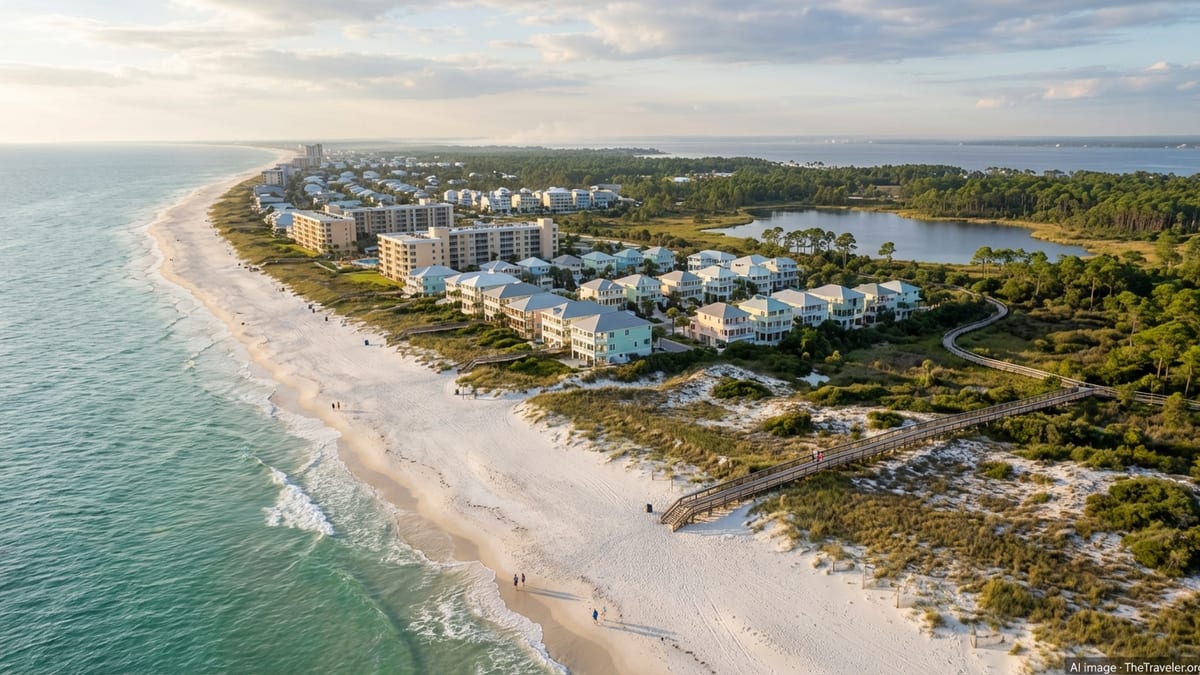
Alabama’s Gulf Coast is often the first image that comes to mind when travelers think of the state, and for good reason. The beaches in Gulf Shores and Orange Beach offer fine, pale sand, relatively warm water for much of the year and extensive services from beach chair rentals to nearby restaurants. While it is tempting to spend an entire visit stretched out on a towel, carving out time for the coastal state parks and backwaters will give you a richer sense of the region.
Gulf State Park is a standout, knitting together beaches, freshwater lakes and a vast network of trails. The Hugh S. Branyon Backcountry Trail, which links Orange Beach and Gulf Shores through nine distinct ecosystems, has gained national recognition in recent years in reader polls and travel rankings. Its paved and gravel paths run past coastal forests, marshes and dunes, and the trail system is accessible to casual cyclists and walkers as well as more serious hikers. Early morning and late afternoon bring softer light and slightly cooler temperatures, with frequent wildlife sightings from herons and osprey to the occasional alligator sunning in the distance.
Water-based excursions round out the coastal experience. Dolphin-watching cruises leave regularly from marinas in Gulf Shores and Orange Beach, offering a chance to see bottlenose dolphins riding the bow waves of boats or surfacing in small pods. Fishing charters range from half-day nearshore trips to longer deep-sea excursions in search of grouper, snapper and other Gulf species. For a quieter pace, you can rent kayaks or stand-up paddleboards to explore protected bays and inlets, where the water is often calmer than on the open shore.
Beyond recreation, the coast offers glimpses into the working life of the region. Shrimp boats, oyster operations and charter fleets share the waterways, and many local restaurants highlight seafood that travels only a short distance from boat to plate. In and around Mobile Bay, historic forts, maritime museums and boardwalks trace the economic and military significance of the area. Balancing beach time with these experiences helps you understand why Baldwin and Mobile counties have become anchors of Alabama’s record tourism growth in recent years.
Trace the Civil Rights Story in Birmingham, Selma and Montgomery
Alabama’s civil rights history is not a side trip. For many visitors it is the emotional and intellectual core of an entire journey. The cities of Birmingham, Selma and Montgomery, along with the rural communities between them, witnessed events that shaped national debates about democracy and equality. Today, museums, churches, memorials and walking trails invite travelers to engage with that history in detail.
In Birmingham, time in the downtown civil rights district helps set the stage. Historic churches, public squares and interpretive centers explain how local campaigns against segregation drew national attention in the early 1960s, and how police responses to peaceful demonstrations galvanized public opinion. Exhibits often draw connections between iconic figures and ordinary residents whose names are less widely known but whose choices sustained the movement. Allow at least a full day for Birmingham’s civil rights sites, and be prepared for an experience that is as reflective as it is informational.
From Birmingham, many travelers drive to Selma, where the Edmund Pettus Bridge has come to symbolize both the violence and the courage of the 1965 voting rights marches. The first attempt to march to Montgomery, later known as Bloody Sunday, saw peaceful marchers attacked by law enforcement officers as they crossed the bridge. The images, now frequently revisited in exhibits and anniversaries, helped build support for federal voting rights legislation. Today, visitors can walk across the bridge, tour local museums and speak with residents and guides who share personal and community stories from that period.
In Montgomery, the Selma to Montgomery National Historic Trail links the city to Selma along the route of the successful 1965 march. The trail’s visitor centers and interpretive sites help explain how events along that 54 mile route, combined with earlier actions such as the Montgomery Bus Boycott, led to the Voting Rights Act of 1965. Museums and memorials in the city deepen the story, examining both the institution of slavery and the long struggle for civil rights that followed. Recent anniversaries have brought renewed attention to these places, reinforcing their role in current conversations about voting and justice. Travelers should approach these sites with time and openness, allowing space to process difficult history rather than treating the visits as quick photo stops.
Explore the Mountains, Forests and Caves of Northern Alabama
While Alabama’s beaches draw the largest share of leisure travelers, the northern part of the state rewards those who seek out hills, forests and underground wonders. The Appalachian foothills roll through this region, creating ridgelines and valleys that feel far removed from the coastal plains. Temperatures here can be a few degrees cooler than on the coast, which makes spring and fall particularly attractive for outdoor exploration.
Cheaha State Park, the state’s oldest continuously operating park, is a natural centerpiece. Spread across nearly 2,800 acres, it includes Cheaha Mountain, the highest point in Alabama at just over 2,400 feet. The park borders the Talladega National Forest, and trailheads here link to longer paths such as the Pinhoti Trail, which ultimately connects to the Appalachian Trail system. Visitors can drive to scenic overlooks, climb Bunker Tower for broad views, or set out on short hikes along accessible boardwalks and rocky footpaths. Overnight options range from campsites to a lodge and cabins, giving travelers the flexibility to experience sunrise and sunset over the ridgelines.
Elsewhere in northern Alabama, underground landscapes tell an even older story. At Rickwood Caverns State Park, guided tours lead visitors through illuminated limestone passages with stalactites, stalagmites and fossil imprints formed hundreds of millions of years ago. The caverns maintain a cool interior temperature year-round, offering a literal change of climate on hot summer days. Above ground, the surrounding parkland provides picnic areas, campgrounds, trails and a seasonal swimming pool, making it a family-friendly stop that mixes education and recreation.
Pairing these outdoor sites with a visit to Huntsville offers contrast. The city’s long association with space exploration draws families and science enthusiasts, and its museums trace decades of rocket development and spaceflight history. Combined with the state parks, Huntsville rounds out a northern loop that balances technology and nature. When planning this part of the trip, pay attention to driving distances and elevation changes, which can affect both fuel needs and trip pacing, especially if you are traveling in a recreational vehicle.
Logistics: Getting Around, Booking Stays and Staying Safe
Alabama is most easily explored by car. While major cities have rideshare services and limited public transportation, the highlights that define many trips from secluded beaches and wildlife areas to small town museums and rural historic sites are scattered. Most visitors arrive through airports in Birmingham, Huntsville, Mobile or Pensacola just across the Florida line, then rent a car to connect the dots. Before you set out, check for any construction updates on key routes, particularly around coastal causeways and interstates that feed into Birmingham and Montgomery.
Lodging choices span chain hotels, independent inns, vacation rentals, cabins and campgrounds. On the Gulf Coast, demand is intense in summer and during school breaks, so booking well in advance is prudent, especially for beachfront condos and large houses. State park cabins and campgrounds, such as those at Gulf State Park, Cheaha State Park and Meaher State Park, also tend to fill quickly during peak seasons and on holiday weekends. In cities, downtown hotels offer walkability to museums and restaurants, while suburban properties may provide easier parking and quieter nights.
Weather and safety are important planning considerations. Along the coast, the official Atlantic hurricane season runs from June through November. While not every season brings a major storm, it is wise to buy travel insurance that covers weather disruptions and to monitor forecasts as your trip approaches. Summer heat and humidity can be intense across the state, so plan outdoor activities for early morning or late afternoon, and carry water, sun protection and bug repellent. In natural areas, obey posted warnings about wildlife, whether alligators in coastal wetlands or snakes in forests and rocky terrain, and stay on marked trails and boardwalks.
Respect for local communities and sites matters just as much as personal safety. Many civil rights landmarks and memorials remain closely connected to living residents and descendants of those who experienced the events commemorated there. Dress and behave as you would in a place of worship or remembrance, and consider supporting local institutions through admission fees, donations or purchases from independent businesses. On the coast and in natural areas, practice leave-no-trace principles, packing out trash and minimizing impact on dunes, marshes and forests so that future visitors can enjoy the same landscapes.
The Takeaway
Planning an Alabama trip without missing the highlights is less about seeing everything and more about choosing the right combination of places for your interests and travel style. With a week or more, you can lie on Gulf Coast beaches, walk the Edmund Pettus Bridge, explore Montgomery’s museums and memorials, hike mountain trails and step into cool limestone caverns. With fewer days, you can still shape an itinerary that feels complete by focusing on one or two regions and allowing time to experience them fully.
What ties these varied experiences together is a sense of place. On the coast, that means understanding how barrier islands, estuaries and working harbors fit into daily life. In the civil rights corridor, it means listening to stories and recognizing how events that unfolded in Alabama continue to influence national debates about rights and representation. In the north, it means feeling the contours of the landscape beneath your feet, from rocky overlooks to forested paths and underground chambers.
With thoughtful preparation, flexible pacing and an openness to both beauty and hard history, a trip through Alabama can be more than a checklist of attractions. It can be a journey through landscapes and stories that stay with you long after you leave. Start with a realistic itinerary, respect the communities and environments you visit and give yourself enough time to linger in the places that move you. The state’s beaches, trails, cities and small towns will do the rest.
FAQ
Q1. How many days do I need for a first trip to Alabama?
Most travelers find that seven to ten days allows enough time to combine the Gulf Coast beaches with the civil rights corridor and at least one northern destination without feeling rushed.
Q2. When is the best time of year to visit Alabama?
Spring and fall are generally the most comfortable, with warm days and cooler nights. Summer is ideal for swimming but can be hot and humid, while winter is milder on the coast and cooler in the north.
Q3. Do I need a car to see the main highlights?
Yes, in most cases you will. Public transportation is limited outside major cities, and many key attractions, parks and small towns are spread out, so renting a car offers the most flexibility.
Q4. Is it possible to combine the beach and civil rights sites in one trip?
Yes. Many visitors spend several days in Gulf Shores or Orange Beach, then drive to Montgomery, Selma and Birmingham to explore civil rights history before returning home from a central airport.
Q5. How should I prepare for visiting civil rights landmarks?
Plan for emotionally heavy material and allow unhurried time at museums and memorials. Reading a brief history beforehand and approaching the sites with respect will deepen the experience.
Q6. Are Alabama’s beaches suitable for families?
Alabama’s Gulf Coast is popular with families, offering wide sandy beaches, gentle surf in many conditions, nearby state parks, nature trails and a range of family-friendly lodging and dining options.
Q7. What kind of outdoor gear should I pack?
Comfortable walking shoes, lightweight clothing, a hat, sunscreen, insect repellent and a reusable water bottle are useful statewide. For hiking, consider trekking poles and a small daypack.
Q8. How busy do the beaches get in summer?
Summer, especially June through early August, is peak season on the Gulf Coast, with heavy demand for lodging and crowded beaches. Booking early and visiting on weekdays can help you avoid the worst congestion.
Q9. Is it safe to explore Alabama’s state parks and natural areas?
Yes, as long as you follow posted guidance, stay on marked trails, prepare for weather conditions and respect wildlife. Many parks also have visitor centers and staff who can provide current advice.
Q10. Can I see Alabama’s main highlights without spending too much?
Yes. State parks, public beaches and many historic districts are relatively affordable. Choosing a few paid attractions, staying slightly back from beachfront areas and traveling in shoulder seasons can help your budget go further.