

Planning an Ohio trip today means thinking beyond a simple city break or a quick drive through farm country. The state links three substantial cities with a network of riverfront parks, bike trails, and surprisingly rugged gorges, and it is compact enough that you can move from museum hopping to waterfall hikes in a single day. With a bit of structure, you can design an itinerary that layers Ohio’s urban food and arts scenes with peaceful national park overlooks and sandstone caves, without spending most of your vacation behind the wheel.
Understanding Ohio’s Layout and How Long You Need
Ohio is essentially a triangle of major cities anchored by Cincinnati on the Ohio River, Columbus in the center, and Cleveland on Lake Erie. Between and around those hubs you will find mid sized cities like Dayton and Toledo, Amish communities, state forests, and the rolling hill country of the southeast. Interstates connect most of the state in a straightforward grid, which means first time visitors can comfortably combine at least two cities and one nature area in a week, or one city and one major park over a long weekend.
For a balanced urban to nature itinerary, five to seven days is a practical minimum. That allows two or three nights in a city such as Columbus or Cincinnati, plus two or three nights near Cuyahoga Valley National Park or the Hocking Hills region. If you have a full week or a little longer, you can stitch all three big metros together, using Columbus as a central stopover and adding a final night in the lakefront city of Cleveland before flying out.
Because distances are moderate, you can keep daily drives short. As a rough guide, Columbus to Cincinnati is about a two hour drive, Columbus to Cleveland is roughly two and a half hours, and Cincinnati to the heart of Cuyahoga Valley National Park is around four hours. That scale makes Ohio especially convenient for travelers who want variety without long road days, including families and visitors who are new to driving in the United States.
It is also useful to understand that many of Ohio’s classic nature escapes sit just beyond metropolitan fringes. Cuyahoga Valley National Park sprawls between Cleveland and Akron, while the Hocking Hills and Clear Creek Metro Park lie within a reasonable drive of Columbus. This proximity means you can base in a city for dining and nightlife, then reach trailheads or scenic overlooks in time for a late breakfast or early morning hike.
Best Seasons and Weather for an Urban to Nature Route
Ohio has four distinct seasons, and your experience can change substantially depending on when you visit. Late spring and early fall are typically the most comfortable windows for a city and hiking focused trip, with mild temperatures, lower humidity than mid summer, and colorful landscapes. May and early June often bring fresh green forests and blooming gardens in city parks, while late September into October is prized for fall foliage in regions such as Cuyahoga Valley and the Hocking Hills.
Summer brings long daylight hours that are ideal for patio dining, riverfront walks, and evenings at outdoor festivals, especially in downtown Columbus along the Scioto Mile and in Cincinnati’s riverfront parks. However, July and August can be hot and humid, particularly in southern Ohio, so plan early morning hikes and use city afternoons for museums, markets, and air conditioned attractions. Lake Erie moderates the heat somewhat around Cleveland, making waterfront promenades and boat tours attractive options.
Winter can be a rewarding but more specialized season. Snow is common in northern Ohio, especially near Lake Erie, and ski areas operate near Cuyahoga Valley National Park. Events such as holiday light displays at major zoos and botanical gardens, and seasonal shows in city theaters, can be highlights. That said, hikers should expect icy paths, shorter days, and variable conditions on steep trails. If your focus is nature, winter is best suited to visitors comfortable with cold weather gear and flexible plans.
Shoulder seasons also bring practical benefits. Lodging in some rural areas and smaller cities may be easier to book outside peak summer weekends and fall foliage weeks. Midweek visits in spring or fall can mean quieter trails and more relaxed urban experiences, from museum exhibits to popular restaurants. Whenever you visit, build some weather flexibility into your schedule, with alternate indoor options in each city in case of storms or heat waves.
Starting in Columbus: Central Hub for Culture and Day Hikes
Columbus, the state capital, sits roughly in the middle of Ohio, making it an efficient starting point for a trip that branches out to both northern and southern nature areas. Downtown and adjacent neighborhoods have seen sustained investment in parks and cultural institutions, and the compact core is easy to navigate by car or rideshare, with growing options for walking and cycling along the riverfront. Staying near the city center or the Short North Arts District gives quick access to restaurants, galleries, and major attractions.
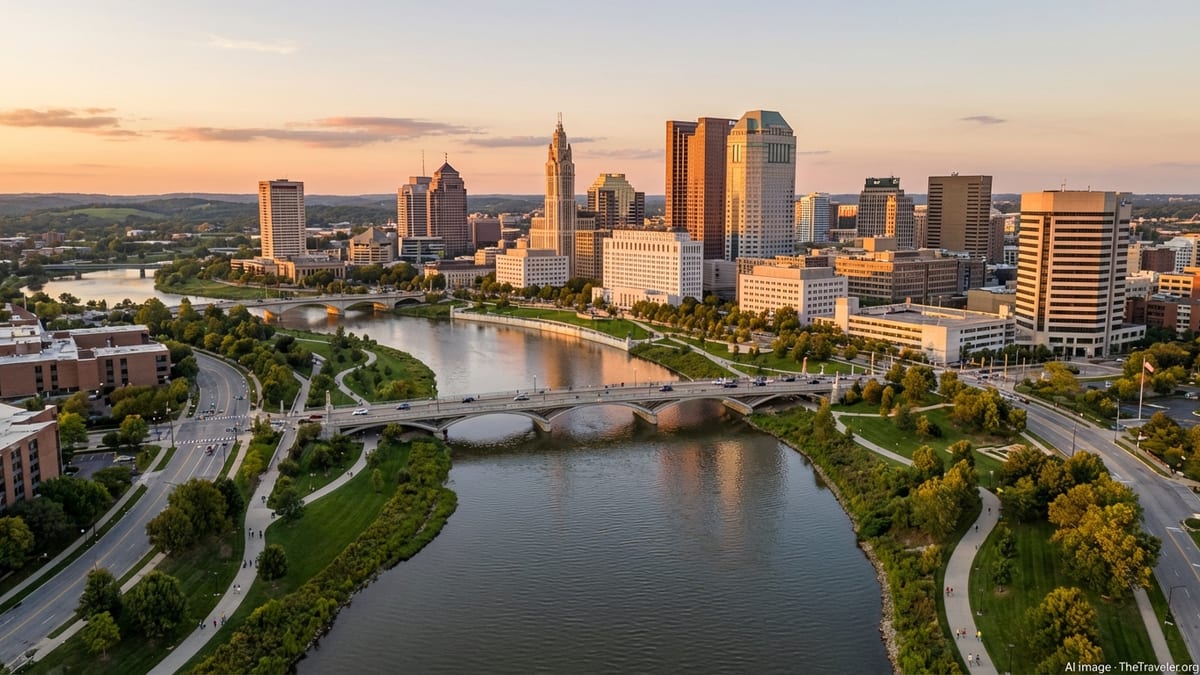
One of the defining features of modern Columbus is the Scioto Mile, a connected system of parks, plazas, and trails hugging the Scioto River through downtown. Riverfront parks such as Genoa Park and Dorrian Green frame skyline views and host seasonal events and art installations. Pedestrian friendly bridges connect both sides of the river, and the paved paths appeal to runners, cyclists, and visitors who simply want a scenic urban stroll before or after dinner.
Cultural stops cluster within a short radius. The Center of Science and Industry sits across the river from downtown high rises, pairing family friendly exhibits with skyline views from adjacent parks. Newer additions underscore the city’s evolving creative identity, including an immersive, adult oriented experimental museum space near the Scioto riverfront that focuses on art, media, and technology. These venues can anchor a day in the city between walks in German Village’s brick lined streets or the boutiques and murals of the Short North.
Columbus also provides straightforward access to nature within an hour or so of downtown. The regional Metro Parks network includes extensive preserves, and Clear Creek Metro Park, located near the Hocking Hills region, is a standout option with forested hills, sandstone gorges, and abundant birdlife. From a downtown hotel, you can drive into rolling, wooded valleys in time for a midmorning hike and still be back in the city for a late dinner service.
Cincinnati and the Ohio River: Historic Neighborhoods and Nearby Hills
Cincinnati, on the state’s southern edge, pairs a historic river city character with renovated waterfronts and hillside neighborhoods. Arriving by car from Columbus, you will drop into a basin ringed by steep hills, with the downtown grid flanked by stadiums and a wide lawn along the Ohio River. The compact core makes it manageable to park once and explore on foot, especially around Fountain Square and the riverfront parks.
The city’s Over the Rhine neighborhood, just north of downtown, has become a major draw for visitors with its concentration of 19th century brick buildings, independent shops, breweries, and restaurants. Walking its streets offers an urban contrast to the quieter residential districts you might see elsewhere in the state. Food travelers can fill entire days moving between bakeries, coffee shops, and regionally influenced restaurants that highlight both German heritage and contemporary Midwestern cooking.
From Cincinnati, nature is closer than it might appear on a map. The city’s own park system incorporates wooded ridges and overlooks, and within an hour’s drive you can reach state parks and sections of the long distance Buckeye Trail, which winds through multiple scenic areas around Ohio. Even without a full day in the backcountry, you can leave a downtown hotel after breakfast, spend several hours on a hillside loop trail or riverside path, and then return in time for a sunset walk along the Ohio River esplanade.
If your itinerary continues north, Cincinnati can serve as the gateway to a longer road journey along parts of the Ohio to Erie Trail corridor, a multi use route that ultimately links the city to Cleveland. Even if you do not commit to a multi day cycling trip, you will see how rail trails, canal towpaths, and small towns interconnect across the state, suggesting side trips and overnight stops away from the interstates.
Lakefront Cleveland and Cuyahoga Valley National Park
Cleveland, on Lake Erie, offers a cooler lakefront climate in summer and proximity to Ohio’s only national park, Cuyahoga Valley, between Cleveland and Akron. Visitors often pair time in the city’s cultural district and waterfront with a day or more in the park’s forests and villages. The city’s downtown and near west side neighborhoods provide access to major museums, sports venues, and restaurants, while lakefront parks deliver big sky sunsets that feel quite different from river valley horizons farther south.
Less than an hour’s drive from downtown, Cuyahoga Valley National Park spreads along a crooked stretch of the Cuyahoga River, integrating historic canal features, small communities, and wooded hills. The park’s visitor center area near the village of Boston functions as a practical starting point, with rangers and volunteers on hand to explain trail options, scenic overlooks, and seasonal conditions. Here, the river, a multi use towpath trail, a scenic railroad, and a scenic byway all converge, giving travelers multiple ways to move through the valley.
The Ohio and Erie Canal Towpath Trail is one of the park’s signature experiences, inviting visitors to walk or cycle alongside former canal locks, marshes, and forested slopes. You can combine trail sections with rides on the Cuyahoga Valley Scenic Railroad, which operates through the park and allows passengers to board and disembark at various stations. Recent infrastructure work has focused on stabilizing riverbanks to protect the railroad and towpath in key sections, helping to keep the system open for hikers, cyclists, and rail passengers during typical conditions.
Cuyahoga Valley’s appeal lies in its mix of history and nature. Kayakers paddle portions of the river, cyclists roll along the towpath under high bridges, and in winter, nearby ski areas operate on the valley’s slopes. For visitors on a tight schedule, a single full day can include a towpath walk, a short train ride, time in a canal era village, and a late return to Cleveland for dinner overlooking the lake.
Hocking Hills, Clear Creek, and Southern Forest Escapes
South and east of Columbus, the land begins to ripple into the Appalachian foothills, and sandstone gorges carve out pockets of dramatic scenery. The Hocking Hills region is the best known example, drawing visitors to caves, rock shelters, and waterfalls tucked into dense forests. Well established state parks and nature preserves provide signed trail systems that allow day hikers to experience cliffs and narrow passages that feel far removed from the flat farmland often associated with Ohio.
Within this broader region, Clear Creek Metro Park stands out as a large nature preserve that combines the biodiversity of a state nature preserve with the accessibility of a regional park. The area contains thousands of acres of forest, with gorges and bluffs formed from erosion resistant sandstone that rises at higher elevations. Trails wind up steep slopes and down into cool ravines, and the park is home to a wide range of plant and bird species compared with more heavily developed landscapes.
Because these parks lie within driving distance of Columbus, they work well for either day trips or two night stays in nearby cabins and lodges. Travelers who base in the city can leave after rush hour, hike shaded trails through midday, and then stop in small towns for dinner on the way back. Those who linger in the region can watch morning mist lift off wooded ridges, then spend slower days exploring less trafficked preserves or paddling quiet stretches of local rivers.
These southern forest escapes pair especially well with spring and fall itineraries. Spring brings wildflowers and cascading streams, while fall color transforms the sandstone valleys into a patchwork of reds and golds. Trails can be muddy after rain, and some routes include stairs and steep grades, so sturdy footwear and a flexible mindset are helpful. As always, visitors should check current park advisories for trail closures, water levels, and seasonal hunting information before setting out.
Connecting Cities and Parks: Routes, Transport, and Lodging
Most visitors planning an urban to nature trip in Ohio will find renting a car the most efficient option. Interstates connect the three main cities, and secondary highways lead into national, state, and regional parks. Distances between overnight stops are short enough that you can design loop routes that start and end in the same city or open jaw itineraries that begin in one metro area and finish in another, depending on flight availability and cost.
A classic loop might start in Columbus, dip south to Cincinnati, then arc northeast toward Cuyahoga Valley and Cleveland before returning to Columbus or flying out from the lakefront. Another approach is to anchor your time in one primary city, such as Columbus, and treat Cincinnati, Cleveland, or the Hocking Hills as separate two or three day side trips connected by straightforward drives. The Ohio to Erie Trail corridor, while primarily aimed at cyclists, also offers a conceptual framework for plotting a north south journey that brushes past smaller towns and parks.
Within cities, you can often leave the car parked and rely on walking, ride hailing services, and local transit, particularly in compact districts like downtown Columbus, the Short North, Over the Rhine in Cincinnati, and the core neighborhoods around downtown Cleveland. Riverfront and lakefront promenades make it easy to incorporate fresh air into urban days without committing to a full drive to a park. Many hotels near these cores market themselves as gateways to both cultural attractions and nearby nature, and some offer packages that include transit or bike rentals.
Lodging near major nature areas ranges from chain hotels on highway exits to independent cabins, bed and breakfasts, and campgrounds. Around Cuyahoga Valley National Park, visitors commonly stay in Akron or Cleveland suburbs and drive into the park each day, while in the Hocking Hills region, cabins and cottages in wooded settings are popular. Booking ahead is advisable during peak leaf season in autumn and on summer weekends, and visitors with accessibility needs should verify stair counts, parking arrangements, and proximity to trailheads when reserving rural accommodations.
Practical Planning Tips for a Smooth Ohio Itinerary
Building an Ohio trip that flows smoothly from urban stops to nature escapes requires a bit of practical groundwork. Begin by identifying your anchor cities based on flights, interests, and season, then layer in nearby parks that match your activity level. For instance, travelers who prioritize museums and dining might spend more nights in Columbus and Cleveland, with Cuyahoga Valley and Clear Creek as day trips. Those who prefer hiking and cabins can reverse the emphasis, basing themselves near Hocking Hills or along the edges of the national park and dipping into cities for concert nights and special exhibits.
Weather flexibility is essential, especially if your main goals include hiking or cycling. Pack layers suitable for variable temperatures and consider bringing light rain gear even in summer, as thunderstorms can move quickly across the state. Have a list of backup indoor activities for each urban stop, such as galleries, historic homes, or hands on science centers, so that a rainy afternoon does not derail the day. Conversely, on blue sky days, be prepared to leave the city earlier than planned to make the most of cooler morning hours on exposed trails.
Navigation is generally straightforward, but a mix of digital maps and park produced guides works best in rural areas where mobile service can be patchy. Visitor centers in national and state parks remain valuable resources, with up to date information on trail closures, wildlife advisories, and parking. In popular areas, parking lots at signature trailheads and viewpoints can fill early on weekends, so consider less trafficked routes or adjust timing to early morning or late afternoon to avoid congestion.
Finally, remember that much of the enjoyment of an Ohio trip lies in the transitions between landscapes. Scenic byways that parallel rivers or follow former canal routes offer glimpses of small towns, farms, and historic lock structures that tell the story of how the state developed. Build time into your schedule not only for marquee attractions, but also for spontaneous stops at farm stands, local diners, and unexpected overlooks that you find along the way.
The Takeaway
Ohio rewards travelers who think in layers rather than single destinations. By linking Columbus, Cincinnati, and Cleveland with nearby parks and preserves, you can design an itinerary that moves naturally from skyline reflections on downtown rivers to quiet paths beneath sandstone cliffs and maple covered ridges. The state’s modest driving distances, growing trail networks, and revitalized waterfronts make it easy to pair a morning at a contemporary gallery with an afternoon watching kayaks on a slow river or walking a shaded towpath.
With a five to seven day window, you can gain an authentic sense of how Ohio’s cities and landscapes fit together, using central hubs as launch pads for deeper exploration. Whether you are drawn by the idea of riding a scenic railroad through a national park, climbing a staircase into a gorge, or tasting your way through neighborhoods that have reinvented historic blocks, a bit of careful planning will help you balance your time and energy. In the end, an Ohio trip that weaves between urban life and nature escapes is less about checking off individual sights and more about experiencing the state as a continuous, varied journey.
FAQ
Q1. How many days do I need for an Ohio trip that includes both cities and nature?
Most travelers should plan at least five to seven days to comfortably combine two cities and one major nature area, or one city with two different park regions.
Q2. What is the best time of year to visit Ohio for both urban activities and hiking?
Late spring and early fall are usually ideal, offering mild temperatures for city walks and trail time, with spring blooms or autumn foliage in forested regions.
Q3. Do I need a rental car to explore Ohio’s cities and parks?
A rental car is strongly recommended, since major parks and rural areas are not always well connected by public transit, even though central city districts are walkable.
Q4. Can I visit Cuyahoga Valley National Park as a day trip from Cleveland?
Yes. The park lies less than an hour from downtown Cleveland under normal traffic, so you can easily spend a full day hiking, cycling, or riding the scenic railroad and return to the city at night.
Q5. Is it realistic to include Columbus, Cincinnati, and Cleveland in one itinerary?
It is realistic if you have at least a week and are comfortable with moderate driving, particularly if you use Columbus as a central hub and limit one night stays.
Q6. Are Ohio hiking trails suitable for beginners and families?
Many trails in parks such as Cuyahoga Valley and the Hocking Hills offer short, well marked routes, though some include stairs, uneven footing, or steep grades, so checking route descriptions in advance is helpful.
Q7. How should I plan for weather when hiking in Ohio?
Expect variable conditions, pack layers and rain gear, and monitor forecasts, especially in spring and summer when storms can move through quickly and make trails muddy or slippery.
Q8. Where should I base myself for exploring the Hocking Hills and Clear Creek areas?
Many visitors stay in cabins, small inns, or lodges in and around the Hocking Hills region, or base in Columbus and visit for long day trips if they prefer a larger city at night.
Q9. Is Ohio a good destination for travelers without extensive driving experience in the United States?
Yes. Distances are moderate, highways are generally straightforward, and you can design routes that avoid major city rush hours while still reaching key parks and attractions.
Q10. How far in advance should I book lodging near popular parks?
For peak summer weekends and fall foliage periods, it is wise to reserve cabins, campgrounds, and small inns several months ahead, especially in the Hocking Hills and near Cuyahoga Valley National Park.