

More news on this day
As historically long Transportation Security Administration lines snarl airports during a partial federal government shutdown, more travelers are watching departure times tick past while they are still in the checkpoint queue and scrambling to secure another way out.
Get the latest news straight to your inbox!
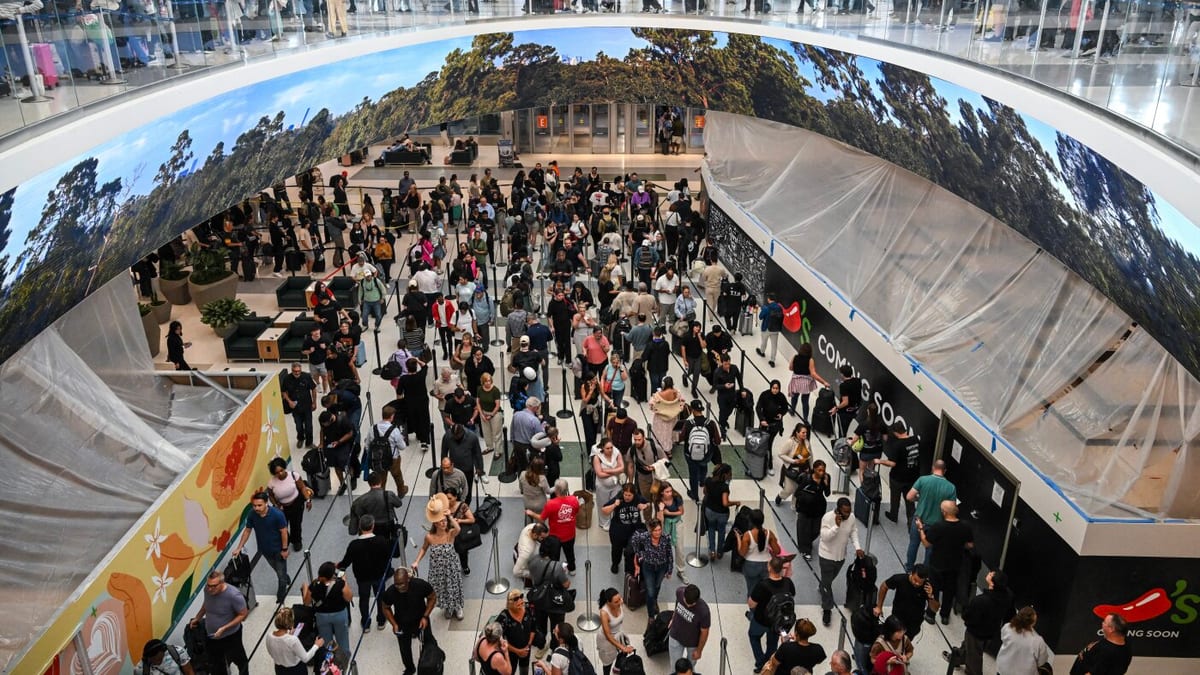
Image by npr.org
Why long TSA lines usually do not mean a refund
The current wave of hours long security lines has been driven in part by staffing strains during the ongoing partial government shutdown, with reports indicating that some travelers are waiting three to five hours just to clear checkpoints at major hubs. In that environment, missed departures are becoming more common, especially for early morning flights when airline counters and checkpoints open later than some passengers expect.
Despite those extraordinary waits, consumer guidance from the U.S. Department of Transportation indicates that missed flights caused by security lines are generally treated as the passenger’s responsibility, not the airline’s. Airlines are typically required to provide a refund or free rebooking only when they cancel or significantly change a flight, not when a traveler arrives too late to board because of airport congestion.
Recent coverage from national outlets and travel advisories has underscored that travelers stuck in TSA lines should not expect automatic compensation. Some carriers are issuing temporary waivers at the hardest hit airports, allowing customers to change or cancel without fees, but those measures are discretionary and often limited to specific dates and routes.
The practical result is that many passengers reaching the gate after their flight has closed are being handled under each airline’s standard “misconnect” or no show policies. Those rules can include same day standby at no extra charge, free rebooking on the next available flight, or a requirement to buy a new ticket entirely, depending on the fare type and carrier.
Move fast: contact the airline before you miss departure
Travel experts and airport bulletins consistently emphasize that timing matters. If a traveler realizes while still in a slow moving security line that boarding time is approaching, the most immediate step is to contact the airline through its mobile app, website chat, phone line or social media channels rather than waiting until reaching the gate.
Many major carriers now allow same day flight changes directly in their apps, and some have added special notifications in recent days directing customers to self service rebooking tools when TSA delays worsen. Using these options while still in line can secure a later departure before the original flight is marked as a no show, which can preserve the value of the original ticket and expand options.
Airline and airport guidance also encourages stranded passengers to pursue multiple channels at once. That can mean queuing at a customer service counter while simultaneously calling the reservations line or using online chat. In busy terminals where customer service desks are overwhelmed, travelers who act quickly through digital tools often rebook faster than those waiting only in physical lines.
For connecting itineraries, passengers who see an initial leg delayed and a connection becoming tight are advised to ask gate agents proactively about same day alternatives before landing. Reports from recent travel disruptions suggest that travelers who request an earlier or more reliable connection before a misconnect occurs tend to have more choices than those who wait until after a missed departure is recorded.
Know each airline’s flexibility and what you may have to pay
Policies on missed flights vary significantly by carrier and by fare class. Publicly available policy summaries and recent travel analysis indicate that some large U.S. airlines will attempt to place passengers who arrive late on the next flight with available seats on a standby basis, particularly when the customer has already checked in and reached the airport.
Other airlines are more rigid, treating late arrival at the gate as a forfeited segment and requiring purchase of a new ticket, especially on lower cost basic economy fares. In some recent cases shared by travelers, fees were waived but a fare difference was charged when the only available replacement flight was more expensive than the original itinerary.
Several major carriers have also issued short term travel waivers tied to the government shutdown and TSA staffing issues at specific airports. Under these waivers, customers scheduled to depart during defined windows can move their flights to another date or time without paying change fees, subject to seat availability. These programs are typically time limited and only apply if changes are made before the original departure time, which again underscores the value of acting early.
Budget conscious travelers are being advised by consumer advocates to review airline contracts of carriage and missed flight policies before departure, especially when booking nonrefundable tickets. Understanding whether a particular fare allows same day confirmed changes, standby, or only a one time rebooking for a fee can help set expectations if a TSA delay threatens the trip.
When travel insurance and refunds may (and may not) help
Many passengers hope that travel insurance will step in when long security lines derail a departure, but current policy language suggests that coverage is limited. According to published insurance guidance cited in recent reporting, missing a flight solely because of a long TSA line is usually not considered a covered reason, since the security checkpoint is outside both the airline’s and the insurer’s direct control.
Some comprehensive policies may offer trip delay or missed connection benefits when a traveler can show that they arrived at the airport within the recommended window and were still unable to board because of extraordinary circumstances such as airport closures or officially documented disruptions. However, in ordinary crowding situations without a formal shutdown of operations, reimbursement is far from guaranteed.
Federal rules on automatic refunds, updated in 2024, focus on flight cancellations, significant schedule changes or long baggage delays linked to airline actions. Those protections do not automatically extend to missed flights attributed to late arrival at the gate, even when that late arrival is the result of security bottlenecks in the same terminal.
Consumer advocates therefore recommend that travelers treat missed flights from TSA delays as primarily a negotiation with the airline rather than a scenario where refunds are assured. Keeping receipts for additional costs such as hotels, meals or ground transportation can still be useful, in case an airline or insurer later offers partial reimbursement as a goodwill gesture or under broader disruption policies.
Practical steps in the terminal when time is running out
For travelers currently stuck in a slow moving checkpoint with departure time approaching, airport advisories point to a few immediate tactics. First, assess whether the line is moving at all and whether there are any posted signs about dedicated lanes for imminent departures, families, or passengers with special needs. Some airports periodically create ad hoc priority lanes when large groups risk missing flights, although this practice is inconsistent.
If it becomes clear that a flight will be missed, contacting the airline while still in line and explaining that you are already at the airport and through check in can sometimes elicit more flexibility, particularly when seats remain on later flights the same day. Travelers report better outcomes when they remain calm, concise and prepared with specific alternative flights that fit their schedule.
Once through security, passengers who have already missed their scheduled departure are advised to head directly to the nearest service desk for their airline instead of the original gate, whose staff may already be boarding another flight. At larger hubs, dedicated rebooking centers have been set up in recent days to deal with the volume of missed departures linked to TSA delays.
Finally, airport and airline messaging stresses that the most reliable protection against being stranded is to build in a wider buffer before flights than was common in previous years. With staffing, security procedures and passenger volumes all in flux, arriving three hours before domestic departures and even earlier for international trips is increasingly being described as a baseline rather than an exception, at least while the current disruption continues.