

More news on this day
With Emirates Skywards tightening award prices and transfer ratios, many travelers are turning to partner-operated flights to squeeze more value from their miles. Recent changes to partner award charts and bank transfer rates mean the smartest redemptions in 2026 increasingly sit on other airlines’ metal, not just on Emirates itself.
Get the latest news straight to your inbox!
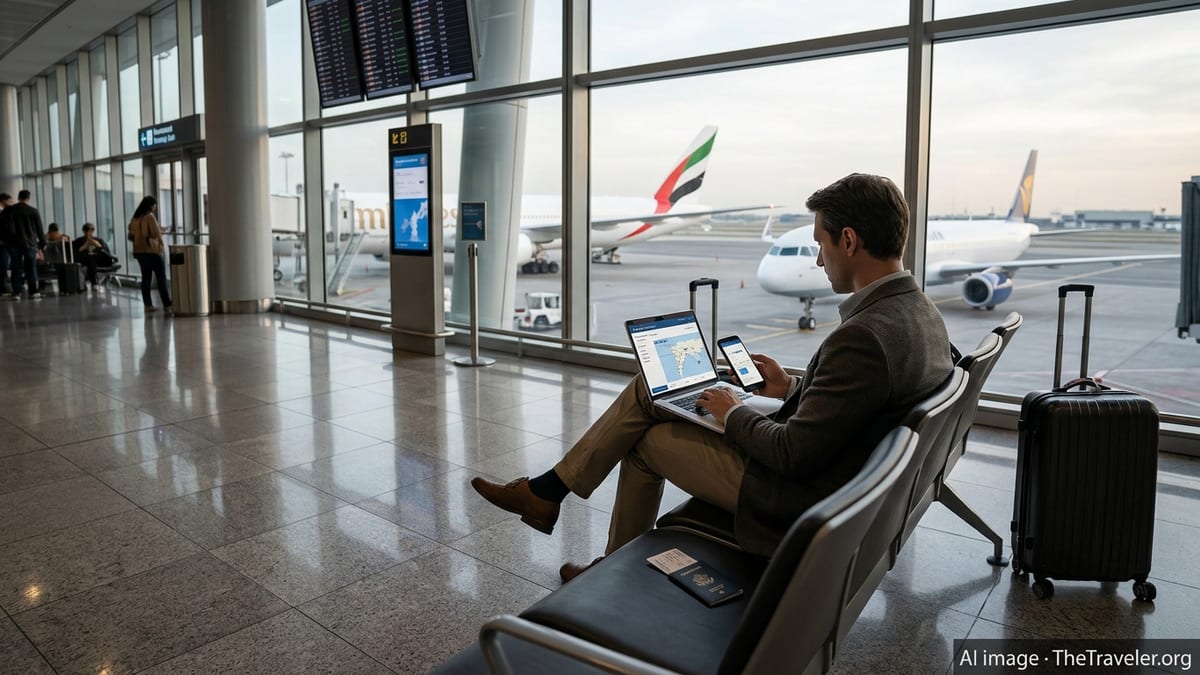
Emirates Skywards partners and what has changed in 2026
Emirates is not part of a global airline alliance, but its Skywards program maintains individual partnerships with a range of carriers. Publicly available information lists airlines such as Alaska Airlines, Japan Airlines, Qantas, Copa Airlines and TAP Air Portugal among the partners where members can both earn and redeem miles, giving Skywards members access to networks well beyond Dubai.
Over the past two years, the economics of Skywards have shifted. Published coverage shows that Emirates first introduced a unified distance-based partner award chart in early 2024, then raised prices and tweaked rules across multiple zones. More recently, an update in March 2026 further reworked pricing on most partner awards, with reports indicating that some routes became cheaper while others climbed in cost, depending on distance band and cabin.
At the same time, several major banks have cut transfer ratios into Skywards. American Express Membership Rewards transfers from the United States were reduced from 1:1 to 5:4 in September 2025, and separate reporting indicates that Capital One moved from a 1:1 ratio to 1,000 points for 750 Skywards miles in January 2026. These changes mean that every bank point now buys fewer Skywards miles, raising the stakes on how and where members redeem them.
Against this backdrop, using Skywards miles on partner-operated flights has become a strategy-focused exercise. Travelers who understand the current partner chart bands, typical taxes and fees, and routing rules can still unlock solid value, particularly in economy and business cabins on routes where Emirates itself does not operate or where its own surcharges are high.
Understanding the current partner award structure
The Skywards partner chart that took effect in early March 2026 keeps a distance-based structure for most participating airlines. According to recent analyses, flights are priced by total flown miles for a one-way journey, with separate mileage amounts for economy, business and first class. For example, one commonly cited band between 5,001 and 6,000 miles now requires fewer miles in economy than under the 2024 table, but similar or higher pricing in premium cabins.
Not all partners follow the same template. Some low-cost or regional partners still sit outside the main chart and rely on dynamic, route-specific pricing. Reports indicate that EasyJet and a handful of niche carriers are treated differently, with mileage costs tied more closely to cash fares. For Skywards members, that means the first step in planning a partner redemption is confirming whether the route in question prices off the standard chart or via a bespoke table.
Taxes and carrier-imposed surcharges remain a critical factor. Emirates is known for adding substantial fees on many of its own long-haul award tickets, and similar surcharges often appear on partner itineraries issued through Skywards. Independent award analyses in 2025 highlighted that even when mileage prices appeared competitive, added cash co-pays on some partner redemptions could erode value, especially in business and first class. Evaluating both miles and cash outlay is therefore essential before transferring bank points or committing a large Skywards balance.
Another structural change is access to first class. Since May 2025, Emirates has restricted first class Classic Rewards on its own flights to Skywards elite members. While this rule does not automatically apply to partner-operated cabins, award space in first class is often scarce and may be further constrained by how Emirates and its partners choose to share inventory. For most members, the practical sweet spots now lie in economy and business redemptions rather than aspirational first class seats.
Step-by-step: Booking a partner-operated award through Skywards
For many major partners, Emirates allows online booking of award flights directly through the Skywards portal. The process typically begins with logging in, selecting the option to book a Classic Reward and then choosing the “partner airlines” or “all airlines” search view. Travelers can enter their origin, destination and dates as usual; where a partner operates the route, results should show a mix of Emirates and partner options.
Recent user reports and airline documentation suggest that some partner awards still require phone assistance. Niche routes, multi-stop itineraries or mixed-cabin journeys may not display correctly online, even if the underlying inventory exists. In those cases, members are often advised to locate the exact flights and flight numbers they want, confirm that partner award space exists via independent tools if possible, and then contact the Skywards service desk to finalize the booking.
Once suitable flights appear, the booking interface typically displays the number of miles required and estimated taxes and fees for each option. Because Emirates now operates with updated distance bands and variable surcharges, comparing several date combinations can reveal meaningful savings. Flexible travelers may find that shifting a partner-operated itinerary by a day or adjusting a connection point reduces either the mileage cost or the cash component.
Payment of taxes and fees is usually completed by card at the final step, after miles are debited from the Skywards account. Public guidance notes that most partner redemptions are nonrefundable or carry change and cancellation penalties, which can be higher than on comparable cash fares. Reviewing current fare rules during checkout is therefore important, particularly when booking far ahead.
Maximizing value: Where partner awards still shine
Despite headline devaluations, several partner use cases remain attractive for Skywards members. Analyses of the March 2026 chart changes point to specific distance bands where economy and business awards are comparatively cheaper than buying revenue tickets, especially on short and medium-haul routes operated by partners like Alaska Airlines or TAP Air Portugal. These flights can connect Emirates customers to secondary cities in North America and Europe that Emirates itself does not serve nonstop.
Another pocket of value appears on regional routes in Asia and Oceania through Japan Airlines and Qantas. Where cash fares are high due to limited competition or strong seasonal demand, a distance-based award can sometimes sidestep peak pricing. Travelers combining an Emirates long-haul journey with a partner-operated regional hop may also be able to stitch together reasonably priced one-way awards rather than paying a premium for through itineraries.
Premium economy has emerged as a separate opportunity. Emirates expanded Skywards redemption access to its own premium economy cabin in late 2025, and some observers expect that as more partners roll out similar cabins, alignment on mid-tier award pricing could follow. While partner premium economy awards are not yet broadly advertised through Skywards, the trend toward intermediate cabins may create future sweet spots where mileage prices remain lower than business but comfort is significantly better than economy.
Crucially, partner awards can help mitigate the impact of Skywards’ higher surcharges on Emirates-operated flights. On some routes, booking a partner’s non-stop or one-stop itinerary can reduce total fees, even if the mileage cost is similar. Comparing both miles and cash across Emirates and its partners has become an essential step for value-focused members.
Practical considerations before transferring or redeeming
Given the recent cuts to bank transfer ratios, travelers are increasingly cautious about when they move flexible points into Skywards. Commentators now advise confirming live award availability on desired partner-operated flights before initiating a transfer, because transfers from programs such as American Express Membership Rewards and Capital One are typically irreversible. With ratios lower than they were in early 2025, speculative transfers carry more risk than in the past.
Timing also matters. Reports from late 2025 and early 2026 describe periods when transfers from certain bank programs or Skywards partner activities were temporarily unavailable due to system work, complicating last-minute redemptions. Members planning complex partner itineraries are therefore encouraged to build in extra lead time, both for points to post and for any troubleshooting if partner segments do not price correctly online.
Accuracy of fare eligibility and mileage earning or burning rules is another recurring theme. Online discussions highlight cases where travelers expected to earn or redeem miles on partner-operated tickets but later discovered their fare types were ineligible. While these anecdotes relate primarily to earning miles, they underscore the importance of checking fare classes and published Skywards partner tables carefully before assuming a particular ticket can be redeemed or combined with awards.
For Skywards members holding large balances in early 2026, the message from recent changes is clear: partner-operated flights remain a viable route to value, but require more research, flexibility and speed than in previous years. With award charts, surcharges and transfer ratios all in motion, the most successful redemptions tend to be those targeted at specific, well-priced partner routes rather than broad, speculative use of miles.