

More news on this day
Holiday travellers heading to Spain over Easter face a challenging season, as walkouts by airport ground staff threaten queues, baggage delays and potential timetable disruption at some of the country’s busiest hubs.
Get the latest news straight to your inbox!
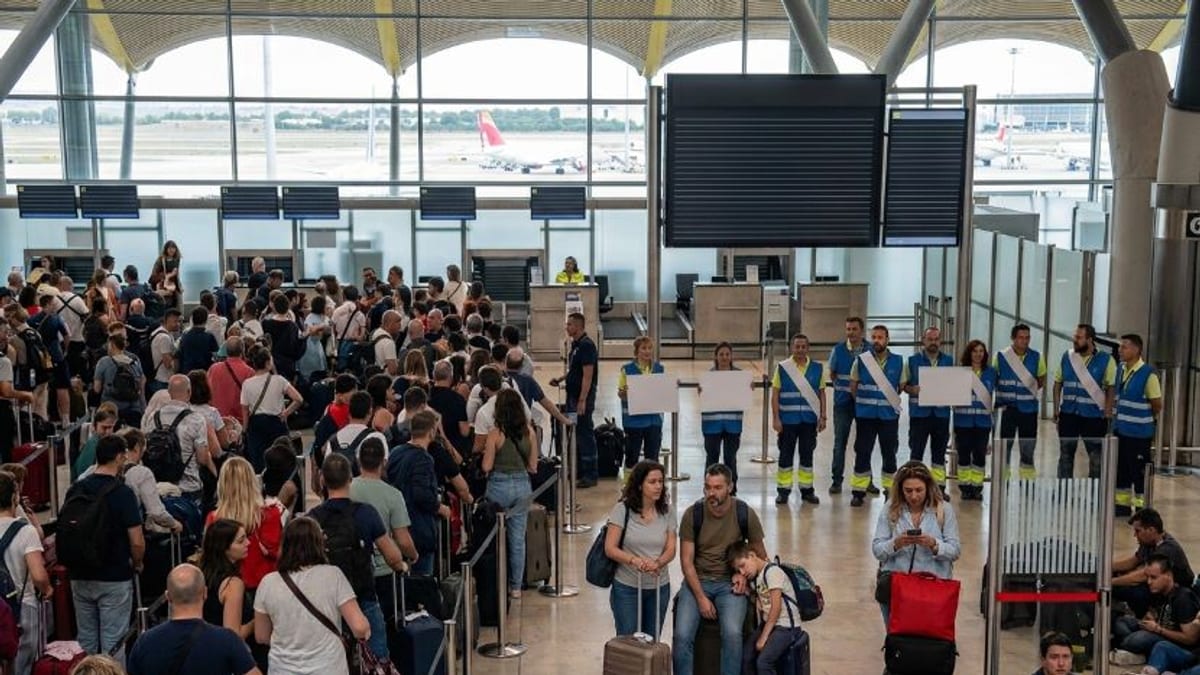
Image by Global Travel Alerts, Advisories, International Travel Alerts
Where and when disruption is most likely
Industrial action around Spain’s Semana Santa period is centred on ground handling companies that manage check in, baggage and aircraft turnaround at major airports. Published coverage indicates that walkouts by Groundforce staff are planned from Friday 27 March, affecting a dozen airports including Madrid Barajas, Barcelona El Prat, Palma de Mallorca and Málaga at key times of day.
Reports indicate that the stoppages are partial rather than full shutdowns, typically concentrated in several time bands during mornings, midday and late evenings. This pattern mirrors earlier labour disputes at Madrid, where limited ground handling strikes created bottlenecks at baggage reclaim and during boarding, while flights continued to operate under minimum service rules.
Separate local disputes add further pressure. In Málaga, ground staff have called an indefinite strike from the start of Easter week, just as the airport prepares for almost 6,000 flights between 27 March and 6 April. In Ibiza, media reports highlight partial and indefinite stoppages by ground personnel from the start of Holy Week, with legally mandated minimum services of around 80 percent on key domestic and public-service routes.
Travellers should also be aware of a rolling strike affecting maintenance of the automated baggage system at Madrid Barajas on certain days through late spring. While this is a separate dispute, it increases the risk that bags on some flights may be delayed or need manual handling during already busy strike periods.
What the strikes mean for your flight
For most holidaymakers, the most visible impact of the strikes is likely to be queues and slower processing rather than mass cancellations. Spanish regulations typically require minimum service levels for essential transport, and published information about current disputes suggests that a majority of scheduled flights are expected to operate, especially on routes linking the mainland with the Balearic and Canary Islands.
However, when ground operations are short staffed, even a modest slowdown can cascade across the day. Longer turnaround times for arriving aircraft can push back departures, which in turn raises the risk of missed connections for passengers changing planes in Madrid or Barcelona. Past strike periods in Spain and elsewhere in Europe have demonstrated that baggage delivery can become a particular pinch point, with suitcases arriving late or being rerouted on later flights.
Not all airlines are affected in the same way. The current action is focused on specific handling contractors, which often serve clusters of carriers. Previous disputes at Madrid, for example, mainly hit airlines linked to the IAG group such as Iberia, British Airways, Vueling and Aer Lingus when ground handlers serving those companies walked out. Other carriers using different service providers sometimes experienced fewer issues, although knock-on effects from congested facilities still caused delays.
Travellers should also bear in mind that delays caused by strikes at ground handling firms or airports may be treated differently under compensation rules than delays caused directly by airlines. While carriers remain responsible for providing care such as meals and accommodation during long disruptions, financial compensation may not always apply when industrial action is deemed outside the airline’s control.
Planning ahead before you fly
Careful preparation can significantly reduce the stress of travelling through Spanish airports during strike periods. The first step is to verify strike dates and times for your specific departure or arrival airport a few days before you travel, using airline notifications and publicly available strike trackers. Because many walkouts are partial, knowing whether your flight coincides with a peak strike window can help you decide how much extra buffer time to build into your plans.
Arriving at the airport earlier than usual is advisable, particularly if you need to check bags. During past strikes in Spain and other European countries, travellers with cabin baggage only were generally able to move through airports more quickly and in some cases rebook more easily when delays occurred. If your trip allows, travelling with carry on luggage can reduce your exposure to baggage handling bottlenecks.
Reviewing your ticket conditions is also important. Flexible or semi flexible fares, as well as tickets booked directly with airlines, may offer more straightforward options for voluntary date or time changes if the situation worsens. Some carriers have, during previous strike waves, allowed passengers to move flights at no extra cost within a set window around affected dates, especially for peak holiday periods.
Travel insurance can provide an additional safety net, but only if it is suitable for the current situation. Policies vary widely in how they treat strikes, so checking whether airport or ground handling industrial action is covered, and under what conditions, can help set realistic expectations about reimbursement for extra hotel nights, meals or alternative transport.
Smart tactics at the airport on strike days
On the day of travel, staying informed and moving early are essential tactics. Checking your flight status before leaving your accommodation and again on the way to the airport can provide early warning of gate changes or delays. At the terminal, many travellers have found it helpful during previous disruptions to proceed directly to security once baggage is checked, rather than lingering in public areas where queues can build quickly.
At check in, having documents ready can speed your passage when staff numbers are reduced. This includes printed or downloaded boarding passes, passports open at the photo page and any required visas or health documents prepared in advance. Families and groups can save time by designating one person to manage documents and keep an eye on screens for updates while others organise children or luggage.
If your flight is significantly delayed or cancelled, knowing your basic rights can help you navigate the situation calmly. In the European Union, airlines generally must provide assistance such as refreshments and accommodation during long waits, even when disruptions are linked to airport or ground staff strikes. Rebooking on the next available flight is common practice, particularly for travellers on point to point leisure routes to and from Spain’s coastal and island destinations.
Some passengers may consider shifting to alternative airports or transport modes inside Spain when disruption becomes severe. High speed rail connections between cities such as Madrid, Barcelona, Valencia, Málaga and Seville are extensive, and domestic flights sometimes can be replaced by train journeys with comparable travel times when factoring in airport queues. Published reports indicate that rail operators often boost capacity during peak holiday periods, which can offer an important fallback for those whose short haul flights are heavily affected.
Minimising risk for connections and onward travel
Travellers with tight connections in Spain or elsewhere in Europe face particular challenges during airport strike periods. When planning or revising itineraries, leaving larger buffers between flights can be a crucial safeguard. Rather than the minimum legal connection time, booking several hours between arrivals and onward departures can provide more room to absorb queues at passport control, security re screening or delayed baggage delivery.
Those starting multi stop trips in Spain may wish to route itineraries to avoid the busiest hubs on peak strike days, particularly if a missed connection would jeopardise long haul sectors. For example, when flexible routing is available, some passengers choose to connect through less congested European airports outside Spain during major strikes, even if it involves a slightly longer journey.
Coordinating airport transfers and accommodation with potential delays in mind is also important. When booking hotels on the first night, especially after an evening arrival, choosing options with late check in and flexible cancellation can ease the impact of a missed or heavily delayed flight. Similarly, those renting cars or joining organised tours may benefit from notifying providers that they are travelling during a known strike period and may arrive later than planned.
For travellers heading to islands such as Mallorca, Ibiza, Tenerife or Gran Canaria, where onward ferries or inter island connections are common, checking timetables and considering backup sailings can be prudent. With services often concentrated around specific hours, a delay of even a couple of hours at the airport can mean missing the last convenient boat or domestic flight of the day, adding extra costs and overnight stays to holiday budgets.